REVIEW · INDIANA
Indiana Dunes National Park Self-Guided Audio Tour
Book on Viator →Operated by Shaka Guide Apps · Bookable on Viator
Sand keeps moving, and you follow the stories. This Indiana Dunes National Park self-guided audio tour turns a long driving day into a guided circuit, with GPS turn-by-turn directions and auto-playing narration as you roll from stop to stop. I like that it’s built for a real road trip pace, so you can stop for a short walk or skip ahead when the dunes (or your legs) say not today.
Two things I really liked: you get an easy “what am I looking at” layer for birds, dunes, and history, and the format is cost-friendly because it’s $15.99 per group up to 15 people rather than per person. One consideration: the whole experience depends on your phone behaving well with GPS and the app, so plan for low-tech backups if you lose signal or the audio doesn’t trigger correctly.
In This Review
- Key highlights worth planning around
- What this self-guided audio tour gives you (and why it works here)
- Start point in Westville and the end in Gary: driving flow that saves time
- Heron Rookery, Mt. Baldy, and the dune-future reality check
- Central Beach to West Beach: how to pick the right shoreline stop
- Great Marsh, Lake View, and river trails: birding without needing a wildlife degree
- Visitor Center and Indigenous Cultural Trail: learn before you wander
- The 1933 World’s Fair homes: living history you can see, not tour
- State Park vs National Park: why your plan may need a fee
- Trails with real sand work: Cowles Bog, Glenwood Dunes, and Tolleston
- The “story trail” of old homesteads: Bailly, Chellberg Farm, and prairie time
- Westville-to-Gary finale: Marquette Park and the Paul H. Douglas Center Loop
- Price and value: is $15.99 per group worth it?
- Should you book this self-guided audio tour?
- FAQ
- How much does the Indiana Dunes self-guided audio tour cost?
- What does the price include?
- Do I need cell service or Wi‑Fi to use the tour?
- Are entrance fees to the parks included?
- What are the start and end points of the route?
- Is this tour private for my group?
Key highlights worth planning around
- One price per group (up to 15): a good deal if you’re rolling with friends or family.
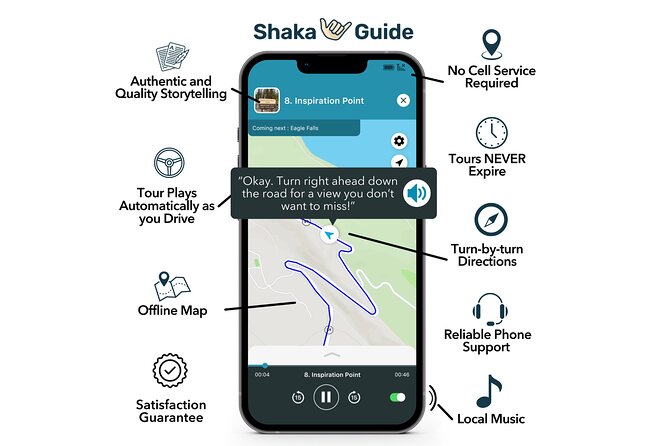
- Auto narration while you drive: fewer app-taps, more time for dunes and shoreline.
- Offline map included: you can keep going even when service gets spotty.
- Many stops stay free to enter: you can spend your money on the day instead of tickets, especially for the National Park portions.
- Real variety in one route: rookery trails, wandering-dune lore, prairie birds, and the 1933 World’s Fair houses.
- Good “fit” for partial days: you don’t have to do everything in one run.
What this self-guided audio tour gives you (and why it works here)
Indiana Dunes can feel chaotic if you show up with no plan: parking lots, short trails, big views, and a lot of places that look similar until you know what each one is. This audio tour solves that with a simple approach: you drive the route, and the app tells you what to see right when you arrive.
The tour is designed for a long, flexible day (about 12 hours). That matters because Indiana Dunes is not a one-stop park. You’ll want time for quick hikes, beach breaks, and at least one longer trail if you’re feeling it.
You also get a private, group-based format. It’s not a guided van with strangers. It’s built so your vehicle uses one tour feed, with narration and directions that follow your movement.
You can also read our reviews of more tours and experiences in Indiana.

Start point in Westville and the end in Gary: driving flow that saves time
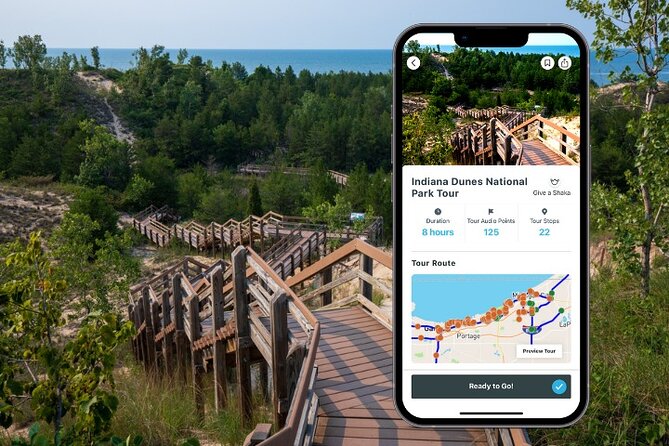
You begin at 5648 US-6, Westville, IN 46391, and the tour route ends near the Paul H. Douglas Center for Environmental Education area in Gary (the trailhead at N Lake Street, south of the center).
That end location is a smart finish for two reasons. First, you can close the loop with visitor-center exhibits and an easy walking option. Second, Gary is outside the main National Park, but the route still keeps the theme going with beaches and a different kind of park story.
The app features are what make this work smoothly:
- Audio narration plays automatically as you drive
- Turn-by-turn GPS directions
- Offline map so you’re not chained to data
- You can start, pause, and resume on your schedule (nice when you’re dealing with beach traffic)
Practical tip: before you go, use strong Wi‑Fi to download the tour so you’re not fighting loading screens during your dune window.
Heron Rookery, Mt. Baldy, and the dune-future reality check
If you want the park’s “wait, dunes move” story to land early, start with the Heron Rookery Trail Auxiliary (West) Lot and the easy, peaceful walk there. Even though the Great Blue Herons that used to nest in this area have moved on, you can still look for other birds like kingfishers, warblers, and red-headed woodpeckers. In spring, the trail can reward patience with small ephemeral flowers such as Harbinger of Spring and Yellow Trout Lilies.
Then you move to Mt. Baldy, the park’s wandering-dune poster child. The big idea here is not just that it’s tall; it’s that it can move—up to ten feet per year. Tourists once damaged the grass that helped hold it in place, so now the wind is doing what wind does: shifting sand, changing the hill’s position, and even threatening to overtake nearby areas.
Getting to the beach takes a half-mile roundtrip hike around the dune with stairs. That’s a short effort, but it’s not a stroller push. Also: Mt. Baldy is a strong reminder that the dunes are living systems, not playground slides.
Central Beach to West Beach: how to pick the right shoreline stop
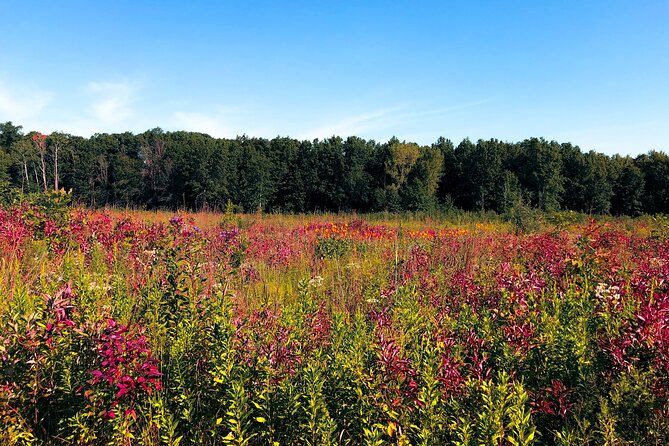
Indiana Dunes is famous for beaches, but the vibe changes by beach. Use the app timing and your own energy level to match the shoreline to the mood you’re chasing.
Central Beach is a straightforward base with seasonal restrooms and potable water. A key safety note here: the park strongly urges you to remain on the beach area and not climb up dune slopes directly behind the beach. There are no lifeguards, so plan to swim at your own risk, especially with rip currents and waves.
Next door in spirit, Dunbar Beach also has seasonal restrooms and potable water, but it’s more about beach time than amenities. Parking can fill quickly on summer weekends. Again: no lifeguards, so treat it like a self-responsibility swim spot.
If you want a beach that’s also a night-sky destination, Kemil Beach is worth your time. It has year-round restrooms and potable water, and it pairs beach watching with wildlife at night. If you have extra energy, add the Dune Ridge Trail. It’s short but varied: forested sand dunes, Black Oak Savannas, and views toward the Great Marsh and Lake Michigan.
Porter Beach is quieter and more bare-bones: it offers few amenities, but it’s a practical overflow option. You can park there and walk about a quarter mile along the beach to reach the State Park area. No lifeguards again, so swimming is still at your own risk.
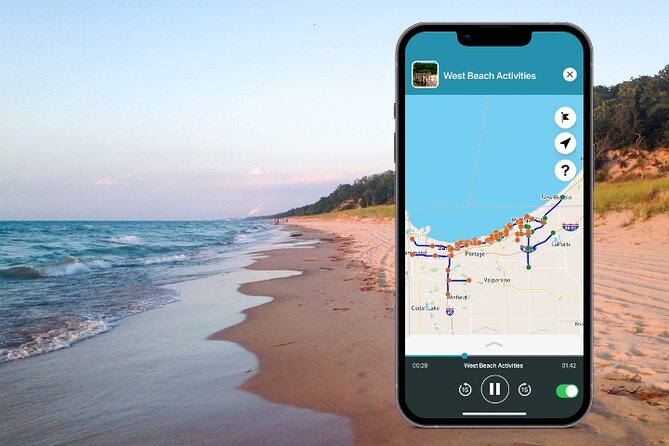
Then save your biggest “challenge choice” for West Beach. This is the park’s biggest and busiest beach, and it’s the one built for variety: sunbathing, swimming, beachcombing, and birdwatching. There’s also a designated dune climbing spot.
If you want something more active, West Beach ties into two signature experiences:
- Long Lake Loop, a trail that winds through forests, wetlands, and rolling sand dunes
- Diana of the Dunes Dare, the one-mile Dune Succession Trail that climbs up 270 steps to the top of Diana’s Dune
That’s not a casual stroll. It’s a sweat-and-view payoff. I’d only schedule it when you know you’ll actually have the legs later.
Great Marsh, Lake View, and river trails: birding without needing a wildlife degree
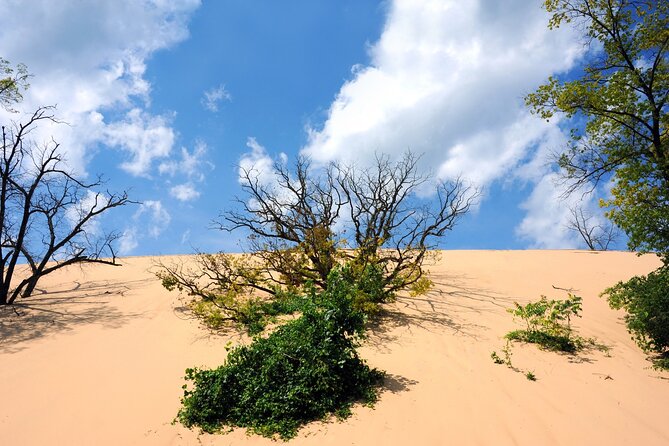
This park is a bird spot, even when you’re just walking a trail that feels “easy.” The Great Marsh Trail is a great example. It’s a simple hike with views of the largest wetland complex in the Lake Michigan watershed. Look for ducks, geese, herons, egrets, warblers, and red-winged blackbirds.
Good for mobility needs: there’s a separate wheelchair-accessible paved trail with quick access to an observation deck. That’s a meaningful advantage if you want bird views without working through deep sand.
If you like the idea of fishing-style local flavor, Lake View Beach is noted for smelt in spring. The details here are very specific: a small, oily fish that’s described as excellent when shallow-fried and eaten whole. If that’s your kind of food mission, this is your moment.
For a longer sense of “this used to be underwater,” take Little Calumet River Trail. It’s popular with bird watchers in summer and cross-country skiers in winter. The trail’s story comes from time: the Calumet Dunes Ridge was once the Lake Michigan shoreline, and in the last 12,000 years the lake receded about 1.5 miles. When you’re walking, try to picture the waterline you’re no longer standing on.
Then there’s Portage Lakefront and Riverwalk, which adds winter drama. In cold weather you might see shelf ice on Lake Michigan. The riverwalk is under a mile and marked as easy. You’ll also find a beach pavilion with snacks, gifts, restrooms, and ranger programs (so it’s not just a walk; it’s a built-in stop).
Visitor Center and Indigenous Cultural Trail: learn before you wander
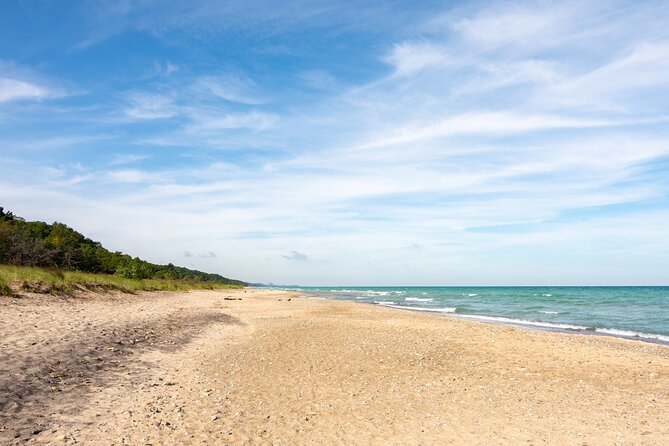
A lot of people skip visitor centers when they’re trying to “get outside.” Don’t do that here. The Indiana Dunes Visitor Center gives you the kind of background that makes every trail feel more readable.
You can check displays, watch short films, shop the bookstore, and talk with a ranger. My favorite part is the Indigenous Cultural Trail. It’s designed to honor the Potawatomi and Miami peoples who called this land home, and it connects their story to the park’s ecosystems. If you want to understand why certain areas matter beyond scenery, this is the place to start.
The 1933 World’s Fair homes: living history you can see, not tour

History at Indiana Dunes doesn’t always mean a museum you walk through. The 1933 Chicago World’s Fair Century of Progress Historic District is a small set of houses that started at the World’s Fair. After the fair, a developer bought five and moved them here, naming the community Beverly Shores after his daughter.
Here’s the tradeoff: you can’t go inside. The houses are leased to private residents who must keep them maintained. There is one exception—if you can get tickets to the annual tour every September. Tickets usually sell out within an hour, so plan like it’s a popular concert.
If you’re the type who likes history, this stop is still worth it because you’re seeing original structures and understanding how a fair-era idea became a local neighborhood.
State Park vs National Park: why your plan may need a fee
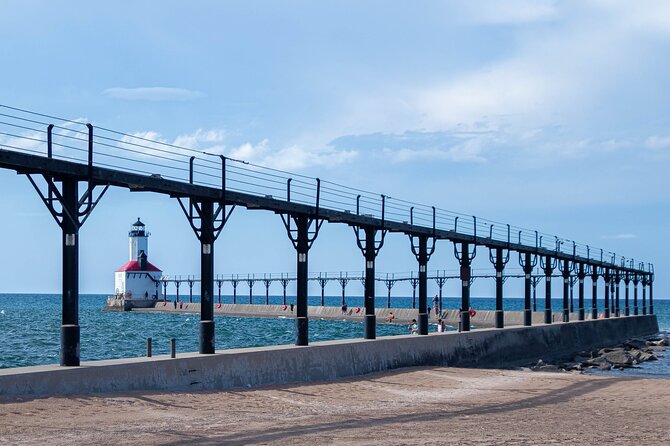
A key reality check on this route: Indiana Dunes State Park is separate from the National Park, and it can require a separate fee. It also gets busy fast. Depending on the time of year or even time of day, you may deal with traffic direction from rangers, and you might wait in line just to get in.
Inside the State Park, you can choose your own flavor:
- The 3-Dune hiking challenge connects you to the dune climb culture (head to the Nature Center to start this plan)
- Or keep it beach-forward and go straight to the shoreline
- There’s a large art deco pavilion near the beach with a general store and restaurants
- West of the pavilion is a bird observatory
Seasonal note: in winter there’s a 100-foot sledding hill called The Devil’s Slide near the pavilion. If you’re there during colder months, that changes the whole “what do we do today” question.
History fans also get a marker for the 1780 Battle of Petit Fort on the way to the pavilion.
Trails with real sand work: Cowles Bog, Glenwood Dunes, and Tolleston
Some of the best Indiana Dunes walking takes effort. The audio tour helps here by setting expectations about what’s ahead.
The Cowles Bog Trail is a moderate hike at 4.7 miles with 202 feet of elevation gain. The terrain is described as rugged, with steep dune climbs in loose sand. It’s not a “light shoes” situation. Also, it’s named after Dr. Henry Cowles, an ecologist whose research helped earn the area a reputation as the birthplace of ecology. That science angle makes the slog feel purposeful.
If you’re considering a bigger commitment, Glenwood Dunes Trail is the one that asks for a map. Trail lengths vary from less than 1 mile to 6.8 miles, with extensions pushing beyond 15 miles. There are 13 trail junctions, and that complexity is why a trail map matters. The dunes here are said to be the oldest in the park at 13,000 years, so you’re walking through serious time.
Tolleston Dunes Trail is about 3 miles and described as moderately difficult because it goes up and down. After rain it can get soggy. The upside: trees provide lots of shade, and the plants can be fun to spot, including prickly pear cactus, sassafrass, and wild blue lupine.
The “story trail” of old homesteads: Bailly, Chellberg Farm, and prairie time
Not every highlight is a dune. Some of the strongest stops are human-scale and easy to combine with shorter walks.
Bailly Cemetery is unique and a bit eerie in a good way: a family took over the cemetery and made it their own. You’ll take a shortcut hike of less than half a mile roundtrip to reach it, which keeps it from becoming a long detour.
The Bailly Homestead is a National Historic Landmark and home of Joseph and Marie Bailly. Joseph was a pioneer in the region and set up a trading post in 1822. At one point, it was the only stopping point between Chicago and Detroit for travelers. The homestead includes five buildings ranging from rustic log cabins and brick structures to a late 19th-century main house. This is a “look closely” stop, not a quick photo-and-go.
Chellberg Farm gives you a working-food angle. The Chellbergs were Swedish immigrants who bought the land in 1869. Their original wooden farmhouse burned in 1884, and a brick house went up the next year. In the 1930s they started making maple syrup, and the park holds a maple syrup festival every March. The tour notes that this is the only National Park in the country that makes its own maple syrup. If ranger programs are running during your visit, you may be able to tour the old farmhouse and even feed farm animals.
Then shift to open-ground walking with Mnoke Prairie, a restored pre-settlement tallgrass prairie. It’s a place to see what the land might have looked like before European-American settlers arrived. It’s also an excellent bird spot for species like double-breasted cormorants, rock pigeons, and Cooper’s hawks.
Westville-to-Gary finale: Marquette Park and the Paul H. Douglas Center Loop
As you near the route end, the tone changes from the National Park to city and education-center space.
Marquette Park belongs to the city of Gary, not the National Park. It has a playground, concession stand, hiking trails, and even a disc golf course. If you want a low-key stretch for kids or a break for non-hikers, it works. Don’t skip the Gary Bathing Beach Aquatorium, built in 1921—one of the most distinctive buildings noted along the way.
Your last stop is the Paul H. Douglas Center for Environmental Education in Miller Woods. It’s a National Park visitor center with exhibits on wildlife found throughout the park, plus hiking trails. The recommended option is the Miller Woods Loop Trail: under a mile, moving through several habitats, with incredible lake views.
This ending is practical. It wraps up with an easy walk option after a day that likely included beach steps and dune sand.
Price and value: is $15.99 per group worth it?
At $15.99 per group (up to 15 people), this tour can be a strong value if you’re traveling with others. The key is that you’re paying for the experience on one vehicle, not per person.
Also, many stops on the route don’t require admission fees, so you’re mostly funding the guidance layer: narration, GPS navigation, and the offline map. That matters because Indiana Dunes isn’t just a place to park and wander randomly. It rewards you when you understand what you’re seeing—birds in a rookery, dune movement, wetland habitats, and why certain historic houses are reachable only in specific ways.
The main costs you should plan for are not included: parking fees and any separate state park fee if you enter Indiana Dunes State Park. Meals also aren’t included. So if you’re on a strict budget, build your day around the National Park portions and treat the State Park as your optional upgrade.
Should you book this self-guided audio tour?
Book it if you want a hands-free, story-forward way to experience Indiana Dunes without paying for a per-person guide. It’s especially worth it if your group has mixed fitness levels, because you can keep walks short or follow longer trails based on your mood.
Skip it (or go in with a backup plan) if you dislike app-based navigation or if you rely heavily on cell signal. The tour is offline-capable with the included map, but it still depends on GPS triggering and your phone’s tech working smoothly.
If you’re excited by birds, dunes that move, and history that’s still part of daily life here, this audio tour is a practical way to turn a long drive into a coherent day.
FAQ
How much does the Indiana Dunes self-guided audio tour cost?
It costs $15.99 per group, up to 15 people. The duration is listed as about 12 hours.
What does the price include?
You get hours of audio narration with stories, travel tips, and music; auto narration as you drive; turn-by-turn GPS directions; tour highlights with activity and restaurant recommendations; and an offline map.
Do I need cell service or Wi‑Fi to use the tour?
No. The tour includes an offline map, and the guidance is designed to work without continuous Wi‑Fi or data. You’ll still want strong Wi‑Fi beforehand to download the tour.
Are entrance fees to the parks included?
No. Entrance fees are not included. The information also notes that the Indiana Dunes State Park has a separate fee.
What are the start and end points of the route?
The tour starts at 5648 US-6, Westville, IN 46391. It ends at the Paul H. Douglas Trailhead area near N Lake Street, south of the Paul H. Douglas Center for Environmental Education in Gary.
Is this tour private for my group?
Yes. It’s listed as a private tour/activity, so only your group participates. Service animals are allowed.