REVIEW · TUCSON
Saguaro NP and Mt. Lemmon Self Guided Driving Audio Tour Bundle
Book on Viator →Operated by Adventures with Action · Bookable on Viator
On one road, Tucson turns into three climates fast. This self-guided audio driving tour takes you from the Mt. Lemmon Scenic Byway climb to Saguaro National Park, with hands-free stories that trigger as you pass each stop.
I like two things a lot. First, the offline setup means you can still hear the narration when cell service goes missing. Second, you get real variety: scenic lookouts, geology, picnic spots, and optional hikes from short loops to full-on days.
One caution: this is audio-by-location. If your phone GPS timing is off, you may feel like the narration is a few beats behind, and you’ll want to keep a steady driving pace (and download the tour first).
In This Review
- Key highlights worth planning around
- How the audio tour actually works (and how to get it right)
- Mt. Lemmon Scenic Byway: the 6,000-foot climate shift in one drive
- Overlooks, pine shade, and the hoodoo story you can see with your own eyes
- The detours worth taking: Palisades Visitor Center, jet crash lore, and SkyCenter
- Transitioning to Saguaro National Park: cacti, Hollywood, and viewpoints with bite
- East Saguaro trails and the Rincons: from CCC-built paths to petroglyphs
- Price and value: why $24.99 per group makes sense here
- Should you book this audio bundle for Tucson and Mount Lemmon?
- FAQ
- How much does the Saguaro NP and Mt. Lemmon self-guided audio tour bundle cost?
- How long does the tour take?
- What language is the tour available in?
- Do I need cellular service or wifi to use the audio tour?
- How do I start the tour once I arrive?
- Is there someone who meets you at the start?
- Can I pause the tour and resume later?
- Are entry tickets included for the stops?
- What are the operating hours?
- Does the tour work in the car audio system?
Key highlights worth planning around

- 6,000 feet of elevation gain on Mt. Lemmon Scenic Byway, with noticeable climate change as you climb
- 40+ audio stories tied to specific pull-offs and trailheads, for a hands-free feel
- Optional hikes across two parks, including Soldier Trail, Bug Spring, and several Saguaro trails
- Hoodoos, hoodoo vistas, and Duck Head Rock, with geology explained in plain language
- Few-crowd pause spots like Rose Canyon Lake and picnic areas tucked in canyon shade
- Lifetime access with no expiry, so you can reuse it on future Tucson trips
How the audio tour actually works (and how to get it right)
This bundle is built for a simple idea: you drive, you park when the story tells you to, and your phone plays the next chapter automatically. You don’t need to press play each time. The narration is designed to follow where you are, so the driving route and stop sequence matter.
You’ll use the Action’s Tour Guide App on your phone. After booking, you get instructions plus a password by email/text. Before you start, download the tour while you’re on strong wifi/cellular so it works offline afterward. For driving, I recommend connecting your phone to the car stereo using Bluetooth, USB, or AUX. For any walking you do, headphones can help you hear clearly.
Practical tip: the audio timing works best when you’re driving close to the speed limit and not hopping stops out of order. If you do stop often, just expect short pauses between story cues and plan a little extra time.
You can also read our reviews of more tours and experiences in Tucson.


Mt. Lemmon Scenic Byway: the 6,000-foot climate shift in one drive
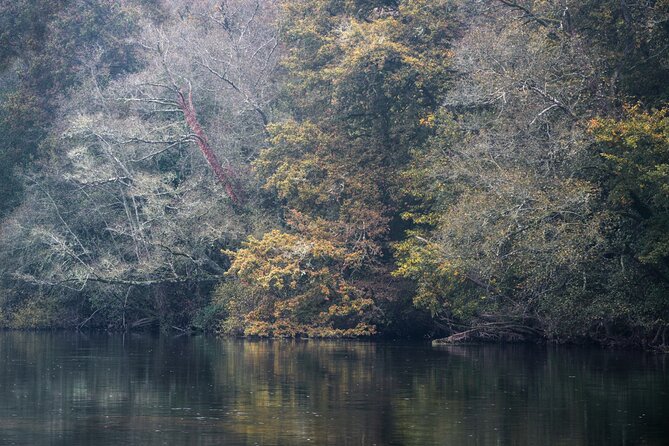
Your climb begins on Mt. Lemmon Scenic Byway, where the main wow-factor is how fast the world changes. You’ll gain about 6,000 feet from start to finish, and the air, vegetation, and light feel different as you go. It’s like moving through a mini version of the American elevation story, only you’re doing it at highway speed.
Stop by stop, this part leans into lookouts and “what am I seeing?” explanations. You’ll be pointed toward Soldier Trail (a tough 5-mile out-and-back) and Babad Do’ag Scenic Overlook, which gives you a wide view of Tucson and the mountains beyond. From there, the Babad Do’ag trail starts—another moderate hike through saguaros, chollas, and ocotillos.
Then it turns more “ecosystems at work.” Molino Canyon Vista sits around 4,000 feet and highlights how boulder-filled canyons change plant communities with elevation. You’ll look for native grasses, ocotillo, desert broom, and pink fairy duster—small details that make the bigger geology feel personal.
If you want a bigger workout, Bug Spring Trailhead is the move. It’s a 10-mile out-and-back that can take around five hours, with desert switchbacks up to a pine forest and creek crossings. Even if you only do a shorter detour, the story helps you understand what you’re walking through.
Overlooks, pine shade, and the hoodoo story you can see with your own eyes

After the canyon viewpoints, the tour keeps handing you places to stop, breathe, and notice. Middle Bear Picnic Area is an easy place to convert your drive into a snack-and-stretch break. It sits by Bear Canyon under ponderosa pines, and you’ll be able to look down into the canyon while the opposite slope shows an erosion-formed sculpture-like effect.
Manzanita Vista is another “slow down and learn” moment. You’ll learn how manzanitas survive harsh conditions—smooth, bright red bark and gnarled branches—and why that toughness matters in a place where soil and water are limited.
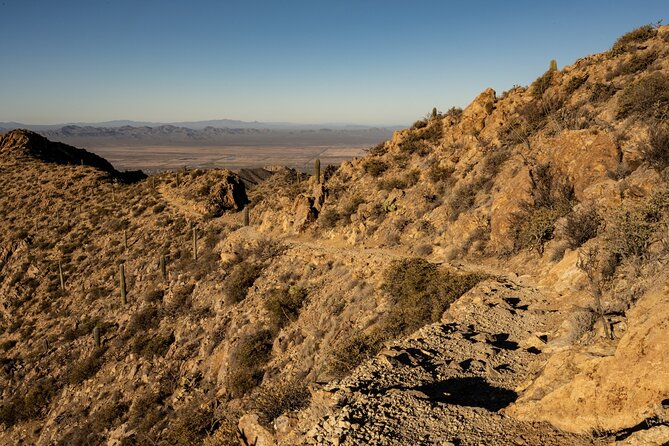
Windy Point Vista is the panorama portion. From here you get a broad view that reaches from the desert base all the way toward subalpine heights. The story frames it as biodiversity in one sweep, so it feels less like you’re just sightseeing and more like you’re reading a map of life.
Then the geology takes over. Geology Vista Point and Hoodoo Vista point out hoodoos—thin rock spires that develop in hot, dry climates. Duck Head Rock is the fun marker you’ll recognize instantly from its shape. If you want the best view at Hoodoo Vista, the audio specifically tells you to park at the turnout for a closer look rather than just rolling through.
If you want a calm break, Rose Canyon Lake is set up for that kind of pause. It’s described as a spot that stays quieter than some other stops along the way.
The detours worth taking: Palisades Visitor Center, jet crash lore, and SkyCenter

This route doesn’t only cover nature. It also threads in people and places, which is why the stories feel more than just science facts.
When you need a restroom, Palisades Visitor Center is a clear option. The audio tells you exactly where to turn (left onto East Organization Ridge Road). It’s a small stop, but the kind that keeps you from losing time later.
Butterfly Trailhead is for hikers who want a serious day. The hike is listed as 11 miles, and the story highlights an unusual side attraction: about three miles in, there’s an unofficial route leading to a crashed F86 fighter jet from 1957. Even if you don’t plan to hike the full distance, it’s one of those details that makes Mount Lemmon feel stranger in a good way.
Aspen Vista sits at nearly 8,000 feet, and on a clear day the view is said to reach about 50 miles. You’ll also learn how the Galiuro Mountains act like another sky-island chain, separated by a deep valley, with the San Pedro River running through the gap.
Mt. Lemmon Ski Valley is a sensible stop if you want to shift gears from hiking to winter-sports energy. Then comes Mt. Lemmon SkyCenter Observatory, which the story frames through Cold War radar history. You’ll hear about a government radar station established in 1956, designed to scan the skies for enemy planes and missiles, and you’ll learn that the station operated at the highest continual level in the world for a time with about 80 men living on site.
Transitioning to Saguaro National Park: cacti, Hollywood, and viewpoints with bite
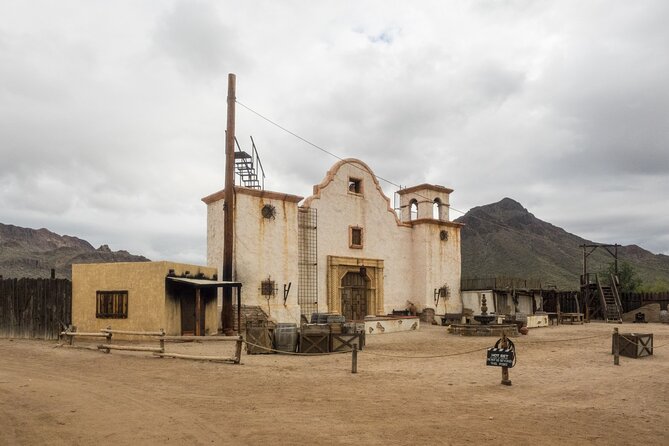
After Mount Lemmon, the vibe drops back down—less pine, more Sonoran heat and character. The tour moves into West Saguaro National Park, with stops tied to formations, prickly cacti, and a surprising thread of Hollywood history.
Old Tucson is built into the flow. The audio notes that the park was rebuilt and remains open to the public, so it’s more than a roadside curiosity. Gates Pass Scenic Lookout follows, and the focus is on ancient rock formations around Tucson. There’s also a trail connected to this area, which the story says you’ll talk about when you get closer.
Brown Mountain Trailhead is the next optional hike. It’s described as a 5-mile loop that’s moderately challenging and usually under two hours, with a hint that coyotes are a real possibility. The tour doesn’t promise sightings, but it sets expectations for sounds echoing across the park.
Then you hit the museum-and-trail zone. Arizona-Sonora Desert Museum is on the way, and the narration points you toward King Canyon Trail. That hike is listed as 7 miles and moderately challenging, with an estimate of about four hours and big desert views along the way. The route repeats King Canyon Trail as a dedicated stop, which is useful if you want to park and commit right there instead of waiting for the next cue.
For an easier legs-on break, Desert Discovery Nature Trail is a short half-mile walk focused on saguaros. It also includes a quick note that some cactus species are edible—but it also makes the common-sense point that you shouldn’t go plucking them to taste.

East Saguaro trails and the Rincons: from CCC-built paths to petroglyphs
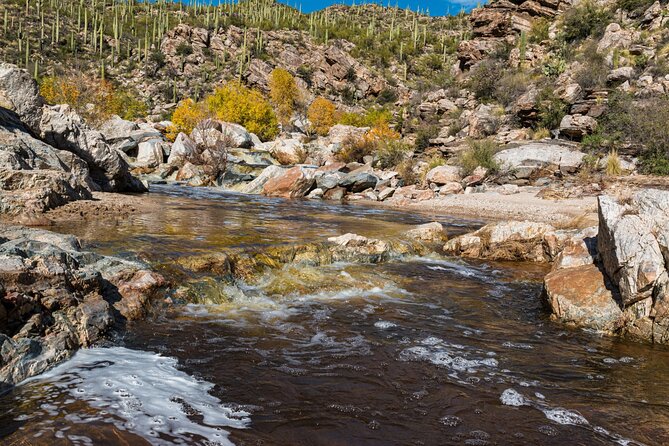
The last major chunk shifts to East Saguaro National Park and starts at Rincon Mountain Visitor Center (at 3693 S Old Spanish Trail, Tucson). The audio gives you a clean start instruction: continue along Cactus Forest Drive to begin.
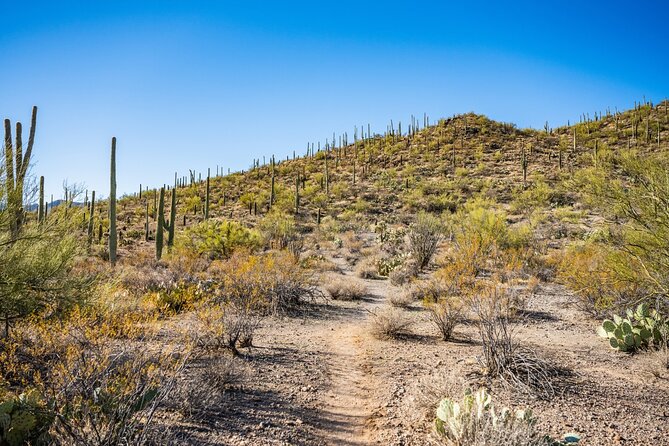
From there, you’ll collect a set of viewpoints and trailheads that cover different reasons to care about this park. Sonoran Desert Overlook connects the human story to the land. It specifically references the Hohokam and their shift toward settled farming, tied to what’s described as the ancestors of the O’odham people.
Future Generations Overlook is where the cactus focus becomes a numbers lesson. The park is described as hosting about 25 species of cacti, not just the iconic saguaro.
Mica View Trail gives you an easy loop option (around 4 miles, under 90 minutes). The story adds birdwatching hints like Gila Woodpeckers and gilded flickers, which helps you look instead of just walk. Cactus Forest Trail is the longer workout at 10 miles (about three and a half hours), and it includes a time-travel clue: lime kilns dating back to 1880.
Loma Verde Trail is another easy-to-moderate choice (about 3.7 miles and around an hour and fifteen minutes). You’ll cross a seasonal stream and walk gradually downhill through the cactus forest, which is the kind of terrain that feels different from a purely flat loop.
Garwood Dam is included as an optional explore. The audio ties it to a Tucson couple buying 450 acres in 1945 and discovering that Wildhorse Canyon held water—small details that connect the water story to desert survival. Riparian Overlook follows with a claim that it’s one of the best cactus-forest views, and it also notes that you can’t see rattlesnakes from up there. (Good reminder: don’t let great views make you reckless.)
Near the end, Rincon Mountains and Javelina Rocks add more place-based story. The Rincon story includes a 1984 incident involving a Cessna 310 and a thunderstorm, while Javelina Rocks are named for javelina, described like a dog-sized animal with pig-like features.
You’ll finish near Tanque Verde Ridge Trail, a 3-mile moderately challenging route listed as under two hours.
Price and value: why $24.99 per group makes sense here
At $24.99 per group (up to 4), this is priced like an app you can share rather than a per-person tour ticket. That matters because you’re doing a lot of stops across two major areas, and the content is meant to keep you moving in a way that a simple phone map can’t.
You’re also getting lifetime access with no expiry. In plain terms: if you come back to Tucson later, you can reuse the same audio bundle instead of paying again. That’s rare for budget-friendly audio products.
Time-wise, the audio route itself is described as about 2–3 hours to complete, with the whole driving route over 15+ miles and 40+ stories. The full experience time of 4–5 hours makes sense because you’ll likely park for hikes, photo stops, and restroom breaks.
The biggest value unlock is the stop-level design. Instead of guessing what to look for, the audio points you at hoodoos, specific rock formations, canyon ecosystems, and even the reason manzanitas do well here. That turns a normal drive into an interpretive route without adding a guide cost.
Should you book this audio bundle for Tucson and Mount Lemmon?
Yes, if you want a self-paced day that blends big scenery + specific nature and human stories and you’re comfortable using your phone for navigation cues. This fits best for couples, friends, and small families who like to stop when they want, skip when they don’t, and keep costs under control by splitting the price across up to four people.
Book with extra caution if you’re the type who gets frustrated by phone setup. This experience depends on downloading ahead and on location-based playback. If you’ve had tech troubles before with audio apps, do the download at home or on strong wifi before you head out.
If you’d like, I can also suggest a “half-day plan” that picks only the best-effort stops and keeps hikes optional, so you still finish while daylight is forgiving.
FAQ
How much does the Saguaro NP and Mt. Lemmon self-guided audio tour bundle cost?
It costs $24.99 per group, up to 4 people.
How long does the tour take?
It’s listed as about 4 to 5 hours total, while the audio tour route itself takes about 2 to 3 hours to complete.
What language is the tour available in?
The tour is offered in English.
Do I need cellular service or wifi to use the audio tour?
You’ll want to download the tour while you have strong wifi/cellular. After downloading, it works offline and you can use it without signal or wifi.
How do I start the tour once I arrive?
Open Action’s Tour Guide App once onsite, launch the tour, then go to the first story’s point. The audio starts automatically and plays hands-free based on your location.
Is there someone who meets you at the start?
No. This is self-guided, and no one meets you at the start.
Can I pause the tour and resume later?
Yes. You can pause anytime and enjoy breaks for photos or snacks, then start again when you like.
Are entry tickets included for the stops?
At the stop level, the audio includes admission ticket-free stops, but the bundle does not include attraction passes, entry tickets, or reservations. If a specific place requires a separate ticket, you’ll need to handle that on your own.
What are the operating hours?
It lists Monday through Sunday from 8:00 AM to 5:00 PM.
Does the tour work in the car audio system?
Yes. You can connect your phone to your car stereo using Bluetooth, USB, or AUX.