REVIEW · TUCSON
Mount Lemmon Self-Guided Driving Audio Tour
Book on Viator →Operated by Travel with Action · Bookable on Viator
Mount Lemmon feels like a vertical road trip. This self-guided drive pairs offline geotracked audio with turnouts that match what you’re seeing, from Saguaro country up through cooler pine and subalpine views. I love the way the narration connects ecology and geology to the actual pullouts, and I also like that it’s great value per car instead of per person. One thing to consider: if you’re driving downhill, the timing can feel less smooth than on the climb.
You start at the base near Tucson, then keep gaining height all the way toward the Mount Lemmon SkyCenter area. Along the way you’ll get quick stops for hikes, lookouts, and picnic spots, without needing an escort. It’s a smart choice when you want the freedom to linger for photos and not worry about catching a group.
If you plan to do longer trail legs, bring real trail gear. Some stop areas are tied to hikes that are 5 to 11 miles out-and-back, and the elevation change is no joke even if you only step out of the car for a listen.
In This Review
- Key Highlights You’ll Actually Feel on the Drive
- Mount Lemmon’s 6,000-Foot Climate Switch on Catalina Highway
- Price and Value: $16.99 Per Group That Covers One Car
- Offline Setup: Download the App Before You Start Climbing
- How the Geotracking Audio Works (and Why Speed Matters)
- Stop-by-Stop Highlights from Soldier Trail to the SkyCenter
- Stop 1: Soldier Trail
- Stop 2: Babad Do’ag Scenic Overlook
- The Drive Segment: Why You Feel Like You’re Moving Vertically
- Stop 3: Molino Canyon Vista
- Stop 4: Molino Basin Trailhead
- Stop 5: Bug Spring Trailhead
- Stop 6: Thimble Peak Vista
- Stop 7: Seven Cataracts
- Stop 8: Middle Bear Picnic Area
- Stop 9: Manzanita Vista
- Stop 10: Windy Point Vista
- Stop 11: Geology Point Vista (Hoodoos)
- Stop 12: Duck Head Rock
- Stop 13: Hoodoo Vista
- Stop 14: Rose Canyon Lake
- Stop 15: San Pedro Vista and the Arizona National Scenic Trail
- Restroom Break: Palisades Visitor Center Area
- Stop 16: Butterfly Trailhead and the F86 Jet Story
- Stop 17: Aspen Vista
- Stop 18: Red Ridge Trailhead
- Stop 19: Mt Lemmon Ski Valley
- End Near Mount Lemmon SkyCenter Observatory
- Who This Tour Fits Best on Your Tucson Getaway
- Should You Book This Mount Lemmon Self-Guided Driving Audio Tour?
- FAQ
- How much does the Mount Lemmon Self-Guided Driving Audio Tour cost?
- How long does the tour take?
- What language is the tour offered in?
- Do I need cellular service during the tour?
- How do the audio stories play while I drive?
- Where does the tour start and end?
- Is the tour audio hands-free?
- Do I need tickets or reservations for the included stops?
- What if I want to use my phone’s sound in the car?
- What are the SkyCenter hours listed for the end area?
- What is the cancellation policy?
Key Highlights You’ll Actually Feel on the Drive
- Geotagged audio that plays as you approach each stop, so it feels like a guided route without a guide in your car.
- Offline maps and offline audio after you download, which is a big deal on Mount Lemmon.
- 44+ audio stories across 30+ miles, so you’ll have plenty to listen to between major views.
- Clear, practical pacing: quick pullouts for overlooks plus optional longer hikes.
- A route built around ecosystem change, including hoodoos, manzanita groves, and pine-forest transitions.
- Value for groups in one vehicle (up to 4 people) at $16.99 per group.
Mount Lemmon’s 6,000-Foot Climate Switch on Catalina Highway
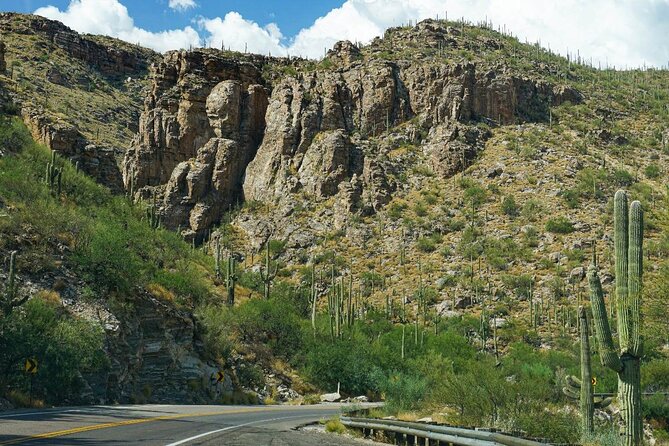
What makes Mount Lemmon special is the speed of the change. On this route, you’ll gain about 6,000 feet of elevation as you drive. That translates into a real shift in temperature, plant life, and even what kind of rock stories make sense.
You’ll feel it as you go: start in desert tones and saguaro country, then watch the ecosystem gradually tighten into cooler habitats as you climb. The audio keeps that transformation from feeling random by linking each turnout to what you’re seeing—cacti and ocotillo early on, then grasses, then pine and subalpine viewpoints farther up.
That’s the whole point of a driving tour here. You’re not just collecting photos. You’re tracking how a single mountain reshapes an entire region.
You can also read our reviews of more tours and experiences in Tucson.

Price and Value: $16.99 Per Group That Covers One Car
At $16.99 per group (up to 4), you’re paying for a tour experience that works like a private guide for your vehicle. If you’re traveling as a couple, friends, or a family of four, that price can be shockingly reasonable compared with doing multiple paid guides or bus-style tours.
You also get something you can’t buy with a standard ticket: flexibility. You can start when you’re ready, pause for bathroom breaks, and spend extra time at the places you like most—without anyone tapping a watch.
Also, there are no attraction passes included. That’s not a flaw; it’s how this stays affordable. It means you can treat most stops as free viewpoints and trailheads, then add paid sights only if you want them.
Offline Setup: Download the App Before You Start Climbing
To make this work smoothly, plan your phone setup first.
After booking, you’ll get a password by email and text. You’ll download the separate Action’s Tour Guide App, then enter the password inside the app. The important part is this: you must download the tour while you’re in strong Wi‑Fi or cellular service. After that, it should work offline.
Once you’re on site, you open the app and launch the right tour version for your start direction. Then you go to the starting point and begin with the first story. There’s no staff member waiting. The app is the guide.
For audio quality, connect your phone to your car stereo using Bluetooth, USB, or AUX. If you hop out to walk a short segment, headphones can help too.
Practical tip: do a quick test of volume before you drive too far. You’ll thank yourself later when the narration kicks in at the first scenic pullout.
How the Geotracking Audio Works (and Why Speed Matters)
This tour is hands-free in the best way. The audio stories play automatically based on your position, then advance as you follow the route.
That said, the system depends on you driving the intended path and keeping your speed reasonable. One common reason people feel “off sync” is driving too fast, then realizing you missed the moment the narration expected you to be near a specific turnout.
Another consideration: uphill is usually smoother than downhill. If you plan to do the route in both directions or you’re mostly on the descent, know that the timing may not feel as consistent. The tour is designed to trigger as you follow the route in the planned order.
If you notice any audio issues mid-drive, contact support from within the process. The goal is to keep you listening without turning the day into tech troubleshooting.
Stop-by-Stop Highlights from Soldier Trail to the SkyCenter
The route is built around short parking areas and turnouts. Some stops are mostly for looking and listening. Others point you toward trails that can turn a two-hour drive into a half-day adventure.
Stop 1: Soldier Trail
Soldier Trail is a challenging 5-mile out-and-back with about a 2,000-foot elevation gain. It’s known for Saguaro, prickly pears, and the kind of steep effort that makes the payoff feel earned.
Even if you don’t hike the whole thing, the audio context helps you read the vegetation as you look uphill. It’s a strong opener because you’re instantly aware of how fast the mountain demands physical effort.
Stop 2: Babad Do’ag Scenic Overlook
This overlook gives you a big-picture view of Tucson and the mountains beyond. It also anchors a moderate 4.5-mile hike called the Babad Do’ag trail, with Saguaros, chollas, and ocotillos along the way.
If you’re short on time, you can treat this as a “look, breathe, and decide” moment. Want more? Park and take the trail. Prefer to stay in the car? The vista still earns its stop.
The Drive Segment: Why You Feel Like You’re Moving Vertically
Midway through the drive, the audio calls out the big idea: you’re climbing about 6,000 feet from start to finish. That’s why the vegetation and temperature change so quickly.
This is the section where the tour really clicks. Once you understand the vertical story, each later stop makes more sense.
Stop 3: Molino Canyon Vista
At this elevation around 4,000 feet, Molino Canyon Vista shows the ecosystem transitioning. You’ll spot native grasses, tall spindly ocotillo, desert broom, and a flowering shrub called pink fairy duster.
Canyon and rock formations can be easy to admire without context. Here, the audio gives you the “why” behind the change.
Stop 4: Molino Basin Trailhead
Molino Basin Trailhead points to an easy 5-mile out-and-back that’s relatively flat. It’s a good choice if you’re tempted to stretch your legs without getting hammered by steep grades.
The trail is described as friendly for mountain biking and trail runners too. If you’re walking, plan for a little over two hours at a relaxed pace, depending on your breaks.
Stop 5: Bug Spring Trailhead
Bug Spring is a step up: a challenging 10-mile out-and-back that can take around five hours. The route starts in desert terrain, climbs via switchbacks toward a secluded pine forest, includes creek crossings, and ends at the Bear Canyon Picnic Area.
The elevation gain is around 2,000 feet total. That matters because you’ll likely feel cooler air as you climb, even though you’re only “at a mountain” by Arizona standards.
Stop 6: Thimble Peak Vista
Thimble Peak Vista is a fun one because the name is visual. Thimble Peak looks like a giant sewing thimble from the right angle, and it’s over 5,000 feet high.
This is a good stop for your “scan the horizon” habit. Once you locate the peak in your view, the rest of the canyon and ridge shapes snap into place.
Stop 7: Seven Cataracts
Seven Cataracts are waterfalls from the Willow Canyon stream system. The complex is about 1,000 feet high from top to bottom, but it’s not one straight fall. It cascades from rock to rock, more like a bunch of mini waterfalls than a single drop.
Even when waterfalls aren’t pouring in peak volume, the geology and water story still helps. You’ll appreciate what you’re looking at more once the audio explains how the cascades work.
Stop 8: Middle Bear Picnic Area
This is one of the best breaks along the drive. Middle Bear Picnic Area sits by Bear Canyon with ponderosa pines and sheltering shade. You can see the canyon below and take a slower moment before continuing up.
The audio also points to a strange “sculpture” effect on the opposite slope created by erosion and landslides. It’s the kind of detail you might miss if you just drove past.
Stop 9: Manzanita Vista
Manzanita Vista is about recognition. Manzanita plants have smooth, bright red bark and gnarled branches, and they can thrive with poor soil and little water.
The audio explains how manzanitas adapt so well that they face little competition from other plants. It’s a nice reminder that “harsh” conditions don’t always mean “empty”—they can mean specialized.
Stop 10: Windy Point Vista
Windy Point Vista is described as an unbeatable panorama. You can look from the desert base up toward subalpine summit areas, in one broad sweep.
This is the stop where you get the “biodiversity in one view” idea. You’ll see why this road is worth doing slowly instead of treating it as a simple climb.
Stop 11: Geology Point Vista (Hoodoos)
Geology Point Vista focuses on hoodoos, tall thin spires of rock that look like natural skyscrapers. The audio ties hoodoo formation to dry, hot climates, which helps you connect the geology to the regional climate story.
It’s also a great stop for non-hikers. You don’t need trail time to get the science.
Stop 12: Duck Head Rock
Duck Head Rock is Mount Lemmon’s playful landmark. From the right angle it looks exactly like a duck head with a long bill.
This is the kind of detail that turns a “boring pullout” into a memorable moment. It’s short, but it helps your brain enjoy the drive.
Stop 13: Hoodoo Vista
Hoodoo Vista is another overlook for those same sculpted rock forms. The tour suggests parking in the turnout just ahead for the clearest look, otherwise you can continue.
If you like geology, treat this as your second pass. The first hoodoo stop might help you recognize the shape; this one helps you understand the variety.
Stop 14: Rose Canyon Lake
Rose Canyon Lake is a calmer pause, and it’s tied to fishing. It’s described as a spot that rarely sees crowds compared with more famous stops on the route.
If you’re feeling “drive fatigue,” this is a great place to slow down. You can listen, sit, and do a quick check for a moment of solitude.
Stop 15: San Pedro Vista and the Arizona National Scenic Trail
San Pedro Vista gives you views of the San Pedro Valley. When you’re done looking, the audio points out that you can hop onto the Arizona National Scenic Trail, an 800-mile hike spanning the state from the Mexican border to Utah.
You don’t have to commit to a full thru-hike. The point is that you can use this view as a gateway to the trail system idea.
Restroom Break: Palisades Visitor Center Area
When you need a restroom, the tour suggests turning left onto East Organization Ridge Road to reach the Palisades Visitor Center. Otherwise, continue straight on the main route.
This is one of those small choices that changes your comfort level for the rest of the drive, especially if you’re doing multiple pullouts.
Stop 16: Butterfly Trailhead and the F86 Jet Story
Butterfly Trailhead points to an 11-mile challenging hike. The audio says the biggest attraction is about three miles in, where an unofficial trail reportedly leads to a crashed F86 fighter jet from 1957.
That is a wow moment for history fans. It also signals that you might want to hike with care and common sense if you’re tempted to follow unofficial routes.
Stop 17: Aspen Vista
Aspen Vista is up high at nearly 8,000 feet. On a clear day you can see about 50 miles away.
The audio adds an “islands in the sky” angle too, calling out a ridge chain called the Galiuro Mountains. It also describes a valley dropping more than 5,000 feet, plus the San Pedro River moving through the gulf between mountains.
Stop 18: Red Ridge Trailhead
Red Ridge Trailhead is named for its red dirt. The brick-colored soil is tied to weathering of iron-rich minerals—rust, basically.
The audio also hints at how exposed the ground is to the elements. If you do this as a walk, bring sun protection and expect the trail surface to feel dry and hot in the wrong conditions.
Stop 19: Mt Lemmon Ski Valley
Mount Lemmon Ski Valley shows how a high-elevation area can swing into winter sport territory. This stop is best for photos and orientation.
If you’re visiting outside ski season, treat it as a marker that you’re near the top of the mountain’s story arc.
End Near Mount Lemmon SkyCenter Observatory
The tour ends beside the Mount Lemmon Sky Center Observatory area. The audio includes the origin story of the site: it didn’t start as an observatory.
In 1956, the government established a radar station there during Cold War tensions. For 10 years, Mount Lemmon was the highest continually-operating radar station in the world, and the site employed 80 men who mostly lived at the facility full-time. That context makes the end stop feel purposeful, not just scenic.
The SkyCenter is listed as open Monday through Sunday, 6:00 AM to 9:00 PM (for the date window shown on the tour details).
Who This Tour Fits Best on Your Tucson Getaway
This driving audio tour works especially well if you want:
- A self-guided day with minimal planning. You can start, pause, and explore at your own rhythm.
- Hands-free storytelling while you drive the steep climb without reading everything off a map.
- Family-friendly pacing as long as everyone is comfortable stepping out at trailheads and overlooks.
It’s also a good choice if you like science and nature but don’t want a museum lecture. The audio connects ecology, geology, and the “why” behind each view.
If you’re the type who needs a tight schedule and constant human direction, you might find the self-guided approach a little too open. You’ll need to be willing to slow down at pullouts and not rush the narration.
Should You Book This Mount Lemmon Self-Guided Driving Audio Tour?
I’d book it if you’re planning a Tucson day trip and you want a mountain drive with meaning, not just scenery. The price works best when you travel as a car group, and the offline, geotagged audio turns the route into something you can repeat on future visits.
I’d think twice if you’re mostly interested in downhill driving only, because the audio timing can feel less consistent in that direction. I’d also plan your day so you have time for at least a couple of short stops and one real break like the picnic area or lake.
If you want a straightforward way to turn Mount Lemmon into a story you can follow—and you’re cool with a little hiking choice along the way—this is an easy yes.
FAQ
How much does the Mount Lemmon Self-Guided Driving Audio Tour cost?
It costs $16.99 per group (up to 4 people).
How long does the tour take?
Plan for about 2 to 3 hours.
What language is the tour offered in?
The audio tour is offered in English.
Do I need cellular service during the tour?
No. You need strong Wi‑Fi or cellular to download the tour while you’re starting, but after downloading it works offline.
How do the audio stories play while I drive?
The audio plays automatically based on your location as you follow the route cues.
Where does the tour start and end?
It starts at 9070 E Catalina Hwy, Tucson, AZ 85749 and ends beside Mt. Lemmon Sky Center Observatory at 9800 E Ski Run Rd, Mt Lemmon, AZ 85619.
Is the tour audio hands-free?
Yes. Stories are designed to advance automatically based on where you are, and you can also pause and restart as needed.
Do I need tickets or reservations for the included stops?
No attraction passes, entry tickets, or reservations are included.
What if I want to use my phone’s sound in the car?
Connect your phone to your car stereo using Bluetooth, USB, or AUX. Headphones can be useful if you walk at stops.
What are the SkyCenter hours listed for the end area?
It’s listed as open daily from 6:00 AM to 9:00 PM.
What is the cancellation policy?
You can cancel for a full refund up to 24 hours before the experience starts. If you cancel within 24 hours, the amount paid is not refunded.