REVIEW · GLASGOW
Glasgow Ghost Hunt: The Soul That Got Away Exploration Game
Book on Viator →Operated by Questo · Bookable on Viator
Glasgow gets a little spooky when your phone is the guide. I like the smartphone-led directions that keep you moving, and I like the low-key pace that turns major landmarks into a question-and-answer walk. One thing to think about: the whole experience depends on the app working smoothly, and a few people had trouble signing in or using clues.
You start at Glasgow Central, then follow a route through design, shopping streets, theatres, and classic squares. Expect interactive checkpoints that ask you to spot details and answer questions as you go. The theme is ghostly, but the payoff is more about seeing the city with purpose than doing big, scary set pieces.
If you want a hands-on guide telling ghost stories face-to-face, this isn’t that. It’s also easy to finish quickly, which is great for value, but it can feel too light on pure ghost lore if you were hoping for more spooky tales.
In This Review
- Key highlights to know before you go
- Ghost Hunting by Phone in Glasgow: what this game actually feels like
- Starting at Glasgow Central: your first clue under the glass roof
- From the Lighthouse of Glasgow to a not-so-light secret
- House of Frasers: shopping streets with a ghost-story twist
- Tron Theatre and the fun of doing puzzles in public
- Merchant City: old trade, new energy, and questions in the open
- Buchanan Street: a pedestrian boulevard built on tobacco-lord naming
- George Square and the City Chambers: statues, stairs, and Mandela’s connection
- Timing, duration, and how to plan your evening
- App, hardware, and what can go wrong (so you’re not surprised)
- Who this ghost hunt suits best
- Should you book Glasgow Ghost Hunt: The Soul That Got Away?
- FAQ
- How long is the Glasgow Ghost Hunt experience?
- Where do you start and finish?
- Do I need an entry ticket for any of the stops?
- Is there a live guide with you?
- Can I start the game at any time after booking?
- Is the tour flexible if I need to pause?
- What language is it offered in?
- Is there a group discount?
- Is the experience open air?
- What should I do if the app won’t work or sign-in fails?
Key highlights to know before you go

- Low-cost city play: At $6 per person for roughly 1.5 hours, it’s a budget-friendly way to see Glasgow in a structured loop.
- Navigation built in: The app gives step-by-step directions, so you’re not stuck figuring out routes.
- You control the timing: You can start, pause, and continue at your own pace without rescheduling.
- Major sights, zero ticket hassles: You don’t need entry tickets to complete the experience.
- Works well for families: Kids can handle the riddles, and the sightseeing focus keeps it from feeling too dark.
- App is the star (good and bad): If sign-in or GPS acts up, your experience can grind to a halt.
Ghost Hunting by Phone in Glasgow: what this game actually feels like
This is a self-guided ghost hunt delivered through your smartphone. You get the route, prompts, and questions in the app, and you walk from place to place to unlock the next checkpoint. It’s designed to feel like a scavenger hunt that happens to take place on some of Glasgow’s most recognizable corners.
I like this format for one big reason: you don’t need a meeting time ritual. The experience can be played anytime after booking, and you can start when it suits your evening plans. Want to arrive a bit late? No problem. Want to take a coffee stop and come back? Also fine.
You’re not relying on a live guide to keep things going. That makes it easy to fit into a busy itinerary. But it also means the app matters. If you’re the type who hates fiddling with logins, or you know your phone struggles with GPS in busy areas, plan for patience. Bring a charged battery and a data plan if you can.
Price-wise, $6 is a steal compared to most guided walks or ticketed attractions. You’re paying for the structure: the directions, the questions, and the little ghost-flavored story beats that connect stops.
You can also read our reviews of more tours and experiences in Glasgow.

Starting at Glasgow Central: your first clue under the glass roof
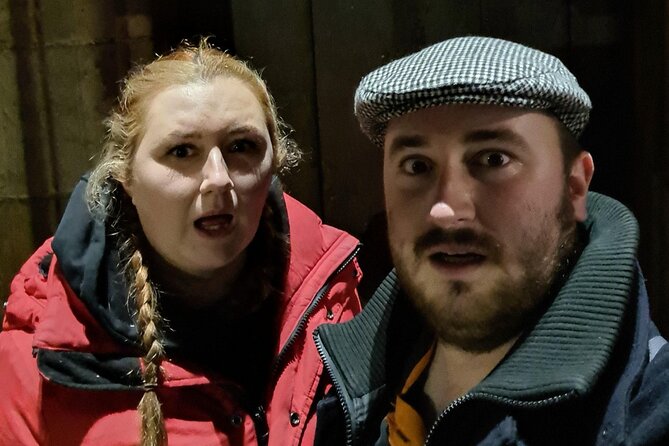
Your journey begins at Glasgow Central, right on Gordon Street. This is a great first stop because it’s visually dramatic and practical at the same time. The station has a big glass roof and classic Victorian architecture, and it’s one of Scotland’s busiest stations, so you’ll feel the energy right away.
The game kicks off with a challenge that gets you looking around instead of just standing there. It pulls you into the station’s layers, including the idea that the old place had vaults, catacombs, and disused platforms below. You don’t need deep local knowledge to play, but it helps to slow down for a minute and actually scan what’s in front of you.
In terms of value, starting here is smart. You’re already in a major transport hub, so it’s easy to reach even if your Glasgow plans are fluid. It also sets the tone: you’re about to move, solve, and walk.
From the Lighthouse of Glasgow to a not-so-light secret
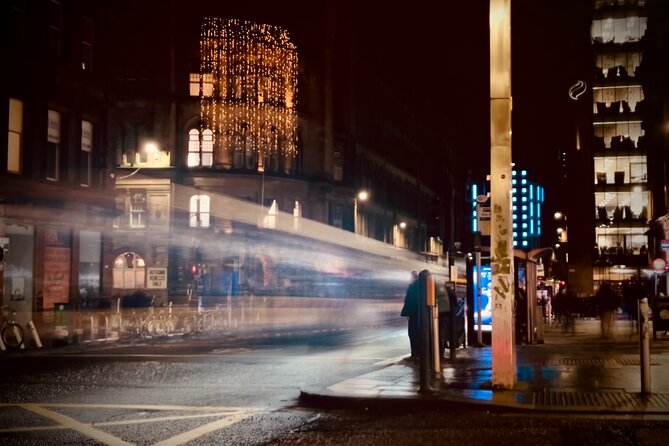
Next up is Scotland’s Centre for Design and Architecture, often described as the Lighthouse of Glasgow. It’s not about movie ghosts. It’s about design. And once you reach the building, you get a different kind of payoff than at the station: you’re pushed to notice the viewpoint over the cityscape.
From the Lighthouse, you can look out over Glasgow and spot tourist attractions from above. The game then adds a puzzle layer. Somewhere around the Lighthouse is a hiding place tied to a secret described as not very light. The prompt basically asks you to use your eyes first, then answer based on what you find.
This is one of the stops where the format really works. It turns a building you might otherwise rush past into a place you actually read with your attention. You don’t need to pay to enter anything to complete the experience, so you’re not stuck worrying about ticket rules.
House of Frasers: shopping streets with a ghost-story twist
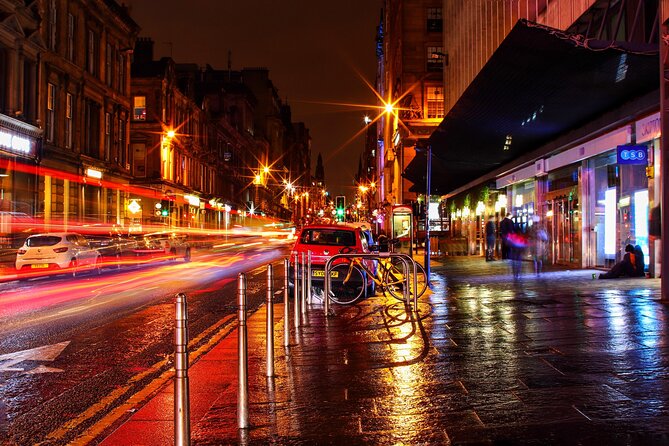
After the design stop, the route heads toward the House of Frasers, a big UK department store. This is where the hunt keeps things playful: it leans into the idea of looking around and answering a question that links to the theme, including the notion of afterlife tastes.
It’s also a practical break point. If you want a snack, use a restroom, or simply take a breather from walking, a major store is convenient. The game keeps you moving, but it doesn’t force you into a sprint.
One detail to keep in mind: like many smartphone hunts, the app’s map guidance can sometimes be a little off. One person noted that the map for a peacock sight sent them to the back of the House of Frasers rather than the front. That’s not a deal-breaker, but it’s a good reminder to stay alert and use street sense, not only the phone dot.
If you’re worried about navigation accuracy, do a quick scan when you arrive: check storefront orientation, look for landmarks, then align your answer. You’ll lose less time.
Tron Theatre and the fun of doing puzzles in public
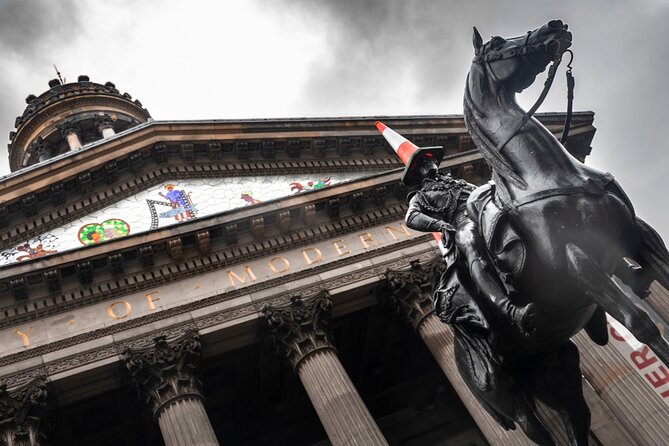
The next cultural stop is the Tron Theatre. The experience frames it as a long-time player in Glasgow’s creative scene and highlights its evolution from theatre club roots into a venue with multiple forms of performance.
In game terms, this is where your prompts feel more like a “challenge you can move through” than just a question you answer while standing still. It asks you to warm up your voice and prepare your moves, then advance through the area by solving what it’s asking at the Tron Theatre checkpoint.
This is also a useful stop for weather. The Tron Theatre area gives you options to keep going even if you need to duck around buildings. Since the experience is open air and self-guided, you’ll still be outside at points, but you’re not locked into one long street with zero shelter.
Also, because there’s no physical guide, you get to move at your own pace. If you want to take extra photos of the building and reread the question prompt, you can. If you want to keep the pace brisk, you can do that too.
Merchant City: old trade, new energy, and questions in the open
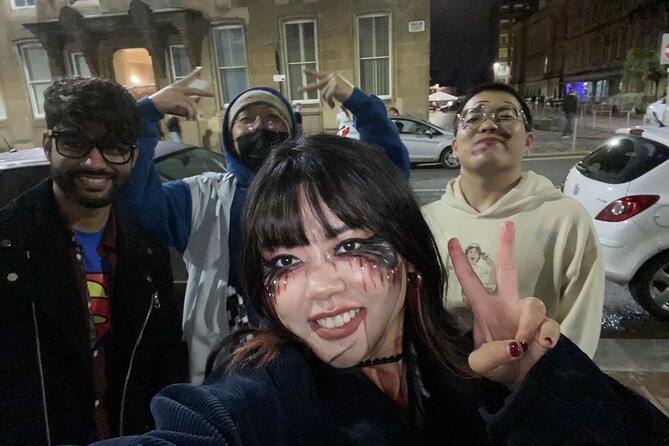
Midway through the route, you’re sent into the Merchant City area, specifically around a square linked to the mid-1750s trading world of merchant tobacco lords. The story thread gives you a strong sense of what shaped Glasgow’s growth: shipping and sales tied to tobacco, sugar, and tea.
What you’ll notice in real life is that Merchant City has a modern Glasgow vibe—bars, restaurants, boutiques, galleries, and spaces that host events. The hunt uses that setting as part of its gameplay. It asks you to search for unspoken truths of the area and find answers by looking closely around the square and its features.
This is one of the stops where the “ghost” theme is a bit lighter, and that’s not necessarily bad. The hunt feels like it uses ghosthood as a hook for city exploration. If you like walking with history flavor and puzzle prompts, this part delivers.
If you were hoping for deeper, location-by-location ghost lore, you might feel the theme leans more toward location and architecture than full-on haunting. Still, it’s a satisfying zone to play because there’s a lot to look at without getting bored.
Buchanan Street: a pedestrian boulevard built on tobacco-lord naming
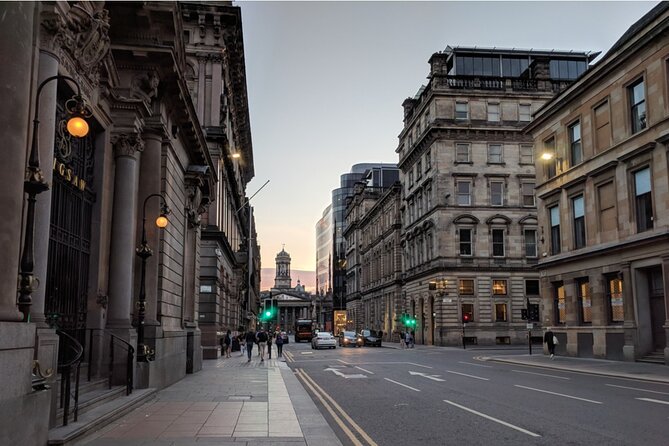
Next comes Buchanan Street, Glasgow’s main pedestrian shopping boulevard. The experience frames it with a story: the street was inaugurated in 1777 and named after Andrew Buchanan, a wealthy tobacco lord.
Even if you don’t care about the backstory, Buchanan Street is a great walking corridor for a phone game. It’s built for pedestrians, it’s easy to keep moving in a straight, predictable line, and you get plenty of visual targets for clue-solving.
The game prompts you to answer a question while crossing the street, plus you’ll likely spot street artists and lively foot traffic. It’s one of those areas where the city feels like a living place, not a museum.
Keep your eyes on the app prompts rather than the shop windows. That’s an easy trap. If you’re solving, you’ll get through faster.
George Square and the City Chambers: statues, stairs, and Mandela’s connection
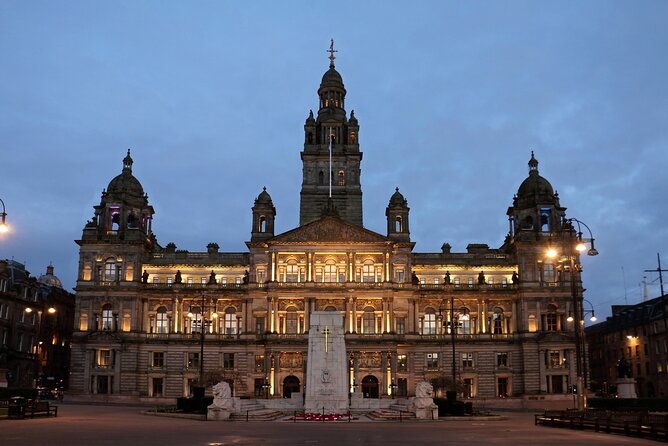
As you reach the George Square area, the tone turns more civic and monumental. The route includes the Glasgow City Chambers, a prestigious building that was inaugurated by Queen Victoria in 1888. You’re told you’ll be greeted by Queen Victoria in statue form, locally known as Glasgow’s own Statue of Liberty.
Then comes the big visual moment: the largest marble staircase in Western Europe. The game also connects the building to Nelson Mandela receiving his Freedom of the City award in 1993. Even if you’re not planning a formal interior visit, these details give context that makes the square feel less like a random meeting point and more like a stage for Glasgow’s public life.
The final push is toward George Square itself, described as one of Scotland’s most loved civic squares. The hunt points you to a collection of statues and monuments dedicated to famous Scots such as Robert Burns, James Watt, Sir Robert Peel, and Sir Walter Scott.
If you like puzzles that work like a guided walk through landmarks, this ending part is the most satisfying. It gives you closure that feels earned: you’ve been solving checkpoints for most of the route, and now you end in one of Glasgow’s best-known places.
Timing, duration, and how to plan your evening
The experience takes about 1 hour 30 minutes on average, though in real life it can stretch depending on how long you pause for photos or breaks. People also reported finishing around two hours when they added a pub stop, which tells me the app is flexible enough to handle real travel rhythms.
Because it’s self-guided, you’re not trapped in a strict schedule. You can also choose when to start during the day since the experience lists availability from early morning through late night. In practice, that means it can fit before dinner, after shopping, or as a pre-show walk if you’re catching theatre elsewhere.
A practical tip: start with enough time left that you won’t feel rushed when the app slows down. If your goal is to catch an evening plan, build in a buffer so tech hiccups don’t steal your whole night.
App, hardware, and what can go wrong (so you’re not surprised)
This game is designed around your smartphone. That’s also its biggest risk.
A few people had trouble with signing in. Others found clues frustrating or got stuck when location support didn’t work as expected. One person even quit after about 15 minutes because the clues felt unworkable. Another mentioned incorrect map guidance around the House of Frasers area.
Here’s how I’d protect your experience:
- Bring a fully charged phone and carry a small power bank if you have one.
- Keep your app running and don’t switch between too many camera and settings screens.
- If a clue asks you to be in a specific spot, stop moving and double-check the prompt before changing streets.
- If the experience stalls early, don’t burn your whole night on it. Use your judgment and switch plans if needed.
Also note that it’s self-guided and open air. That’s great for avoiding crowds, but it means weather can interrupt your comfort. If it’s raining hard, you’ll want a strategy for getting shelter quickly.
Who this ghost hunt suits best
This is a strong match for:
- Families with kids who like puzzles more than scares
- People who want a structured walk without paying for entry tickets
- Visitors who want to cover big Glasgow landmarks efficiently
- Anyone who enjoys city history framed as game prompts
It may not be the best fit if:
- You want a live guide telling ghost stories in full detail
- You hate apps or you know you’ll have tech frustration
- You’re expecting lots of pure haunting lore rather than city-and-clue exploration
The theme is ghostly, but the city exploration is the main event. If you’re okay with that mix, you’ll likely enjoy the walk.
Should you book Glasgow Ghost Hunt: The Soul That Got Away?
If you want a low-cost, flexible way to see Glasgow Central, the Lighthouse of Glasgow area, Merchant City, Buchanan Street, and George Square in about 90 minutes, I think it’s worth booking. The value is hard to ignore at $6 per person, and the self-guided format means you can fit it into your day without babysitting a schedule.
Just go in with realistic expectations: the “ghost hunt” is mostly an app-driven scavenger quest with light spooky flavor, not a fully staged theatre-style haunting. And bring your best app habits—because when it works, it’s a fun way to turn sightseeing into a mission.
If you’re traveling with a group and want everyone to play, check group size rules. For larger groups, you’ll need to book multiple slots, but you can still keep it smooth by planning who plays on which phone.
FAQ
How long is the Glasgow Ghost Hunt experience?
It lasts about 1 hour 30 minutes on average.
Where do you start and finish?
You start at Glasgow Central, Gordon St, Glasgow G1 3SL, UK. You finish at West George Street, Glasgow G1 2AF, UK.
Do I need an entry ticket for any of the stops?
No. Entry tickets to attractions are not included, and you do not need them to complete the tour.
Is there a live guide with you?
No. This is a private, self-guided experience with no physical tour guide.
Can I start the game at any time after booking?
Yes. You can play anytime after booking without rescheduling.
Is the tour flexible if I need to pause?
Yes. You can start, take a break, and continue at your own pace.
What language is it offered in?
It’s offered in English.
Is there a group discount?
Yes. There are group discounts, and for groups larger than 15 you may need to make multiple bookings.
Is the experience open air?
Yes, it’s self-guided and open air, which helps avoid crowds.
What should I do if the app won’t work or sign-in fails?
The support contact shown is [email protected], and another email used is [email protected]. Use those addresses to reach out for help.