REVIEW · ATHENS
Athens: Ancient Agora E-Ticket and Audio Tour
Book on GetYourGuide →Operated by Clio Muse Tours · Bookable on GetYourGuide
A quiet phone, a big story. This Ancient Agora visit works well because you get fast e-ticket entry and a smart offline audio guide that paces itself to you. I especially like the way the narration ties people and politics to specific ruins, not just names on a wall, and I like that you can time your stops without a clock bossing you around. The main drawback is simple: you’ll need to download everything ahead of time and bring your own headphones, or the experience can get annoyingly quiet.
You also get a good plan for seeing more than the obvious. The route is built around the key zones of classical Athens, including the Museum of the Ancient Agora, Mars Hill, the Pnyx, and the Prison of Socrates, with a finish near the Theatre of Dionysus. Price-wise, $30 for 90 minutes to 2 hours is a fair deal if you’ll actually use the phone audio and offline map, but it may feel steep if you’re the type who prefers wandering without prompts.
In This Review
- Key highlights you’ll feel right away
- Getting into the Ancient Agora: e-Ticket Entry Without the Headache
- The offline audio tour: how it turns ruins into a political story
- Stop-by-stop: the walk from Hephaestus to the early laws of Athens
- 1) Temple of Hephaestus area: the foundation of civic change
- 2) Tholos and the ruined Bouleuterion: where lawmakers met daily
- 3) Along the way: Aristides the Just and Pericles as living context
- Museum of the Ancient Agora: artifacts plus a smart reality check
- Mars Hill, the Pnyx, and the Rock of Ares: where speeches and power met
- Mars Hill / Rock of Ares: the attitude of judgment
- Pnyx: the civic stage with views that explain the point
- Philopappos hill and the Prison of Socrates: the story turns darker
- Ending near the Theatre of Dionysus: drama as civic life
- Price, time, and when to do it so it feels worth $30
- The small issues to know before you go
- Should you book this Ancient Agora e-ticket and audio tour?
- FAQ
- How long is the Ancient Agora e-ticket and audio tour?
- What languages is the audio guide available in?
- Does the audio tour work offline?
- What do I need to bring with me?
- Are headphones included?
- Is the audio tour compatible with Windows phones?
- Which Apple devices are not supported?
- Can I use a GetYourGuide voucher at the entrance?
- Can I cancel for a refund?
Key highlights you’ll feel right away
- Fast-track Ancient Agora entry with a pre-booked e-ticket you validate on arrival
- Offline audio + offline map, so you’re not stuck relying on spotty reception
- Real “who mattered” storytelling featuring Solon, Pericles, and Aristides the Just
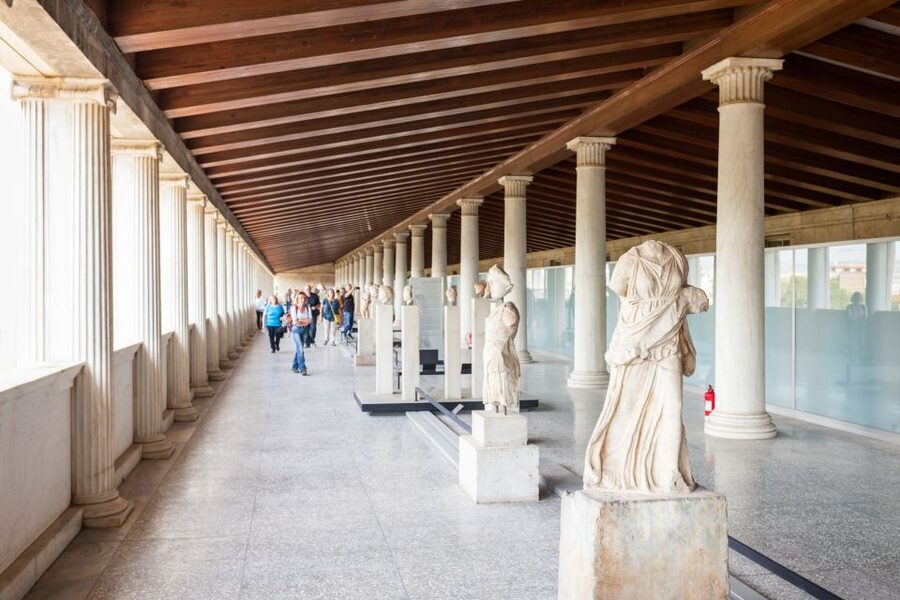
- Museum time included, with a tip to check the 2nd floor view over the Panathenaic Way
- Views that connect locations, from the Pnyx and Rock of Ares to the hill zones around Philopappos
- A strong ending near the Theatre of Dionysus, tying drama to civic life
Getting into the Ancient Agora: e-Ticket Entry Without the Headache

The best part of this setup is that it removes one of the most stressful bits of Athens sightseeing: the line and the back-and-forth. You arrive with your validated e-ticket, walk in, and start moving—no waiting for a live group or juggling paperwork at the gate.
In practice, this means you should plan for how you’ll show your ticket. The instructions are clear: go to the validating machines, and have your ticket ready either printed or downloaded on your phone. Also note one important detail: a GetYourGuide voucher isn’t accepted at the entrance. You’ll want the separate e-ticket email from the local partner (check spam too). It’s not hard, just easy to mess up if you assume one email is enough.
Your meeting point can vary depending on what option you booked, so don’t treat the address like a guess. Use the details that come with your ticket confirmation and arrive ready to validate.
One more thing to keep in mind: there’s no “bag storage hustle” built into this experience. Luggage or large bags aren’t allowed, so travel light. If you’re carrying a daypack, you’ll likely be fine; if you’re traveling heavy, you’ll waste energy deciding where to put it.
You can also read our reviews of more tours and experiences in Athens.



The offline audio tour: how it turns ruins into a political story
This is a self-guided walk driven by your smartphone. That sounds simple, but it’s what makes it good. You can pause, look closer, and go at a pace that matches the heat and your curiosity.
Before you go, download the audio tour and the offline interactive map. Once you’re at the archaeological site, there’s no internet access, so relying on live streaming or map data will fail. The audio is available in several languages—English, Italian, Greek, German, Spanish, and French—so you can pick what fits you best.
Headphones are essential. They’re not included, and without them the tour loses its main feature. If you’re the kind of traveler who hates wearing headphones, consider bringing a pair anyway. The narration is built to match the walk—stopping to listen is part of the value.
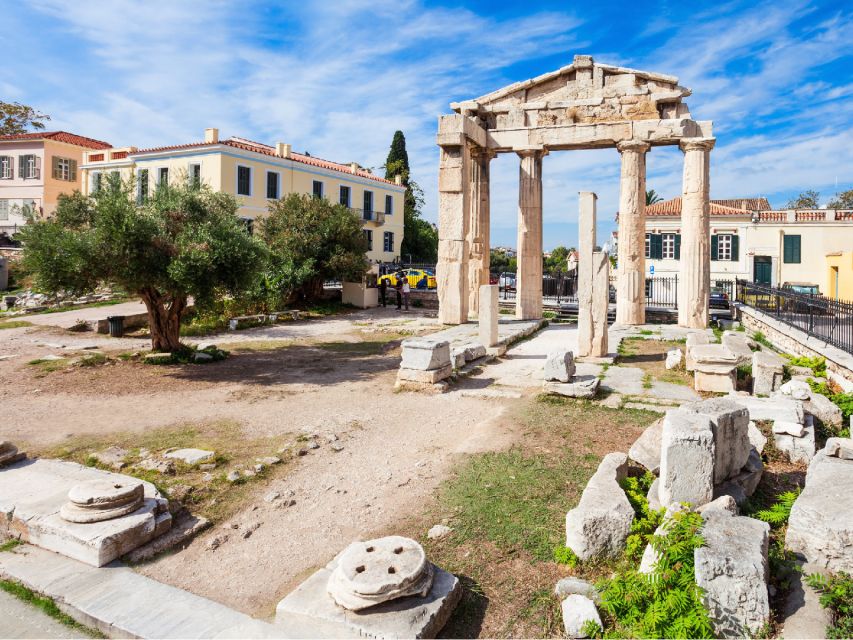
What the audio does well is linking specific places to the big idea: how democracy developed in Athens. It starts with the legal groundwork laid by Solon, then moves uphill toward the sites where civic decisions were shaped. Along the way, the guide uses short stories about major figures like Aristides the Just and Pericles, so the ruins feel tied to real human choices. You’re not just looking at stones; you’re hearing why people argued, voted, and tried to protect the system they created.
Stop-by-stop: the walk from Hephaestus to the early laws of Athens

1) Temple of Hephaestus area: the foundation of civic change
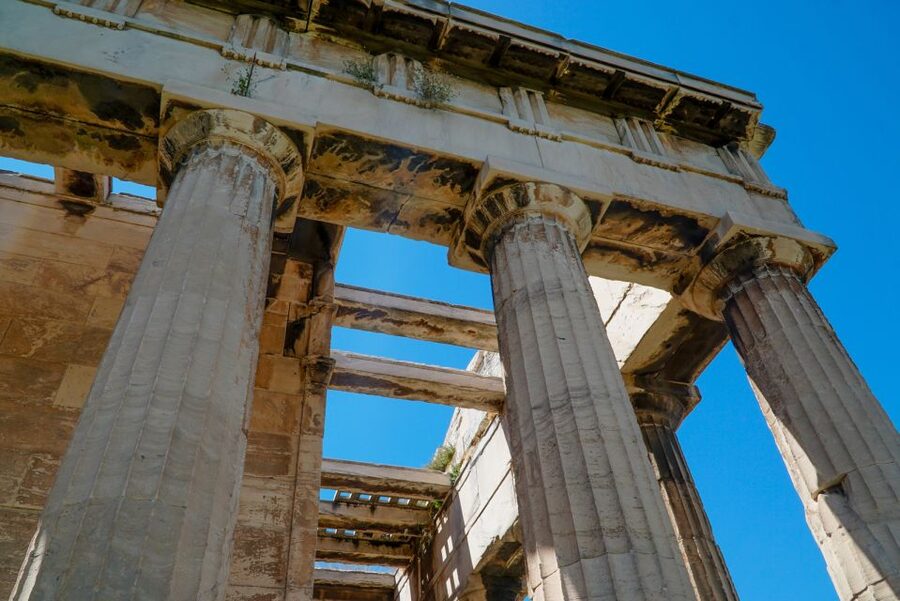
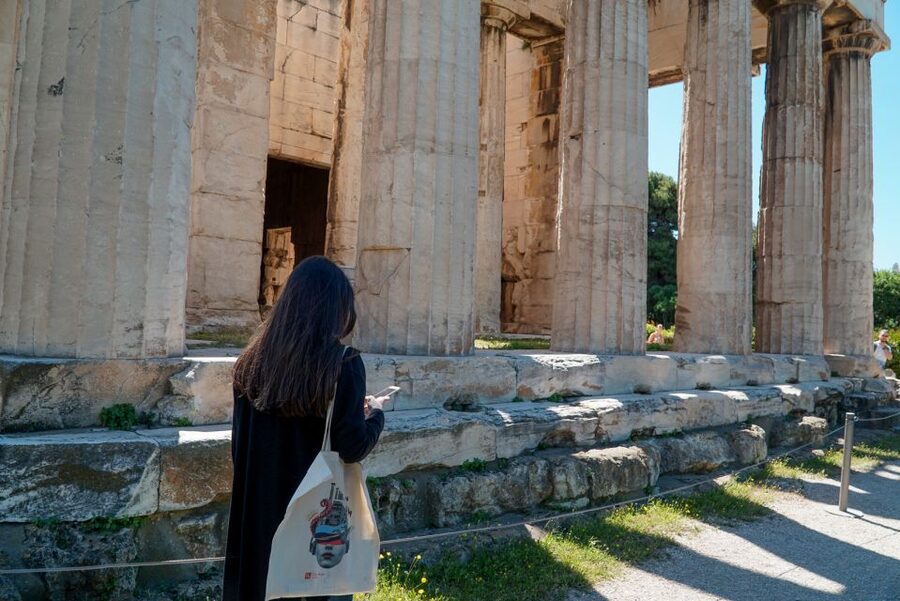
Your tour’s beginning is anchored where the Temple of Hephaestus still stands out nearby. From this starting point, the narration sets the stage for what had to happen before “democracy” could even function—Solon’s legal reforms.
That matters because Athens isn’t presented as magically inventing democracy overnight. Instead, you learn how law and rules created the conditions for an early civil society. You’ll get the feeling that politics here was hands-on—citizens arguing, shaping norms, and building institutions.
Practical tip: take a minute to get your bearings before you commit to the route. The audio is helpful, but you still want your own orientation so you can look around while listening.
2) Tholos and the ruined Bouleuterion: where lawmakers met daily
As you continue, the audio brings you toward the Tholos and the ruined Bouleuterion—the council setting where 500 Athenians met daily to draw up laws and proposals for the popular assembly.
This is one of the tour’s smartest choices: it shows you that democracy wasn’t only about public speeches. It had a working body behind the scenes—people meeting often, drafting ideas, and feeding the broader process.
If you like structure in your sightseeing, this segment will click. You can almost picture the daily rhythm: council work, then assembly debate.





3) Along the way: Aristides the Just and Pericles as living context
The audio guide adds anecdotal storytelling so major names stop feeling like textbook entries. Aristides the Just and Pericles come up not as distant heroes, but as characters in the drama of civic life.
One review-worthy takeaway I’d repeat: the tour content doesn’t assume you’ll already know Greek history like a course syllabus. It frames people in terms of what they were dealing with, and that makes the whole walk less intimidating.
Museum of the Ancient Agora: artifacts plus a smart reality check
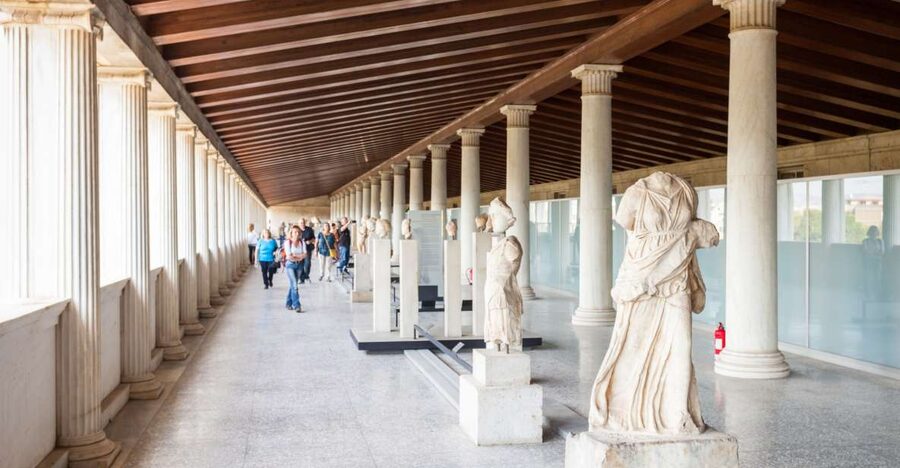
After the outdoor portions, you’ll hit the Museum of the Ancient Agora, and it’s a good pause from the sun. One practical plus: the museum is air conditioned, so it can feel like a reset button if you’re touring in hotter months.
Inside, the tour’s narration and your own looking time focus on how Athenians defended their democracy. You’ll see exhibits that describe ingenious methods—but also cruel ones. That’s where the tour earns its keep. Democracy here isn’t treated as a smooth, ideal machine. You learn about the real costs and the hard edges of protecting power.
A tip worth using: don’t skip the 2nd floor. There’s a different elevated perspective over the Panathenaic Way, and it’s the kind of view many people miss because they rush through the museum like it’s just a waiting room between monuments.
If you’re deciding when to do this, I like doing it earlier or later in the day. One helpful travel instinct from the experience: the walk is a lot of outdoors time, so plan your museum portion to give your body a break from heat.
Mars Hill, the Pnyx, and the Rock of Ares: where speeches and power met
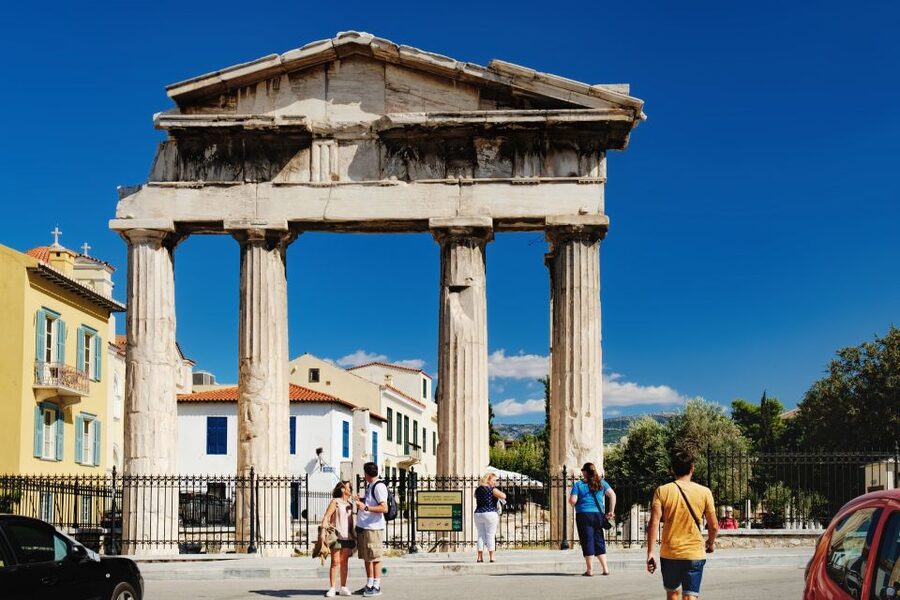
The route then pushes you into the higher ground and key symbolism of classical Athens.
Mars Hill / Rock of Ares: the attitude of judgment
This part centers around Mars Hill, also known as the Rock of Ares. It’s not just a photo stop. The audio uses it to reinforce how Athenians connected civic life with moral and legal judgment—how “thinking like a citizen” could feel like being inside an argument.
The viewpoint also helps. When you can see lines of sight and terrain, the places start making sense in a spatial way.
Pnyx: the civic stage with views that explain the point
Next comes the Pnyx, where the audio tour leans into the idea of public speaking and assembly life. The views here connect you back to the earlier story: citizens wasn’t just a political label; it was something people physically did—gathering, listening, deciding.
There’s a reason the Pnyx is repeatedly singled out in good Athens routes. It’s one of the places where you can feel how the city organized power in public.
Practical tip: bring your patience for steps and uneven ground. This isn’t a flat stroll.
Philopappos hill and the Prison of Socrates: the story turns darker
As you ascend toward Philopappos, the audio leads you to the prison of Socrates.
This is a meaningful tonal shift. Up to this point, you’ve heard about structures, councils, laws, and civic debate. Here, the guide draws your attention to the life-and-death stakes that could follow political conflict and philosophical clashes.
Socrates becomes more than a name. You get context for why the democracy Athens was proud of could also be unforgiving. Even if you’re not a big “philosophy traveler,” the audio makes the emotional weight easier to track because it stays tied to place.
One stop to watch for: the audio’s sense of narrative momentum. If your phone keeps giving you notifications, you might want to switch to Do Not Disturb. The tour can get hard to follow if the device is constantly interrupting your listening.
Ending near the Theatre of Dionysus: drama as civic life
Your tour ends within easy reach of the Acropolis archaeological site, in front of the theatre of Dionysus.
This ending works because it doesn’t treat Athens as only courts and assemblies. You reach the oldest theatre of the world and, through the audio, understand it as the actual staging ground for tragedies by Aeschylus, Sophocles, and Euripides.
That matters for a simple reason: democratic life wasn’t only votes. It included culture that shaped how citizens thought and argued. Drama, in this context, becomes part of civic education—an ongoing conversation with consequences.
After you finish, you’re well positioned to keep exploring the Acropolis area on your own, without feeling like you’re starting from scratch.
Price, time, and when to do it so it feels worth $30

$30 per person for a 90-minute to 2-hour self-guided experience can be a strong value—if you use the audio properly.
Here’s what makes it worth it:
- You avoid the main entry hassle with the e-ticket and validation process.
- The content is built for the route you’ll actually walk, covering multiple key sites in one flow.
- Offline audio and an offline map prevent the trip from turning into a phone-charging stress test.
When it might feel less worth it:
- If you don’t like listening to audio on walking tours, you’ll be paying mostly for ticketing convenience.
- If your phone doesn’t meet compatibility needs, you may lose the audio feature. The tour isn’t compatible with Windows phones, and older Apple devices (iPhone 5/5C or older, iPod Touch 5th gen or older, iPad 4th gen or older, iPad Mini 1st gen) aren’t supported.
Timing advice: do it when the light is pleasant and your legs have energy. One practical suggestion that fits the reality of the site: start earlier or later in the day to avoid slow walking in midday heat. The museum helps as a cooling break, but the outdoor segments still take time.
Also consider how you handle photos. One issue that came up is that the audio can stop if you zoom to take a picture. It doesn’t ruin the tour, but it’s a good reason to pause listening before you start snapping or plan a short “photo window” so you don’t lose the thread.
The small issues to know before you go

No audio tour is perfect, and the Ancient Agora version has a few normal bumps:
- Navigation can be vague at times. Some paths can feel parallel, and site names aren’t always obvious from signage alone. The offline map helps, but you may still want to slow down and double-check your position.
- Some sites might feel skipped. The route is curated to core zones, so you won’t necessarily see every possible stop within the time window.
- Tech sensitivity matters. If you’re on an older phone or you forget to download the offline content, the experience becomes much less valuable.
- You’ll be doing it on your own. There’s no live guide included, so you’re relying on the audio narration and your own questions (if you have them, you’ll want to ask staff on-site when you can).
Should you book this Ancient Agora e-ticket and audio tour?
Book it if you want to see more than a quick photo circuit and you like history that connects people to buildings. The audio’s focus on Solon, Pericles, Aristides the Just, and Socrates gives you a clear spine for the walk, and the offline tools keep you from guessing your way through.
Skip it or consider another option if:
- you hate using headphones outdoors,
- your phone isn’t supported or you’re unlikely to download offline content ahead of time,
- you need a wheelchair-friendly route (the activity isn’t suitable for wheelchair users, and some points of interest aren’t wheelchair accessible).
If you’re flexible, this is one of the better ways to do the Agora at your own pace—especially because you end near the Theatre of Dionysus, with the Acropolis area waiting right after.
FAQ
How long is the Ancient Agora e-ticket and audio tour?
The experience takes about 90 minutes to 2 hours, depending on availability and how you pace the stops.
What languages is the audio guide available in?
The audio guide is available in English, Italian, Greek, German, Spanish, and French.
Does the audio tour work offline?
Yes. It includes offline content and an offline interactive map, and the site has no internet access.
What do I need to bring with me?
Bring comfortable shoes, headphones, and a charged smartphone.
Are headphones included?
No, headphones are not included.
Is the audio tour compatible with Windows phones?
No. The audio tour is not compatible with Windows phones.
Which Apple devices are not supported?
It’s not compatible with iPhone 5/5C or older, iPod Touch 5th generation or older, iPad 4th generation or older, or iPad Mini 1st generation.
Can I use a GetYourGuide voucher at the entrance?
No. GetYourGuide vouchers aren’t accepted at the entrance. You need the e-ticket that you received by email.
Can I cancel for a refund?
No. This activity is non-refundable.