REVIEW · ATHENS
Ancient Agora of Athens E-Ticket and Audio Tour
Book on Viator →Operated by Clio Muse Tours · Bookable on Viator
Ancient Athens makes more sense when you hear it. The time-shelled e-ticket cuts down waiting, and the offline audio tour with interactive map helps you move around without hunting for signal. The one caution: the site layout and entry points can be confusing at first, especially if maintenance changes where you’re told to start.
I especially like that this experience doesn’t try to force you into a group schedule. With a self-guided format, you can linger over the moments that catch your attention, like the story of Socrates and the people tied to Athenian democracy, including Pericles.
The possible drawback is simple: since most of what you see are ruins with limited markings, you’ll need to pay attention to the audio. If you’re hoping for a clearly labeled walk-through with “this is exactly what to look at,” this may feel a bit harder to follow at the start.
In This Review
- Key things to know before you go
- Time-Slotted Entry at the Ancient Agora: where the value really comes from
- Starting at Stoa of Attalos: the first minutes can make or break the visit
- The Offline Audio Tour: how to use it without getting stuck
- Stop 1: Ancient Agora of Athens—how the self-guided walk is meant to work
- Socrates and Pericles: why these audio stops feel different
- Scheduling and time slots: what strict timing means for your day
- Practical on-site tips: shoes, sun, and weak-signal reality
- Who this Ancient Agora e-ticket + audio tour is for (and who should think twice)
- Should you book this tour?
- FAQ
- How long does the Ancient Agora e-ticket and audio tour take?
- Where does the experience start?
- Is a live guide included?
- What’s included in the price?
- Do I need an internet connection during the site visit?
- What do I need to bring?
- Can I use the audio tour on Windows Phones or older iPhones?
- What happens if I’m late to my time slot?
- Are there discounts or free admission for EU citizens or young people?
- Is this experience refundable?
Key things to know before you go

- Fast-track, time-slotted entry helps you keep your schedule when crowds pile in
- Offline audio + offline interactive map means you’re not dependent on weak site signal
- Self-guided, no live guide keeps it flexible, but you control the pace and focus
- Heads-up on layout confusion: starting directions may not match what you see at the gate
- Short visit window (about 1–2 hours) works well if you pair it with other central Athens sights
Time-Slotted Entry at the Ancient Agora: where the value really comes from
The big selling point here is practical: you prebook a time slot and get an e-ticket so you’re not stuck in the longest queues. At major archaeological sites in Athens, that can be the difference between a pleasant visit and a rushed one. This is also one reason the price feels more reasonable than many “ticket + audio” products that only give you sound.
At $41.91 per person, you’re paying for more than admission. Your ticket includes:
- the entrance fee for the Ancient Agora of Athens
- time-slotted ticket service
- the self-guided audio tour for your smartphone (Android & iOS)
- offline content and an offline interactive map
You should also think about what’s not included: there’s no live guide, and you’ll need your own smartphone and headphones. If you already plan to bring a phone for maps and you’re fine using audio on-site, the value adds up fast.
One more thing to keep in mind: there can be long queues at the entrance, even with time slots. Prebooking reduces waiting, but it doesn’t magically remove every line.
You can also read our reviews of more tours and experiences in Athens.



Starting at Stoa of Attalos: the first minutes can make or break the visit

Your start point is Stoa of Attalos – Museum of the Ancient Agora, Adrianou 24, Athina 105 55, Greece. That’s convenient because it’s a well-known landmark in the area, and it anchors your visit near where the site narrative begins.
But here’s the heads-up worth taking seriously: the Ancient Agora has had maintenance-related changes, and the starting direction you receive might not perfectly match what you see when you arrive. In one case, the audio journey reportedly started at a gate that was currently closed, and the directions needed an update.
So before you commit your brain to following the audio, do this:
- Get oriented on foot for a few minutes.
- Look for the best practical route from where you are to where the audio tells you to go.
- If something looks blocked, trust your common sense and use the offline map to redirect.
That small reset keeps you from losing time during your most important phase: the first 10–15 minutes.
The Offline Audio Tour: how to use it without getting stuck

This is an audio-first experience, so your phone setup matters. The provider encourages you to download everything before you arrive—specifically the e-ticket, the mobile app, and the audio tour—so you can go offline and avoid roaming charges. It also helps because internet access might be unavailable and mobile signal can be weak in the archaeological site.
You’ll want to plan for:
- storage space for the app and tour: 100–150 MB
- using a supported device: Android or iOS required
- audio format not compatible with certain older devices (for example, iPhone 5/5C and older models listed, older iPads/iPod Touch, and Windows Phones)
The tour also includes an offline interactive map. That’s huge in places like the Ancient Agora, where ruins can blur together and you may not instantly understand what you’re looking at or how you’re moving through the space.
Bring headphones if you have them. They’re not included, and you’ll enjoy the audio far more with a decent connection between your ears and your phone.
A practical bonus: the audio can be used repeatedly online and offline, so you can re-listen later if you want to connect what you saw with what you read.
Stop 1: Ancient Agora of Athens—how the self-guided walk is meant to work

This experience is essentially one stop: Ancient Agora of Athens. The 1–2 hour duration is a realistic match for a self-guided audio circuit—long enough to hear the key stories and move through the space, but not so long that you’re trapped there all day.
The Agora is described as the political center of ancient Athens, where Socrates taught and democracy was born. That matters because the audio tour is likely built to help you connect physical remnants to real ideas and real people.
Here’s what you should expect to experience as you walk:
- You’ll hear context that ties the ruins to Athenian political life.
- The audio spotlights ancient personalities, including Pericles (called out as an orator and general).
- Your job is to use the interactive map and audio cues to help you identify where you are in the story.
The possible drawback comes from the same reason this tour is flexible: if you’re expecting “point-to-this-exact-stone” guidance, the Agora can feel more subtle. Some ruins are hard to distinguish at a glance, so the audio needs to be playing the whole time. If you pause it too often—or if your phone battery is low—you may miss the threads that make the place click.
Socrates and Pericles: why these audio stops feel different

The audio highlights are not random names. Socrates and Pericles are central because they point to two big themes the Agora represents:
- how thinking and public debate shaped life in Athens
- how leaders influenced public policy and rhetoric
When the audio explains these personalities in the context of where you’re standing, you stop seeing the Agora as just scattered stone. You start seeing it as a place where ideas were argued out in public—and that’s exactly what visitors usually want when they come here.
You’ll get more meaning out of the tour if you treat it like a guided conversation, not a background soundtrack. In practice, that means:
- listen before you turn down a path
- use the offline map when you’re uncertain
- don’t let the phone become optional
It’s also why headphones help so much: you’ll miss fewer cues, and the narration will feel like it’s pacing your walk.






Scheduling and time slots: what strict timing means for your day

Because this is time-slotted, your plan should be respectful of the clock. The guidance specifically notes that booking requests received between 5:00 pm and 8:59 am will be served the next morning from 9:00 am. That’s the kind of detail that matters if you book close to cutoff and want the right instructions in time.
Also, the format is not a “wandering as long as you want” ticket. Even if the audio itself can be re-used later, your entry is linked to a scheduled slot. So if you’re building your day around other timed stops, place the Agora visit where you can arrive without stress.
A good strategy: plan your first Athens heavyweight early in the day, and keep your late-day schedule flexible. The Agora can be easier when you’re fresh, and the heat can be real—especially in hot months.
Practical on-site tips: shoes, sun, and weak-signal reality
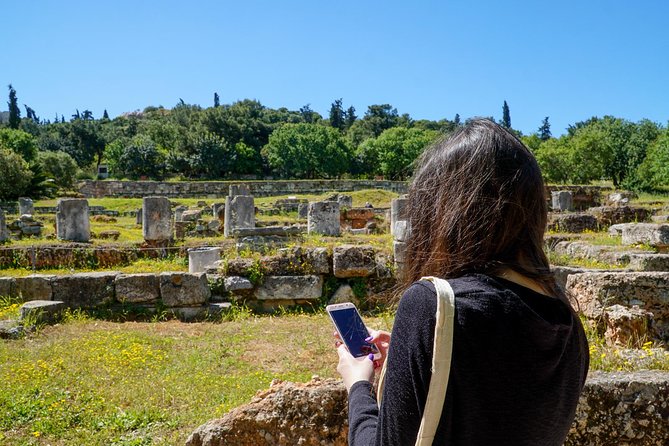
This is an outdoor archaeological site, and the practical advice is straightforward:
- wear comfortable shoes
- use sunscreen and a hat during hot months
- expect that mobile signal may be weak, so don’t count on streaming
Since the tour is designed for offline use, the best move is to treat your phone like part of your gear. Charge it fully the day before. If your battery is iffy, plug in a power bank or plan shorter stops elsewhere so you don’t run out mid-narration.
Also remember what’s required: you’ll need a smartphone (Android or iOS). If you don’t like relying on your phone for directions and audio, you might find the experience frustrating—especially in a place where the ruins can look more alike than you’d expect.
Who this Ancient Agora e-ticket + audio tour is for (and who should think twice)
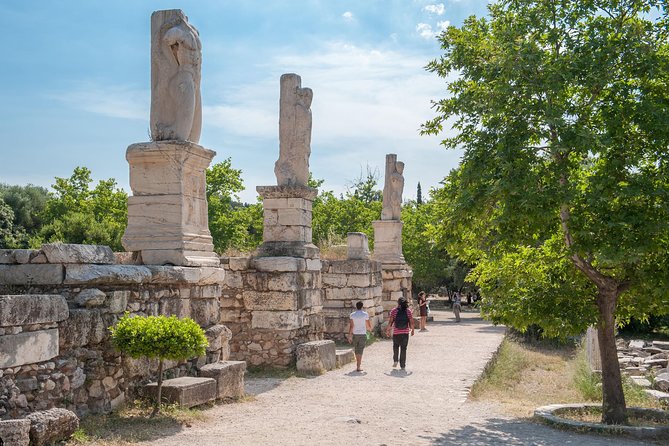
This works best if you:
- want to avoid waiting in lines and prefer a scheduled entry
- like learning at your own pace, without a live guide dictating the timeline
- can handle a self-guided format and follow audio + map prompts
It may be less ideal if you:
- want a heavy instructor-led experience (there is no live guide included)
- rely on clear signage and don’t enjoy using an offline map
- get annoyed when directions don’t match what you see on the ground, since maintenance changes can affect entry/gate details
If you fall in the first group, you’ll likely appreciate how the audio connects Socrates, Pericles, and the Agora’s role in democracy to the physical place. If you fall in the second group, you might spend more time solving navigation puzzles than learning.
Should you book this tour?
Book it if your top priorities are fast-track entry, an offline audio experience, and a flexible visit length that fits into a typical Athens day. The price feels fair because you’re getting admission plus a usable audio tool designed for weak signal conditions.
Skip or reconsider if you hate self-guided tours or you’re only going to do “light listening.” At the Ancient Agora, audio isn’t a nice extra—it’s how the ruins turn into meaning.
If you do book, prep well: download the audio and map before you go, bring headphones, and give yourself a few minutes to get oriented at Stoa of Attalos.
FAQ
How long does the Ancient Agora e-ticket and audio tour take?
Plan on about 1 to 2 hours.
Where does the experience start?
The meeting point is Stoa of Attalos – Museum of the Ancient Agora, Adrianou 24, Athina 105 55, Greece.
Is a live guide included?
No. This is self-guided with a smartphone audio tour.
What’s included in the price?
Your admission ticket, time-slotted ticket service, and a self-guided audio tour with offline interactive map content are included.
Do I need an internet connection during the site visit?
No, the tour is designed for offline use. Still, you should download everything ahead of time, since signal can be weak on-site.
What do I need to bring?
You need an Android or iOS smartphone. Headphones and a smartphone are not included.
Can I use the audio tour on Windows Phones or older iPhones?
No. The audio tour is not compatible with Windows Phones, and it won’t work with certain older iPhone/iPad/iPod models listed in the details.
What happens if I’m late to my time slot?
Your entry is tied to a specific reservation time, and the experience is set up around those time windows.
Are there discounts or free admission for EU citizens or young people?
Yes. EU citizens aged 0–25 have free admission but must wait in line to show ID. Non-EU children up to 5 also need ID and must wait in line. In the stated date range, some visitors aged 6–25 (non-EU) and seniors over 65 (EU/EEA and Greece) may get reduced admission but still have to wait in line for verification.
Is this experience refundable?
No. It is non-refundable and cannot be changed for any reason.