REVIEW · ATHENS
Ancient Agora: Audiovisual self-guided tour with 3D models
Book on GetYourGuide →Operated by Culture App · Bookable on GetYourGuide
Ancient Athens gets a lot clearer fast. This self-guided Culture App tour pairs 3D models with 360° views so the Agora stops being ruins and starts being a working city.
I really like that you get both written and audio historical info for 16 monuments, so you can read when you want and switch to listening when you’re walking. One catch: it’s not a hosted tour, so you’ll need your own smartphone (and ideally headphones) and an internet connection to use it well.
With a 5-day validity window starting from first activation, it also works if you want to revisit later the same trip instead of rushing it all in one walk. (Worth noting: the site entrance fee is extra, since the ticket isn’t included.)
In This Review
- Key things I’d focus on before you go
- Ancient Agora: what you’re walking through
- How the Culture App tour works on your phone
- Your self-guided route through Athens’ political and commercial core
- Democracy, Socrates, and why this place feels different
- Temple of Hephaistos: the stop you’ll get the most from
- Price and value: $7.89 plus the real-world entrance fee
- Tech and timing: what to do before you start walking
- Who should book this Ancient Agora self-guided tour
- Should you book Ancient Agora on the Culture App?
- FAQ
- Is the Ancient Agora entrance fee included in the $7.89 price?
- Do I need internet to use the tour?
- How long is the tour valid after purchase?
- What devices are supported?
- How much storage space do I need on my phone?
- What languages are the audio guides available in?
Key things I’d focus on before you go

- 3D models for 14 monuments help you picture what the stones looked like in real life
- 360° panoramic views for 14 spots make it easier to orient yourself in the Ancient Agora
- Audio and written info for 16 monuments means you’re not forced into one learning style
- Integrated map + monument ID helps you follow the route without constantly guessing
- Videos and related stories for many monuments add context beyond what you can see on the ground
- 68 bonus culture facts (written and audio) are included as a free extra
Ancient Agora: what you’re walking through
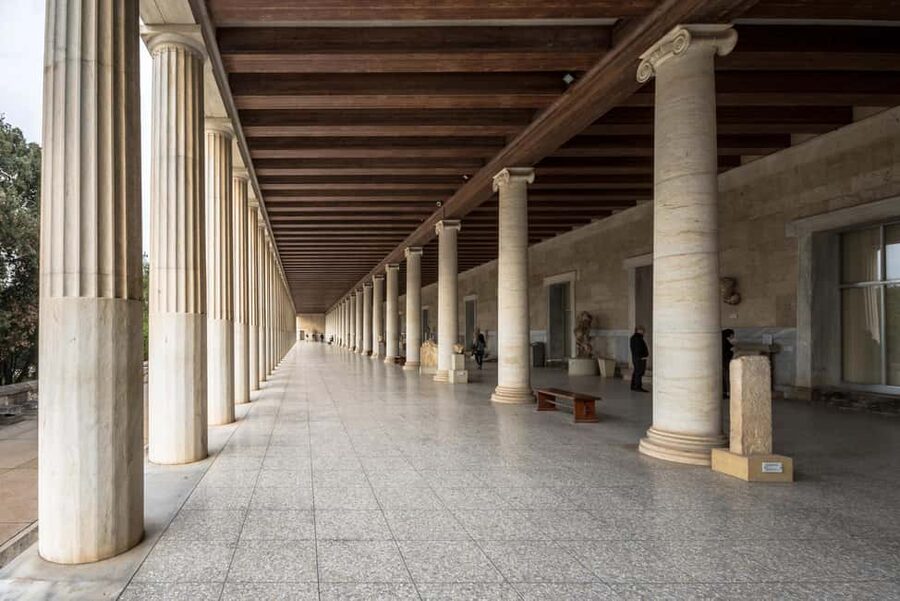
The Ancient Agora is the heart of old Athens. Think of it as the city’s shared space for politics, business, religion, and everyday talk. It was where people met, where deals got made, and where public life ran on rules and arguments—not just gossip and good intentions.
This tour is built around that big idea: the Agora wasn’t one single attraction. It was a mix of places—civil administration buildings, courts, stoas (covered walkways), fountains, workshops, and temples/sanctuaries—all tied together by movement and meetings. The app frames the story around those functions, so you start understanding why certain buildings mattered, not just what they look like today.
A key promise here is that you’ll get the place where democracy was first established, plus areas connected to Socrates and philosophers teaching. Whether you’re a first-time visitor or you’ve been to other Greek sites, this is the part where Athens starts feeling less abstract. You’re not only looking back—you’re seeing how the system worked in public.
You can also read our reviews of more tours and experiences in Athens.



How the Culture App tour works on your phone
This is a self-guided, audiovisual experience. You’re not meeting a guide at a set time, and you won’t hear the same exact script as everyone in a group. Instead, you control your pace and pick what you want to use while you’re outside.
For each monument, you may see several content types:
- Text + audio (for 16 monuments)
- 3D models (for 14 monuments)
- 360° views (for 14 monuments)
- Videos (for 14 monuments)
- Related stories (for 13 monuments)
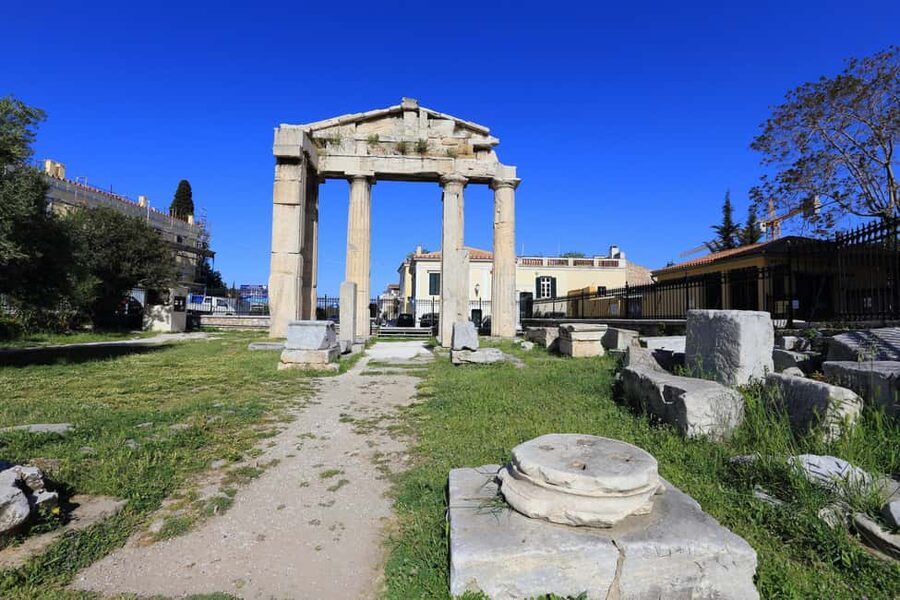
That mix matters because the Ancient Agora can be tricky to read visually. Some sites leave only foundations or partial structures. A 3D model can show you the missing parts, and a 360° view can help you connect the building to the space around it.
You also get an integrated map for monument identification. Translation: less wandering and more knowing what you’re looking at. When you pair that with audio, you can keep moving while the story catches up to you.
One more practical detail: you don’t need a guide service included here, and that’s intentional. The tradeoff is that you’ll want good phone battery habits.
Your self-guided route through Athens’ political and commercial core

Instead of a strict timetable, you’ll move through the Agora by matching what you see to what the app highlights. You’ll cover the Agora’s main “systems,” and that’s where the experience becomes more than a list of stops.
Here’s the kind of progression you should expect while following the integrated map and monument ID features:
Civic administration areas. The app focuses on the Agora as the seat of civil administration. That’s valuable because it explains the civic engine—where official business happened, and how the city managed decisions in public.
Courts and public decision-making spaces. You’ll get content tied to places where justice and public debate played a role. Even if you’re not a legal-history person, this is where you start seeing democracy as action, not a slogan.
Stoas, fountains, and everyday commerce. The tour doesn’t treat the Agora like a museum corridor. You’re shown that it was also a place of trade and daily interaction. Stoas and fountains matter because they explain how people moved and gathered comfortably, especially when the day got hot.
Temples and sanctuaries. Sacred spaces are woven into the Agora’s story. That helps you avoid the common mistake of reading ancient sites like they’re all secular politics. In Athens, religion, civic life, and public assembly overlapped.
Workshops. The included information about workshops adds the human scale. This wasn’t just leaders and speakers; it was also work, production, and the rhythms of ordinary life.
If you use the app as intended, you’ll end with the Agora feeling like a functional district—where different groups showed up for different reasons, all within walking distance.
Democracy, Socrates, and why this place feels different
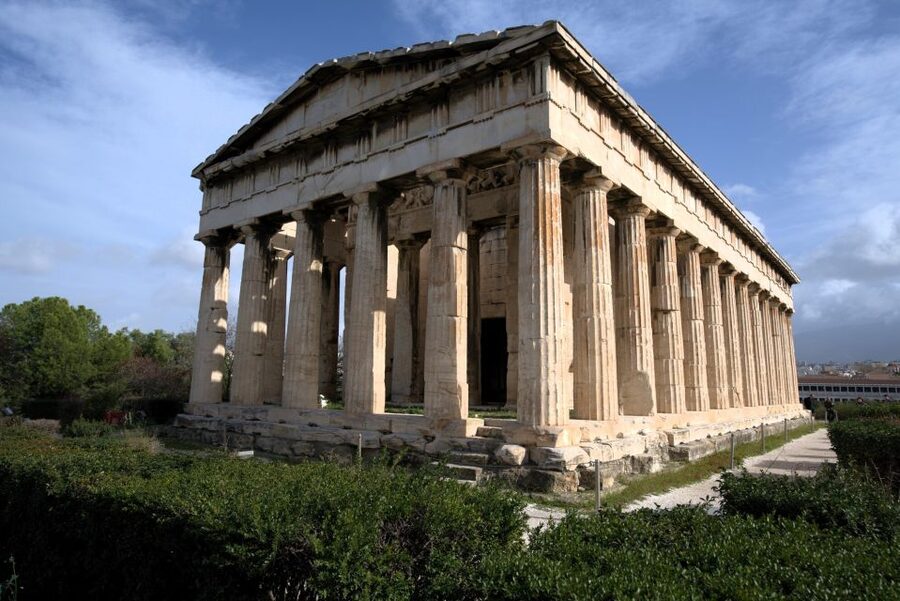
The tour’s anchor points are big, and that’s a good thing. You’re not only seeing ruins—you’re being oriented to ideas.
First, the app highlights the place where democracy was first established in the world’s history. Even if you already know the basics, this framing helps you understand why the Agora was the obvious stage for public decisions. Democracy needs space—space to gather, speak, argue, and vote.
Second, you’ll find content connected to Socrates and philosophers teaching. The practical value here is that it connects philosophy to real public life. In Athens, learning wasn’t confined to private rooms. It happened in the flow of the city.
Here’s how I’d use this section while walking: don’t treat the democracy and Socrates content like separate trivia. Use it to build a mental map of the Agora as a public classroom and a political forum at the same time. That’s when the ruins start to make emotional sense.
Also, if you’re doing a broader Athens trip, the Agora is the piece that connects the dots between what you see at major monuments and what people actually practiced in everyday civic life.
Temple of Hephaistos: the stop you’ll get the most from
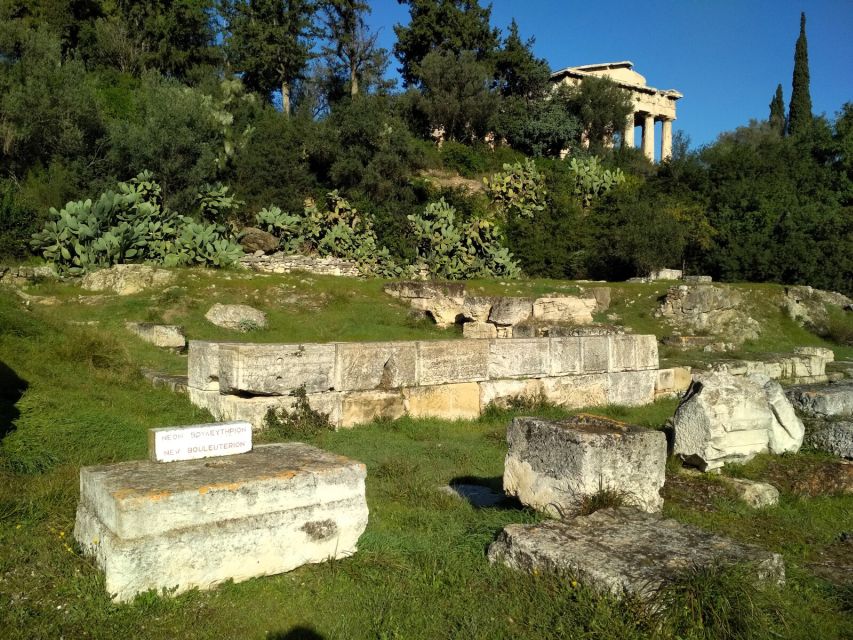
One highlight is the Temple of Hephaistos, described as one of Greece’s finest preserved gems. That’s not just marketing—this is the kind of site where you can actually compare what you see on the ground with what the app explains.
If you want the best payoff from the audiovisual approach, this is a strong candidate. A well-preserved temple gives you real visual anchors, and then the app’s media (3D models, 360° views, videos) can help you connect angles, proportions, and setting.
Practical tip: when you reach the temple area, slow down and watch for how the app describes the surrounding context. The goal is to stop thinking of temples as isolated objects. In the Agora, sacred buildings sit inside civic life.
Even if you’re not especially interested in architecture, the Temple of Hephaistos is where the tour’s tools tend to click hardest, because it’s one of the places where your eye can confirm what your phone is explaining.






Price and value: $7.89 plus the real-world entrance fee
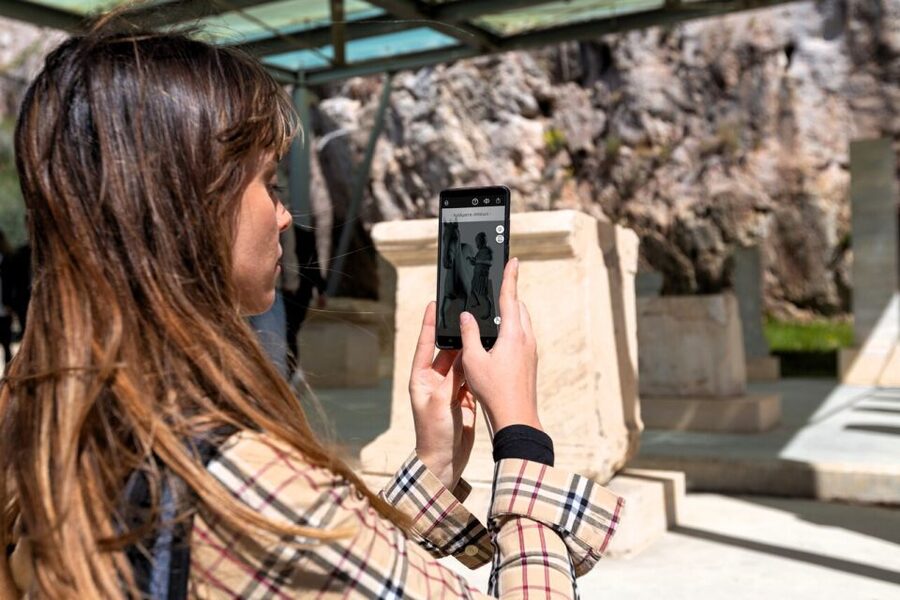
The tour costs $7.89 per person, and the listing is clear that the entrance ticket is not included. Plan on the site fee separately: €10 full or €5 reduced.
So is it good value? In my view, it can be, for three reasons.
First: you’re paying for more than narration. At this price, you’re not just buying audio. You’re getting text for multiple monuments, 3D models for many stops, 360° panoramas, and videos—plus extra written and audio culture facts.
Second: you can reuse the content. The tour is valid for 5 days from first activation. That means you can spread it out over multiple visits to the area instead of trying to “finish” it in a single intense walk.
Third: you get multi-language audio. English, Greek, German, Spanish, Italian, French, Dutch, and Chinese are included. If you’re traveling with someone who learns differently, the content can still work for both of you.
The tradeoff is that you’re responsible for your own tech setup (phone battery, headphones, internet). If you’d rather have someone physically guide you and answer questions on the spot, this may not feel like the best fit.
Tech and timing: what to do before you start walking
This tour depends on your phone, so do a quick prep routine.
Know this:
- Internet access is required to use the tours effectively.
- Download the content on Wi‑Fi before your visit unless you have enough data.
- You’ll need about 200MB of storage.
- Your device should be iOS 11.0+ or Android 5.1+.
- Smartphone and headphones are not included, and you should come with earphones.
Also, after booking, you’ll receive an email from Culture App with instructions. Check spam folders, because these are the sorts of emails that sometimes get filtered.
Here’s my practical timing advice: pick a moment when you can start without rushing. You’ll want your phone charged, and you’ll want to be able to pause when you see a monument match in the app.
One more useful idea: the tour can be used anywhere anytime—before, during, or after your visit—so you’re not locked into a single daytime window. That flexibility is worth something in a city like Athens, where plans change when the weather or your feet decide otherwise.
Who should book this Ancient Agora self-guided tour
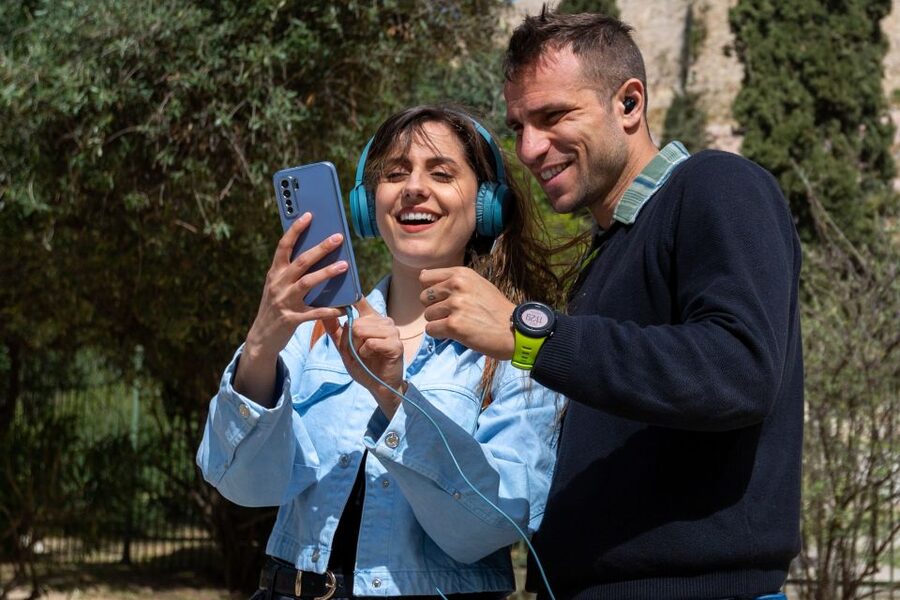
This is a good match if you like to travel with control. You can go at your pace, replay parts, and spend time on the monuments that grab you.
You’ll likely enjoy it if you:
- Want a self-guided Athens experience with solid structure
- Like using media like 3D models and 360° views to understand ruins
- Prefer learning in both audio and text
- Are traveling over a few days and might return to the Agora area
It might be less ideal if you:
- Don’t want to rely on your phone’s battery, data, and storage
- Prefer an in-person guide who can respond to questions as they come up
- Expect a ticket included in the price (you’ll still pay the entrance fee)
Should you book Ancient Agora on the Culture App?
Yes, if you’re the kind of traveler who likes to understand what you’re seeing and you’re comfortable using your phone outdoors. The combination of 3D models, 360° views, and coordinated audio/text for many monuments is the core value, and it pairs well with Athens because the Agora can be hard to interpret at a glance.
Hold off if you hate tech-dependent tours or you’re traveling with limited mobile data. Without downloading and charging properly, the experience can turn into frustrating scrolling instead of meaningful context.
If you do book, plan for the entrance fee on top of $7.89, bring earphones, and give yourself time to wander. When you do, this becomes an efficient way to experience the Ancient Agora as the civic engine it really was.
FAQ
Is the Ancient Agora entrance fee included in the $7.89 price?
No. The entrance fee is not included. The site ticket costs €10 full or €5 reduced.
Do I need internet to use the tour?
Yes. Internet access is required to use the tours effectively, and you’re advised to download the content on Wi‑Fi before your visit.
How long is the tour valid after purchase?
The tour is valid for 5 days starting from the first activation.
What devices are supported?
The self-guided tour requires iOS 11.0 or later and Android 5.1 or later.
How much storage space do I need on my phone?
You’ll need approximately 200MB of storage space.
What languages are the audio guides available in?
Audio is available in English, Greek, German, Spanish, Italian, French, Dutch, and Chinese.