REVIEW · MALAGA
Malaga Historic Centre: Self-guided tour created by Official Guide
Book on Viator →Operated by ontur app · Bookable on Viator
Malaga in one walk. You get a self-guided route through the city’s most important layers, with English audio by Nacho, plus GPS guided directions and photos along the way. I especially like the free-to-pause pacing (no group herding), and the way the narration ties places together—Roman Theatre, La Alcazaba, La manquita, and finally Picasso at Plaza de la Merced.
One catch: the app experience depends on your phone. Some people ran into app/map glitches or had trouble getting directions to the next stop, so build in time to check your route if your signal or settings aren’t perfect.
In This Review
- Key things to know before you go
- Why this Malaga historic-centre route is a smart pick
- Starting at Allegories of Winter and Summer (Alcazabilla)
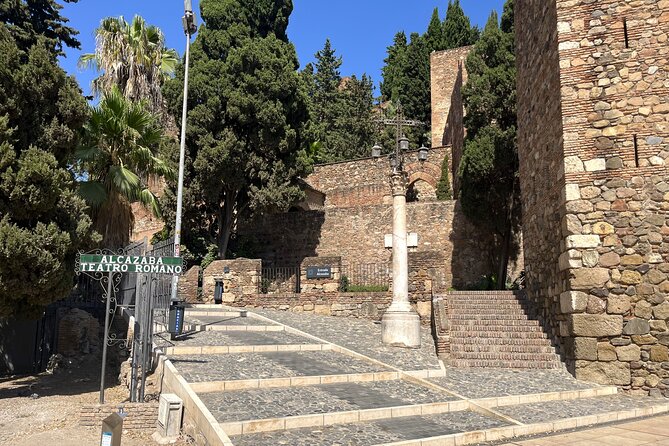
- Roman Theatre, then straight to fortifications: Alcazaba and Gibralfaro
- Customs Palace museum stop: art and archaeology in one place
- Malaga’s best-known shopping street, market time, and a long-running meeting place
- Arab architecture stop: ventilation and military strategy
- Bishop’s Square and La manquita: the cathedral part of the story
- The most visited museum and Malaga’s cultural change
- First Christian Church and the reconquest chapter
- Plaza de la Merced, Torrijos obelisk, and Picasso at the finish
- How to make the app work smoothly (based on real hiccups)
- How long will this take, and why that matters
- Who should book this Malaga historic-centre experience
- Should you book the Malaga Historic Centre self-guided tour?
- FAQ
- How long is the Malaga Historic Centre self-guided tour?
- Is this tour offered in English?
- Does it include a live, face-to-face guide?
- Do I need to buy tickets for monuments?
- What does the ticket include?
- Does it use GPS?
- Where does the tour start and end?
- What app do I use?
- Is the tour available offline?
- Is there a limit on group size?
Key things to know before you go
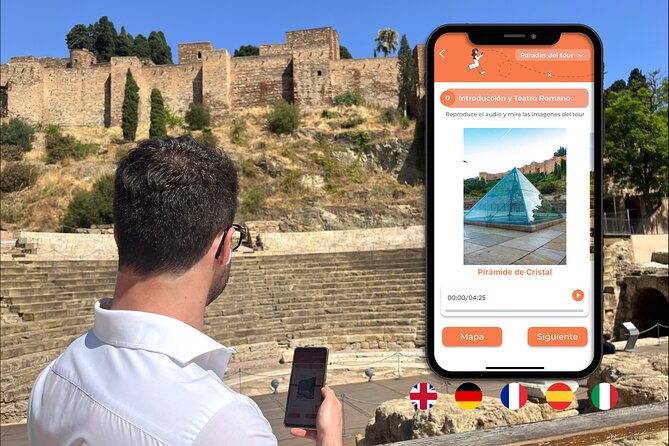
- English audio by Nacho that feels personal rather than robotic
- GPS itinerary plus landmark images to keep you oriented
- Roman Theatre to La Alcazaba to La manquita in one coherent loop
- Food-friendly stops including a traditional market with practical recommendations
- Flexible sightseeing with unlimited access for 14 days
- Map isn’t fully turn-by-turn, so it helps to be comfortable using your phone map
Why this Malaga historic-centre route is a smart pick
This tour works best if you like history, but you don’t want to sprint. You’re not locked into a meeting-time shuffle or stuck with a large group. Instead, you follow the audio as you walk, stop when you want, and keep moving when you’re ready.
I like that the tour is designed around “place-to-place story beats.” You start with Malaga’s early roots (Roman Theatre), then slide into the city’s fortifications (La Alcazaba and Gibralfaro), then move into art, commerce, religion, and the later cultural shift tied to Picasso. It turns a walk across the center into a guided narrative you can control.
Value-wise, the 14-day unlimited access matters. If you’re staying in Malaga a few days, you can repeat sections, pace it differently, or just redo the parts you enjoyed most. No pressure, no rush clock.
You can also read our reviews of more tours and experiences in Malaga.

Starting at Allegories of Winter and Summer (Alcazabilla)
Your tour begins at the Allegories of Winter and Summer on C/ Alcazabilla, 3. This is a good “start point energy” spot because it puts you right where the center starts to thicken with landmarks and stories.
As soon as you start, the audio sets the tone with an introduction to Malaga’s history and points you toward the Roman Theatre. If you’re the type who likes context before you arrive, this helps: you’re not just looking at stone, you’re hearing why that stone matters.
Practical tip: at the start, make sure you’ve got your phone charged and your audio ready. The experience is built around listening, plus using the map/GPS.
Roman Theatre, then straight to fortifications: Alcazaba and Gibralfaro
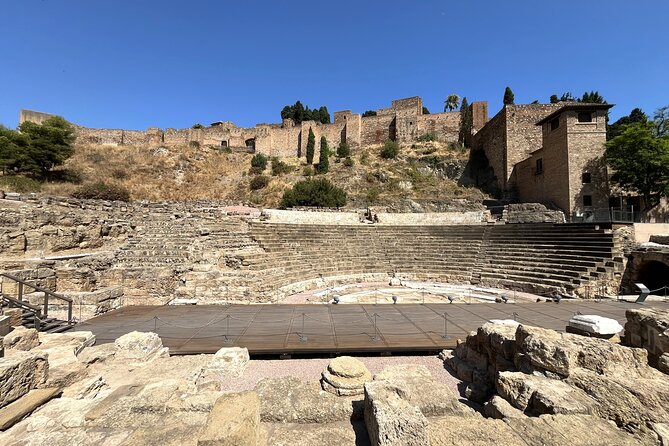
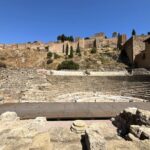
The early part of the route is built around the idea that Malaga didn’t just grow outward—it was defended, rebuilt, and reinterpreted over time. The first stop introduces you to the Roman Theatre, then you move into the story of La Alcazaba, described as the most visited monument in Malaga.
From there, the narration connects La Alcazaba to Gibralfaro Castle. Even if you don’t go deep into architectural details on your own, the audio gives you a framework so your eyes know what to look for as you walk around.
This section is also where self-guided touring shines. If you want to linger at viewpoints or slow down for photos, you can. If you want to keep a steady pace, you can do that too.
Customs Palace museum stop: art and archaeology in one place
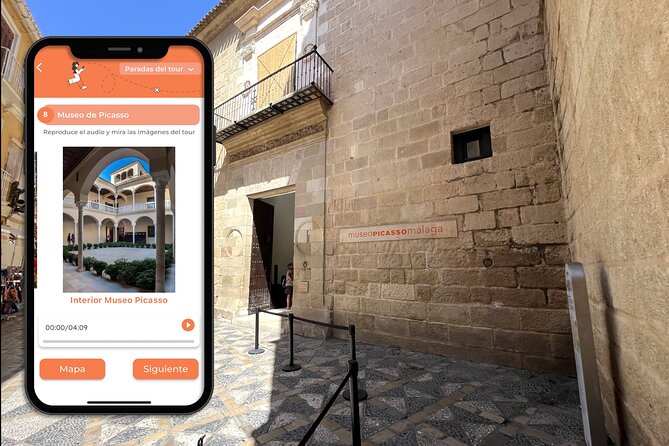
Next you reach the Customs Palace, where the tour stops at a museum with an extensive collection of art and archaeological remains. This is a key “brain break” in the loop. After walking through outdoor landmarks, the museum stop gives you a calmer way to absorb the city’s layers.
What I like here is the specificity: the audio doesn’t treat the museum like a random detour. It frames what you’re seeing as both art and archaeology, so you can understand why the collection matters even without reading every label.
If you’re the kind of visitor who usually speeds through museums, this is a good spot to slow down for a short, focused session.
Malaga’s best-known shopping street, market time, and a long-running meeting place
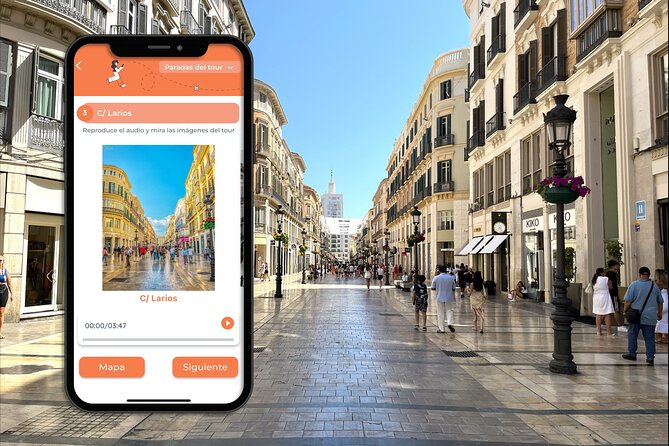
Then the tour shifts from monumental history to everyday life—shopping, eating, and meeting people. It takes you to the best-known street in Malaga, described as one of Spain’s most important shopping streets.
After that, you hit a traditional Malaga market, with built-in gastronomic recommendations. This is one of those “I’m glad the audio includes this” moments. Instead of guessing where to eat nearby, you’re cued to think about what to try in the area as you go.
One more useful piece in this part of the story: the tour highlights a main meeting point of the city since the 14th century. That detail turns the street-level vibe into something more than just foot traffic—you start to see it as a continuing social center.

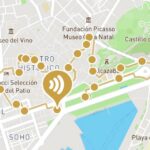
Arab architecture stop: ventilation and military strategy
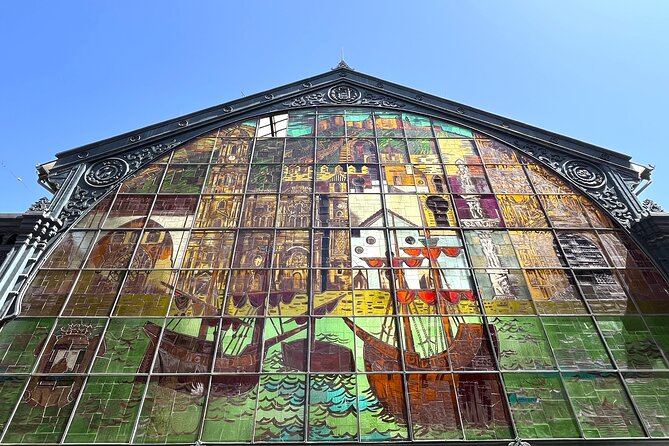
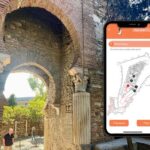
One of the more interesting chapters in the audio is the stop focused on Arab architecture, including ventilation and military strategies. This is exactly the kind of information that makes ruins and old walls feel practical, not just decorative.
Even without being an architecture expert, you can listen for the “why.” Ventilation and defense are two very real design problems. When you understand that the builders were solving everyday comfort and long-term protection, the place starts to make sense in a more human way.
For me, this is a good pause moment. Take a breath, listen carefully, and look at how you’d expect spaces to work when people lived, guarded, and traveled through them.
Bishop’s Square and La manquita: the cathedral part of the story
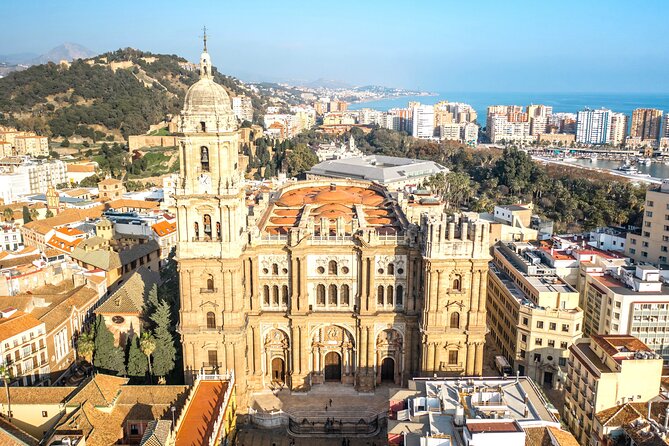
Next up is Bishop’s Square and the Cathedral of the Incarnation of Malaga, known as La manquita. This stop is important because it switches the tone from fortifications and city defense to religious and civic identity.
In a self-guided format, this chapter works because the audio can give you just enough background without forcing you to spend hours reading. You walk into the area already primed for what you’re seeing and why it’s a named landmark.
If you want photos, this is also a likely sweet spot. Plan for a couple quick stops for pictures, then keep the flow going—this tour is at its best when it stays a connected loop.
The most visited museum and Malaga’s cultural change
Then you reach the most visited museum in Malaga, where the audio explains the cultural change of the city. This is where the route starts moving away from older layers and toward later identity—how Malaga shifted over time.
Even if you don’t memorize every point, the pacing helps. You’re not thrown into a museum with zero context; you already have the storyline in your ears. That makes it easier to notice what’s different as the tour shifts from earlier history to cultural transformation.
After this, the audio turns toward Picasso’s story—works and life—which sets up your final stretch.
First Christian Church and the reconquest chapter
The route includes a stop at the first Christian Church and the history of the reconquest of Malaga. This is the kind of segment that can feel abstract if you only read labels, but audio narration tends to make it easier to follow.
Keep your expectations reasonable here: think of it as a narrative guide to the turning points rather than a history class. If you’re the type who loves context, you’ll enjoy this. If you prefer action and scenery, just listen for the key shifts and move with the story.
Plaza de la Merced, Torrijos obelisk, and Picasso at the finish
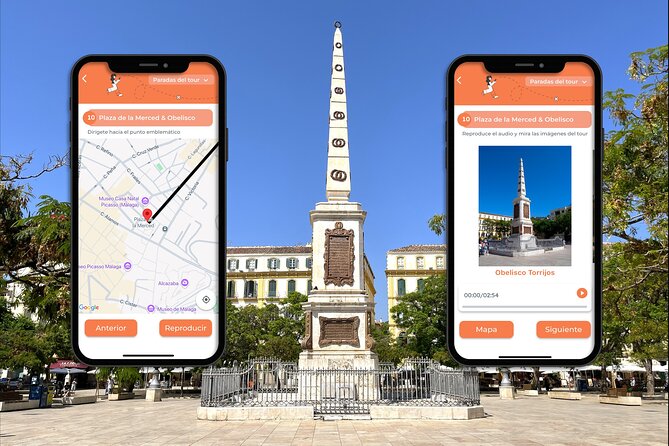
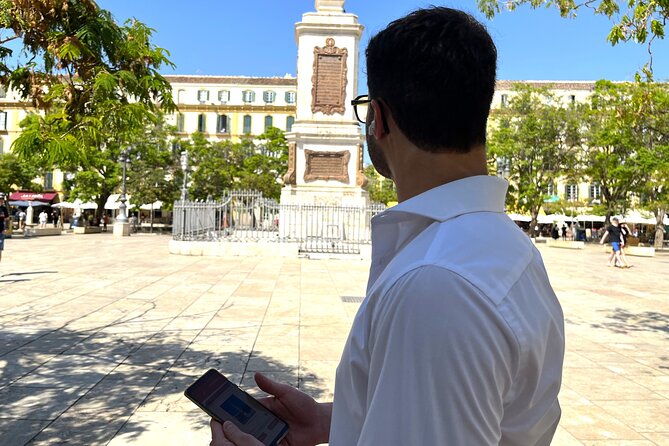
The finale is Plaza de la Merced, featuring an obelisk honoring General Torrijos and his companions. This stop adds a “modern historical memory” feel to the route.
Then the tour lands in the Picasso story—works and life—finishing near the Picasso statue. Ending right by Picasso makes sense because Malaga’s identity in pop culture is hard to separate from him.
If you finish with time and energy, you’ll likely want to wander a bit around the square after the tour ends. The self-guided format gives you a graceful landing: you don’t have to rush out at the exact moment the audio stops.
How to make the app work smoothly (based on real hiccups)
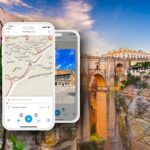
The tour is built around the ONTUR app for Android and iOS, with a mobile ticket and a GPS guided itinerary. It also includes audios created by Nacho, plus images of landmarks.
Here’s the practical checklist I’d follow:
- Enable location services so GPS guidance can do its job. In one reported issue, the tour still had GPS, but the phone’s location settings weren’t working.
- Be ready for the possibility of cellular needs. Some visitors reported the tour wasn’t available offline and had to use mobile data while also using Google Maps for turn-by-turn directions. The provider indicated they’re developing offline functionality.
- Expect map behavior that’s not fully step-by-step. The app may show your location and a route, but it may not give true turn-by-turn instructions. If you’re directionally cautious, plan to use your phone map alongside it.
Also: bring a way to listen. The tour does not include your phone or headphones, so you’ll want your own audio setup.
One more thing: some people mentioned the marketplace closing at 2:00 pm. Since hours can change by day, treat that as a heads-up to not leave market time for the very end of the day.
How long will this take, and why that matters
The tour runs about 1 hour 10 minutes to 1 hour 30 minutes. That range is realistic if you mostly keep moving and stop briefly for photos.
If you tend to linger, you’ll naturally stretch it. That’s not a failure of the plan—it’s the point of self-guided walking. Just don’t schedule a strict next activity immediately after the end unless you enjoy stress.
Who should book this Malaga historic-centre experience
This is a great fit for you if:
- You want a local voice style of history rather than a robotic lecture
- You like walking at your own pace and making spontaneous snack stops
- You’d rather pay for flexibility than join a big group schedule
- You’re comfortable navigating with your phone when needed
It might be less ideal if:
- You strongly need full offline functionality (offline use isn’t clearly guaranteed)
- You hate any chance of app crashes or mapping glitches—one visitor experienced repeated crashes and couldn’t complete the route
If you fall in the middle, I’d still recommend it. Just go in with the mindset of a flexible self-guided walk, not a flawless GPS system like you’d get from a dedicated driver.
Should you book the Malaga Historic Centre self-guided tour?
Yes, if your main goal is a smooth, story-led walk through Malaga’s biggest historical stops—at your own pace, with audio by Nacho and GPS support to keep you moving. The flexibility is the headline here, and it’s backed by a strong overall rating.
Book with care if you’re counting on fully offline use or perfect turn-by-turn directions. Bring a charged phone, turn on location services, and plan your day with a little buffer for navigation.
If you want, tell me your travel dates and what else you plan to do that day (museum time, beach time, tapas crawl). I can suggest a smart order that pairs well with this route.
FAQ
How long is the Malaga Historic Centre self-guided tour?
The tour is approximately 1 hour 10 minutes to 1 hour 30 minutes.
Is this tour offered in English?
Yes, it’s offered in English.
Does it include a live, face-to-face guide?
No. The tour is self-guided and does not include face-to-face guidance.
Do I need to buy tickets for monuments?
Yes. Tickets to the different monuments are not included.
What does the ticket include?
You get a mobile ticket and unlimited access to the tour for 14 days.
Does it use GPS?
Yes, it includes a GPS guided itinerary. You may need to have your phone’s location settings enabled.
Where does the tour start and end?
It starts at Allegories of Winter and Summer, C/ Alcazabilla, 3 (29015 Málaga) and ends at Pl. de la Merced, 16 (29012 Málaga), next to the Picasso statue.
What app do I use?
You use the ONTUR app (available for Android and iOS).
Is the tour available offline?
Offline use isn’t confirmed as fully available. Some feedback indicated it wasn’t available offline, and the provider said offline functionality is being developed.
Is there a limit on group size?
The tour has a maximum of 1,000 travelers. Service animals are allowed, and it’s near public transportation.