REVIEW · NASHVILLE
Self-Guided Audio Driving Tour in Natchez Trace Parkway
Book on Viator →Operated by GuideAlong (GyPSy Guide) · Bookable on Viator
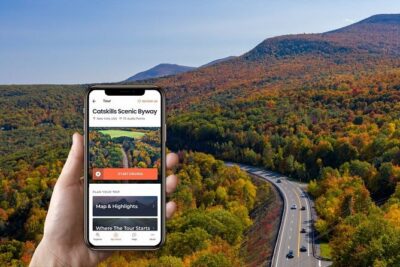
Cars become history lessons on Natchez Trace. This self-guided drive turns your car into a moving tour stop, using GPS-triggered audio to play stories and directions as you pass key points along the Natchez Trace Parkway. I like the freedom here: you can go at your pace, pause when something catches your eye, and build a route that fits your day.
Two things I really appreciate are the offline-ready audio (so you are not hunting for cell service) and the clear, location-based narration that tells you what to look for as you arrive. One consideration: the whole experience depends on getting the app and tour downloaded and signed in ahead of time, so if you arrive unprepared you may run into setup headaches.
In This Review
- Key Highlights You’ll Actually Feel While Driving
- How the GPS Audio Driving Tour Works On Natchez Trace
- What 4 to 5 Hours on the Parkway Really Gives You
- Stop 1: Natchez Trace Parkway and Its Time-Travel Layout
- Stop 2: Jackson Falls for the Best Waterfall Effort
- Stop 3: Leiper’s Fork—Small-Town Stops and Music-Industry Magic
- Stop 4: Meriwether Lewis Park and the Grinder’s Stand Story
- Stop 5: Muscle Shoals—Pick Your Hits From the Quad City Area
- Stop 6: Natchez Trace Parkway Bridge for the Photo Stop
- Stop 7: Old Trace Drive—Driving Part of the Original Route
- Stop 8: Rock Spring and the Square Stepping Stones Moment
- Stop 9: War of 1812 Memorial and Why the Trace Mattered
- Price and Value: What $16.99 Per Group Buys You
- The Practical Setup That Makes or Breaks Your Day
- Who This Natchez Trace Audio Drive Fits Best
- Should You Book This Self-Guided Natchez Trace Parkway Drive?
- FAQ
- How much does the Natchez Trace Parkway self-guided audio driving tour cost?
- How long should I plan for this tour?
- Does the audio tour work offline?
- What language is the tour available in?
- Which parts of the Natchez Trace does the tour cover?
- Where does the tour start and end?
- Do I need to bring food, drinks, or snacks?
Key Highlights You’ll Actually Feel While Driving
- GPS location-based audio plays as you move, so you’re not stuck staring at a map
- 255+ audio points means more than just the big landmarks—expect lots of small stories along the way
- A payoff-rich route with free stops like Jackson Falls, the Parkway Bridge, and short walks
- Muscle Shoals choice options let you pick a few hits instead of feeling forced to do everything
- Go either direction and still follow the same overall idea of the Tennessee and Alabama drive
- Private, group-in-one-vehicle pricing makes it easy to explore without paying per person
How the GPS Audio Driving Tour Works On Natchez Trace
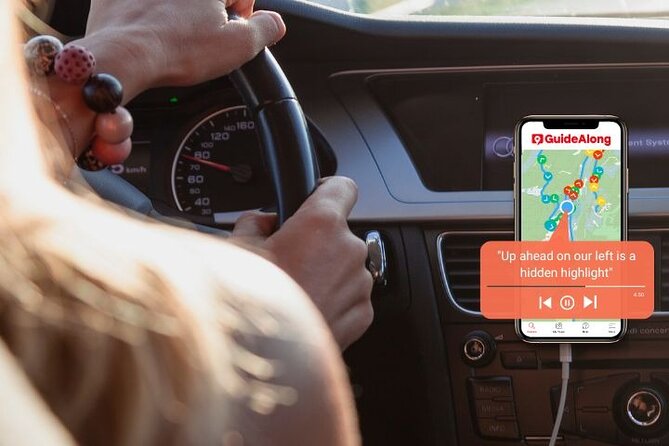
This tour is self-guided, but it does not feel like a loose collection of pins. Your phone listens for where you are, then the audio starts automatically based on your GPS position. That matters on the Natchez Trace Parkway, where the best moments often arrive in stretches—overlooks, trailheads, and pull-offs where you only get a few seconds to decide to stop.
You get access to the GuideAlong (GyPSy Guide) audio tour through the GuideAlong app. After booking, you receive an email and text with instructions to download the tour—there’s a link that tells you how to sign in with your Apple or Google account and redeem a voucher code. From there, you download the tour under My Tours, then you can start and preview the route.
Here’s the practical part: download over Wi-Fi or cellular data before you drive, because once the audio is downloaded, the tour is designed to work offline. You still need your phone powered, though, so pack a USB/C car charger. On a 4–5 hour outing, battery anxiety can kill the vibe.
You can also read our reviews of more tours and experiences in Nashville.



What 4 to 5 Hours on the Parkway Really Gives You
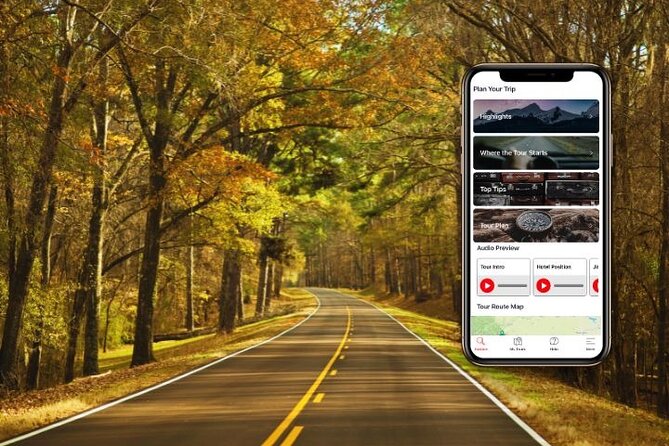
The whole “Natchez Trace Parkway” concept is about pace. This route is a ribbon of parkway that runs through calm countryside and occasional urban edges, tracing older travel paths used long ago by Native Americans and later by European explorers and traders. Your audio tour covers the Tennessee and Alabama portions, and you can drive it in either direction.
That direction flexibility is more useful than it sounds. If you’re already in Nashville and want a loop-style day, you can choose how you approach the drive. If you prefer to finish with the most photogenic stretch, you can time your stops so the best moments land when the light is kind.
You are given a range of about 4 to 5 hours for the tour experience (plus any time you add for walking). Each major stop is typically around 15 to 30 minutes, so you can keep things moving without feeling rushed. And because you’re controlling the pace, you can stop for an extra photo—or skip a stop—without messing up a group schedule.
Stop 1: Natchez Trace Parkway and Its Time-Travel Layout
Your tour starts along the Natchez Trace Parkway with an orientation-style drive segment (about 30 minutes). This is the “why” of the whole trip. The parkway follows the older Trace routes—historical trails that carried people through this region long before highways existed.
If you’re into scenery plus context, this opening works because it frames what you’re seeing. You’re not just driving through trees and overlooks; you’re learning why the route mattered and how it fits into the American story of exploration and travel.
A practical note: since this is the beginning of the experience, make sure you’re ready to listen. Once your audio is playing, you’ll get the best results if you follow the GPS prompts rather than multitasking too hard.
Stop 2: Jackson Falls for the Best Waterfall Effort
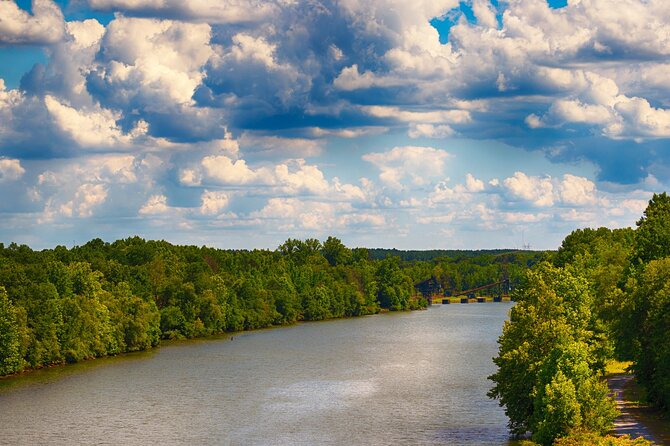
Jackson Falls is the kind of stop that fits even a tight schedule. It’s free, close enough to be a quick win from the Nashville area, and it’s about 30 minutes at the top plus optional walking.
From the top, the view is satisfying. But the bigger payoff comes if you walk at least partway down the path. Continuing farther toward the bottom reveals a clear pool and water stepping down a limestone outcropping.
If you only have energy for one “stretch your legs” moment, this is a strong candidate. It gives you both quick scenery and a chance to get closer to the water without turning your day into a marathon.
Stop 3: Leiper’s Fork—Small-Town Stops and Music-Industry Magic
A short side trip (about 5 minutes off the Parkway) takes you to Leiper’s Fork, a small community with style. Plan around 30 minutes for browsing.
What you do here is simple: explore the selection of stores, restaurants, and galleries at a relaxed speed. The best part, if you love quirky Americana, is the possibility of spotting big country music names. The tour does not list specific celebrities, so treat it as a fun maybe rather than a promise—but the vibe is real.
This is also one of those stops where you can adjust based on your day. If you’re hungry, it’s an easy place to eat. If you’re just window-shopping, it still feels rewarding because the town itself is the attraction.


Stop 4: Meriwether Lewis Park and the Grinder’s Stand Story
Next up is the Meriwether Lewis Park and Monument area (about 30 minutes). This stop adds depth to the American West-adventure story that started with Lewis and Clark.
You’ll find a Monument to Lewis, plus a reproduction of Grinder’s Stand, described here as the lodging where Lewis’ life came to an end. The tone matters: this is not presented as a sad detour. It’s an interesting visit that connects a major expedition to the reality of where it ended.
There’s also a major campground and some pleasant short trails. So even if you’re not aiming for a long hike, you can get a stretch without having to commit to hours of walking.
Stop 5: Muscle Shoals—Pick Your Hits From the Quad City Area
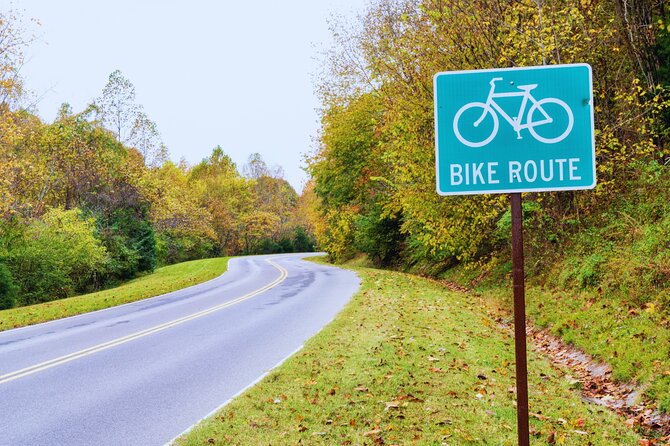
Muscle Shoals is optional in the sense that you can choose how much you do, but it’s hard to justify skipping if you have any interest in music, design, or notable museums. The stop is structured around “five places of interest,” and you can do one, several, or all of them.
Time-wise, driving off the Trace to the closest site takes about 20 minutes, so you’re not losing your whole day to logistics.
The five options include:
- Ivy Green, the Helen Keller childhood home
- The Alabama Music Hall of Fame
- Muscle Shoals’ two iconic recording studios
- The Florence Mound and Museum
- The Rosenbaum House, designed by Frank Lloyd Wright
Here’s how to choose without overthinking: think about what you’d happily spend money on even at home. If you love music, aim for the studios and the Music Hall of Fame. If you prefer architecture or “place as story,” the Rosenbaum House and the mound/museum approach can feel especially satisfying.
You’ll want to budget closer to the top end of the time estimate if you try to do multiple locations in one go. The good news is the tour plan supports picking a few and leaving time for the rest of your drive.
Stop 6: Natchez Trace Parkway Bridge for the Photo Stop
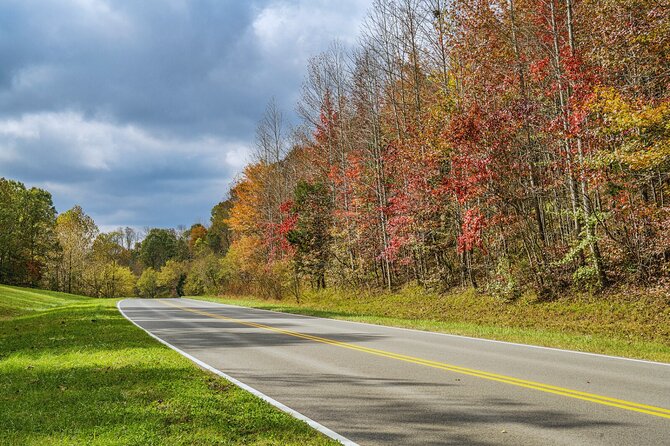
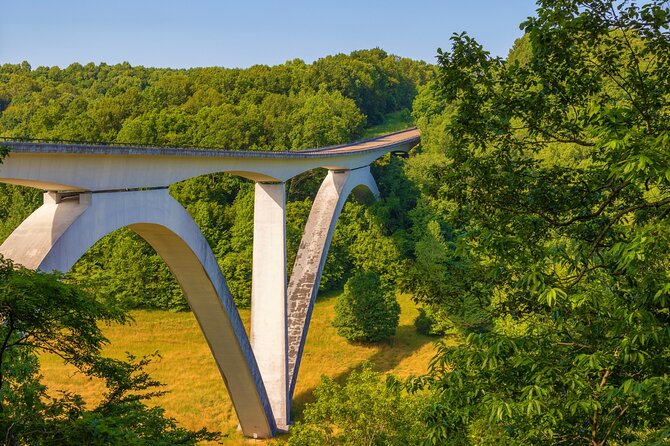
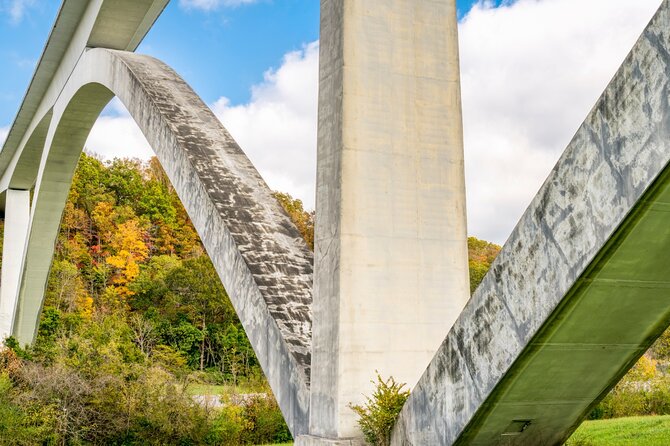
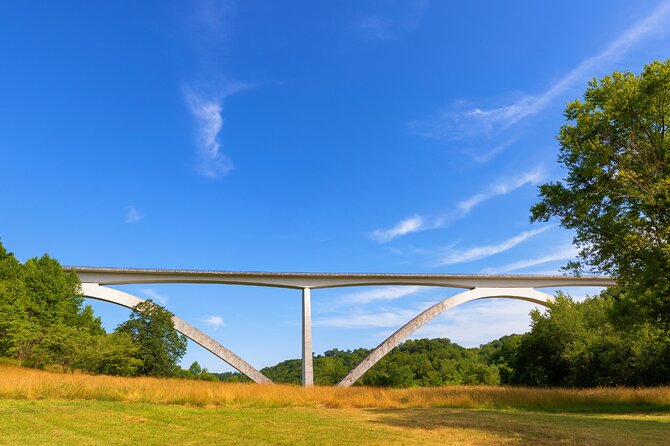
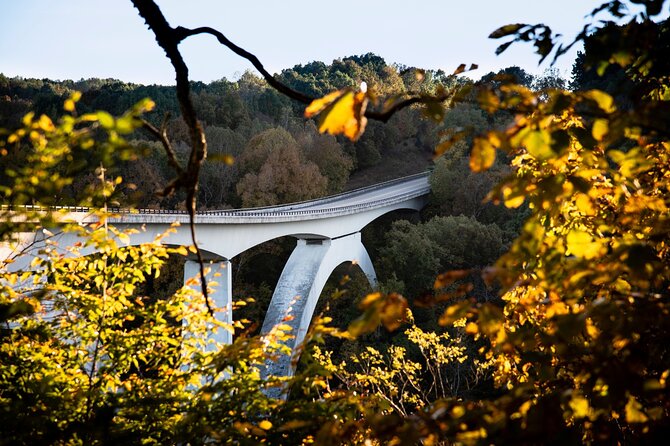
The Natchez Trace Parkway Bridge is quick but memorable. It’s one of the last major additions that completed the Parkway’s uninterrupted path, and it’s described as visually stunning.
This is the stop where you pull over, take the picture, and keep things moving (about 5 minutes). If you’re doing this drive in any kind of daylight, don’t rush through it. This is the kind of structure that looks better the moment you step out and actually look across the valley, not just through a passing windshield.
Stop 7: Old Trace Drive—Driving Part of the Original Route
Old Trace Drive is one of the rare places where you can drive on the true original Trace route. It’s a narrow, one-way section of about 2.5 miles, and the route includes excellent views while still following the historic path.
Expect around 30 minutes here. This is the stop that feels most like you’re “doing it the way it was done,” except you’re doing it in a modern car. It’s short enough to fit into the tour without stress, and it’s different enough from the rest of the Parkway stops that it earns its time.
Stop 8: Rock Spring and the Square Stepping Stones Moment
Rock Spring is a simple stop with scenery that feels instantly peaceful. It’s about 15 minutes.
You’ll notice square stepping stones crossing Colbert Creek on the trail to the natural spring. It’s not a huge production, but it’s the kind of detail that turns a quick stop into a small memory.
If you like micro-adventures—short walks, odd little landmarks, and the sense that nature is doing its own thing—this stop will land well.
Stop 9: War of 1812 Memorial and Why the Trace Mattered
Finish with the War of 1812 Memorial (about 30 minutes). This is where the route’s “why” tightens up again.
The Trace was used to move troops and cavalry, including Andrew Jackson in 1813. The memorial honors those who marched the route, especially those who died and were buried in unmarked graves.
This stop is quiet by design. It gives you a real sense of the cost behind the movement of people through the landscape. If you tend to rush through memorials, slow down here. The audio context helps you understand why this small marker matters.
Price and Value: What $16.99 Per Group Buys You
At $16.99 per group (up to 8 people), this is priced for families, friends, and couples in one car. The value jumps when you think in terms of group cost, not per-person cost.
Let’s do the simple math: if you fill the group limit, you’re looking at roughly $2 per person for the audio tour experience. Even if you have fewer people, you’re paying for one vehicle setup—so it still usually pencils out well compared to paying per person for something else.
Also, several key stops are free (Jackson Falls, Leiper’s Fork, Lewis Park, Muscle Shoals options, Parkway Bridge, Old Trace Drive, Rock Spring, and the War of 1812 Memorial). That means the main cost you control is your time and any food you decide to buy.
You do not get food or drinks included, so treat this as a sightseeing base plan. If you want a day with meals planned, you’ll need to budget for it separately.
The Practical Setup That Makes or Breaks Your Day
This is a self-guided GPS audio tour, so your success depends on setup.
Before you start driving:
- Download the tour in the GuideAlong app under My Tours
- Sign in using the same Apple or Google account linked to your voucher redemption
- Charge your phone and bring a USB/C car charger so audio stays reliable
Once you’re rolling, plan to use the tour’s location-based prompts instead of trying to track everything mentally. With GPS audio, the best strategy is to let the narration tell you when to look and when to pull off.
Also note the audio tour is private for your group. That’s a good fit if you want a quieter experience and don’t want to worry about keeping pace with other cars or strangers.
Who This Natchez Trace Audio Drive Fits Best
I think this tour is a strong match if you:
- Prefer self-paced driving over a formal guided group
- Want history and storytelling without giving up scenic time
- Like flexible “pick your own stops” travel days
- Are traveling with a group that can share the one-vehicle purchase
It may not be ideal if you:
- Hate app-based travel or you’re prone to last-minute tech issues
- Want someone to talk directly to you the whole time (this is audio + GPS, not a live guide)
The experience is designed for most travelers, and it runs daily from 12:00 AM to 11:59 PM, so you can choose daylight hours based on comfort and photo timing.
Should You Book This Self-Guided Natchez Trace Parkway Drive?
If you want a smooth, low-pressure day with GPS-triggered stories, a handful of memorable stops, and the ability to go offline once downloaded, I’d book it. At $16.99 per group, the math works even better if you’ll have multiple people in your car.
The only real reason to hesitate is the dependency on proper app setup. Your day can go perfectly—or feel frustrating—if the audio doesn’t load how it should. So if you’re the type who always plans a little tech time, this is a great match. If not, give yourself extra time to download and test before you hit the road.
Overall, the tour has a 3.9 rating from 7 reviews, which suggests a generally solid experience with a few tech hiccups for some people. That’s not unusual for modern audio travel, but it’s enough to take preparation seriously.
FAQ
How much does the Natchez Trace Parkway self-guided audio driving tour cost?
It costs $16.99 per group, with a maximum group size of up to 8.
How long should I plan for this tour?
Plan on about 4 to 5 hours for the experience.
Does the audio tour work offline?
Yes. After you download the tour in the GuideAlong app, you do not need internet or cell service to use the audio while driving.
What language is the tour available in?
The tour is offered in English.
Which parts of the Natchez Trace does the tour cover?
This tour covers the Tennessee and Alabama portions of the drive, and you can drive it in either direction.
Where does the tour start and end?
It starts on the Natchez Trace Parkway in Nashville, TN 37221, USA, and it ends back at the same meeting point.
Do I need to bring food, drinks, or snacks?
Food and drinks are not included, so you’ll need to plan your own meals and refreshments.