REVIEW · CASCAIS
Cascais Scavenger Hunt and Sights Self-Guided Tour
Book on Viator →Operated by Explorial · Bookable on Viator
Turn a city walk into a game.
This Cascais scavenger hunt by Explorial is a self-guided, English-language walking route that turns sights into mini challenges. You follow hints on an app map to reach places like Marina de Cascais, then you earn points by solving sight questions and quick photo prompts.
I also like that it helps you learn without feeling like a classroom. The questions are tied to what you’re looking at—signs, pictures, and on-site details—so you naturally pay attention as you move. The one drawback to plan for: the hunt can mean a lot of screen time, so it’s easy to lose the moment if you’re constantly checking directions.
The good news is you’re not locked into a set schedule. After you start at Restaurante Casa Velha (Av. Valbom 1), the experience is not limited in time, and you can take breaks as you go.
In This Review
- Key highlights you’ll actually care about
- How this Cascais scavenger hunt works (and why it’s fun)
- Start at Restaurante Casa Velha, then aim for the waterfront mood
- Marina de Cascais: your first “win” sight
- Palacio Seixas: where questions turn into real learning
- Bairro Amarelo and Praia de Santa Marta: fun zones for photo challenges
- The route question: why it can feel short and repetitive
- Navigation with the app: helpful, but don’t lose the moment
- Price and value: $9.30 worth it for the way you’ll use it
- Who should do this (and who should rethink it)
- Timing tips: start when the town feels right to you
- Should you book the Cascais scavenger hunt?
- FAQ
- FAQ
- How long does the Cascais scavenger hunt take?
- Is the tour timed?
- Where do I start?
- Where does it end?
- What do I get after booking?
- What language is it offered in?
- Is this activity private?
- Can I cancel for free?
- Are service animals allowed?
Key highlights you’ll actually care about
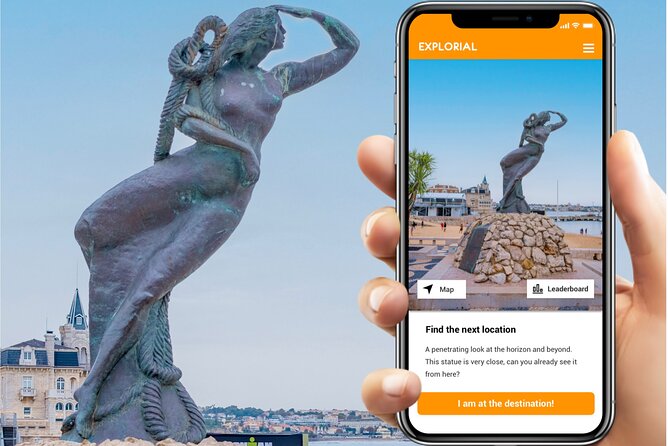
- App-based hints and map keep navigation easy without needing a guide standing next to you
- Sight questions help you read what’s in front of you, not just pass it by
- Photo tasks reward creativity, so you’re not just walking—you’re composing
- Key stops include Marina de Cascais and Palacio Seixas, with other famous areas along the way
- Flexible pacing: the tour isn’t timed, and it ends back where you started
How this Cascais scavenger hunt works (and why it’s fun)

Think of this as a choose-your-own-pace city walk, but with goals. Once you buy the ticket, you get an access code for the app. You download the app, go to the starting point at Restaurante Casa Velha, and then you’re ready to begin.
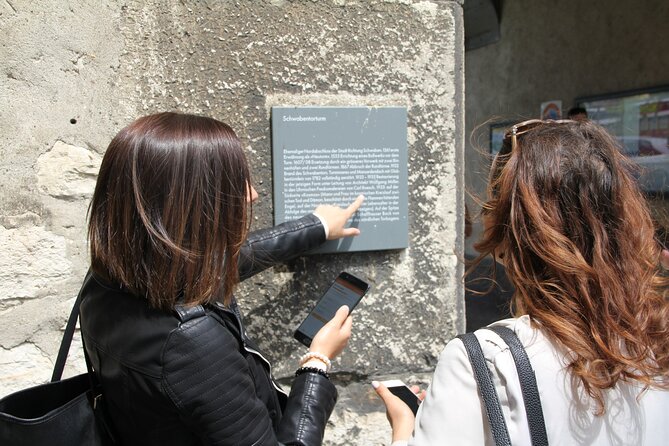
The game loop is simple: you move to a suggested spot using the map function, then you answer questions connected to that sight. Many of the answers are meant to be found on-site—often in signage or visual displays—so it feels like you’re learning while you’re doing. That matters in Cascais, because the town is pretty, but you can also spend a lot of time just wandering without a plan. This gives you a reason to slow down.
You’ll also hit photo tasks. These aren’t the usual “take a photo here” instructions. They’re described as requiring creativity, and the game awards points if you nail the shots. If you enjoy snapping images anyway, you’ll probably have fun here because the game nudges you to look for angles and details you might skip on a normal walk.
One more practical note: this is a private activity, meaning only your group participates. If you’re traveling with family or friends and you want a low-stress shared plan, that’s a plus.
Start at Restaurante Casa Velha, then aim for the waterfront mood
Your meeting point is Restaurante Casa Velha, Av. Valbom 1, 2750-508 Cascais, Portugal. The tour ends back at the same spot, so you’re not stuck guessing how to get home after you finish.
The experience can be started anytime during its listed operating window (the hours shown cover the full day). In plain terms: you don’t need to rush. You can go when you’re ready, take your time, and still finish within a typical 1–2 hour flow.
Starting near a real restaurant area is smart for a self-guided game. Even if you’re arriving on foot or using public transport nearby, you get a clear anchor point. And because Cascais is walkable in sections, beginning with a recognizable hub makes the app route feel less like an abstract scavenger hunt and more like a street-level adventure.
I like that the pacing is flexible. Since the hunt is not limited in time, you can stop for a coffee or watch the coastline for a minute without worrying you’re “behind.” That’s especially helpful if you’re traveling with kids or just don’t want the pressure of a tight schedule.
Marina de Cascais: your first “win” sight
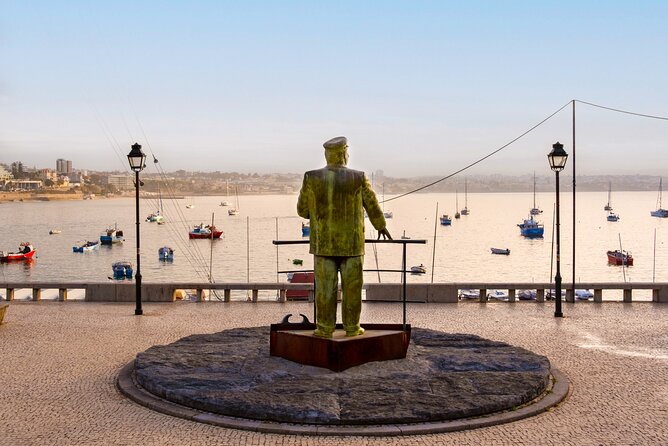
The route’s first stop is Marina de Cascais. This is a solid choice for a beginning point because it sets the tone fast: you get water views, a sense of place, and a visual zone that feels like it belongs on a postcard.
As the first clue area, the Marina also helps you get comfortable with the app. The early part of most self-guided games is the hardest—figuring out how the hints work, how the map updates, and what the questions expect. Starting here means you’re already in a lively area, so even if you take a moment to learn the rhythm, you’re not wandering in silence.
If you like getting your bearings quickly, you’ll probably appreciate how the hunt makes the start feel intentional. Instead of trying to memorize streets, you’re solving tasks step by step, and that structure reduces decision fatigue.
Palacio Seixas: where questions turn into real learning
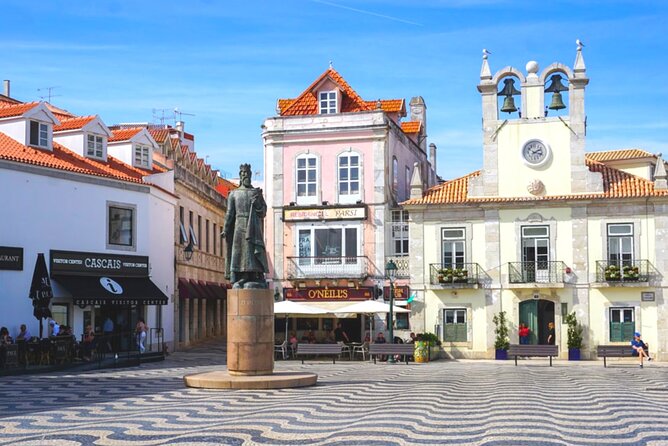
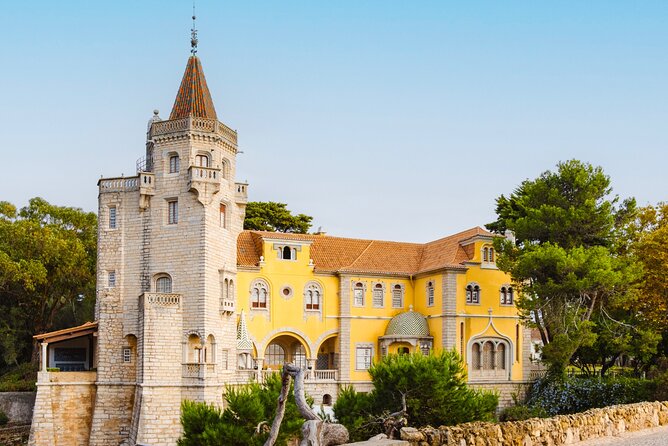
The next listed stop is Palacio Seixas. This part of the experience leans into “look closer” mode. Sights like palaces can be easy to glance at, especially when you’re just walking past. Here, the game asks questions tied to what you see, which encourages you to slow down and actually read the cues around the building.
That’s a big part of why this hunt scores well for value. For a low price, you’re not only walking between landmarks—you’re turning them into short lessons. The questions are described as often hidden in signs or images, so you get a guided feeling without a traditional guide.
One thing to keep in mind: palaces and similar sites can be detail-heavy. If you’re prone to moving fast, you might miss the information the game is pointing you toward. So I suggest you give each stop a little time—enough to answer the question properly—rather than sprinting to the next point.
Bairro Amarelo and Praia de Santa Marta: fun zones for photo challenges
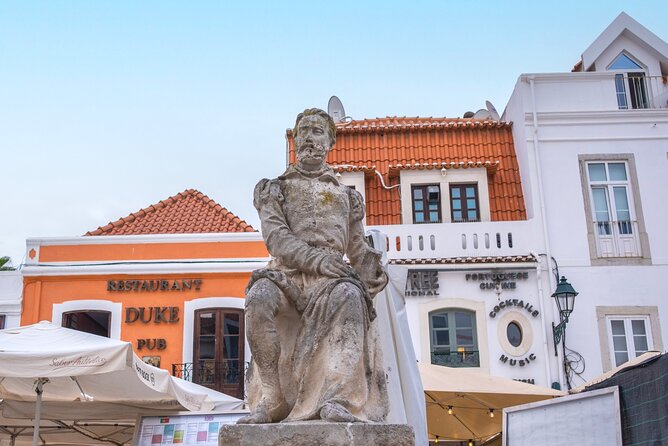
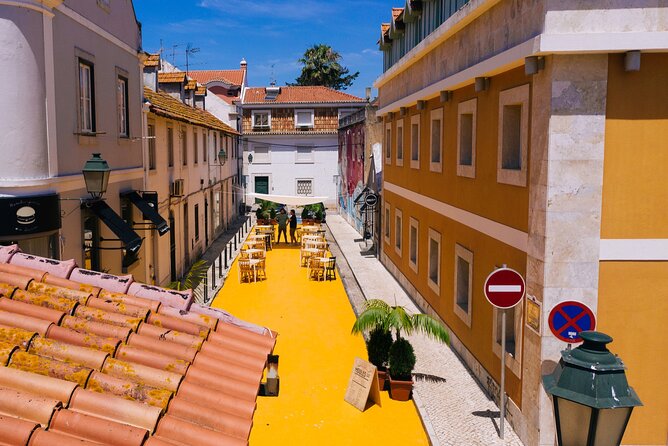
Along the way, the route reaches areas including Bairro Amarelo and Praia de Santa Marta. Even though the exact stop sequence beyond the first two isn’t spelled out in detail here, these are clearly part of what the game is steering you toward.
This matters because these areas fit the “photo task” style of gameplay. Coastal towns are made for pictures, but the best photos aren’t always the obvious ones. When the game prompts creativity, you end up looking at street angles, color details, and shoreline framing rather than only photographing the broad view.
Praia de Santa Marta gives you the classic ocean backdrop energy. If you’re traveling outside of peak season, you might find the atmosphere calmer, but the game still gives you a reason to stop and work for a shot. Bairro Amarelo adds a more neighborhood feel—good for close-up images and for spotting small-town details that make Cascais feel lived-in.
If you’re the type who likes to turn travel days into a camera roll, these zones are the payoff. If you’re not, the tasks still give you a simple mission—find the angle, answer the question, collect the points—without needing extra planning.
The route question: why it can feel short and repetitive
One downside to be aware of is that the route is on the shorter side and concentrated around a small perimeter. That can be great if you have limited time in Cascais—this tour is designed for a quick, focused walk that can fit into a packed day.
But if you crave long, meandering wandering, you may feel boxed in. There’s also mention of the route taking you back across the same road multiple times. That kind of back-and-forth can be frustrating if you were hoping for variety across totally different neighborhoods.
Here’s how I’d handle that: treat the hunt as the framework, not the whole day. When you finish, don’t immediately call it quits. Walk a parallel street or two off the main route to explore what’s next door. Cascais is full of charm close to the obvious roads, and you’ll get a better mix of “game highlights” plus real free browsing.
The goal is balance: use the hunt to avoid wasting time guessing where to go, then expand on your own once you’ve completed the game.
Navigation with the app: helpful, but don’t lose the moment
The app is central to this experience. The map function gets you from clue to clue, and the access code is how you unlock the game inside the app.
That said, the biggest practical risk is staring at your phone too often. The game structure requires you to check hints and directions, so it’s easy to feel like you’re walking with your head down. One way to reduce that is to group your movements: check the map, walk a block or two, then look up again. Also, when you arrive at a stop, pause and focus on the signage or visuals before checking the app again.
If you’ve ever done a self-guided walking tour that felt like a constant screen stream, you’ll want to manage your pace here. The prize is worth it: the app makes the route easier, and the tasks keep your brain engaged. Just don’t turn it into a full-time job.
Price and value: $9.30 worth it for the way you’ll use it
At $9.30 per person for an experience averaging 1–2 hours, the value is mostly in how much structure you get for very little money. You’re not paying for a human guide, but you are paying for guided momentum: a route, a set of tasks, and a game mechanic that encourages learning.
For me, the best value equation is this: you’re buying the difference between wandering randomly and walking with a purpose. Cascais can be pretty enough that you don’t need a lot of help visually, but without a plan it’s easy to miss details. This hunt keeps you busy and helps you notice what the town is showing you.
It also works across travel styles. If you’re solo, you’ll enjoy the clear route. If you’re with friends or family, it becomes a shared activity with points and photo prompts. Since it’s private for your group, you’re not waiting on strangers or coordinating with a big tour pack.
If you only have a short window in Cascais, this price and format make it one of the easiest ways to get a lot of key places in a single walking session.
Who should do this (and who should rethink it)
This works well if you want a mix of walking, light competition, and learning-through-looking. It also seems like a great fit for families because the tasks include photo challenges and question prompts, which can keep kids engaged while adults still feel like they learned something.
It’s best for people who:
- like interactive experiences more than lectures
- are comfortable using a smartphone app for navigation
- want to cover major areas without joining a timed group tour
It might be less ideal if you:
- prefer a totally screen-free walk
- want an all-day route with lots of variety beyond a small perimeter
- get impatient with clue-based pacing
Also note: it’s English. If that’s important to you, it’s good to know before you arrive.
Timing tips: start when the town feels right to you
Because the tour is not limited in time, you can match it to your day. If you like cooler temperatures, aim for earlier in the day or later when the light is softer. If you want the Marina and coastal views at their most dramatic, you’ll likely enjoy starting closer to golden hour.
Your key planning advantage is that you don’t have to hit a strict start time like a bus tour. You start at the meeting point and go at your own pace, and you still end back where you began.
If you want the best flow, give yourself enough margin to enjoy the stop moments instead of racing to answer every question. For most people, the hunt lands around 1–2 hours, but flexibility is built in.
Should you book the Cascais scavenger hunt?
Book it if you want a low-cost, self-guided way to see the core parts of Cascais while staying active and curious. I think it’s especially worth it when your schedule is tight, because the structure helps you use your time wisely. The app makes getting around easier, and the combination of sight questions plus creative photo tasks keeps it from turning into a monotonous walk.
Skip it or adjust your expectations if you hate looking at your phone while walking, or if you’re hoping for a long, winding route. This one is meant to be short and focused. Plan to explore beyond the perimeter afterward if you want more of Cascais in your day.
FAQ
FAQ
How long does the Cascais scavenger hunt take?
It usually takes about 1–2 hours to complete, and the experience is described as lasting on average within that range.
Is the tour timed?
No. It is not limited in time, so you can explore at your own pace and take breaks.
Where do I start?
You start at Restaurante Casa Velha, Av. Valbom 1, 2750-508 Cascais, Portugal.
Where does it end?
The activity ends back at the meeting point.
What do I get after booking?
After purchase, you receive an access code that you can use in the app.
What language is it offered in?
The experience is offered in English.
Is this activity private?
Yes. It’s a private tour/activity, so only your group participates.
Can I cancel for free?
Yes. You can cancel for a full refund if you cancel at least 24 hours in advance of the experience start time. If you cancel less than 24 hours before, the amount paid isn’t refunded.
Are service animals allowed?
Yes. Service animals are allowed.