REVIEW · COPENHAGEN
Self-Guided Tour of Hans Christian Andersen’s Copenhagen
Book on Viator →Operated by VoiceMap Audio Tours · Bookable on Viator
Andersen’s Copenhagen reads like a story map. This self-guided GPS audio walk links Hans Christian Andersen to real places you can see right now, with offline audio so you’re not hunting signal bars.
I love how the route pairs Andersen touchpoints with major Copenhagen landmarks, so you get context fast instead of just names on a plaque. I also like that you can listen in virtual playback mode like an audiobook from anywhere, not only while you walk.
One thing to consider: you’ll need to bring your own smartphone and headphones, and you’re responsible for starting at the correct meeting point so the audio cues line up cleanly.
In This Review
- Key highlights worth planning around
- How the self-guided audio route works (and what you should do first)
- Royal Danish Theatre to Magasin du Nord: Andersen’s early pull
- Nyhavn and the Andersen cafe: a waterfront built for stories
- Amalienborg and Frederik’s Church: royal court links and the Marble Church
- King’s Garden and the Andersen Monument: your built-in slow moment
- Rosenborg Castle Gardens and the Round Tower: inspiration and a specific poem
- When to walk the route (so you don’t rush it)
- Price and value: what you actually get for $11.99
- Should you book this self-guided Andersen tour?
Key highlights worth planning around

- Royal Danish Theatre start: you begin outside the place connected to Andersen’s inspiration for coming to Copenhagen
- Magasin du Nord reconstructed room: a surprising Andersen-focused interior moment inside a department store
- Nyhavn waterfront storytelling: colorful buildings and maritime atmosphere tied to his work
- Hans Christian Andersen cafe stop: a chance to reflect on his love of travel (food and admission not included)
- King’s Garden + Andersen Monument: a quieter pause built into the walking route
- Round Tower link to The Terrifying Hour: a specific literary connection to finish on
How the self-guided audio route works (and what you should do first)
This is a private, self-guided GPS tour delivered by VoiceMap Audio Tours, offered in English. Instead of meeting a guide at every step, you follow audio prompts as you move between key sights.
Before you start, make sure you understand the tech basics:
- Download or access the tour on your device with offline access to audio, maps, and geodata, so you’re covered even if your phone struggles on the street.
- Bring your own smartphone and headphones. The tour doesn’t supply them.
- Use the directions included so you’re standing at the right spot when the first narration cue begins.
Also, don’t think of it as only a “walk it once” experience. You get unlimited, lifetime use of the tour before your booking date and after it, which means you can replay it on another trip or revisit segments when you’ve got extra time.
Finally, the tour duration is about 1 hour 50 minutes to 2 hours 10 minutes. That’s long enough to feel like you did something real, but short enough to fit into a busy day without turning Copenhagen into a forced march.
You can also read our reviews of more tours and experiences in Copenhagen.


Royal Danish Theatre to Magasin du Nord: Andersen’s early pull
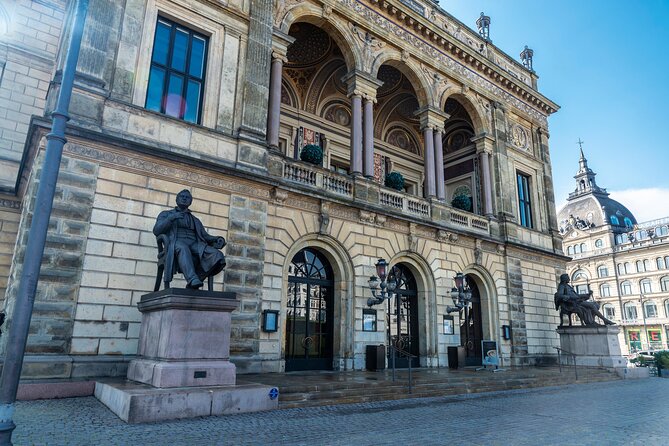
The route begins outside the Royal Playhouse and The Old Stage at August Bournonvilles Passage 8 (1055 København K). This is your first “anchor point” because it connects Andersen to the reason he came to Copenhagen in the first place—there’s inspiration baked into the start.
Why this opening works: it sets a tone. You’re not just sightseeing randomly. You’re learning how Andersen’s city experience formed, while you’re standing in the kind of cultural setting that makes writers matter.
Next you head to Magasin du Nord, where the tour highlights a reconstructed version of Andersen’s former room inside the department store. This is one of those practical surprises: you get a sense of his personal world without needing to hunt down a standalone museum building.
What I think you’ll appreciate here is the contrast. You’ll be stepping out of grand public space, then into a more intimate, recreated room—even though you’re surrounded by everyday shopping. It helps you “feel” the story instead of only reading it.
Possible drawback at these first stops: if you rush, you’ll miss the value. This section is strongest when you pause long enough to let the audio paint the picture for what you’re seeing.
Nyhavn and the Andersen cafe: a waterfront built for stories
Nyhavn is the star in this middle stretch. The audio has you stroll past Nyhavn, described as the iconic waterfront district with colorful buildings, a bustling atmosphere, and maritime history—the exact kind of setting that feeds imagination.
This is where you’ll likely want to slow down for photos and real street-level observation. Nyhavn can look like a postcard from a distance, but up close it’s about human scale: the water, the facades, and the steady pull of boats and pedestrians moving through the area.
After that, the route brings you to the Hans Christian Andersen cafe near Nyhavn. The point here isn’t just a place to sit. The audio focuses on Andersen’s love of travel and gives you a moment to reflect on his legacy.
Important practical note: food and drinks, or admission to the cafe, aren’t included in the tour price. So think of this stop as an optional pause for your own schedule. If you want a coffee or snack, budget for it separately.
Amalienborg and Frederik’s Church: royal court links and the Marble Church
Once you’ve worked your way through Nyhavn, the tour continues with a shift in mood—more ceremonial Copenhagen.
First up is Amalienborg, the official residence of the Danish royal family. The audio explains the connections between Andersen and the royal court. Even if you’re not a royal-court person, this stop helps you understand how Andersen’s world intersected with power and prestige in his time.
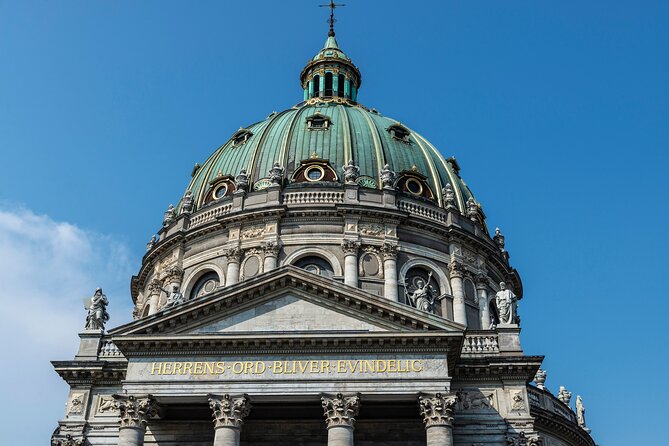
Then comes Frederik’s Church, also known as the Marble Church. The tour frames it as a breathtaking architectural masterpiece, and also notes that Andersen would have been familiar with it during his Copenhagen days.
This is a good pairing: Amalienborg gives you the “people and institutions” story, and Frederik’s Church gives you the “how the city looked and sounded” side of the same era. You’ll finish this section with a clearer picture of Copenhagen as Andersen might have experienced it—public, monumental, and very much on display.
King’s Garden and the Andersen Monument: your built-in slow moment
The tour then guides you through the King’s Garden, described as a tranquil oasis in the heart of Copenhagen. This is where the audio pacing works in your favor. After streets and landmarks, the garden gives you a change of scenery and a chance to recharge your eyes.
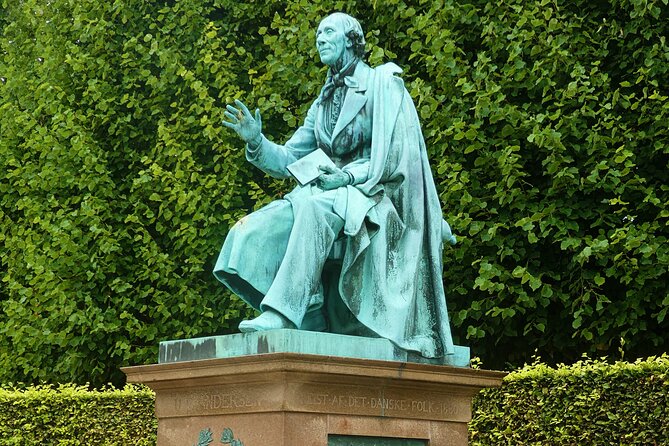
Inside this calm space you’ll find the Hans Christian Andersen Monument, and the route includes time to pause and pay tribute. The focus here is personal and reflective. You’re not racing to the next photo spot. You’re stepping into a space designed for quiet attention, which fits the author theme perfectly.
If you like travel moments that don’t feel like checklists, this part is for you. It’s also a helpful reset if you started the walk later in the day and need to balance energy with enjoyment.






Rosenborg Castle Gardens and the Round Tower: inspiration and a specific poem
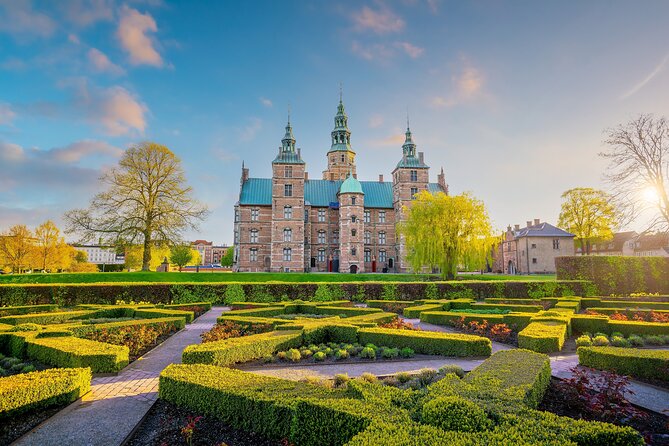
From the King’s Garden, the route moves toward Rosenborg Castle and the surrounding Rosenborg Castle Gardens. The audio highlights that Andersen sought solace and inspiration there, among the flower-filled surroundings.
Even if you don’t spend long in the gardens, the “why” matters. The narration ties the scenery to Andersen’s mindset, so you’re not just passing by pretty greenery—you’re connecting a place to a creative habit.
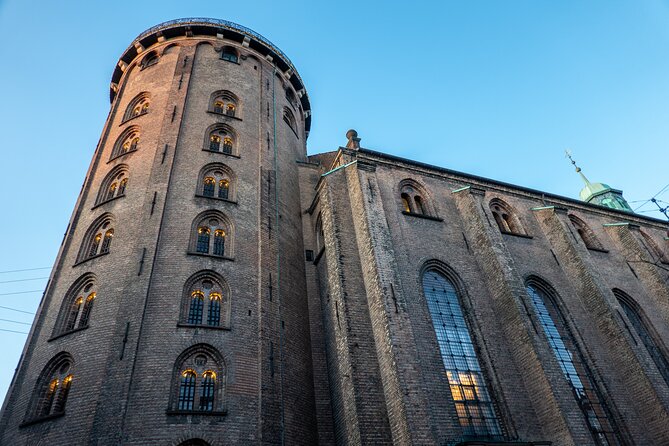
Then the tour finishes with the Round Tower, a 17th-century historical landmark. The key connection for literature is specific: the tour explains how the Round Tower inspired Andersen’s poem The Terrifying Hour.
This ending is smart because it gives you a clean closure. You started with a reason he came to Copenhagen. You moved through the city’s cultural settings, the waterfront, the royal sphere, and the quiet garden spaces. Then you land on a concrete literary link you can carry home.
When to walk the route (so you don’t rush it)
The tour clock is about 1 hour 50 minutes to 2 hours 10 minutes, but your real timing depends on two things: how often you stop for audio, and how long you linger at major photo spots.
My practical advice:
- Wear comfortable shoes. This is a city walk with multiple stops, and you’ll want to pause for narration cues.
- If you’re sensitive to crowds, aim for earlier or later in the day for Nyhavn. It’s one of those places that gets busy.
- Treat the garden and monument segment as your “breather.” It’s built for slower attention, and rushing it costs you the point of the tour.
Because the tour offers offline maps and geodata, you don’t need to keep checking your phone screen constantly. Still, keep a quick glance on where you are so you don’t drift off-route.
Price and value: what you actually get for $11.99
At $11.99 per person, the value is mostly about what’s included rather than what’s missing.
What you’re paying for:
- Directions to the starting point, so you can begin without guessing
- A full self-guided GPS experience that lets you explore at your pace
- Unlimited, lifetime use, so one purchase can serve multiple Copenhagen trips
- A virtual playback option, meaning you can listen like an audiobook even when you’re not walking
- Offline access to audio, maps, and geodata
What you pay extra for:
- Your own smartphone and headphones
- Any food or admission connected with the Hans Christian Andersen cafe (those aren’t included)
So is it worth it? If you want a structured walk with story context, and you like the freedom to stop, look, and keep moving, this price makes sense. If you’re the type who prefers a live guide for every stop, you might find it easier to compare other tour styles. But for a two-hour, audio-led route through the core Andersen geography, this is a strong bargain.
Should you book this self-guided Andersen tour?
Book it if you want:
- A short, story-focused walk that connects Andersen to real Copenhagen places
- The flexibility of GPS pacing and offline audio
- A route you can replay later because of the lifetime use benefit
- A blend of Andersen-related stops plus major city sights
Skip it if you:
- Don’t want to use your phone outdoors (headphones are required, and you’ll be using a device for audio cues)
- Prefer a fully guided, turn-by-turn human guide experience at every stop
- Plan to do the route without stopping—some of the best parts are the pauses, especially the reconstructed room and the garden/monument section
Bottom line: if you like wandering with a plan, this Andersen walk gives you the kind of context that makes Copenhagen feel personal instead of just scenic.