REVIEW · STOCKHOLM
Stockholm Walking Tour with Audioguide on Your Smartphone
Book on Viator →Operated by TouringBee · Bookable on Viator
Stockholm is best heard on foot. This TouringBee smartphone walk strings together City Hall, Riddarholmen and Gamla Stan with 25 stops narrated by a professional historian, plus an offline map you can follow without constant signal.
The main trade-off is simple: it’s fully self-guided. If you don’t set up your app and download the audio ahead of time, you’ll feel it fast, and the phone can run down quicker than you expect. Pack headphones and think about bringing a portable charger.
In This Review
- Key things I’d circle before you go
- Price and time: what $6.73 really buys in Stockholm
- Your smartphone audio guide: great when set up well
- Getting oriented at Klara Mälarstrand (and why the start point helps)
- City Hall: brick drama, mosaic math, and Nobel banquet vibes
- Norstedt Publishers on Riddarholmen: literature where it grew up
- Birger Jarl’s Tower and the monuments that explain Stockholm’s origin
- Wrangel Palace: Baroque form meets today’s legal work
- Riddarholmen Church: Gothic tombs and the cast-iron spire
- Västerlånggatan and Stortorget: medieval streets, then the square where history happened
- Iron Boy: the tiny statue that turns the whole day more fun
- Nobel Prize Museum and the Royal Palace: ideas and power in walking distance
- Riksdag and the Royal Opera: Swedish democracy and culture on the same route
- Kungsträdgården, Hallwyl Museum, and Kreditbanken: gardens, art-house life, and a crime story
- Modern Stockholm finish: Sergel’s Square, Drottninggatan, and Hötorget
- Who this tour fits best
- Should you book this Stockholm smartphone walking tour?
- FAQ
- How long is the Stockholm walking tour with the smartphone audio guide?
- What does the tour cost?
- What language is the audio guide available in?
- Is this tour guided by a person?
- Do I need to bring headphones?
- Are entrance tickets included for stops like museums and palaces?
- Where does the tour start and end?
- Can I use the audio guide offline?
- How many travelers is the tour limited to?
- What’s the cancellation policy?
Key things I’d circle before you go
- 25 historian-led audio recordings in English, built for walking at your pace
- Offline map + route so you can keep moving even if your signal gets flaky
- High-density sightseeing: City Hall, Nobel Museum, Royal Palace, Parliament, and Opera in one loop
- Riddarholmen island cluster: Birger Jarl’s Tower, Wrangel Palace, and the royal tomb church area
- Gamla Stan details you’d miss like Iron Boy in a church courtyard
- Costs stay low because there’s no human guide fee and many stops have free admission
Price and time: what $6.73 really buys in Stockholm
At about $6.73 per person for roughly 2 hours (the time estimate is approximate), you’re not paying for a tour guide. You’re paying for a working plan: audio, identification illustrations, and an offline route that helps you connect dots across central Stockholm. That’s the key value here.
The route is packed. City Hall alone can take time if you want to go inside. Nobel-related stops and the Royal Palace area also pull you toward “just one more room” syndrome. Based on how this kind of route plays out in real life, I’d plan closer to 3–4 hours with breaks if you listen to everything and want photos at the best viewpoints. The good news: the walk is laid out as a sequence of “checkpoint moments,” so you can pause, walk slower, or skip a stop without wrecking your whole day.
You can also read our reviews of more tours and experiences in Stockholm.


Your smartphone audio guide: great when set up well
This is a self-guided walking tour using the TouringBee app on iPhone and Android. You get a mobile ticket, a route map for navigation, and a library of audio recordings (listed as 25 audio recordings) narrated by a professional historian. You also get illustrations to help you recognize what you’re looking at.
Here’s the part that matters: you have to have your phone ready. Bring your own headphones, and make sure you activate your purchase and follow the route in the app. One common problem with audio tours like this is “it doesn’t load” when the content hasn’t been downloaded for offline use. If you want a smooth start, download the audio before you leave Wi‑Fi.
If you’re trying to conserve battery, treat this like a long phone session: audio + GPS navigation can drain power. Keep your brightness reasonable, and consider a power bank. You’ll enjoy this more if you’re not walking while hunting for the charger.
Getting oriented at Klara Mälarstrand (and why the start point helps)
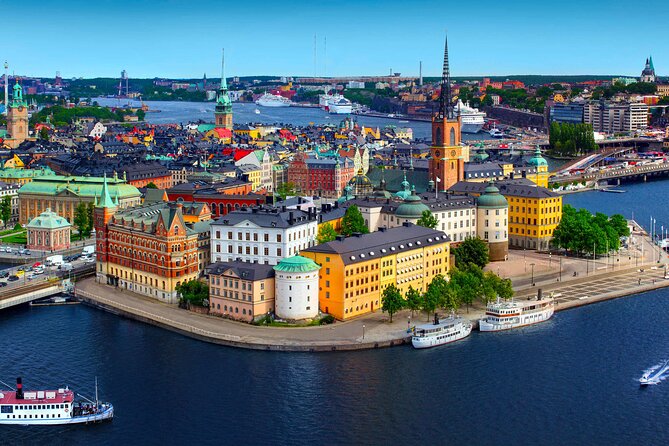
The tour starts and ends back at Klara Mälarstrand. That’s a smart base. It puts you near water views and gives you a clear “walk city center” rhythm right away. Even if you don’t know Stockholm yet, you’ll feel oriented because the route gradually moves from the historic core toward the modern squares and shopping streets.
If you get turned around in Old Town streets, don’t panic. The app map is designed to help you line up your next stop, and the offline route is meant to reduce the usual stress of “which street is this?” That said, Old Town navigation can be tricky on small screens, so zoom in enough that street names are visible.
City Hall: brick drama, mosaic math, and Nobel banquet vibes
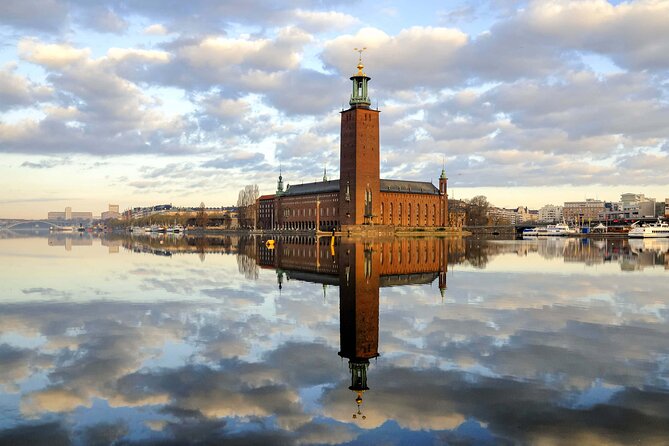
Your tour kicks off with Stockholm City Hall (completed in 1923). The big draw is the architecture: a striking brick façade and a tall tower that frames classic Stockholm views. The narration also guides you through what’s special inside—especially the Golden Hall, covered with 18 million mosaic pieces, and the Blue Hall, known for the annual Nobel Prize Banquet.
What I like about covering this early is that it sets the tone. Stockholm isn’t just scenic here. It’s civic pride, international culture, and political ceremony packed into one building. If you can enter, you’ll get more out of the audio. If you can’t, the exterior and tower views still anchor the story.
Practical tip: look for viewpoints that show the water and nearby islands. The city reads differently when you understand the geography from above and from the edges.
Norstedt Publishers on Riddarholmen: literature where it grew up
Next you head to Norstedt Publishers on Riddarholmen (Norra Riddarholmshamnen 1). This is Sweden’s oldest publishing house, established in 1823. Instead of treating it as a random address, the audio frames the building as part of how Swedish literature shaped itself over time.
This stop is short, but it’s one of the best “tone shifts” on the route: you go from royal ceremony and big architecture into a quieter world of books and craft. If you like literary history, you’ll appreciate how the audio connects the institution to the authors and the publishing process.
Because admission here is listed as free, it’s also a low-risk add. If you’re short on time, you can keep moving without losing momentum.




Birger Jarl’s Tower and the monuments that explain Stockholm’s origin
On Riddarholmen, the tour leans hard into the story of Stockholm’s founding through Birger Jarl.
- Birger Jarl’s Tower: described as dating to the 16th century, with thick stone walls built for defense. The audio highlights the idea that this is a survival structure from early Stockholm, and it mentions panoramic views from the top.
- Monument to Birger Jarl (1854): this statue, created by sculptor Bengt Erland Fogelberg, depicts Birger Jarl in medieval attire holding a sword and shield.
These aren’t just statue-and-photo stops. The walking sequence is useful: the tower gives you the practical medieval feel, and the monument gives you the later, commemorative version of the same story. Together, they help you understand why Riddarholmen holds so much meaning.
If you want the best experience, don’t rush the transitions. Look back down toward the waterfront as you go. The narration pays off when you connect it to what you can see.
Wrangel Palace: Baroque form meets today’s legal work

Then comes Wrangel Palace on Riddarholmen, originally built in the 16th century and expanded later, with Baroque architecture and waterfront views. Today it houses the Svea Court of Appeal. The audio frames it as a former royal residence before focusing on the palace’s architectural character.
This stop is valuable because it shows how Stockholm’s “old power” morphs into “modern institutions.” You’re not just looking at a pretty building. You’re seeing how functions change while the walls stay.
Even if you don’t go inside, stand where you can see the façade and water. The contrast between the palace shape and the surrounding urban life makes the story feel real.
Riddarholmen Church: Gothic tombs and the cast-iron spire
The tour’s Riddarholmen anchor is Riddarholmen Church (late 13th century), described as the final resting place of Swedish monarchs. The church’s signature is the intricate cast iron spire, and the narration notes the Gothic interiors and royal tombs.
If you want a calmer, more reflective moment in your walk, this is it. The audio nudges you to look for coats-of-arms and royal tomb details along the walls. That’s exactly the kind of thing you’ll miss without guidance.
Don’t expect a quick photo and leave. This is a spot to slow down. Even a short listen will help you appreciate why Stockholm uses this island for ceremony and memory.
Västerlånggatan and Stortorget: medieval streets, then the square where history happened
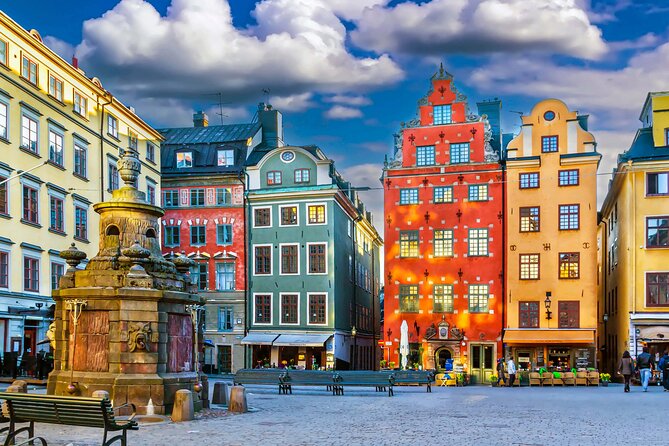
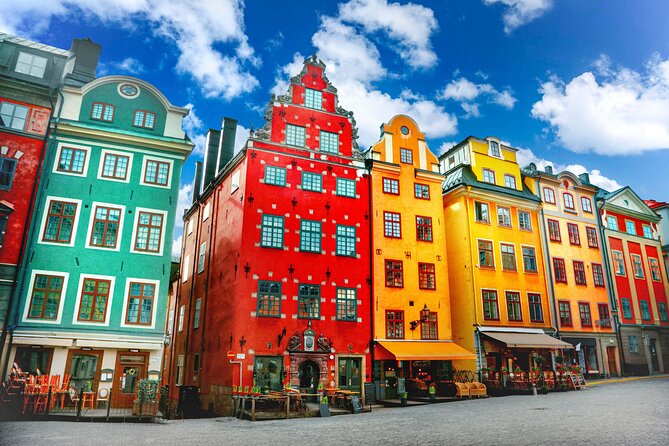
After Riddarholmen, you shift into Gamla Stan with Västerlånggatan, a medieval narrow street lined with shops and cafes. The point isn’t to shop like it’s your job. It’s to feel the street scale—how narrow, how old-world, and how easy it is to get that “I’m inside a postcard” feeling while still moving like a real pedestrian.
A short walk later, you hit Stortorget, described as Stockholm’s oldest public square. This is where the story gets darker: the audio references the Stockholm Bloodbath of 1520. It also points out modern anchors such as the Nobel Museum and the annual Christmas Market.
If you’re planning a break, Stortorget is one of the better places to do it. You’ll have room to regroup, buy a coffee, and then continue on when you’re ready.
Iron Boy: the tiny statue that turns the whole day more fun
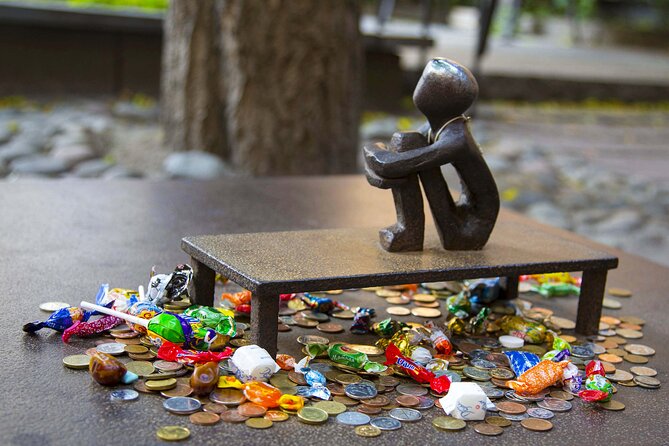
One of the most charming stops is Iron Boy (Järnpojke) in a courtyard of the Finnish Church in Gamla Stan. The narration calls him the city’s smallest statue at about 15 centimeters, created by Liss Eriksson in 1967. The story includes a local tradition: in winter, locals often dress him in tiny hats and scarves and leave coins for good luck.
This is the kind of detail that makes a guided audio tour worth it. Without the narration, you might walk right past something that locals treat like a little ritual.
If you want a practical tip: look for the courtyard setting, not just the statue. The atmosphere is part of the experience.
Nobel Prize Museum and the Royal Palace: ideas and power in walking distance
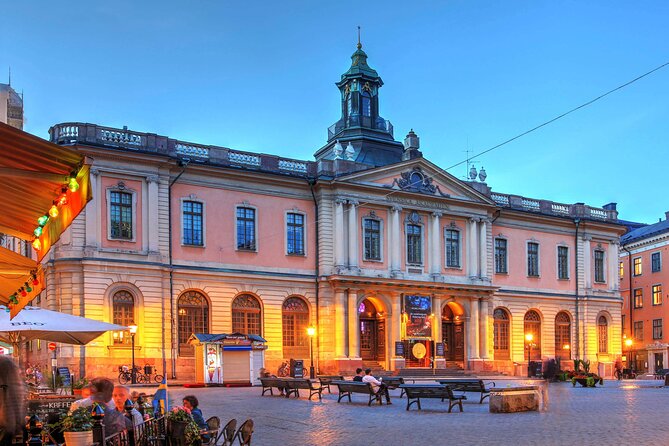
From Stortorget, the route moves into Nobel territory with the Nobel Prize Museum. The audio focuses on Nobel laureates across fields like peace, literature, and science, and it ties the exhibits back to Alfred Nobel’s vision and legacy. The museum is positioned in the route as a place to connect big names to the human stories behind them.
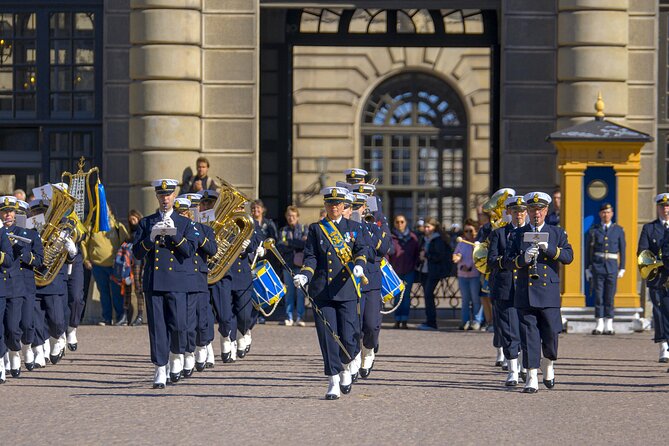
Then you move toward the Royal Palace in Gamla Stan. The narration covers it as one of Europe’s largest palaces and Sweden’s official royal residence. Key highlights include the State Apartments, the Royal Chapel, and the Treasury with crown jewels. It also points you to the daily changing of the guard.
Important reality check: the tour’s info says entrance fee/tickets are not included. The audio can still help you know what you’re looking for outside, but if you want the full payoff inside those buildings, you’ll need to pay museum or palace entry where required.
If you’re short on time, choose one: Nobel Museum or Royal Palace interiors. Doing both with full attention can turn into a longer day.
Riksdag and the Royal Opera: Swedish democracy and culture on the same route
Next comes Riksdag, Stockholm’s parliament building on Helgeandsholmen, completed in 1905 and designed in a blend of neoclassical and baroque revival styles. The narration frames it as a place where Swedish laws are shaped and explains the political system through what you can see in the chambers.
It’s a great stop for two reasons. First, it connects architecture to how the country works. Second, it keeps the tour from being only royal-themed. Stockholm isn’t stuck in monarchy stories; it’s also about systems and decisions.
After that, you reach the Royal Opera House by the Norrström river. It’s described as established in 1773 by King Gustav III, reconstructed in 1898, and known for ornate interiors and a long performance tradition. The audio points you toward what you might see and what kinds of performances happen there.
If you like to plan ahead for evening plans, this stop can be a good “taste test” for what to see later in your trip. Even if you don’t go inside on the tour, you’ll understand why the building matters.
Kungsträdgården, Hallwyl Museum, and Kreditbanken: gardens, art-house life, and a crime story
The route then shifts into lighter tone with Kungsträdgården (King’s Garden), a park dating to the 15th century. The narration mentions cherry trees, fountains, and seasonal events such as summer concerts and winter ice skating.
This is a smart breather after a run of grand buildings. Parks reset your pace and let you take photos without feeling like you’re “behind” the tour.
After the park, you reach the Hallwyl Museum, housed in a late 19th-century palace. It’s tied to Countess Wilhelmina von Hallwyl and her family, and the narration describes over 50 rooms with art, antique furnishings, and collectibles kept in their original setting. This is the place where you’ll feel what wealthy domestic life looked like in early 20th-century Sweden.
Then comes Kreditbanken near Norrmalmstorg. The story here is famous and strange: the audio references the 1973 Norrmalmstorg robbery, which led to the term Stockholm Syndrome. Even if you don’t know the psychology angle, the building’s mention is a reminder that Stockholm is also a city of modern events and global cultural references.
Entrance notes again: museum entries aren’t included, so if you want to go inside Hallwyl Museum, plan that cost.
Modern Stockholm finish: Sergel’s Square, Drottninggatan, and Hötorget
The final stretch pushes you toward modern city life.
- Sergel’s Square: described as the beating heart of modern Stockholm, named after sculptor Johan Tobias Sergel, with an obelisk and patterned floor. The audio suggests it’s a place for public gatherings and everyday movement.
- Drottninggatan: a pedestrian street linking Old Town and the modern center, packed with shopping and dining, with historical landmarks along the way (including a statue of King Charles XII).
- Hötorget: a market square near the blue Concert Hall. The audio notes an open-air market on weekdays (fresh produce, flowers, local delicacies) and a flea market on Sundays (antiques and vintage finds).
This is a good ending because it shows Stockholm beyond the medieval core. You’ll get a feel for how locals actually spend time: squares, markets, and walking streets.
Who this tour fits best
This is a strong match if you:
- like self-guided walking with a clear route
- want political, royal, museum, and street-level details without extra tour planning
- enjoy small stories like Iron Boy that make a city feel human
- don’t mind walking a lot for good value
It may be less ideal if you:
- hate using your phone for navigation
- want a human to answer questions
- plan to enter many buildings on the same day without extra budget for tickets
- can’t risk battery drain during a longer walk
Should you book this Stockholm smartphone walking tour?
I’d book it if you want a smart first-pass through Stockholm’s center, especially if you enjoy walking and you like being told what matters as you stand in front of it. The price is low enough that you’re not gambling big, and the combination of City Hall, Riddarholmen, Gamla Stan details, Nobel, and Royal Palace keeps the day varied.
Skip it only if you’re counting on step-by-step help from a human guide, or if you already know you’ll struggle with phone setup and offline audio. With the right prep—download first, bring headphones, and consider a charger—it’s an efficient way to see a lot of Stockholm without missing the story.
FAQ
How long is the Stockholm walking tour with the smartphone audio guide?
The tour is listed as about 2 hours, with the specific date and time shown at checkout described as approximate.
What does the tour cost?
The price is listed at $6.73 per person.
What language is the audio guide available in?
The audio guide is offered in English.
Is this tour guided by a person?
No. It’s self-guided using a mobile app. There is no human guide.
Do I need to bring headphones?
Yes. The tour does not include smartphones and headphones, so you’ll need your own headphones to listen.
Are entrance tickets included for stops like museums and palaces?
No. Entrance fees and tickets are not included.
Where does the tour start and end?
It starts at Klara Mälarstrand and ends back at the meeting point.
Can I use the audio guide offline?
The tour provides an offline map and route for GPS navigation. The audio guide is meant to work using the app; offline use depends on having the content ready as directed.
How many travelers is the tour limited to?
The tour has a maximum of 20 travelers.
What’s the cancellation policy?
You can cancel for free up to 24 hours in advance for a full refund. If you cancel less than 24 hours before the start time, the amount paid is not refunded.