REVIEW · STOCKHOLM
Stockholm Troll Hunt: Self-Guided Old Town Adventure
Book on Viator →Operated by Questo · Bookable on Viator
Gamla Stan becomes a game. This self-guided Stockholm Troll Hunt turns the Old Town into a story you solve step by step. It’s fully virtual, so you play at your own time and pace—no need to match someone else’s tour speed.
What I like most is the smart mix of famous landmarks and legend-based puzzles, plus the fact it’s private to just your group. You also get a mobile access code and 12 interactive challenges, which makes it feel like a hunt rather than a history lecture.
The one thing to keep in mind: setup and question wording can be a weak spot. One harsh comment called out slow installation and translation issues, so I’d plan extra time before you start and make sure you can access everything comfortably.
In This Review
- Key things to know before you go
- What this Troll Hunt feels like in real life
- Price and value: what $7.21 really buys you
- Start at the Royal Swedish Opera, end at Stortorget
- Your 12 puzzle stops through Gamla Stan’s key landmarks
- 1) Royal Swedish Opera: Swedish theatre identity
- 2) The “first parliament” clue: Arboga, 1435, and the Four Estates
- 3) An 18th-century Baroque palace: royal Europe’s style shock
- 4) Royal Armoury artifacts: weapons, memory, and royal power
- 5) Storkyrkan (Stockholm Cathedral): the oldest church in Gamla Stan
- 6) The Liss Eriksson sculpture: tucked away behind the Finnish Church
- 7) The Sten Sture the Elder statue: Brunkeberg and Saint George
- 8) Den Gyldene Freden (The Golden Peace): a historic restaurant still in place
- 9) Järntorget: a trading center that smelled like commerce
- 10) A street that might be called a square: library and the Great Church School
- 11) Sankta Gertrud Church: medieval German neighborhood roots
- 12) Palace of the Purse and the fountain: Swedish Academy and Nobel Museum
- Pacing: how to fit it into 50 minutes to 1 hour 15 minutes
- Is it worth it for families and mixed-age groups?
- The main snag to consider: setup and translation clarity
- Who should book the Stockholm Troll Hunt
- Bottom line: should you book this Troll Hunt?
- FAQ
- Is this a traditional guided tour with a physical guide?
- How long does the Stockholm Troll Hunt take?
- Where does the quest start and where does it end?
- Is it private or do I join a group?
- What language is the experience offered in?
- Can I pause and resume the quest?
- What’s included in the experience?
- Are service animals allowed?
Key things to know before you go
- Private play for your group means less waiting and more control of your pace.
- Fully virtual quest: you complete it on your phone, not with a physical guide.
- 12 interactive puzzle challenges keep you moving and looking at details.
- Pause and resume anytime helps if you stop for photos or snacks.
- Old Town storytelling points to legends and institutions, not just pretty buildings.
- English is available, but clarity can matter—test the experience early.
What this Troll Hunt feels like in real life
This isn’t a guided walk with a person talking at you. It’s a self-guided quest through Gamla Stan, guided by a phone code and puzzle checkpoints. The “troll hunt” frame is playful, but the real hook is that each step ties to a specific place and a specific story moment.
Because it’s private, you don’t have to worry about a slow member or a fast member. You can linger outside Storkyrkan, duck into a café window view, then keep going when you’re ready. And since it’s built for pause and resume, you can stretch it over a couple of shorter sessions instead of squeezing it into one tight hour.
The experience length is roughly 50 minutes to 1 hour 15 minutes, which is ideal for a partial Old Town morning or an early evening before dinner. You’ll still cover meaningful ground, though “meaningful” here means you’ll be scanning façades, reading context clues, and answering puzzle prompts tied to each stop.
You can also read our reviews of more tours and experiences in Stockholm.


Price and value: what $7.21 really buys you
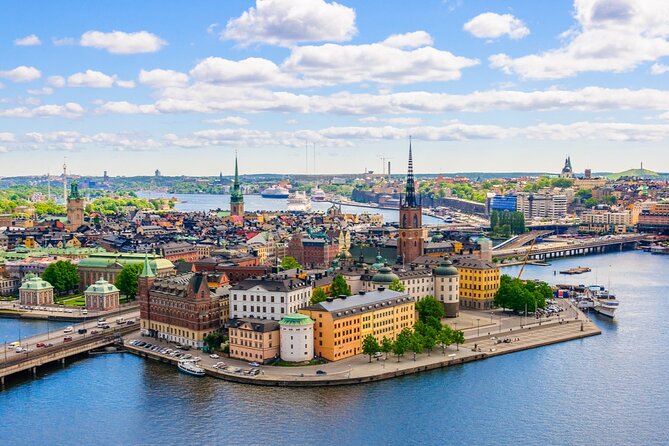
At about $7.21 per person, you’re paying for three things: structure, storytelling, and momentum. Structure comes from the route and the set of 12 puzzle challenges, so you’re not wandering aimlessly through one of Europe’s most famous old city cores. Story comes from the legend-and-history storyline that connects the places to ideas like early Swedish governance, royal culture, and older religious life.
Momentum is the big one. Puzzles force you to notice things you’d normally skip: inscriptions, locations that are oddly specific (like a sculpture tucked behind a church), and details that make a building more than a postcard.
Could you get similar history by doing a normal walking route? Sure. But you’d need more planning and more reading time. This is designed to do that work for you while keeping it fun. The main value risk is the setup experience—if your start takes too long, you may lose the time you meant to spend playing.
Start at the Royal Swedish Opera, end at Stortorget
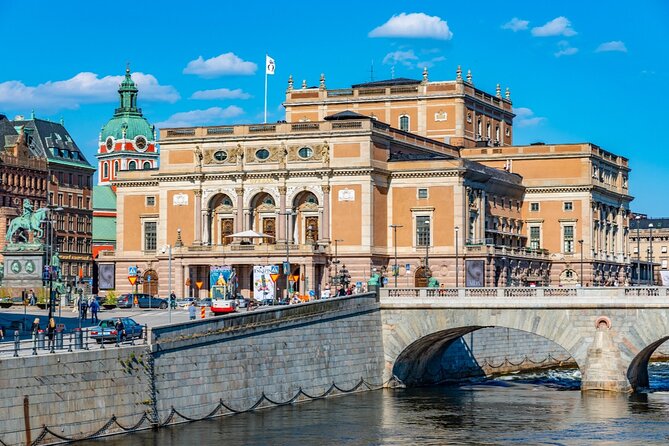
The quest starts at Kungliga Operan (Royal Swedish Opera) at Gustav Adolfs torg 2 (5:00 AM to 9:00 PM daily). It ends at Stortorget 7, in the Stortorget area of Gamla Stan, where the Old Town vibe is strongest and you’re close to lots of onward options.
That start point matters. The Royal Swedish Opera is tied to Sweden’s shift toward its own performing arts identity, and the first puzzle sets that tone. Then the route gradually pulls you into the denser medieval heart of Gamla Stan—churches, squares, and monuments—before finishing near the political and cultural institutions that shape modern Swedish life.
Because it’s mobile-based, you’ll want to have your phone ready when you’re standing at the first stop. Not having to coordinate with a group guide is the upside. The downside is you’re responsible for getting going smoothly on your own.
Your 12 puzzle stops through Gamla Stan’s key landmarks
Below is what each checkpoint brings, and what to watch for when you arrive. The quest prompts are built around “look around” type answers, so bring a curious eye.
1) Royal Swedish Opera: Swedish theatre identity
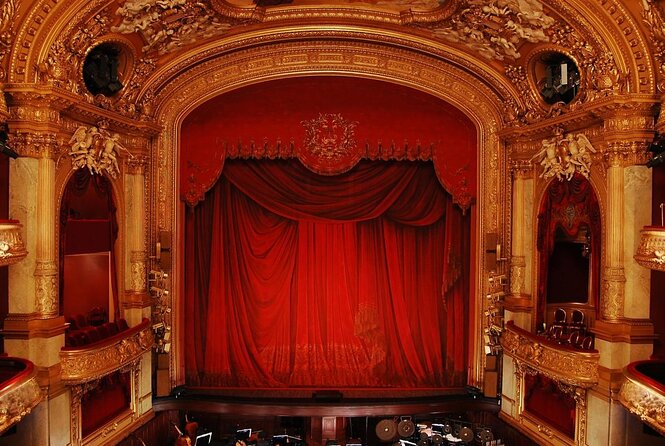
You begin at the Royal Swedish Opera, Sweden’s national theatre for opera and ballet. The story focus here is the turning point under King Gustav III: he wanted a Swedish ensemble, after firing a French opera troupe that had been performing in Stockholm for decades. It also notes the timing—first performances and the later move into the completed opera house in the late 1700s.
Why it works for the quest: it gives you a clear narrative frame right away. You’re not just starting with a big building; you’re starting with a cultural mission. When the puzzle asks you to find the answer around here, you’re really training your attention for the rest of the route.




2) The “first parliament” clue: Arboga, 1435, and the Four Estates
The next stop shifts from culture to governance. The puzzle references the often-cited first parliament meeting in Arboga in 1435, and then follows the evolution of Sweden’s system—especially the way parliament became represented through the Four Estates: nobility, clergy, burghers, and peasants.
Even if the place name points to Arboga (not inside Gamla Stan), the quest is teaching you to connect ideas to locations. Look around for the clue the puzzle wants you to identify. The payoff is that Sweden’s political history starts to feel less abstract.
3) An 18th-century Baroque palace: royal Europe’s style shock
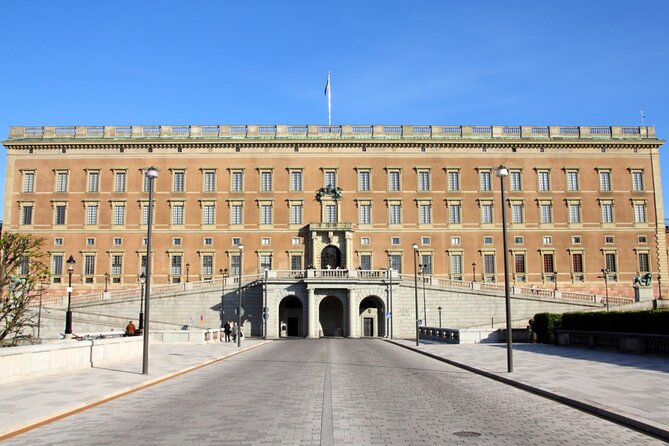
Next comes a palace story with a Baroque angle. It explains that when the building was first created in the 18th century, it created a stir across Europe, and today it’s considered emblematic of Baroque architecture.
In practice, this stop is about visual awareness. If you’ve ever walked past Baroque details and thought, I’ll read this later, this puzzle forces the later to become now. Look for the architectural cues the area offers and match them to the puzzle’s prompt.
4) Royal Armoury artifacts: weapons, memory, and royal power
You then land in the world of royal material culture through the Royal Armoury—specifically its oldest artefacts: royal state and ceremonial weapons stored in the old Three Crowns Palace during the 1500s. The story also brings in a striking detail from Gustavus Adolphus in the 1620s, including the idea of preserving blood-spattered clothes as lasting memoria.
This is a great checkpoint if you like history that has physical weight. You’re not just dealing with “events.” You’re dealing with objects tied to power, ceremony, and how memory gets kept.
5) Storkyrkan (Stockholm Cathedral): the oldest church in Gamla Stan
Now you’re at Storkyrkan, also known as the Church of St. Nicholas. The quest background is clear: it’s the oldest church in Gamla Stan, first mentioned in 1279, with tradition tying its original building to Birger Jarl, the founder associated with the city’s start.
This stop is ideal for slowing down. Church exteriors and church squares are where you naturally catch yourself reading small plaques and noticing ages. Let the puzzle “pull” you into those details instead of letting your eyes slide over them.
6) The Liss Eriksson sculpture: tucked away behind the Finnish Church
One of the most location-specific checkpoints is the sculpture by Liss Eriksson, created in 1954 and inaugurated in 1967. It sits behind the Finnish Church, only a few meters off the Stockholm Palace—yet described as hard to find due to its secluded placement.
That “hard to find” bit is actually the point. The puzzle is basically training you to hunt for the thing in the small space you’d normally miss. If you like micro-adventures inside big sights, this is the kind of stop that feels like a win.
7) The Sten Sture the Elder statue: Brunkeberg and Saint George
Next is a statue tied to Sten Sture the Elder and the Battle of Brunkeberg in 1471. The background says Sten Sture placed his army under the protection of Saint George during the battle. It also notes the statue is widely attributed to the workshop of Bernt Notke.
This is a strong checkpoint for anyone who likes “why that statue is here.” It adds a political story to a sculptural one. Then the puzzle has you look around to locate the right answer—likely through symbolism or placement.
8) Den Gyldene Freden (The Golden Peace): a historic restaurant still in place
You’ll reach Den Gyldene Freden, translated as The Golden Peace, first opened in 1722. The quest notes it has delighted palates for almost 300 years, and even mentions members of the Royal Academy. It also says it hasn’t moved from its original location, which gives it a sense of real continuity.
This is where the quest becomes a break. You can use the moment to reset before the last stretch of squares and streets. Even if you’re not eating right then, the place is a reminder that Old Town history isn’t only in museums—it lives in businesses.
9) Järntorget: a trading center that smelled like commerce
The quest then heads to Järntorget, described as Stockholm’s second oldest square, slightly younger than Stortorget. It dates back around 1300 and remained the city’s important trade center for centuries. The description paints it as constantly busy and crowded, with goods moved from shore to shore across the square and between buildings.
This stop is great for picture-thinking. Close your eyes for a second and imagine carts, chatter, and goods being hauled. Then open them again and scan the square with the puzzle prompt in mind.
10) A street that might be called a square: library and the Great Church School
Next is an elongated open space that’s described as a street, even though it’s named a square. The puzzle context points out the public library and the major school tied to Storkyrkan: Storkyrkoskolan, literally the School of the Great Church.
This checkpoint is about links between Old Town and learning. It’s an easy stop to underestimate, but the quest framing makes it feel purposeful. Look for how the environment supports the clue, not just the building fronts.
11) Sankta Gertrud Church: medieval German neighborhood roots
Now you reach Sankta Gertrud Church, officially dedicated to Saint Gertrude of Nivelles (626–659), known as patron saint of travellers. The background connects the church’s name and location to a medieval neighborhood dominated by Germans.
If you’re the kind of person who likes tracing how communities shaped city blocks, this stop will land well. The puzzle asks you to identify the answer by looking around, so take a minute to slow your walking pace here.
12) Palace of the Purse and the fountain: Swedish Academy and Nobel Museum
The final checkpoint centers on the palace of the purse, built between 1773 and 1776 by Erik Palmsted in French rococo style. It’s now home to the Swedish Academy and the Nobel Museum. The fountain in the square is also attributed to the same architect.
Then you finish at Stortorget, where the setting feels like the “big finish” of the route. This is the point where the quest’s playful legend frame meets the modern cultural reality of Sweden. If your phone is running low on battery or your time is shrinking, this last stop is where you can push through with confidence.
Pacing: how to fit it into 50 minutes to 1 hour 15 minutes
The stated runtime of about 50 minutes to 1 hour 15 minutes is believable, but only if you keep the puzzle rhythm moving. Each stop uses a similar mechanic: reach the location, then look around for the clue the app asks for.
If you like to read slowly, plan closer to the upper end. If you’re fast on photo spotting and text hunting, you might land closer to the middle. Either way, use the pause-and-resume option to avoid stress. That feature is built into the experience, so it’s not a workaround—it’s the intended pacing system.
One caution from user feedback: if setup drags, you can lose the playable window. So I’d start your experience as soon as you arrive at the first stop, not after you’ve already eaten or explored too far away.
Is it worth it for families and mixed-age groups?

Yes, this style works well for families. The quest highlights that it’s fun for the whole family, and the structure supports it: multiple short challenges, clear locations, and a storyline that can pull kids (and adults) into the same game.
For younger kids, the “look around” parts can be hit-or-miss unless an adult reads the prompt carefully and guides the search. For older kids and teens, puzzles are usually more engaging than walking-and-listening.
The bigger family value is that you control the pace. A traditional guided walk can feel like a treadmill. This one can flex—pause when someone needs a snack, then continue when everyone’s ready.
The main snag to consider: setup and translation clarity
Here’s the honest part. One negative comment described a complicated start, taking over an hour before the experience even worked, leaving no time to play. It also complained about translations being hard to understand.
Even if that’s not your outcome, it’s a good reason to be smart about timing. Plan a window where you’re not rushing to catch a ferry or a dinner reservation right at the start time. And if you’re traveling with friends who speak different languages, double-check the language you choose in the experience before you begin.
Who should book the Stockholm Troll Hunt
Book it if you want:
- A private Old Town activity that doesn’t require joining a group and matching a guide’s schedule.
- A way to see Gamla Stan while doing something active, not just standing and listening.
- A light “history + story” approach using puzzles and nearby landmarks.
Skip it if you:
- Strongly prefer a human guide with fluent explanations and follow-up questions.
- Don’t want to handle any phone-based setup steps.
- Would feel stressed if a puzzle takes longer than expected to decode.
Bottom line: should you book this Troll Hunt?
I think it’s a strong value for an Old Town day, especially if you enjoy scavenger-style activities. The route hits big names—Storkyrkan, Järntorget, Den Gyldene Freden—and it’s wrapped in 12 structured puzzle challenges that turn sightseeing into a mission.
My main “don’t get burned” advice is simple: give yourself time at the start and expect the experience to run on your phone without anyone stepping in to troubleshoot. If you do that, you’ll likely end with the best kind of souvenir: you’ll remember the places because you solved something there.
FAQ
Is this a traditional guided tour with a physical guide?
No. It’s a fully virtual self-guided experience, and there’s no physical tour guide.
How long does the Stockholm Troll Hunt take?
It runs for about 50 minutes to 1 hour 15 minutes (approx.).
Where does the quest start and where does it end?
It starts at Royal Swedish Opera (Kungliga Operan), Gustav Adolfs torg 2, 111 52 Stockholm, Sweden. It ends at Stortorget 7, 111 29 Stockholm, Sweden.
Is it private or do I join a group?
It’s private. Only your group participates.
What language is the experience offered in?
It’s offered in English.
Can I pause and resume the quest?
Yes. You can pause and resume anytime.
What’s included in the experience?
You get a mobile access code for the quest, 12 interactive puzzle challenges, and storyline content inspired by Stockholm legends and history.
Are service animals allowed?
Yes, service animals are allowed.