REVIEW · SAN FRANCISCO
Self-Guided Cable Car City Tour in San Francisco
Book on Viator →Operated by Pintours · Bookable on Viator
Cable cars, but with control. This self-guided ride uses the Pintours app so you can pause, read up, and hop off when you want. I especially like how the route hits big-name neighborhoods fast, with stops like Union Square and Chinatown without a stressful schedule. One drawback to plan for: some people report ticket/app trouble, so it helps to have a backup plan if your app access fails.
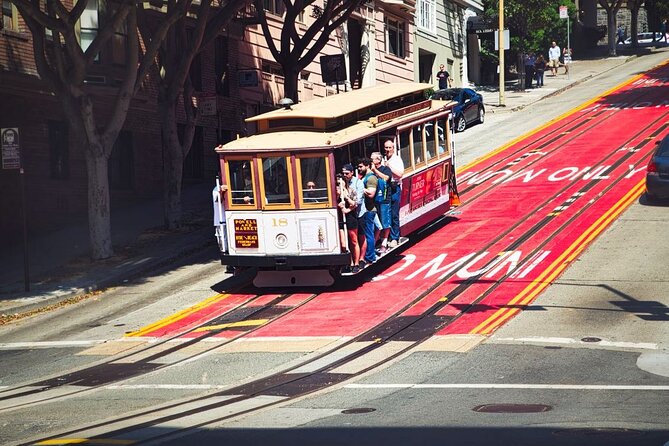
You start at the Powell cable car turnaround area and end farther along the system at Powell/Mason, right where you can keep walking toward Fisherman’s Wharf. Along the way, you get a fun mix of shopping blocks, classic historic streets, and photo-friendly city views—plus just enough stop time to see the highlights before you’re ready to move on.
The ride window is about 1 to 3 hours, and this is a private activity for your group (so you’re not stuck with strangers steering your pace). It’s also a good match if you’re comfortable with a moderate level of walking and standing, and you need something with nearby public transportation.
In This Review
- Key Highlights at a Glance
- What $15 Buys: Cable Car Hopping From Powell
- Using the Pintours App Like a Local on a Self-Guided Ride
- Powell and Market: The 5-Minute Photo Stop That Sets the Tone
- Union Square and the Downtown Mix: Where the City Feels Most Central
- Westin St. Francis and the Old-SF Facade Moment
- Chinatown Stops You Can Actually Taste and Explore
- Grace Cathedral and the Cable Car Museum: Small Stops With Big Story Feel
- North Beach (Italian Quarter) and the 15-Minute Snack Sprint
- The Wharf Connection: Walking In the Footsteps of Fishing Craft
- Best Seats and Timing Tips to Keep the Ride Fun
- Who This Tour Is For (and Who Should Skip It)
- Should You Book This San Francisco Cable Car Self-Guided Tour?
- FAQ
- FAQ
- Where does the tour start?
- Where does the tour end?
- How long does the experience take?
- How much does it cost?
- What does the Pintours app do for you?
- Which areas are included in the route?
- Is this a private tour?
- Are service animals allowed?
- Is there a physical fitness requirement?
- Can I get a refund if I cancel?
Key Highlights at a Glance
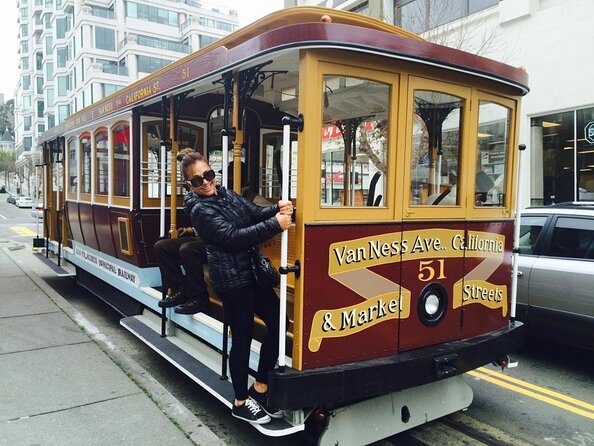
- Self-guided pacing via the Pintours app so you can pause and linger instead of rushing.
- Iconic cable car route connecting Powell, downtown sights, Chinatown, North Beach, and the Wharf area.
- Short, practical stop times (some are just a few minutes) that keep your sightseeing moving.
- Great photo strategy: the best views often come from outside seats as you ride.
- A route that ends near the Wharf so you can extend your day without planning extra transport.
- A real risk to consider: a small number of customers report ticket access problems with the app.
What $15 Buys: Cable Car Hopping From Powell
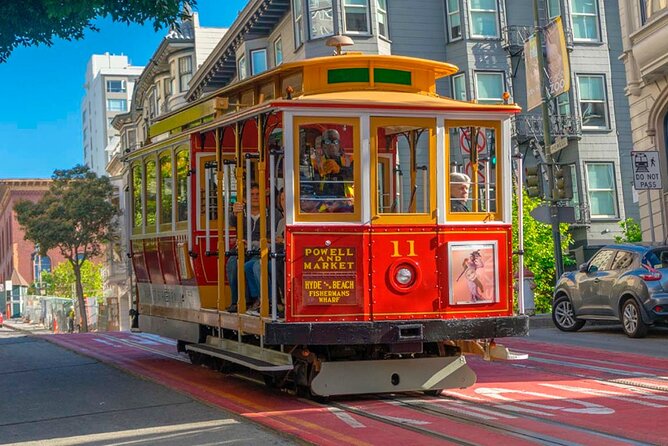
At $15 per person, the value is pretty straightforward: you’re paying for the experience of riding San Francisco’s cable cars while getting a structured, self-paced way to see the city. The cable car system itself is iconic enough that you’d likely want to ride at least once anyway, and this approach bundles that with stop-by-stop context—without forcing a live guide voice to babysit your group.
The other value play here is time control. Instead of doing a “sit and listen” tour, you decide how long to spend at each point. Some stops are tiny by design (like a quick photo moment), while others are long enough to actually wander. That works well if your group has mixed interests: one person can do quick snapshots, while you can spend more time where you care.
One thing to keep in mind: cable cars are not like a quiet subway. They’re crowded, slow in places, and old-school in the best way. Lines can be long, and getting on/off can take time—so you’ll want to build in patience as part of the experience, not treat it like a defect.
You can also read our reviews of more tours and experiences in San Francisco.
Using the Pintours App Like a Local on a Self-Guided Ride
The core of this experience is the Pintours app. It’s designed to act like your on-the-go guide, but with pause and control. You can check out each location as long as you like, and you can also skip a stop you’re not feeling.
Here’s how that changes the feel of the tour. On a classic guided bus tour, you’re often stuck hearing the same commentary while you stand still in the same spot. With a self-guided format, you can time your sightseeing to what you actually want: a 5-minute landmark photo, a longer Chinatown wander, or a quick peek at a hotel facade.
The app approach also helps with decision-making when you’re in a place like Chinatown or North Beach, where the streets can pull you off-course. Instead of giving up and just wandering randomly, you’re supported by what the experience considers key moments—so you can still end up seeing the highlights you came for.
Practical tip from the travel-world reality of digital tickets: have your phone charged, keep your confirmation handy, and don’t wait until the last second to confirm the ticket path. Some customers report problems when tickets don’t show up correctly in the app, and they ended up needing to purchase again at the cable car area. I’m not saying it will happen to you—but it’s smart to plan like it might.
Powell and Market: The 5-Minute Photo Stop That Sets the Tone
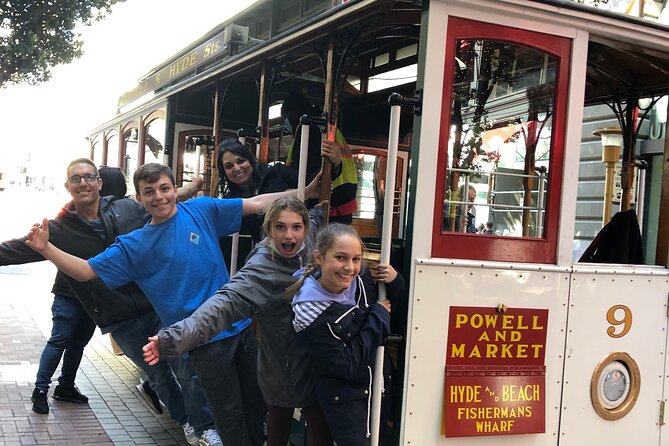
You begin at the Powell cable car turnaround area near Powell and Market. This first stop is brief—around 5 minutes—so treat it as your “get the iconic shot” moment. Think famous curves, classic street energy, and the sense that you’ve arrived at the real San Francisco stuff.
This is also a good place to get your bearings. If you’ve never ridden cable cars before, you’ll quickly understand how they work: the sway, the crowding at boarding time, and how quickly the car moves once it’s rolling. That helps you relax for the next segments, especially if you’re worried you’ll be too slow to catch views later.
If you want the most satisfying photos, don’t burn the full five minutes just standing still. Use it like a photo checklist: cable car details, the turnaround backdrop, and at least one shot that shows the street angle and scale. Then move on before the crowd pushes you around.
Union Square and the Downtown Mix: Where the City Feels Most Central
From Powell, the route rolls toward downtown and makes a stop at Union Square. You’re given roughly 25 minutes here, which is enough time to do one clean pass: walk a block or two, peek into a couple shops, and still have time to reconnect with your group.
Union Square is a useful stop because it anchors the tour in the modern part of the city. If you’re coming from a hotel area that feels quiet or residential, this gives you that downtown contrast right away: big buildings, designer storefronts, and the kind of pedestrian flow that makes San Francisco feel like a full-on world city.
The drawback? Union Square can feel busy, and shopping streets aren’t everyone’s idea of fun. The advantage is that you control the pace. If you’re not there for retail, you can still use it for a quick orientation walk and then refocus your energy for Chinatown and the older neighborhoods later.
Westin St. Francis and the Old-SF Facade Moment
Next up is a short stop at the Westin St. Francis hotel area, with about 5 minutes. This is the kind of stop I usually like because it gives you a taste of old San Francisco without locking you into a museum or a long exhibit time.
It’s also an easy photo moment. You can step close enough for a building look, then step back before it becomes a traffic bottleneck. The “secret stories” angle is more atmosphere than strict sightseeing, but it adds charm: you’re reminded this city has layers, and not everything is just street-level scenery.
If your group loves architecture or classic hotels, use this stop to walk around one side of the building and capture the vibe from different angles. If you’re not into that, set a timer and roll through.


Chinatown Stops You Can Actually Taste and Explore
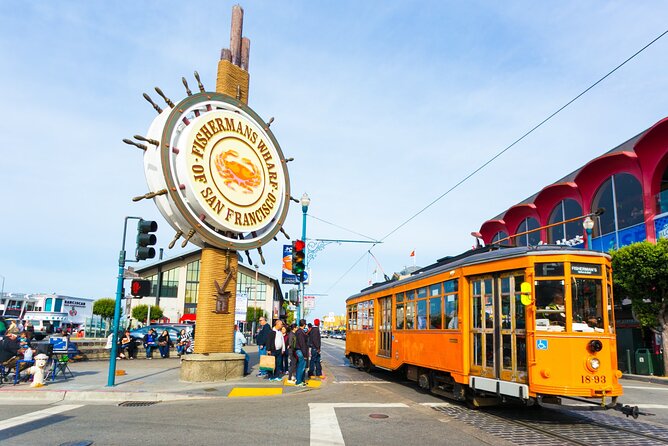
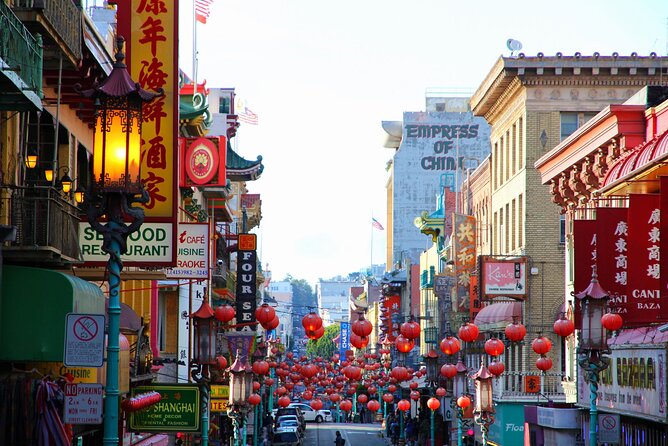
Chinatown is where the self-guided format really helps. You get around 25 minutes, enough for small discoveries—especially if you’re willing to meander instead of rushing straight down the main drag.
This area also includes references tied to pop culture and classic Chinatown lore. For example, you’ll pass Ross Alley, known for its use in Indiana Jones-style filming, and you’ll hear about the Fortune cookie factory type of landmark that visitors seek out. Even if you only read about it briefly and don’t go inside, knowing what to look for makes the streets feel more meaningful.
One consideration: 25 minutes in Chinatown can feel fast if your group includes shoppers or snack hunters. If you want to do this right, treat it like a “sampling and strolling” window. Grab a bite, pause near a landmark, and keep moving so you still have energy for North Beach after.
Also, I’d use the app here to manage your group’s attention. Chinatown rewards curiosity, but it can scatter people fast. A self-guided app gives you a shared anchor point so you don’t end up with half your group disappearing into side streets while you wait.
Grace Cathedral and the Cable Car Museum: Small Stops With Big Story Feel
After Chinatown, the route connects to the Nob Hill side of the city experience—where you get views and quick looks at several historically flavored stops.
Grace Cathedral is one highlight mentioned in the route context. It’s described as inspired by Notre Dame of Paris, so even a short look can help you understand why people get excited seeing it from the outside. This is the kind of stop where the value is mostly visual: the architecture, the scale, and the contrast with nearby older street scenes.
You also get a note about the very first Fairmont hotel in the world, which gives you a historical lens as you walk around nearby areas. I like stops like this because they don’t demand an all-day commitment. You get the story angle, then you’re free to spend your limited time where you get the best photos.
Then there’s the cable car museum-type concept stop: a place with historic cable cars, photographs, mechanical displays, and a gift shop connected to the Friends of the Cable Car Museum. Even if you mostly peek, it helps you understand the system you just rode—and it turns the cable car from a fun ride into a living piece of San Francisco engineering culture.
If you’re short on time, the strategy is simple: look at the main displays, take a few photos, and don’t let the gift shop steal your whole hour. You still have North Beach and the Wharf area ahead.
North Beach (Italian Quarter) and the 15-Minute Snack Sprint
North Beach is your Italian Quarter-style stop, with about 15 minutes. That’s not a lot, so this is best used like a sprint with direction.
I’d do three things in that time:
1) walk a block or two to catch the neighborhood rhythm,
2) find one place to grab a quick snack or coffee, and
3) take your best photo angle before you feel rushed.
The big win of North Beach is that it shifts the vibe from shopping downtown to a more street-level, food-and-café feel. It’s also a natural bridge to Fisherman’s Wharf, since the city layout encourages walking and gradual changes in scenery.
You can definitely overspend time here if you’re hungry and find a perfect bite. But because your total ride experience is designed for a 1 to 3 hour window, it’s worth staying aware of the clock so you still have energy at the end of the route.
The Wharf Connection: Walking In the Footsteps of Fishing Craft
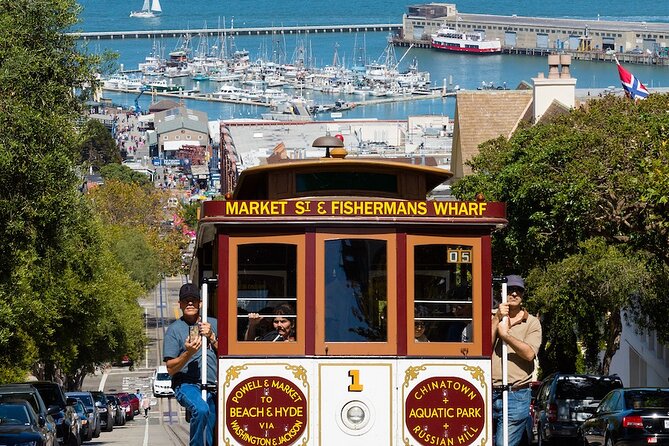
Your tour ends at the Powell/Mason cable car turnaround area at 2350 Taylor St. From there, the experience is set up so you can explore the neighborhood and head toward Fisherman’s Wharf.
Why Wharf works well as an add-on: it’s a place you can keep enjoying after the cable car portion is done. You’ll be near classic waterfront scenes where you can peer down at fishing-related work in calm water and watch fishermen mending nets. The route context also points out how many boats you’ll see are linked to multi-generation fishing craft, which gives the area more meaning than just postcard scenery.
There’s also a historical angle mentioned: from the Gold Rush into the turn of the century, the fishing fleet included lateen-rigged sailboats that were copies of Italian fishermen’s craft. Green was the prevailing color of tiny boats, and a patron saint name appeared on the hull. Even if you don’t memorize those details, they help you look at the waterfront as history, not just entertainment.
If your group loves walking, this ending setup is a big advantage. You’re not stuck returning to wherever you started. You can transition straight into an easy-going “stay longer” plan.
Best Seats and Timing Tips to Keep the Ride Fun
Cable cars can feel like a rollercoaster in your hair and cheeks (the wind plus the movement is part of the charm). But to get the best views and photos, placement matters.
A key tip: aim for outside seats on the left or right. Those positions tend to give you better photo angles as the car snakes along the route. If you care about pictures, don’t treat boarding as a casual free-for-all—try to choose your side quickly once you’re on.
Timing also matters because stop durations vary. Your first stop is very short (about 5 minutes), while Union Square and Chinatown are longer (around 25 minutes each). North Beach is shorter again (about 15 minutes). When you understand that rhythm, you can plan your own “micro-itinerary” around it: photos early, real walking mid-route, and quick snacking before the end.
And one more real-world note based on common complaints: app-based systems can be a headache if something doesn’t load at the wrong moment. If you want fewer stress points, take a screenshot of key info and keep a charged phone. If the app misbehaves and you can’t access your tickets, expect you may need to buy directly at the cable car office area.
Who This Tour Is For (and Who Should Skip It)
This experience is a strong fit if you want:
- Iconic cable car time without waiting for a live guide script,
- a route that covers major neighborhoods efficiently,
- flexibility to pause, linger, or skip stops,
- and an ending that naturally leads you toward Fisherman’s Wharf.
It’s less ideal if you hate tech reliance. If your group doesn’t want to manage an app, or you’re traveling with low battery, spotty connectivity, or limited comfort with digital ticket screens, you may be happier buying cable car tickets directly and riding on your own schedule.
For first-timers to San Francisco, this can be a friendly shortcut. You get the big names (Union Square, Chinatown, North Beach), the scenic transit part, and a smooth transition to the Wharf. For repeat visitors, it’s best if you want a structured cable car ride with just enough prompts to keep you from missing key stops.
Should You Book This San Francisco Cable Car Self-Guided Tour?
I’d book this if your top priority is an iconic cable car ride with flexible pacing. The stop mix is practical, the idea of using the Pintours app to pause and skip is genuinely useful, and ending near Fisherman’s Wharf is a smart way to extend your day.
I’d hesitate if you’re the type who wants zero tech friction. Since some people have reported trouble getting app tickets to work, it’s worth going in with a calm backup plan: charge your phone, keep your confirmation info accessible, and be prepared to handle ticket access if it fails.
If you want the easiest “low-risk” version of cable car sightseeing, you can always skip the app layer and ride using the system’s regular ticketing options. But if you like control and guided prompts—without a full guided tour structure—this is a fun, cost-friendly way to see a lot of San Francisco in a short time.
FAQ
FAQ
Where does the tour start?
It starts at the Cable Car Turnaround on Powell St, Powell St, San Francisco, CA 94102, USA.
Where does the tour end?
It ends at the Powell/Mason Cable Car Turnaround, 2350 Taylor St, San Francisco, CA 94133, USA.
How long does the experience take?
The duration is about 1 to 3 hours.
How much does it cost?
It costs $15.00 per person.
What does the Pintours app do for you?
The app lets you pause the tour and check locations as long as you want, and you can skip stops you don’t like. It also provides information for each stop.
Which areas are included in the route?
You stop at places including Union Square, Chinatown, Nob Hill area highlights (Grace Cathedral and the first Fairmont mention), North Beach (Italian Quarter), and you end near Fisherman’s Wharf so you can explore there.
Is this a private tour?
Yes. Only your group participates.
Are service animals allowed?
Yes, service animals are allowed.
Is there a physical fitness requirement?
The experience is listed as requiring a moderate physical fitness level.
Can I get a refund if I cancel?
Yes. Free cancellation is available up to 24 hours in advance for a full refund.