REVIEW · SAN FRANCISCO
Point Reyes National Seashore Self Guided Driving Audio Tour
Book on Viator →Operated by Adventures with Action · Bookable on Viator
Point Reyes is the kind of place that makes your car feel small. This self-guided GPS-triggered audio drive strings together 53+ stories over a scenic route, so you don’t just pass the sights—you understand them. I love that it’s designed to fit real travel time: about 2 to 3 hours at a comfortable pace, with optional detours when you feel like stretching your legs.
Two things I really like: first, the offline-ready setup means you’re not stuck hunting for signal once you’re out on the peninsula. Second, the audio is hands-free—stories play automatically based on your location, and you can pause whenever you want for photos or a snack.
One drawback to keep in mind: it depends on phone/GPS setup working smoothly, and the route can trigger audio again if you pass the same points later (like if you return the way you came). If you want zero tech friction, give yourself a little time to set up at the start.
In This Review
- Key highlights worth knowing before you go
- A DIY drive through Point Reyes that teaches as you go
- Price and value: $16.99 per group for up to 4
- Before you start: setup steps that make or break the experience
- The route in order: from Bear Valley Visitor Center to the Lighthouse
- Tomales Point detour: remote beaches and photo breaks
- Drakes Estero: a marsh inlet hike with a footbridge view
- Cypress Tree Tunnel and the KPH Radio station story
- Point Reyes Beach and Drakes Beach: ocean views with different moods
- Chimney Rock area: a detour for lifeboat context and elephant seal overlooks
- Historic Point Reyes Lifeboat Station: lifesaving in fog and chaos
- Elephant seal overlook: the story behind the size and the rebound
- Sea Lion Overlook: how to tell sea lions from seals
- South Beach Overlook and lighthouse parking reality
- Leaning Tree: a small stop that completes the tunnel theme
- Practical advice: how to pace this in 2–3 hours
- Who this Point Reyes self-guided audio drive is best for
- Booking it: should you do this drive, or skip it?
- FAQ
- How long does the Point Reyes National Seashore self-guided driving audio tour take?
- What’s the price for the tour?
- What language is the tour available in?
- Does the tour work offline?
- Do I need to buy park passes?
- Where does the tour start and end?
- Is the audio hands-free, or do I have to press play?
- Can I start and pause whenever I want?
- Is this tour available for multiple days?
- What should I do if the tour audio doesn’t work?
- Can I get a refund if I cancel?
Key highlights worth knowing before you go
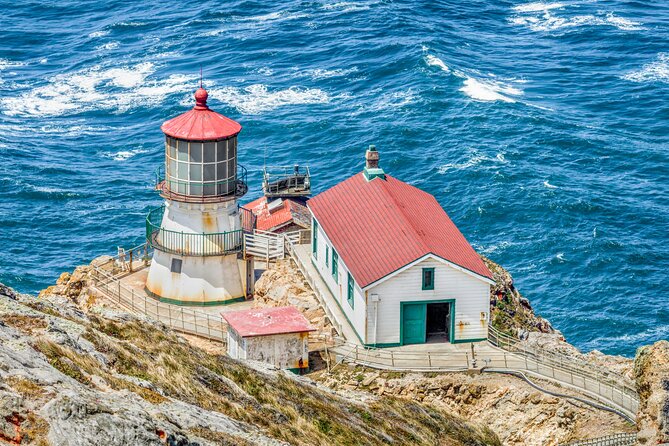
- 53+ audio stories over 21+ miles: a lot of context packed into a drive you can control.
- Offline maps and audio after download: you can keep going without worrying about weak cell service.
- Detours are optional, not chores: you get choices like a Tomales Point beach walk or a Drakes Estero hike.
- Wildlife basics built into the audio: you’ll learn how to spot elephant seals and sea lions.
- Cypress tunnels connect you to history: including the RCA-era KPH radio story.
- Audio can repeat on a return trip: plan to treat the lighthouse segment as your finish.
A DIY drive through Point Reyes that teaches as you go
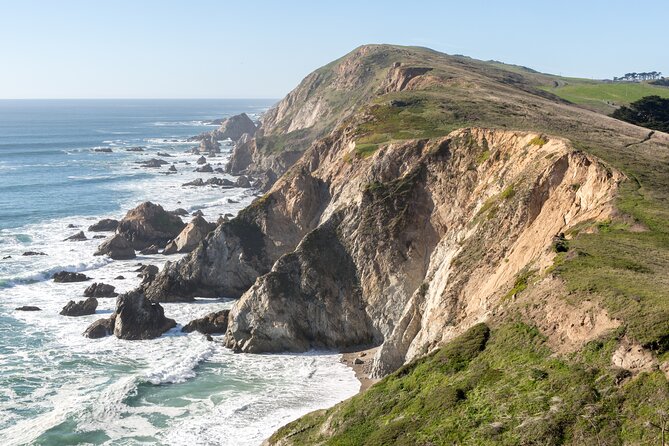
Point Reyes National Seashore is famous for wild coast views, but the best part of this experience is how it turns quick look-outs into short lessons. Instead of reading signs or guessing what you’re seeing, you hear why each place matters and what to watch for nearby.
The route is long enough to feel like a day-trip, not a drive-by. You’re looking at 21+ miles and 53+ audio stories, typically 2–3 hours total, depending on how long you linger at beaches, viewpoints, and trailheads.
And because the tour is set up as a private activity for your group (purchase covers up to 4 people per car), it’s a nice fit for couples and small families who don’t want to line up behind strangers.
You can also read our reviews of more tours and experiences in San Francisco.



Price and value: $16.99 per group for up to 4
At $16.99 per group (up to 4), this works out as one of the more budget-friendly ways to enjoy a self-guided “tour-style” day without paying per person. If you’re traveling with friends or family, that per-car structure is the real value win—you’re not forced into buying separate tickets just because you’re all in the same vehicle.
It also saves money in a subtle way: you’re not paying for a dedicated guide time slot. You’re paying for story content plus a route that tells you where to turn and when to slow down.
One caution on value: this tour includes the audio experience, but park passes are not included, so you should plan accordingly if you need one for entry or parking. The upside is that all the listed stops are free to access once you’re in the area, so your day isn’t weighed down by extra ticket costs for each viewpoint.
Before you start: setup steps that make or break the experience
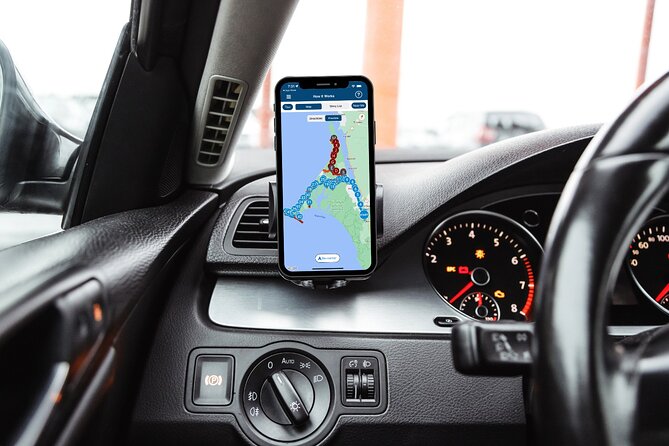
This is a self-guided driving tour. No one meets you, and the first story triggers automatically as you drive past the start area. That’s convenient, but it also means you need your phone ready.
Here’s the setup reality:
- After booking, you’ll get email/text instructions with a password.
- You install and use Action’s Tour Guide App.
- You must download the tour while you’re in strong Wi‑Fi or cellular, then it works offline.
When you’re onsite, you open the app and choose the correct tour version if needed. Then you drive toward the route start and let the GPS cues start your audio.
For audio playback, you can use your phone speaker, or connect to your car using Bluetooth, USB, or AUX. If you plan to get out at overlooks and short trail sections, you might prefer headphones for the walking parts so the audio stays clear.
Practical tip: if you’re traveling with older relatives or anyone who doesn’t love apps, it helps to do the setup while you’re still calm and parked—because once you start driving, you want everything stable.
The route in order: from Bear Valley Visitor Center to the Lighthouse
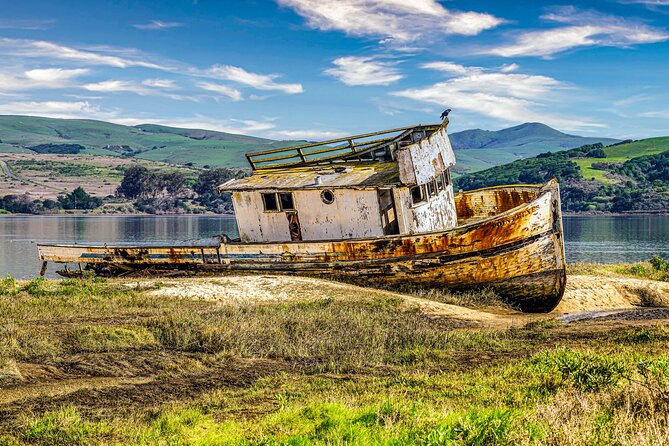
The tour starts at 1 Bear Valley Visitor Center Access Road, Point Reyes Station, CA 94956 and ends at the Lighthouse Visitor Center, 27000 Sir Francis Drake Blvd, Inverness, CA 94937. It runs 9:00 AM to 5:00 PM daily during the listed season dates.
That start-to-finish design matters. The lighthouse area is your endpoint, so you’ll enjoy the most “flow” if you treat the tour as a one-way story arc rather than something you try to repeat in reverse.
Also remember the route length: with 21+ miles, you’ll want to drive at a relaxed pace and plan a little extra time if you stop often. This is not a “get it done in 45 minutes” kind of tour.
Tomales Point detour: remote beaches and photo breaks
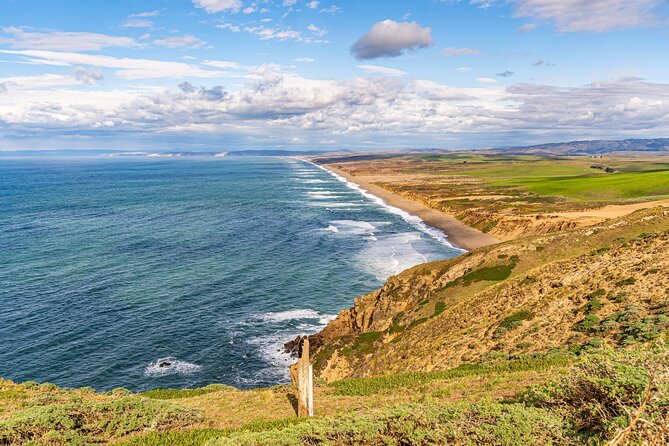
Early on, you’ll get an option to detour to Tomales Point, a remote, windswept area that’s popular for good reason. The detour is 45 minutes round trip, and you’ll want to budget a bit of time for walking around and taking photos.
What makes this stop worthwhile in the context of the audio tour is that it gives you a structured reason to go beyond the main drive. Instead of thinking, should we stop, you get prompted to make the call and then use the time well.
If the weather’s rough, you’ll still get the point of Tomales Point: dramatic views and that “edge of the world” feeling. Just keep in mind that the detour is long enough that it can slow your overall schedule.





Drakes Estero: a marsh inlet hike with a footbridge view
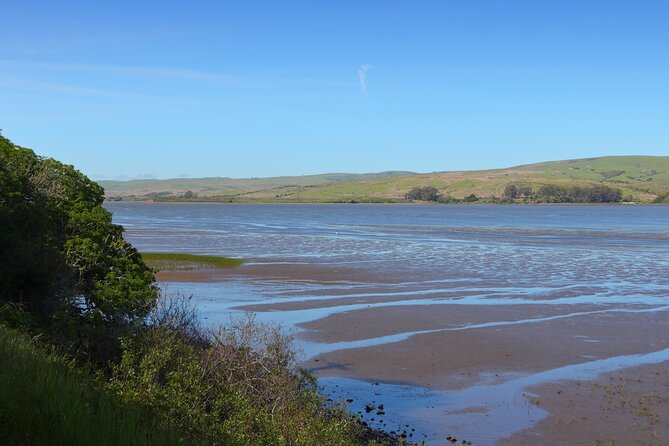
Next up is Drakes Estero, described in plain terms as a marshy inlet. If you want the short walk, there’s a 2.5 mile round-trip trail with a trailhead coming up shortly after the first prompt.
This is one of the most valuable moments on the tour because it shifts you from pure coastline viewpoints to something more life-filled and subtle. You cross coastal grasslands and reach a scenic footbridge over the bay.
Drawback to consider: if you’re short on time or traveling with mobility limits, you can skip the hike and stay in the car. The tour is designed so you don’t have to do every detour, but you’ll miss the best “stretch your legs” payoff.
Cypress Tree Tunnel and the KPH Radio station story
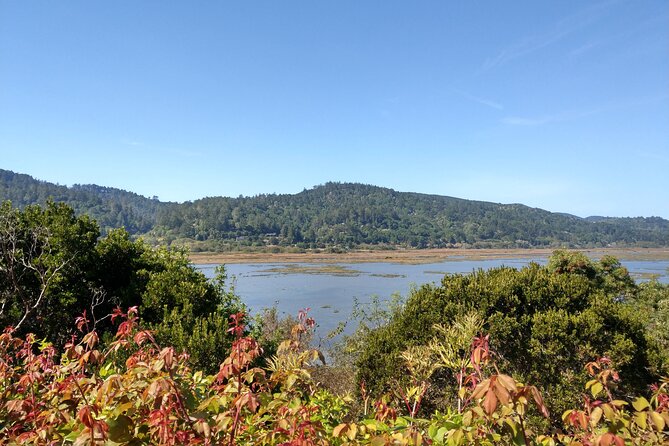
Then the audio pushes you toward Cypress Tree Tunnel, where rows of cypress trees create that tunnel effect. The story links these trees to an unusual piece of coast history: the KPH radio station built by RCA in 1929, originally connected to Morse code communications with ships at sea.
The tour’s angle here is smart for travelers: it ties a simple visual feature (a tree-lined road) to why it exists and what it was used for. It also keeps your mind busy while the drive continues—so you notice details you might otherwise pass.
Practical note: this is a stop where you may want a quick photo, then keep moving. Don’t treat it like a long walk—use it as a brief reset before the next big viewpoints.
Point Reyes Beach and Drakes Beach: ocean views with different moods
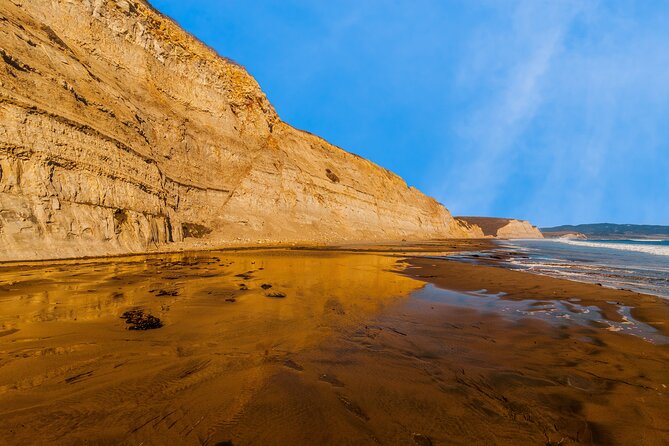
As you continue, you’ll reach two classic beach areas in sequence.
Point Reyes Beach is known for a long stretch—11 miles of sand—plus ocean views. The audio also mentions winter and spring gray whale sightings, which is useful if you’re planning your timing around wildlife season.
Then you’ll hit Drakes Beach, a beach facing Drakes Bay. Because of that orientation, the wind and wave intensity are typically gentler than the open-ocean side. The audio also notes white sandstone cliffs as a backdrop.
Why this pairing works: you see how the coast changes direction and exposure. One stop teaches you to look for wildlife and horizon cues over a bigger beach, while the other teaches you how geography changes what the ocean feels like under the wind.
If you’re sensitive to fog or cool breezes, bring a layer. This area can feel colder than you expect even on a clear day.
Chimney Rock area: a detour for lifeboat context and elephant seal overlooks
When the audio mentions turning left at the fork, it’s pointing you toward a detour for the lifesaving station overlook and Chimney Rock for ocean views. You also get an option that leads you past views connected to elephant seals.
The value here is context. You’re not just stopping at a random viewpoint; you’re building a mental link between the coast, wrecks, survival infrastructure, and the animals that make the same coast their home.
This is also one of the segments where timing can shift. Plan for the fact that a short detour can become a longer linger if the views are good.
Historic Point Reyes Lifeboat Station: lifesaving in fog and chaos
The tour then moves into the Historic Point Reyes Lifeboat Station, tied to the earliest life-saving efforts close to the point. The station began operations in 1878, and the tour’s narration uses the period details you can’t easily guess from a plaque: the leader was called the keeper, the workers were surfmen, and they patrolled for wrecks while listening for voices through fog.
What makes this stop more than just trivia is the scale of impact: the tour notes that the first station saved people from 14 major shipwrecks over 37 years. It’s a reminder that the drama of this coast isn’t only in today’s weather—it’s in how people had to survive there.
If you like stories that connect environment to human behavior, this is a high-impact part of the drive.
Elephant seal overlook: the story behind the size and the rebound
At the Elephant Seal Overlook, the audio turns wildlife into something you understand. It talks about how northern elephant seals were heavily reduced after European settlers found seal blubber for oil. By 1892, only around 75 were left along North America’s coast.
Then the story shifts to protection and recovery: the audio notes federal protection in the 1920s and a slow population rebound, with the first breeding pair back at Point Reyes in 1981. It also gives a big modern picture—around 200,000 along the Pacific coast of the US and Mexico.
Why this is worth including on a driving tour: it changes how you look when you arrive. You’re not just spotting big animals on the beach; you’re seeing a conservation comeback you can tie to real human actions and government protection.
Sea Lion Overlook: how to tell sea lions from seals
Next is Sea Lion Overlook, where 54 steps lead down to a coastal view that’s usually full of sea lions. The tour helpfully gives you quick identification cues: look for ear flaps and folded-in back flippers. The audio contrasts sea lion movement on land with how seals differ.
It also includes seasonal behavior details, including breeding season between May and August, male and female sizes, and how territory and fasting work during that period. For the rest of the year, sea lions roam the ocean feeding.
This is one of the tour’s best “you’ll actually use this” moments. If you’ve ever been unsure what you were looking at, this stop solves that confusion.
If you hate stairs, this part is a consideration. The steps are explicitly part of the experience—so decide before you commit.
South Beach Overlook and lighthouse parking reality
The next key moment is South Beach Overlook, arriving near the Point Reyes Lighthouse. The tour notes that this is the only parking lot for the lighthouse, and if it’s full, street parking can get congested on weekends.
So treat the arrival as a planning moment. Don’t casually drive past the lighthouse area if you haven’t mentally decided where you’ll park and how long you’ll spend.
Once you’re at the lighthouse zone, you’ll be finishing the story arc and moving toward the endpoint at the Lighthouse Visitor Center.
Leaning Tree: a small stop that completes the tunnel theme
Before you fully wrap up, the tour includes a Leaning Tree stop. The narration notes another cypress tunnel feel with fewer trees around it, and how the leaning cypress bends over the path without seeming to fall.
This is a “soft landing” stop: it’s small, visual, and calm compared to the big moments like beaches and wildlife. If you’re pacing the tour well, it helps you end your drive with something memorable and not overly rushed.
Practical advice: how to pace this in 2–3 hours
If you want the smoothest experience, think in blocks:
- Do the main drive and accept the quick story stops.
- Pick one longer detour early (Tomales Point) or later (Drakes Estero), not both, if you’re short on time.
- Save extra time for the wildlife and lighthouse area, because those are where you’ll naturally pause.
The audio encourages skipping what you don’t care about. So you’re not locked into doing everything. You’re building a route that makes sense for your interests.
If your goal is photos, you’ll likely go slower than the average time estimate. That’s fine. The tour is meant for your pace, not a strict schedule.
Who this Point Reyes self-guided audio drive is best for
This experience is best for people who want:
- A structured way to see the coast without hiring a guide.
- Storytelling that explains what you’re looking at—especially wildlife and maritime history.
- A low-cost setup where one purchase covers up to 4 people in a car.
It’s also a good fit if you hate group tours. This is private to your group, and the audio plays hands-free once you start.
Where it’s less ideal: if you strongly dislike phone-based planning or you want someone to meet you and handle the details. Setup depends on your ability to download the app on reliable signal and then operate it while parked.
Booking it: should you do this drive, or skip it?
I’d book this tour if you want a cost-effective, story-rich way to experience Point Reyes without adding paid guide time. The best reasons are the offline audio design, the way it teaches you to spot elephant seals and sea lions, and the maritime-history stops that turn viewpoints into real context.
I’d hesitate if you’re worried about tech setup. Some people find the instructions confusing, and if audio triggers don’t feel intuitive, you’ll want to ensure you can get help quickly. If you’re comfortable with downloading an app, connecting to car audio, and following GPS prompts, you’ll likely feel right at home.
If you’re the kind of traveler who likes to stop often, this route gives you permission to do it. If you’re the kind who hates stopping, you can still enjoy the main sequence—just be ready for wildlife and lighthouse to tempt you into lingering.
FAQ
How long does the Point Reyes National Seashore self-guided driving audio tour take?
Plan on about 2 to 3 hours to complete, depending on how long you spend at stops and whether you do optional detours.
What’s the price for the tour?
It costs $16.99 per group, up to 4 people per car.
What language is the tour available in?
The tour is offered in English.
Does the tour work offline?
Yes. After you download the tour while you have strong Wi‑Fi or cellular signal, it works without cellular or Wi‑Fi.
Do I need to buy park passes?
Park passes are not included in the tour.
Where does the tour start and end?
It starts at 1 Bear Valley Visitor Center Access Road, Point Reyes Station, CA 94956, and it ends at the Lighthouse Visitor Center, 27000 Sir Francis Drake Blvd, Inverness, CA 94937.
Is the audio hands-free, or do I have to press play?
It’s hands-free. Audio stories play automatically based on your location, and you can pause as needed.
Can I start and pause whenever I want?
Yes. You can start anytime, pause anywhere, and take breaks for photos or snacks.
Is this tour available for multiple days?
Yes. Access is described as lifetime with no expiry, so you can use it anytime on any trip.
What should I do if the tour audio doesn’t work?
If you have audio issues, you should contact support and use the setup instructions provided after booking.
Can I get a refund if I cancel?
You can cancel up to 24 hours in advance for a full refund. If you cancel less than 24 hours before the start time, the amount is not refunded.