REVIEW · FLAGSTAFF
Self-Guided Audio Driving Tour in Grand Canyon South Rim
Book on Viator →Operated by GuideAlong (GyPSy Guide) · Bookable on Viator
A GPS audio guide turns a drive into a guided day. This self-paced route links the big South Rim viewpoints with smaller roadside stops, so you control timing without giving up context. You’ll get location-triggered stories and tips while you roll past classic overlooks like Desert View Watchtower and Mather Point.
What I like most is how easy it is to create your own plan: park, walk a trail, linger at a viewpoint, then jump back in. I also like the value of the format—one purchase covers your group in one vehicle, and the app can be downloaded for offline use so you’re not stuck hunting for signal inside the park.
One caution: the audio experience depends on your setup. Some people may find the narrator voice or volume less to their liking, so bring a car charger and make sure your phone audio is easy to hear.
In This Review
- Key Highlights at a Glance
- How This Self-Guided South Rim Audio Tour Actually Works
- Price and Value: Why $19.99 Per Group Can Beat a Ticketed Tour
- The Best Way to Start: Williams, Flagstaff, or Wherever the Tour Begins
- Offline Audio Beats Park Cell Dead Zones
- Scenic Route 64: The Rim-Following Drive That Sets the Tone
- Desert View Watchtower: Architecture, Culture, and Long Views
- Lipan Point and Unkar Delta: When Geology Turns Into a Story
- Duck on a Rock: A Short Stop With a Big Personality
- The Chapel of the Holy Dove: A Tiny Detour That Feels Like Found Time
- Grandview Point: Panoramas and a Reminder About Planning a Hike
- Little Colorado River Gorge and the Navajo Tribal Park View
- Grand Canyon Village on Foot: Parking, Then Walking the Rim Trail
- Williams for Route 66 Energy, Before or After the Canyon
- First Big Views: Mather Point and Its Visitor Center
- Yavapai Point and the Museum of Geology for Layer-Spotters
- How Much Time You Really Need (8 Hours vs 16 Hours Feel)
- Small Setup Details That Make This Tour Go Smoothly
- Who This Tour Is Best For
- Should You Book This Grand Canyon South Rim Audio Driving Tour?
- FAQ
- How long is the Grand Canyon South Rim self-guided audio driving tour?
- How does the audio commentary know when to play?
- Do I need internet service during the tour?
- Is the National Park admission included?
- Where does the tour start and end?
- How many people can share one purchase?
- Is there a cancellation window for a refund?
Key Highlights at a Glance
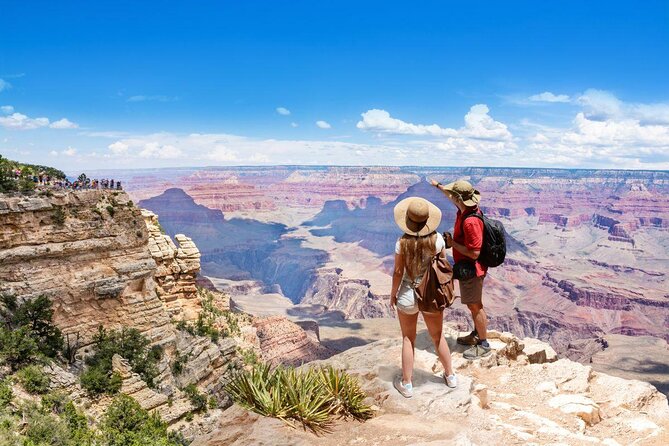
- GPS-triggered audio that plays as you reach overlooks and turns
- Group pricing: one purchase covers up to 8 people in your vehicle
- Offline-ready app once you download the tour before you drive
- South Rim classics plus detours like Williams’ Route 66 and Chapel of the Holy Dove
- Architectural and cultural focus at the Desert View Watchtower and Tusayan Museum & Ruins
How This Self-Guided South Rim Audio Tour Actually Works
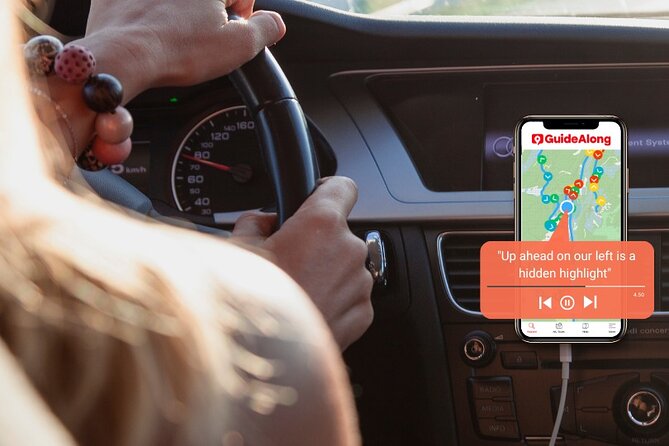
This is a self-guided driving day for the Grand Canyon South Rim, guided by a GPS-aware audio app. The narration is set up as location-based stories, so instead of following a strict bus schedule, you listen when you arrive at (or near) the tour’s key spots. The tour is designed to be flexible: you can start and stop, and you can follow a suggested route or build your own timing around your interests.
The tour is provided by GuideAlong (sometimes described as GyPSy Guide), and it includes 190 points of commentary. That matters because the Grand Canyon is big, and you’ll miss a lot if you’re just scanning for the next parking lot. Here, the audio helps connect what you’re seeing with facts, history, and practical tips.
One practical note: because it’s GPS-based, your phone needs a bit of attention. Keep it charged, and don’t plan to start with a dead battery or a half-downloaded tour.
You can also read our reviews of more tours and experiences in Flagstaff.
Price and Value: Why $19.99 Per Group Can Beat a Ticketed Tour
At $19.99 per group (up to 8), the pricing is simple and unusually low for what you get. Instead of paying per person, you’re buying one guided audio experience for your vehicle, which makes this a strong deal for families, couples traveling with friends, or small groups sharing one car.
You’re not paying for park admission (that’s extra), but you are paying for orientation and storytelling. The “value engine” is the combination of:
- turn-by-turn style guidance (with distances referenced in the tour experience)
- lots of stop explanations while you’re already on the road
- offline audio so you don’t lose the guide when connectivity gets spotty
If you’re planning a shorter visit and want to hit multiple viewpoints without hiring a private guide, this is the kind of purchase that can make the day feel longer and more meaningful.
The Best Way to Start: Williams, Flagstaff, or Wherever the Tour Begins
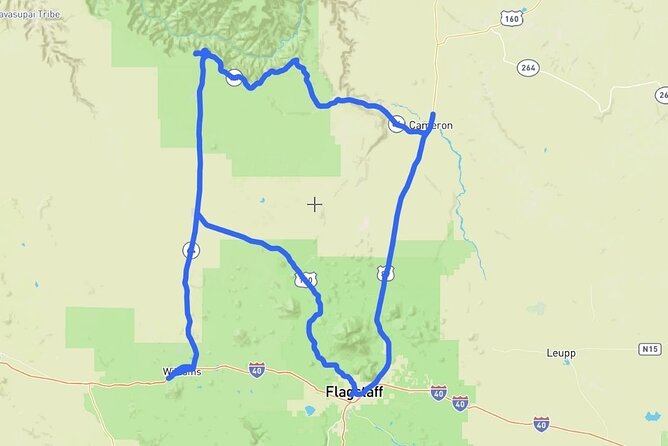
The tour’s start point is listed as Williams, AZ 86046, with the end in Flagstaff, AZ. The useful part is that the audio is designed to trigger based on where your phone says you are, so you don’t need to obsess over “exact” timing.
That said, a few reviews suggest you should be ready to reach an intro area so the tour begins when you expect. The smoothest plan is to start your drive near an obvious starting area the app shows you, then let the GPS cues do their thing.
You’ll also want to do the app steps before you head into the park:
- After booking, you get email/text instructions with a download link
- You sign in with your Apple or Google account and redeem a voucher code
- You download the tour inside the GuideAlong app under My Tours
- Then you run the tour and let it play as you drive
Offline Audio Beats Park Cell Dead Zones
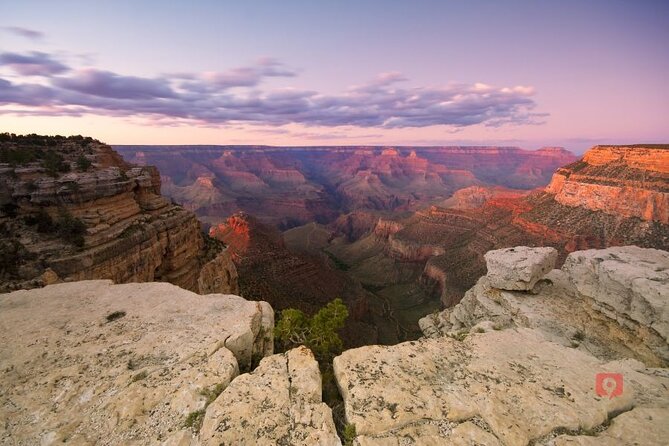
The tour is built to work offline after the download. That’s a big deal on the South Rim, where service can be inconsistent and you don’t want your “guide” to go silent.
I recommend you download over Wi‑Fi or cellular data before you enter the park area. Then bring a USB/C car charger so you’re not living on phone battery math. If you’re using your car’s Bluetooth or connecting audio to your speakers, test it at the start of the drive so you don’t waste time mid-day.
One more small tip: bring earbuds/headphones if you might take a shuttle or want a calmer sound profile while you park and walk briefly.
Scenic Route 64: The Rim-Following Drive That Sets the Tone
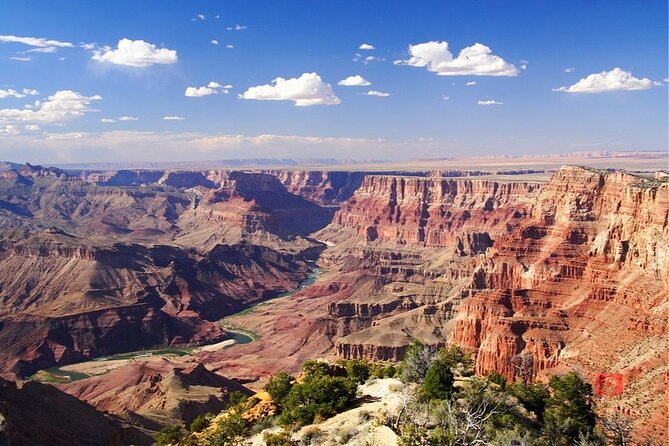
One of the core sections is the scenic drive along Scenic Route 64. It travels between the East Entrance and Grand Canyon Village, and the route follows the rim for about 25 miles.
This is a “slow down” kind of drive. You’ll pass viewpoints spaced so you can stop, step out, take photos, and get back in without feeling like you’re sprinting between overlooks. The tour also points you toward stops like Desert View, Navajo Point, Lipan Point, Moran Point, Grandview Point, and Duck on a Rock, with Desert View Watchtower as the dramatic highlight at the climax of the drive.
If you like a road trip feel—windows down, quick walks, and lots of picture chances—this is the heart of the experience. Just remember the Grand Canyon is sun-heavy much of the year, and stopping often means you’ll want water and sunscreen in the car.
Desert View Watchtower: Architecture, Culture, and Long Views
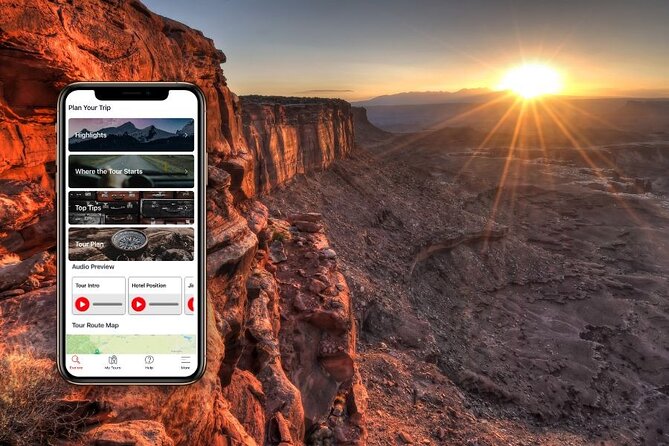
Your biggest “wow” stop on this rim segment is Grand Canyon Desert View Watchtower. It’s tied to the 25-mile Desert View Drive section that connects the Village area toward the eastern entrance.
The watchtower is an architectural work by Mary Colter, built in an Ancestral Puebloan style. On clear days, the tower area is described as offering around 100-mile views—which is exactly the kind of range that makes the Grand Canyon feel even bigger than the photos you’ve seen.
You can also spend time with the indoor collection of artifacts. Even if you’re not a museum person, this stop can change the way you see the canyon because it connects place, people, and design rather than treating the canyon as just a scenic backdrop.
Lipan Point and Unkar Delta: When Geology Turns Into a Story
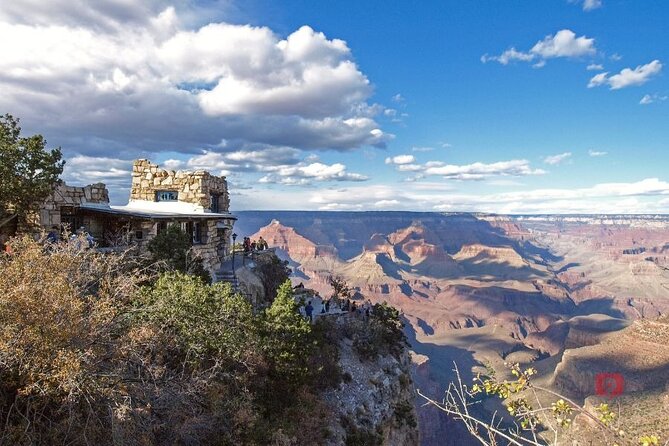
Along Desert View Drive, Lipan Point is one of the stops the tour calls out as “not to be missed.” The viewing here includes a look down toward the Colorado River, and the tour mentions that you might catch powerful rapids like Hance Rapid (noting its difficulty level).
The more mind-bending part is the connection to Unkar Delta, described as one of the canyon’s more active archaeological areas. This is where you get a chance to think about time scales in two ways: human history through Ancestral Puebloan presence, and deep time through the exposed rock layers.
The tour specifically highlights the Grand Canyon Supergroup and the rock strata you can see—starting from the Vishnu Basement Rocks at the oldest end of the sequence. If you’ve ever wanted geology facts that match what you’re seeing, this is where the audio helps most.
Duck on a Rock: A Short Stop With a Big Personality
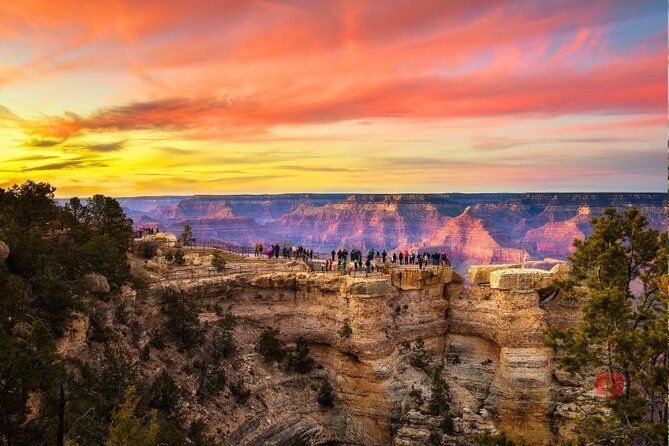
Not every highlight needs a long walk. Duck on a Rock Viewpoint is a quick stop (about 20 minutes suggested) where the tour teases the origin of the name without giving it away too aggressively.
I like this kind of stop because it breaks up the heavier moments. You get a laugh, a quick photo, and a simple pause that keeps the drive from turning into a nonstop “look, photo, go.”
The Chapel of the Holy Dove: A Tiny Detour That Feels Like Found Time
On your way between Flagstaff and the South Entrance, the route includes the Chapel of the Holy Dove, an A-shaped Ponderosa log chapel in the Coconino National Forest.
It was built in 1961/62 by the Watson Family, who were described as medical practitioners in the Grand Canyon area. The chapel stays open for passersby for prayer, reflection, or simply a photo—and the point of including it makes sense. It’s a quiet change of pace that doesn’t require park tickets or major planning.
Grandview Point: Panoramas and a Reminder About Planning a Hike
Another important stop is Grandview Point. It’s one of those viewpoints you don’t rush, because it offers wide views into the canyon and glimpses of the Colorado River.
The tour connects this area with the now-dismantled Grandview Hotel and explains that the trail history links to routes used by Native peoples for access to copper, gold, and silver mines. It also notes the Grandview Trail follows an original route and can be steep—requiring preparation due to sun exposure in summer and potential ice/snow in winter.
So if you’re the type who loves a short hike, you can plan a turn here with caution. If you’re not sure you’ll manage steep terrain, treat the viewpoint as the main event and keep your feet on flatter ground.
Little Colorado River Gorge and the Navajo Tribal Park View
Depending on how you arrive, Little Colorado River Gorge can be your first “sneak peek” into what’s ahead after entering the park area—especially if you’re coming from Cameron, AZ.
The gorge is described as over 3,000 feet (910 m) deep, which again is one of those details that changes your scale perception. The tour mentions the Navajo Tribal Park provides an overlook and picnic facilities for a small entrance fee.
This is a good stop if you want an “in-between” moment before you hit the South Rim crowd areas. It also helps you start the day with a different angle on the canyon system.
Grand Canyon Village on Foot: Parking, Then Walking the Rim Trail
The historic center of the experience is Grand Canyon Village, which is compact and built around famous lodges and businesses like Kolb and Lookout Studios.
Here’s the key shift: you’ll park the car and switch to walking. The tour emphasizes exploring the Rim Trail on foot, calling it something you don’t want to miss. This matters because Grand Canyon views can be better at walking pace, not at windshield pace.
The tour also references popular sightseeing stops like the log train station and the mule barn. The practical value is that you can do a quick circuit, check a couple of anchor buildings, and then return to your car whenever you need a break from the sun or crowds.
Williams for Route 66 Energy, Before or After the Canyon
The route includes Williams, described as a gateway town and a great place to catch one of the best preserved Route 66 Main Street experiences.
This is a useful stop because Grand Canyon days can feel intense. Williams gives you something more human-scale: diner cafes, shopping, and lodging. Since Williams is also listed as a start location, it’s easy to treat it as your “day before” base or as a relaxing add-on after your canyon stops.
If you want the Grand Canyon experience to start with something fun and not just road and parking, Williams is a smart fit.
First Big Views: Mather Point and Its Visitor Center
Mather Point is described as the first view that many visitors get of the canyon’s massiveness. That’s important: early views set expectations, and this spot is an easy entry point for first-timers.
It’s accessible via a paved all-mobilities trail and connects with the Rim Trail for an easy flat walk between the Village and Mather Point. The tour also notes a Visitor Center and cafe at the same location, so you can handle basic needs without leaving the viewpoint zone.
Think of this stop as both scenic and practical. You’re also less likely to feel rushed because the area is designed for steady flow.
Yavapai Point and the Museum of Geology for Layer-Spotters
Yavapai Point is often a second panoramic stop after Mather Point when you arrive through the South Entrance. The tour highlights the Yavapai Museum of Geology, paired with a bookstore and visitor center built to blend with canyon rock.
What makes it useful for this kind of drive is the viewing setup: there’s a covered area with picture windows and educational map models. If you want to understand what you’re seeing before you move on to the next overlook, Yavapai is a solid anchor.
It’s not required, but it adds context that makes later stops like Lipan and Unkar Delta feel more connected.
How Much Time You Really Need (8 Hours vs 16 Hours Feel)
The tour duration is listed as 8 to 16 hours (approx.), which is a huge range. The difference comes down to how long you stop for at each viewpoint and whether you plan any extra walking.
If you have about half a day, you can use the audio cues to hit the must-see points—especially Mather Point, Village walking time, and Desert View Watchtower—without turning the day into a marathon. If you have a full day or more, you’ll have time for extra viewpoints, the cultural detours, and longer breaks in Village.
My advice: plan your day around sunlight. Most of your “wow” moments are exposed viewpoints, and summer heat can turn a quick stop into a sweaty slog.
Small Setup Details That Make This Tour Go Smoothly
This experience isn’t hard, but a few habits help.
Bring a charger and keep your phone at a healthy battery level. Use your car speakers if possible, since audio volume can vary depending on whether you play through the phone speaker or the vehicle system. And if your narration volume feels low, adjust in your phone settings or try a different output (Bluetooth vs speaker).
Also: download the tour ahead of time and double-check you’re signed in correctly. When the app works, it’s one of those “why didn’t I do this sooner?” road-trip upgrades.
Who This Tour Is Best For
This tour is a good fit if you want:
- flexibility to control your pace
- a guided drive through lots of viewpoints without hiring a live driver
- stories and facts that match what’s outside your windshield
- value for small groups traveling together in one vehicle
It may be less ideal if you hate audio narration while driving or if you strongly prefer a particular style of voice. Since the audio is produced as a packaged narration, you should expect it to be consistent throughout the day.
Should You Book This Grand Canyon South Rim Audio Driving Tour?
Book it if you want the Grand Canyon South Rim to feel planned but not rigid. For the price, the combination of GPS-triggered commentary, offline audio, and a route that mixes big viewpoints with smaller stops like Chapel of the Holy Dove and Duck on a Rock makes it a practical way to get more meaning out of each parking lot.
Skip it only if you’re planning to spend most of your time on short hikes and would rather rely on guidebooks than audio cues, or if you know you won’t tolerate any narration while driving.
If you’re a first-timer, this is especially useful. It helps you understand what you’re seeing while you’re already there—so the canyon doesn’t stay a visual postcard.
FAQ
How long is the Grand Canyon South Rim self-guided audio driving tour?
The duration is listed as about 8 to 16 hours, depending on how many stops you make and how long you linger at viewpoints and walking areas.
How does the audio commentary know when to play?
Audio plays automatically based on your phone’s GPS location, with stories, tips, and directions tied to where you are along the driving route.
Do I need internet service during the tour?
No. Once you download the tour in the GuideAlong app, it can be used offline without cell service.
Is the National Park admission included?
No. National Park passes are not included, so you’ll need to handle entry separately.
Where does the tour start and end?
The start is listed in Williams, AZ 86046, and the end is in Flagstaff, AZ. The commentary is location-based, so you may have flexibility about where you begin and end along the route.
How many people can share one purchase?
Pricing is per group, up to 8 people in one vehicle.
Is there a cancellation window for a refund?
Yes. Free cancellation is available if you cancel at least 24 hours before the experience start time for a full refund.