REVIEW · ROME
Santa Maria Maggiore: Pope Francis Entry Ticket, Audio Guide
Book on GetYourGuide →Operated by Enjoy Rome · Bookable on GetYourGuide
Old Rome religion meets modern convenience. This Santa Maria Maggiore ticket takes you in faster with skip-the-line entry, then lets you roam at your own pace while an audio guide points out what you’d otherwise miss. I especially love the 5th-century feel you get from the basilica’s mosaics and marble floor details, and I like how the audio guide turns the visit from looking-around into understanding-what-you’re-seeing.
One catch: the basilica is an active church, so you’ll want to plan for modest dress. Also, the meeting point area can feel a bit fiddly, and there can be a short wait to pick up the audio device once you’re there.
In This Review
- Key highlights to know before you go
- Why Santa Maria Maggiore feels different from other big Roman churches
- The 5th-century mosaics and marble floor: where you should slow down
- The papal side: why mosaics and tombs belong together here
- Crypt of the Nativity: the stop that changes the mood
- Gian Lorenzo Bernini’s tomb: art history fans, pay attention
- Audio guide: how to use it so you don’t waste your hour
- Logistics that actually matter: meeting point, timing, and dress code
- Value for money: is $17 worth it for Santa Maria Maggiore?
- Who this is best for (and who might prefer something else)
- Should you book this Santa Maria Maggiore skip-the-line audio ticket?
- FAQ
- How long is the Santa Maria Maggiore visit?
- Where is the meeting point?
- Does this ticket include skip-the-line entry?
- What languages are available for the audio guide?
- Is the audio guide included with the Santa Maria Maggiore Dome Panoramic view 360 option?
- What should I bring and what clothes are required?
- When should I plan my arrival before closing?
Key highlights to know before you go
- Skip-the-line entrance through a separate entry to cut the worst of the queue
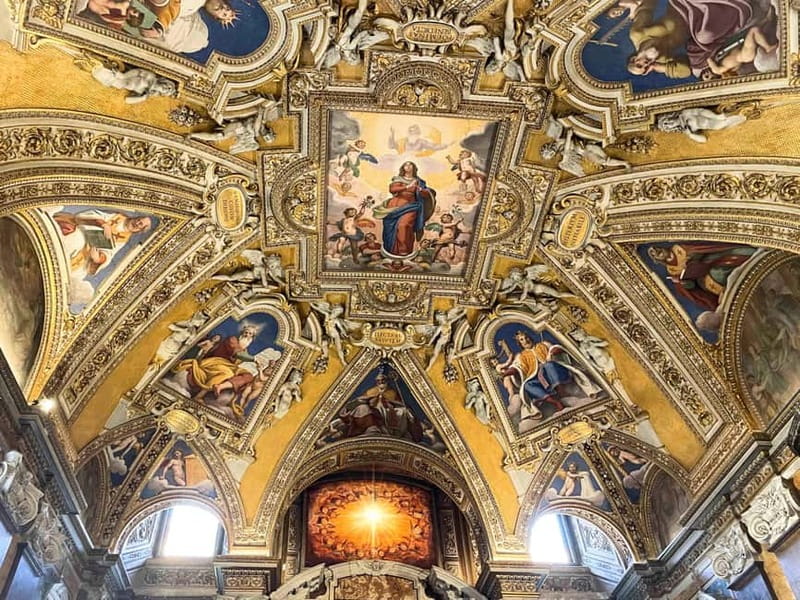
- Early Christian mosaics and polished marble floors that reward slow walking
- Crypt of the Nativity plus the tomb of Gian Lorenzo Bernini
- Miraculous August snowfall legend connected to why the basilica was built
- Multilingual audio guide (English, French, German, Italian, Spanish)
- Small group size with limited participants for a calmer start
Why Santa Maria Maggiore feels different from other big Roman churches
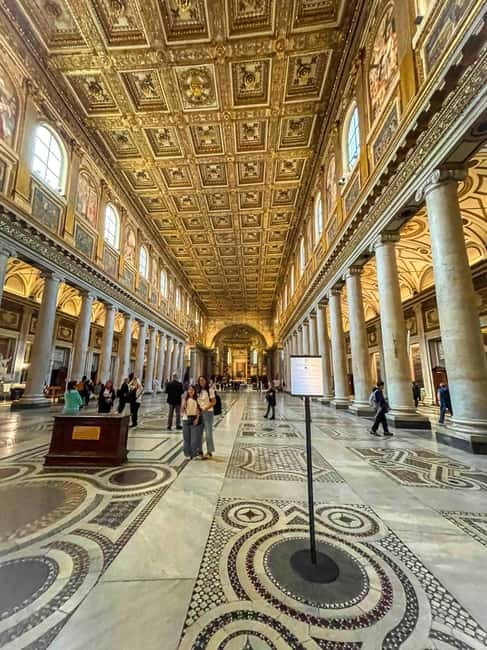
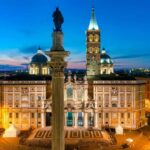
Santa Maria Maggiore is one of the four major papal basilicas, but it doesn’t have to compete with the spectacle of the Colosseum or the Vatican museums to win you over. It’s quieter in a good way—more about looking closely and learning the layers. This experience is built for that: you get skip-the-line access so you don’t lose your best energy standing in the crowd.
Once you’re inside, the basilica rewards your pace. You’re not stuck on a fixed route. With the audio guide option, you can stop where the art actually grabs you—then move on when you’re ready. That’s a big deal in Rome, where even “one hour” can turn into “too rushed” if you don’t have a plan.
And yes, the basilica is free to enter. But the reality is you often face a long waiting line. Paying this $17 gets you the practical benefit: you trade money for time and for clearer guidance once you’re in.
You can also read our reviews of more tours and experiences in Rome.


The 5th-century mosaics and marble floor: where you should slow down
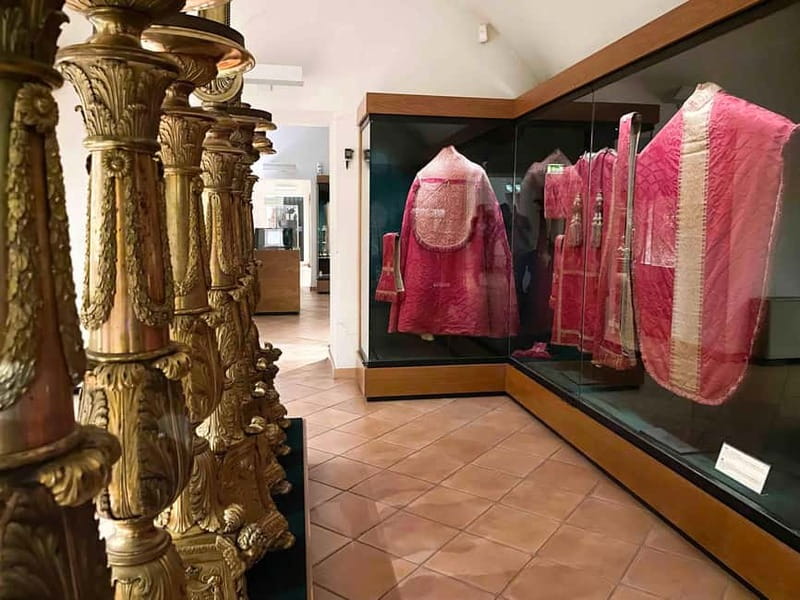
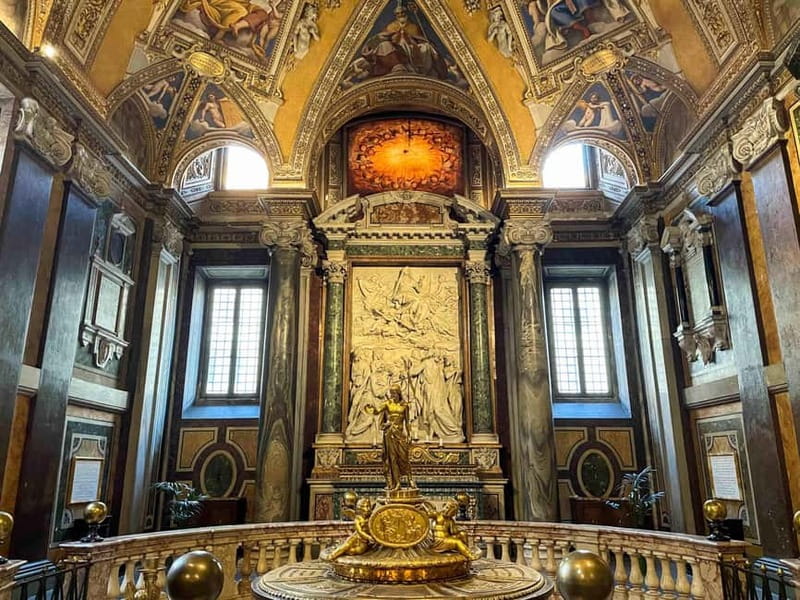
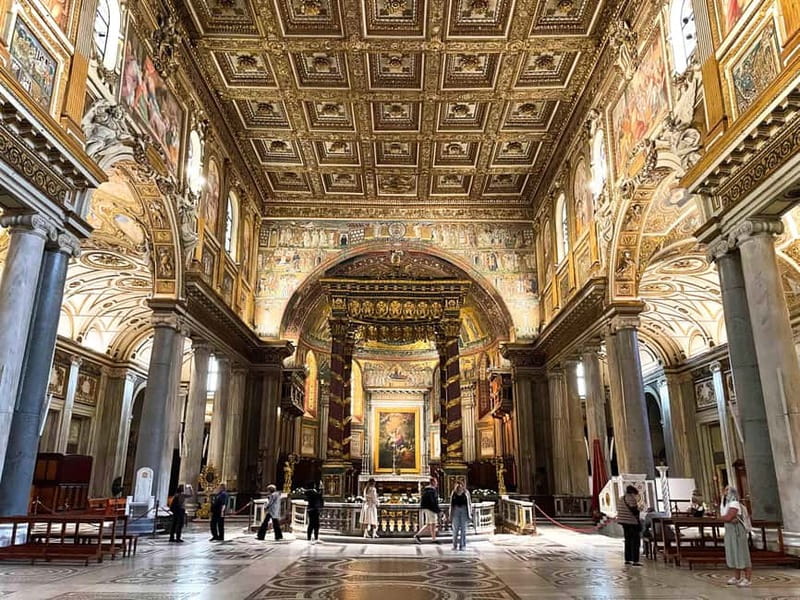
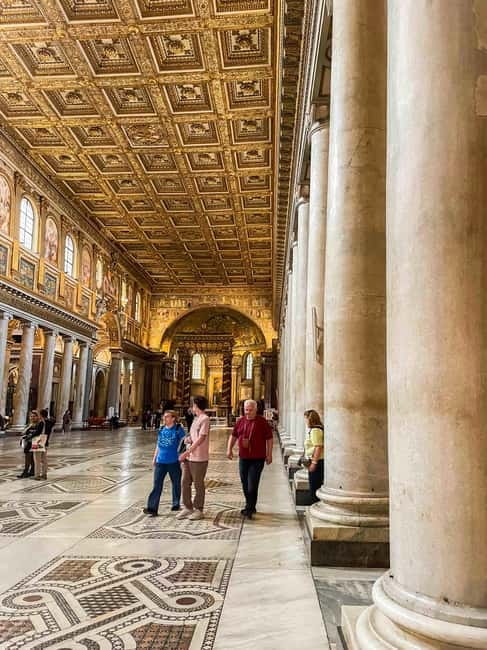
The star of Santa Maria Maggiore is the visual language—mosaics, marble floors, and chapels packed with meaning. Even if you’re not an art-history person, the mosaics create a “readable” effect: you can look at them as scenes, symbols, and storytelling rather than random decoration.
Here’s how I’d approach it so the time feels worth it:
- Start by taking in the overall look first, then circle back to specific mosaic sections.
- Pause on the marble floor patterns. They guide your eye and make the space feel more dimensional.
- Move chapel to chapel instead of sprinting down the main aisle.
The ticket experience is designed for this. It’s only about 1 hour, and that time makes sense if you treat the visit like a careful walk, not a checklist. You’ll have the audio guide to explain what you’re seeing—so you’re not left guessing why a particular chapel or artwork matters.
A helpful note: you’re visiting an active place of worship. That means your body language matters—keep your voice low, and dress appropriately. It’s part of the experience, not a nuisance.
The papal side: why mosaics and tombs belong together here
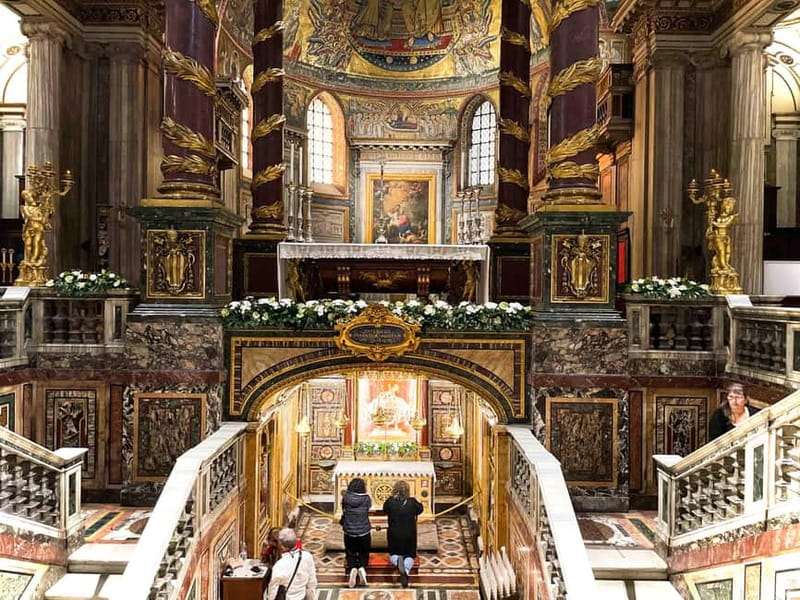
Santa Maria Maggiore isn’t just “pretty church art.” It’s a basilica tied to papal Rome—history you can see in the architecture and in what’s preserved.
As you explore, you’ll hear the context behind the basilica’s importance. One of the most famous stories connected to it is the legend of the miraculous August snowfall, tied to the basilica’s construction. The audio guide is where this makes the most sense, because it connects the legend to why the building exists and what it meant to the people who built it.
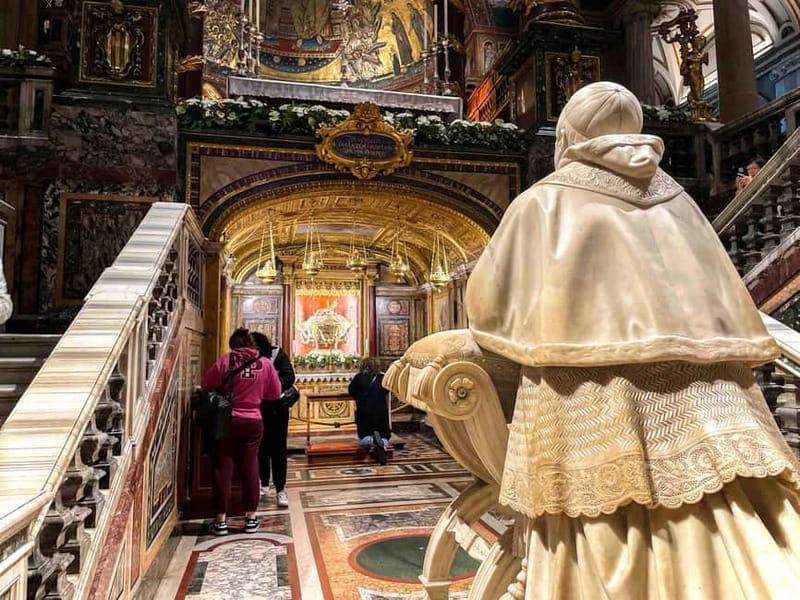
Then there’s the papal layer that makes the tombs feel more personal. You’ll find tombs of several popes, and the space takes on a different tone once you realize you’re standing in a monument to centuries of religious authority.
This is the kind of place where understanding turns viewing into something closer to reflection.
Crypt of the Nativity: the stop that changes the mood
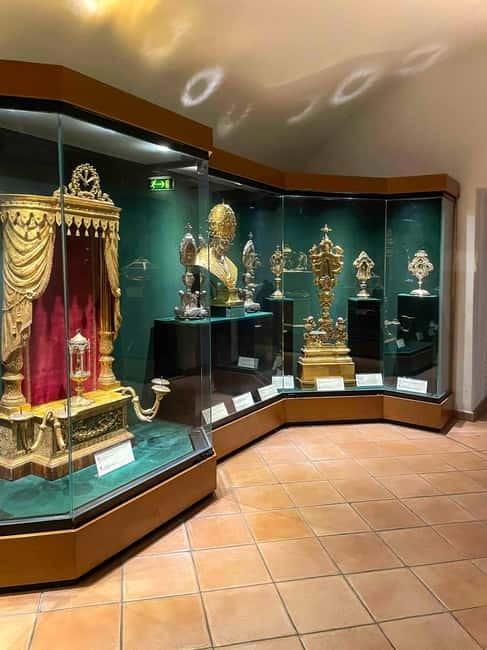
The experience doesn’t end at the main floor. One of the best-value parts is the visit to the Crypt of the Nativity. Crypts in Rome can feel like a detour, but here it’s more like a reset button: fewer distractions, a quieter atmosphere, and a shift from “grand church” to “sacred interior.”
In the crypt area, you get the chance to connect the basilica to the Nativity tradition in a physical way. It’s also where the basilica’s layers feel real rather than decorative. If you like places that offer both art and atmosphere, this is where you’ll likely linger.
Gian Lorenzo Bernini’s tomb: art history fans, pay attention
Another highlight is the tomb of Gian Lorenzo Bernini. This is one of those details that can make a quick visit feel smarter. Even if you don’t know Bernini by name, the audio guide helps place him in the story—so you’re not just spotting a name on a plaque.
This stop works well because it gives you a bridge between Renaissance/Baroque artistic identity and the earlier world of Christian Rome. Santa Maria Maggiore manages both without turning the visit into a museum sprint.


Audio guide: how to use it so you don’t waste your hour
The audio guide is the main reason I consider this ticket more than a simple skip-the-line pass. Without guidance, big churches can blur together. With the audio, you get explanations of key altars, artworks, and sculptures that you’d likely walk past.
The guide is available in several languages: English, French, German, Italian, and Spanish. If you’re the type who likes to understand what you’re seeing, you’ll get a lot from listening while you walk.
A practical way to use it:
- Listen briefly as you arrive at a section, then switch to quiet looking.
- When you hit something you want to remember, let the audio finish the point.
- Don’t try to listen to every word start to finish. Use it like a companion, not a lecture.
One small operational note from real-world experience: sometimes people spend a little time waiting to pick up the audio device after reaching the entrance area. That doesn’t eliminate the value of skipping the main line—it just means you should plan to show up calm and ready.
Logistics that actually matter: meeting point, timing, and dress code
This activity is built for a smooth entry, but Rome still has its own rules.
Meeting point: Via Liberiana 8, next to the Santa Maria Maggiore Church and the green Kiosk. If you’re arriving a little late, it’s easy to get turned around. Give yourself extra minutes to find the kiosk and the representative.
Duration: about 1 hour total, depending on your start time and how long you pause in chapels.
Last entry: typically 30–60 minutes before closing. Build your day so you’re not racing the clock. If you show up near closing, you’ll feel it.
What to bring: a passport is required.
Dress code: shorts and sleeveless shirts are not allowed. You don’t need fancy clothes, but you do need shoulders and legs covered enough to be respectful.
Also remember: audio guide pickup happens onsite, so you’ll want a bit of patience even with the skip-the-line entrance.
Value for money: is $17 worth it for Santa Maria Maggiore?
Let’s do the honest math in travel terms. The basilica itself is free. So why pay $17?
You’re paying for two things:
- Skip-the-line entry via a separate entrance, which saves time and stress.
- The multilingual audio guide, which makes the art and symbolism easier to understand.
If you enjoy self-guided travel, that audio piece is what turns “see a famous church” into “learn something while you see it.” Multiple people found that they would have missed details without the audio, especially around altars and sculptural elements.
Is it worth it if you just want a quick look? Maybe not. But if you like art, symbolism, or simply want a smarter visit with less wandering, this ticket is good value.
Who this is best for (and who might prefer something else)
This works especially well for:
- First-time visitors who want the biggest highlights without dealing with long queues
- People who enjoy self-guided sightseeing with context
- Travelers who like quieter, spiritual spaces where you can pause and think
It’s less ideal if:
- You only want a fast photo-stop and don’t care about explanations
- You dislike any wait time at all (audio device pickup can add a small delay)
- You’re visiting with clothing that doesn’t fit the basilica rules
If you’re traveling as a couple or solo, the small group feel—limited to 10 participants—helps the start stay calm.
Should you book this Santa Maria Maggiore skip-the-line audio ticket?
I’d book it if your plan is to actually see and understand the basilica, not just walk through it. The combination of skip-the-line entry plus a multilingual audio guide is what makes this a practical, high-satisfaction option in Rome.
Skip booking only if you know you’ll be fine joining the normal line and you’re comfortable wandering without interpretation. In that case, you could technically enter for free. But if you want time saved and meaning provided, this $17 ticket is an easy yes.
FAQ
How long is the Santa Maria Maggiore visit?
The experience is listed at about 1 hour.
Where is the meeting point?
Meet at Via Liberiana 8, next to Santa Maria Maggiore Church and the green Kiosk.
Does this ticket include skip-the-line entry?
Yes. It includes skip-the-line access through a separate entrance.
What languages are available for the audio guide?
The audio guide is available in English, French, German, Italian, and Spanish (if you select the audio guide option).
Is the audio guide included with the Santa Maria Maggiore Dome Panoramic view 360 option?
No. For the Dome Panoramic view 360 option, the audio guide is not included.
What should I bring and what clothes are required?
Bring your passport. Shorts and sleeveless shirts are not allowed, since the basilica is an active place of worship.
When should I plan my arrival before closing?
Last entry is typically 30–60 minutes before closing time, so plan to arrive with enough buffer to pick up the audio and walk through calmly.