REVIEW · MALAGA
Ronda Old Town Walking Tour with Audioguide on Your Smartphone
Book on Viator →Operated by TouringBee · Bookable on Viator
Ronda makes you look up. This smartphone audioguide turns the city’s cliffside drama into a step-by-step walk, with 21 historian narrated recordings and an offline map to keep you moving. It’s a smart way to see the big sights at your pace, especially if you’re short on time in Málaga.
Two things I really like: the route hits the postcard moments plus the “less obvious” layers of Ronda, and you still get a clear structure without juggling tickets or waiting for a group. The audio feels built for walking, so you can stop, listen, and then wander on when you’re ready.
One thing to consider: it’s self-guided, so your timing is on you. Also, even though the end point is listed as back at the start, some people find the walk may finish a bit away from the exact original spot, so plan for a short extra stroll.
In This Review
- Key highlights (what makes this one work)
- How the smartphone audioguide keeps you moving in Ronda
- Price and value: what $6.73 buys you
- Start in Plaza del Socorro: a calm entry into the old center
- Balcón del Coño: where the gorge steals your attention
- Plaza de España and the bridge views: Spain’s architecture in walking form
- Puente Nuevo (New Bridge): the signature stop that makes Ronda famous
- Mirador de Aldehuela: a second viewpoint to reset your perspective
- Don Bosco House Museum and Mondragón Palace: when Ronda turns into rooms
- Santa María la Mayor and the Minaret of San Sebastian: religious buildings with layered identities
- Museo Lara and Casa del Rey Moro: curiosity on your route
- Puente Viejo and the Arab Baths: arches and water, not just heights
- Puerta de Almocábar: finish near the city wall edge
- Tips to make this self-guided walk feel easy
- Should you book this Ronda Old Town audioguide?
- FAQ
- Is this tour in English?
- How long is the Ronda Old Town walking tour?
- Do I need tickets to participate?
- Will there be a human guide with me?
- What do I need on my phone?
- Where does the tour start?
- Can I cancel for a refund?
Key highlights (what makes this one work)
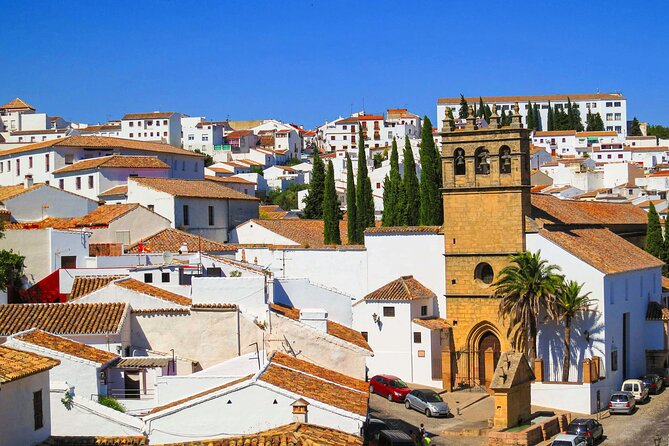
- Smartphone audioguide with 21 historian recordings in English, plus offline map support
- No entry fees for the viewpoints and exterior stops on the route (indoor spots may require tickets)
- Iconic gorge bridges included in the walking flow: Puente Nuevo and Puente Viejo
- Moorish-to-Christian architecture stops like the minaret and the church that changed after the Reconquista
- Photo-friendly canyon overlooks at Balcón del Coño and Mirador de Aldehuela
- A workable length for a day trip: about 1 hour 30 minutes at an easy walking pace
How the smartphone audioguide keeps you moving in Ronda

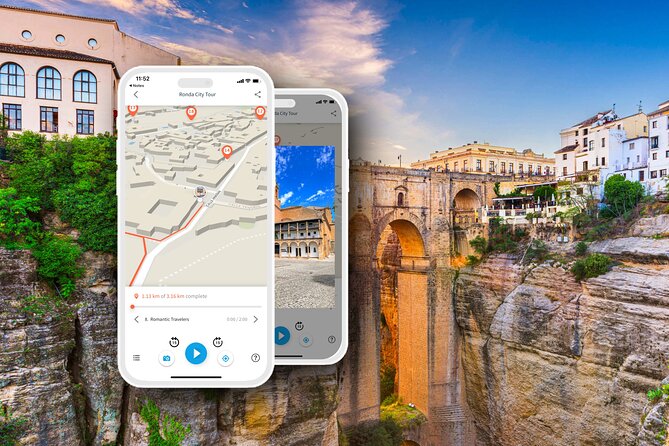
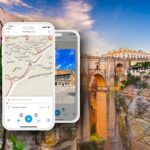
This isn’t a “show up and meet someone” tour. You download the app, activate your purchase, and follow the route on the phone map. You’ll get audio recordings narrated by a professional historian, plus illustrations to help you identify what you’re looking at.
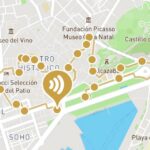
That matters because Ronda can feel like a maze if you’re doing it solo. With an offline map and a pre-set route, you don’t spend your time hunting for the next viewpoint. You just follow the on-screen guidance, pause where it tells you, and let the audio fill in the story behind each stop.
You’ll need to bring your own headphones (not included). If you’re used to sightseeing with one ear free, plan for the opposite on this one: you’ll want both ears for the narration so you don’t miss details while you’re at the overlooks.
You can also read our reviews of more tours and experiences in Malaga.
Price and value: what $6.73 buys you
At about $6.73 per person, you’re paying for information and route help more than for a guided escort. And the best part is that a lot of the highlights on the route are free-to-see from public streets and viewpoints.
You also get 1 year of access to the tour in your preferred language (English is the option listed). That means it’s not just a “one day and done” purchase. If you want to re-walk a section later, you can.
Two practical value notes:
- The route is designed to be completed in roughly 1 hour 30 minutes, which makes it realistic alongside other Ronda plans.
- Since entrance fees/tickets aren’t included, you’re not paying twice—just remember that museums or palace interiors (if you choose to go in) would be separate.
Start in Plaza del Socorro: a calm entry into the old center
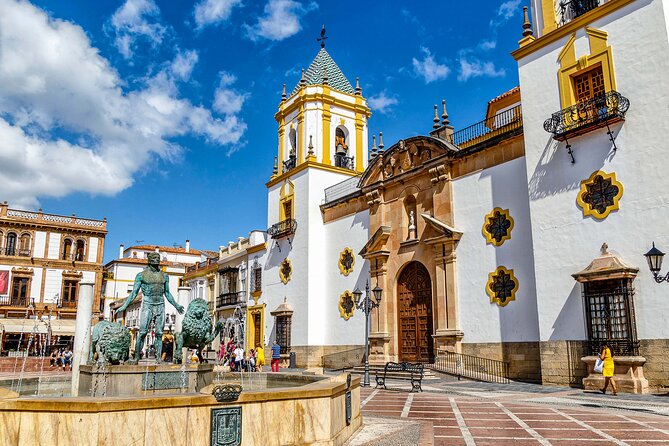
Your walk begins at Plaza del Socorro. This is a good first stop because it’s welcoming and human-scaled—historic buildings, cafes nearby, and a sense that you’ve entered the day-to-day heart of Ronda rather than a dead tourist stage.
The audio here points out two main attractions: the Church of Socorro and the fountain with Hercules and the Two Lions. That combination gives you an immediate sense of place: Ronda isn’t only about cliffs and bridges. It’s also about community spaces where people gather, talk, and take a breather.
If you want an easy start, arrive a few minutes early and get your phone ready before you begin walking. You’ll be glad you did if you’re sorting out headphones, volume, and audio activation.
Balcón del Coño: where the gorge steals your attention
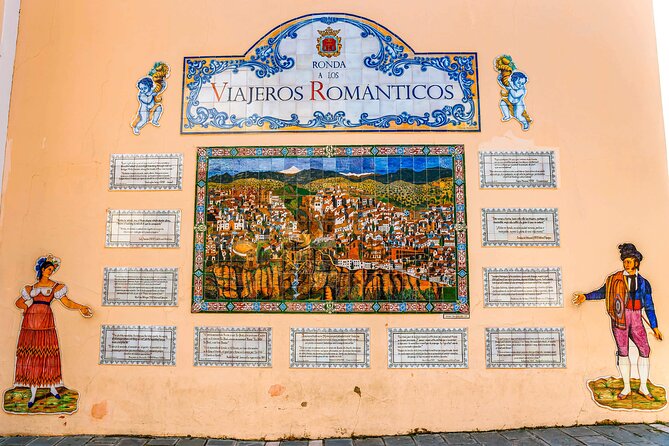
Next comes Balcón del Coño, one of the viewpoints that makes Ronda feel like a special effects set. The name alone gets a laugh from many visitors, but the real show is the view: the gorge edge, the Serranía de Ronda mountain scenery in the distance, and the dramatic backdrop of Puente Nuevo.
This is a stop where the audio helps, but your eyes do most of the work. I’d treat this as your first “photo pause.” Stand still long enough to notice what’s below (the valley area and river) and what’s across (the bridge connection to the other side of town).
Tip: if you’re traveling in warmer months, keep your water handy. Viewpoints can tempt you to linger, and you don’t want to end the walk dehydrated.
Plaza de España and the bridge views: Spain’s architecture in walking form
One segment brings you to the area connected with Spain Square (Plaza de España) and the nearby bullring context. The audio also guides you toward the neoclassical Parador de Ronda facade, a former town hall building.
What I like about this portion is how it ties everyday city life to the big canyon structure. You’ll be looking for the Puente Nuevo bridge spanning the El Tajo gorge, and that viewpoint logic matters: when you later reach the bridge itself, you’ll already understand the geometry of how Ronda is put together.
If you’re the kind of person who likes to orient before you stare, this stop does that for you.
Puente Nuevo (New Bridge): the signature stop that makes Ronda famous
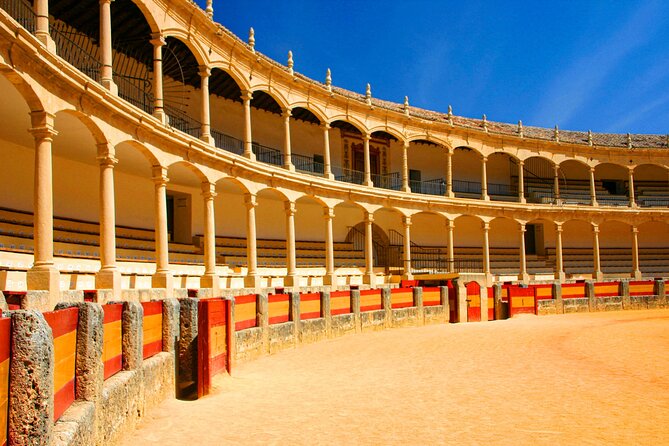
Puente Nuevo is the anchor of the route. Completed in 1793 after 40 years of construction, it crosses the El Tajo gorge and connects the old and new sides of town. The audio gives you the engineering timeline, then you’re left with the real reward: the scale.
From the bridge area, you’ll get views down into the gorge and toward the Guadalevín River below. This is also one of those places where you can see why photographers keep coming back. The stonework, the depth, and the dramatic canyon setting combine into a single “Ronda moment.”
Practical note: the route gives you a stop at the bridge and again later at Puente Viejo. That’s a smart design choice—seeing both helps you compare the city’s approach to crossing the gorge across centuries.
Mirador de Aldehuela: a second viewpoint to reset your perspective
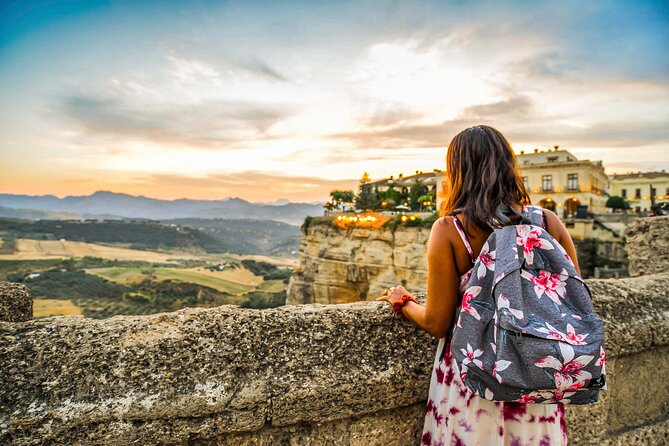
After the bridge focus, the route takes you to Mirador de Aldehuela. This viewpoint is named after engineer José Martín de Aldehuela, who also designed Puente Nuevo, and the audio connects that fact to what you’re seeing.
The goal here is simple: another angle on the gorge, the Guadalevín River, and the surrounding mountains. If you felt a little “bridge overload” earlier, this stop re-centers everything in one wide view.
I also like this moment because it’s a chance to slow down. You don’t need to hurry through it. Stand back from the edge a bit, let your eyes track the canyon lines, and use the audio to fill in the why.
Don Bosco House Museum and Mondragón Palace: when Ronda turns into rooms
Mid-walk, the route shifts from viewpoints into architecture and interiors. You’ll step into the Don Bosco House Museum (Casa Museo Don Bosco), an early 20th-century mansion tied to a wealthy Ronda family. The audio highlights period furnishings, antique details, and decorative azulejo tiles, plus gardens with views of El Tajo gorge and Puente Nuevo.
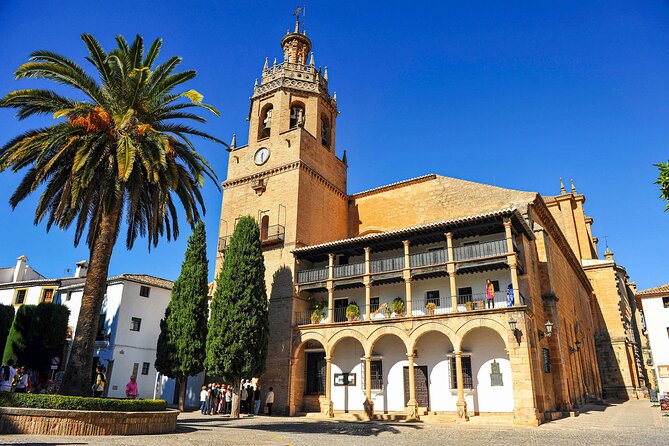
Then you continue to Mondragon Palace (Palacio de Mondragón), which blends Moorish origins with Renaissance and Mudéjar styles. The audio points out that it has served different rulers over time and that today it houses the Municipal Museum.
Two things to keep in mind:
- Entrance fees/tickets are not included, so if you choose to go inside, budget for that separately.
- These palace-and-mansion stops work best if you like architecture and decorative details. If you’re strictly “see the view, move on,” you may want to treat them as quick stops and keep your time focused outdoors.
Santa María la Mayor and the Minaret of San Sebastian: religious buildings with layered identities
Next, the route guides you to Santa María la Mayor. The audio describes a church with Gothic, Renaissance, and Baroque elements, originally a mosque transformed into a Christian church after the Reconquista. You’ll also get pointed attention to the carved altarpiece, columns, and the Mudejar coffered ceiling.
Close by, you’ll find the Minaret of San Sebastian, which the audio frames as a preserved remnant from the Moorish period that later became part of a Christian church complex.
This is one of the most meaningful segments of the walk because it explains how the same urban space can hold different eras at once. You’re not just looking at old buildings—you’re seeing how power, faith, and design changed over time while still leaving physical traces behind.
If you like history that you can actually see, don’t rush this section.
Museo Lara and Casa del Rey Moro: curiosity on your route
The route includes Lara Museum (Museo Lara), housed in an 18th-century palace. The audio calls out the range of collections, including antique scientific instruments, vintage firearms, clocks, and ethnographic artifacts. It also mentions themed rooms such as a Witchcraft and Inquisition exhibit.
Then you’ll reach Casa del Rey Moro, also known for its Moorish palace ruins and gardens. The audio highlights terraced gardens designed by French architect Jean-Claude Nicolas Forestier and an ancient Water Mine with steps carved into the rock leading toward the Guadalevín River below.
These stops are a good contrast to the big gorge views. They’re more about atmosphere, objects, and the feeling of exploring a place with unusual stories. If you enjoy museums with variety (not just one topic), Lara Museum can be a satisfying break from outdoor walking.
Puente Viejo and the Arab Baths: arches and water, not just heights
Later on, you’ll hit Puente Viejo (Old Bridge), dating to the 17th century. The audio frames it as a stone bridge spanning the El Tajo gorge and connecting parts of the old city. The best part is that it gives you another “walking across” experience, with arches and gorge views that feel more intimate than Puente Nuevo’s larger statement.
Then the route guides you to the Arab Baths (Baños Árabes), described as one of the best-preserved Moorish bathhouses in Spain, dating to the 13th and 14th centuries. The audio points out horseshoe arches, star-shaped skylights, and brickwork details, along with the old techniques for heating water and generating steam.
This is where the tour becomes more than sightseeing. The baths add a sensory angle—light patterns, stone textures, and an explanation of how daily life worked centuries ago. If you’re choosing only one interior stop, Arab Baths is the one that feels most tied to Ronda’s identity.
Remember: entrance fees/tickets aren’t included, so plan accordingly if you want to go in.
Puerta de Almocábar: finish near the city wall edge
Your final major stop is Puerta de Almocábar, a fortified gate from the 13th century associated with the Moorish period. The audio emphasizes its defensive purpose—robust stone construction, crenellations, and arches—and frames it as a key access point to the medieval town.
Even if you don’t think of yourself as a “walls and gates” person, this stop helps close the loop. After bridges, churches, palaces, and baths, seeing the city’s entry boundary brings everything back to movement: how people arrived, entered, and lived inside these limits.
One practical note based on how people describe their experience: make sure you give yourself room for a little extra walking at the end. The end location is listed as returning to the starting point, but it’s smart to assume your actual finish point might be nearby rather than exactly where you first started.
Tips to make this self-guided walk feel easy
Here’s what will make your day go smoothly:
- Bring headphones and charge your phone fully. You’ll rely on both for the narration.
- Download and activate the tour before you commit to the route. If activation takes time, you’ll want that buffer while you’re still near the start.
- Wear shoes you trust for uneven old-street walking. This is a walking tour with lots of stops and brief pauses.
- Plan for photos at the viewpoints (Balcón del Coño and Mirador de Aldehuela). The best shots usually take a couple extra minutes.
- If you’re parking, don’t assume the end point is a quick hop back to your car. Build in time for a short return walk.
Should you book this Ronda Old Town audioguide?
Book it if you want an efficient way to cover Ronda’s big highlights without paying for a live guide, and you like the idea of a self-paced audio route that keeps you oriented. At this price, it’s also a solid option for a day trip when you need to “see the city” fast—Puente Nuevo, Puente Viejo, Moorish-to-Christian architecture, and the canyon viewpoints are all built into one flow.
Skip it (or at least treat it as a partial walk) if you’re hoping for a fully guided experience with human interaction, or if you’re not interested in museums and interior stops where tickets may be extra. The app can’t replace a person who can answer questions on the fly, but it does a strong job of giving you context while you walk.
If you’re comfortable using your phone outdoors and you bring headphones, this is an easy, good-value way to experience Ronda’s dramatic geography and layered identity.
FAQ
Is this tour in English?
Yes. The audioguide is offered in English.
How long is the Ronda Old Town walking tour?
It takes about 1 hour 30 minutes (approx.).
Do I need tickets to participate?
You don’t need an entry fee to join the experience. The tour notes that entrance fee/tickets are not included for any sites that require them.
Will there be a human guide with me?
No. It’s self-guided, and there is no human guide at the meeting point.
What do I need on my phone?
You’ll need a smartphone, the audio guide app (iOS and Android are supported), and headphones (not included). You must download the app, activate your purchase, and follow the route on the mobile map.
Where does the tour start?
The start point is Plaza del Socorro (Pl. del Socorro, 29400 Ronda, Málaga, Spain).
Can I cancel for a refund?
Yes, free cancellation is available. You can cancel up to 24 hours in advance for a full refund.
If you want, tell me what month you’re going and whether you plan to visit the indoor stops (palaces/museum/baths). I can suggest a smart timing plan for that schedule.