REVIEW · ALICANTE
Alicante’s History and Highlights: Self-Guided Walking Tour
Book on Viator →Operated by VoiceMap Audio Tours · Bookable on Viator
Alicante can feel big fast. This self-guided audio GPS walk strings together major sights in a calm, logical route, with you in control from start to finish at El Adivinador. It’s a great way to get oriented without chasing a group.
I really like two things here. First, the audio is easy to manage like an audiobook: you can pause, take breaks, and restart when you want. Second, the narration comes across clear and lightly humorous, which keeps all the historical bits from feeling like a lecture.
One thing to think about: you’ll need your own smartphone and headphones, and you’ll be reading the route on screen while you walk. If you prefer a fully guided experience with human interaction, this won’t scratch that itch.
In This Review
- Key highlights you’ll actually notice on the walk
- Start at El Adivinador and get your bearings quickly
- Explanada de España: the palm-and-mosaic promenade moment
- Alicante City Hall and the story of how the city governs itself
- Plaza Santa Faz and Plaça de la Santíssima Faç: medieval-era atmosphere
- Basilica of St Mary: architectural change you can sense while walking
- Central Market Alicante: where the city’s food story becomes real
- Bonfire Museum and Hogueras/Tardeo: why Alicante calls itself the City of Light
- Casa Carbonell: revenge, elegance, and a strong story at the street level
- Calle Jorge Juan and the composer finale: names that keep Alicante’s legacy alive
- Plaza 25 de Mayo and the 1938 bombing: remembering without getting lost
- Price and value: $11.99 for a full self-guided audio day
- Logistics that make or break a self-guided walk
- Who this self-guided Alicante walk suits best
- Should you book this Alicante walking tour?
- FAQ
- How long is the self-guided Alicante walking tour?
- Where does the tour start and where does it end?
- What language is the tour available in?
- What do I need to bring with me?
- Is the tour usable offline?
- Can I replay or use the tour after booking?
- Can I cancel and get a refund?
Key highlights you’ll actually notice on the walk
- Audio you control: pause, rewind, and listen at your own pace.
- Offline support in English: audio, maps, and geodata are available for the route.
- A route that mixes eras: promenade views, old squares, architecture, festival lore, and war remembrance.
- Stops designed for seeing, not sprinting: the path keeps you looking at landmarks while the story plays.
- Good value for the price: a full audio experience for about the cost of a couple coffees.
- Easy start point: begin at the well-known El Adivinador sculpture area.
Start at El Adivinador and get your bearings quickly
You begin by finding the El Adivinador sculpture at Pl. Puerta del Mar. It’s a strong “welcome” landmark: you’ll recognize it fast, and it sets the tone for the day’s theme of hope, curiosity, and local storytelling.
From the first minute, the audio approach works well because it doesn’t force you into a rigid pace. You can linger at the edges of streets, look back at the sea, and let the history land while you’re actually seeing what the speaker is pointing to.
Practical tip: stand still at the start long enough to sync your phone and headphones before you move on. It saves you from the usual walking-tour frustration of hearing nothing while you’re crossing the street.
You can also read our reviews of more tours and experiences in Alicante.

Explanada de España: the palm-and-mosaic promenade moment
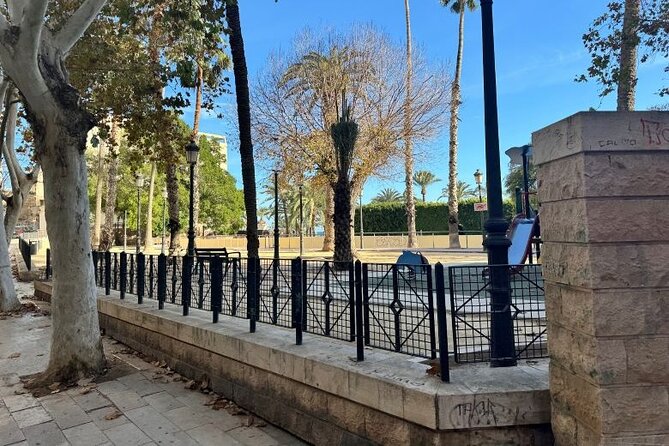
Next you walk along the Explanada de España, Alicante’s iconic promenade. The big draw is visual: palm-lined views plus those colorful mosaic tiles that run along the walkway.
This is a perfect section to use the audio flexibly. If you want photos, slow down. If you want to walk and listen, keep going. Either way, the narration fits the setting because it’s tied to what you’re seeing right in front of you, not distant facts you can’t picture.
If you’re traveling in warmer months, this is also a good place to choose your “comfort strategy.” You can aim for shadier spots under the palms while still keeping your route simple.
Alicante City Hall and the story of how the city governs itself
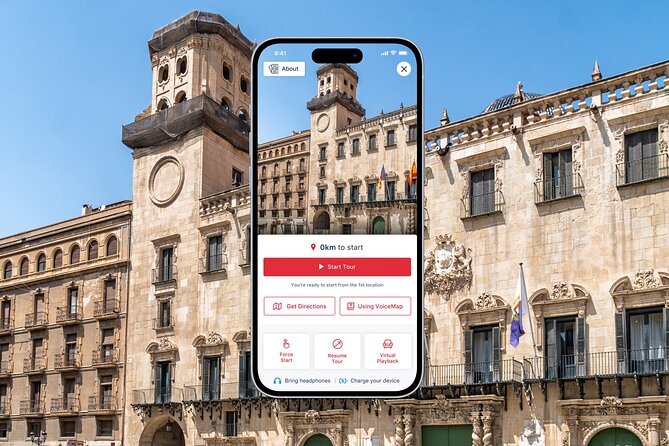
You then pass Alicante City Hall, a standout building that anchors the route in civic history. The theme here is how administrative decisions and local institutions shaped the Alicante you walk through today.
Even if architecture isn’t your main interest, you’ll get value from this stop because it adds structure. The walk starts feeling less like random sightseeing and more like a connected story: sea trade and public life lead to governance, which leads to squares and churches.
If you like to understand what you’re looking at, this is the stop where you’ll likely pause for a second look at details on the building facade while the audio talks.
Plaza Santa Faz and Plaça de la Santíssima Faç: medieval-era atmosphere
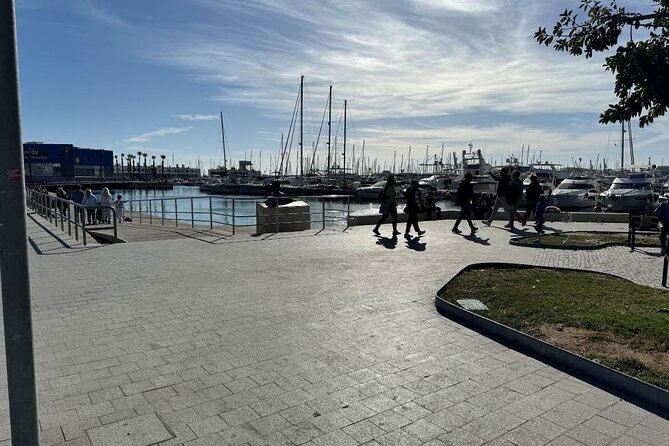
The route brings you into Plaza Santa Faz, a historic square tied to the medieval side of Alicante’s identity. A little later, you’ll also pass by Plaça de la Santíssima Faç—same name, different spelling, same idea: the city’s older layers show up in street corners and signage.
Squares like these matter because they’re where daily life has always happened. You’re not just studying stone; you’re standing in the same kind of open space where people historically gathered, waited, prayed, and traded stories.
If you want the best experience here, don’t rush. Let the audio run, then step back for a quick glance around. Squares make much more sense when you can take in the edges: where people would have crossed, where the sightlines open.
Basilica of St Mary: architectural change you can sense while walking
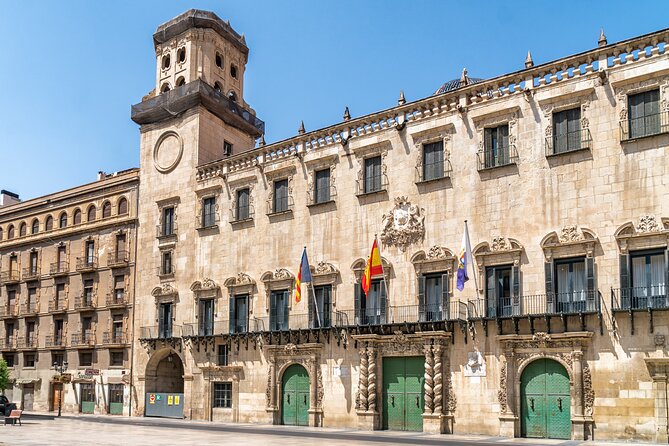
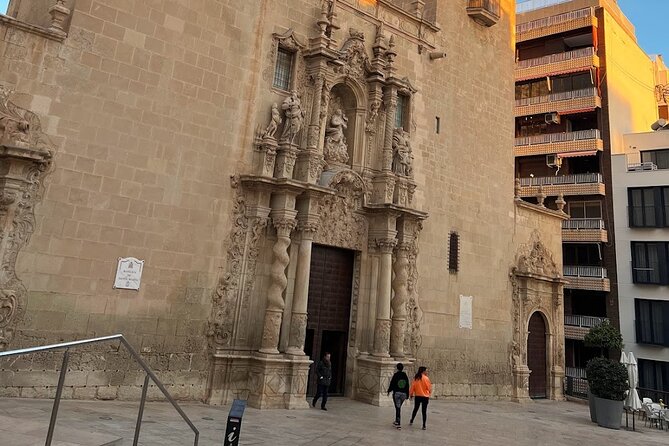
As you move on, you come to the Basilica of St Mary. This is one of those stops where the building’s long evolution shows up as different layers of style and time.
I like this part of the route because it teaches you how to “read” a church beyond the obvious. Even without going inside (entrances aren’t included), you can still get a strong feel for how the structure grew and what it meant for the city.
Drawback to note: since tickets aren’t included, your experience will depend on what you can see from the outside and how the audio frames it. Still, it’s a worthwhile stop if you like architecture and context.
Central Market Alicante: where the city’s food story becomes real
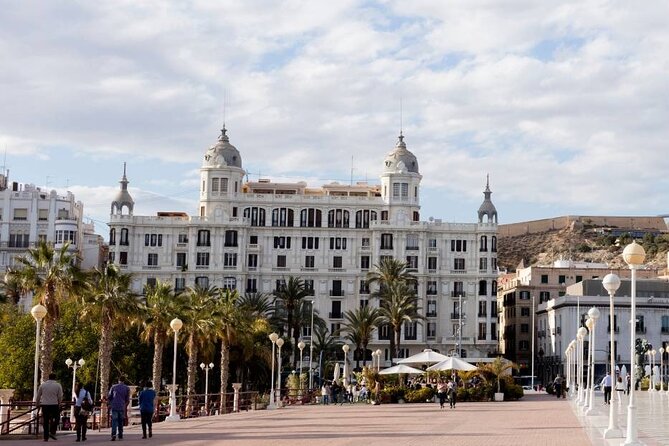
Now the route shifts to food and everyday energy with the Central Market. This is where the audio experience starts paying off in a practical way: you get ideas for what to eat, and you understand why the market matters culturally.
It’s also a smart time to do a real-life break. Grab a snack, wander a few aisles, and use the flexibility of the self-guided format to match the market rhythm to your schedule. The audio won’t care if you take an extra 15 minutes to sit.
A good strategy: listen through the market segment first, then return later if you want to shop. That way, you’re not overwhelmed by choices before you’ve heard the story of what you’re seeing.
Bonfire Museum and Hogueras/Tardeo: why Alicante calls itself the City of Light
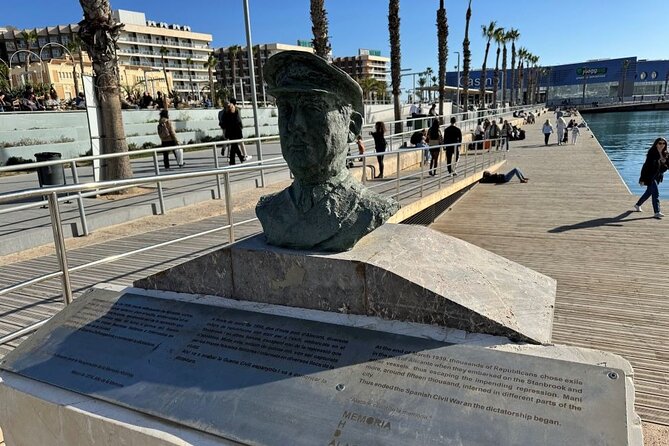
Next up is the Bonfire Museum, which connects directly to the Hogueras Festival and the Tardeo tradition. This is where the nickname City of Light makes sense, because you’re learning about a festival culture built around night energy, spectacle, and local pride.
I find festival-focused stops valuable because they explain the city as a living thing, not just a sequence of monuments. After this point, Alicante feels less like a postcard and more like a place with strong seasonal identity.
Even if you’re not traveling during Hogueras season, you’ll still come away with a clearer picture of why locals celebrate the way they do, and why the festival is such a big deal.
Casa Carbonell: revenge, elegance, and a strong story at the street level
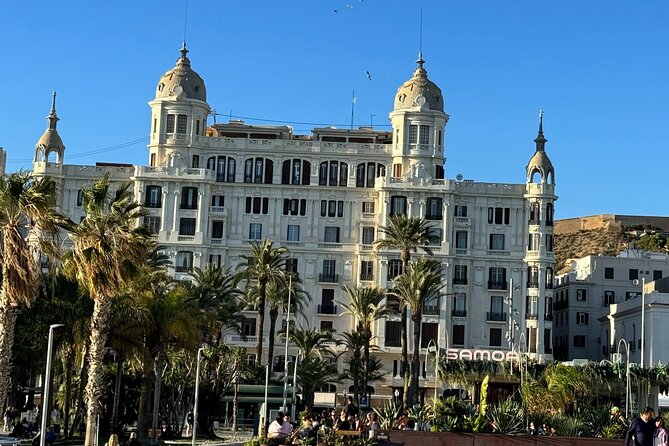
The route includes Casa Carbonell, an architectural highlight with an intriguing narrative. The audio focuses on its combination of elegance and a revenge story, which is a fun change from the more straightforward civic and religious themes.
This stop works well for people who want both beauty and plot. You’re looking at a building, but you’re also hearing why it became what it became and why people remember it.
Practical note: take a moment to frame your photos so you capture the facade without rushing past. The building benefits from quiet attention.
Calle Jorge Juan and the composer finale: names that keep Alicante’s legacy alive
As the walk progresses, you’ll stroll down Calle Jorge Juan, named for Alicante’s own adventurous figure. The story here is about daring exploits and the contributions that helped form the city’s legacy.
Later, your route ends with a cultural tribute to Ruperto Chapi via the Ruperto Chapi Statue. It’s a nice final beat because it reminds you that Alicante isn’t only about sea and festivals. Music and names matter too, and the city keeps honoring its creators in public space.
I like endings like this. You finish with something that’s easy to remember, and it gives the whole walk a “cultural closing paragraph” feeling.
Plaza 25 de Mayo and the 1938 bombing: remembering without getting lost
One stop you shouldn’t skim is Plaza 25 de Mayo, tied to the tragic 1938 bombing. The audio gives this moment a serious tone, and that matters, because Alicante’s story includes both celebration and loss.
This part of the route is a reminder that cities are shaped by dramatic events as much as by everyday life. It’s also a good spot to slow down mentally—listen carefully, then look around to ground yourself back in the present.
If you’re sensitive to heavy topics, you’ll still be able to manage it with the pause/rewind controls. You set the pace here; the narration doesn’t force you forward.
Price and value: $11.99 for a full self-guided audio day
At $11.99 per person, this kind of audio walk can be surprisingly good value—especially because you get more than just a one-time listen. You receive unlimited lifetime use of the tour before your booking date and after it, which is unusual for walking experiences at this price point.
You’re also not paying for a human guide’s schedule. That’s the tradeoff: you gain flexibility, and you give up real-time back-and-forth questions. If you like to wander, stop for coffee, and adjust your day on the fly, this format often feels like a bargain.
Timing matters too. It’s usually booked around nine days in advance, so if you know your Alicante dates, it’s worth securing the experience early.
Logistics that make or break a self-guided walk
This is a private activity in the sense that only your group participates. There’s no mixing with strangers, but you’re still self-guided.
You’ll start at Pl. Puerta del Mar near El Adivinador and finish back at the meeting point. The route is designed to be walked in a roughly 2 to 3 hour window, so it fits into a first day or a half-day plan.
Good to know:
- The route is English.
- The audio/maps/geodata are available offline.
- You can use a virtual playback option if you want to listen without doing the walk.
- Service animals are allowed, and it’s near public transportation.
Opening hours run all day, Monday through Sunday, so you’re not stuck with one narrow departure time. In plain terms: pick the time of day that matches your energy and the light you like for photos.
Who this self-guided Alicante walk suits best
This works best if you like cities best when you control the pace. It’s ideal for:
- First-time visitors who want a fast orientation without feeling rushed
- People who like audio explanations but don’t want a rigid group schedule
- Travelers who enjoy history as stories tied to visible places
- Anyone planning to build the rest of their day around what they learn on the walk
It may be less ideal if you:
- Want a live guide answering questions
- Prefer to avoid smartphone-based navigation entirely
- Are traveling without headphones (they’re required for the audio)
If you have limited walking ability, you’ll likely appreciate that you can pause often. The route is meant to be flexible, not a forced march.
Should you book this Alicante walking tour?
Yes, you should book this if you want an easy way to understand Alicante in a couple hours. For a modest price, you get a route that links promenade views, market life, festival culture, notable architecture, and a thoughtful moment of remembrance.
Skip it only if you’re expecting a guided experience with a person leading you step-by-step. This is for travelers who enjoy looking, listening, and choosing when to slow down.
FAQ
How long is the self-guided Alicante walking tour?
It typically takes about 2 to 3 hours.
Where does the tour start and where does it end?
It starts at El adivinador, Pl. Puerta del Mar, 579, 03002 Alicante, Spain, and ends back at the same meeting point.
What language is the tour available in?
The tour audio is offered in English.
What do I need to bring with me?
You’ll need your own smartphone and headphones.
Is the tour usable offline?
Yes. The experience includes offline access to audio, maps, and geodata (in English).
Can I replay or use the tour after booking?
You get unlimited, lifetime use of the tour before your booking date and after it, plus a virtual playback option.
Can I cancel and get a refund?
Yes. You can cancel for a full refund up to 24 hours in advance of the experience’s start time.