REVIEW · ROME
Rome+Jubilee Audioguide – TravelMate app for your smartphone
Book on GetYourGuide →Operated by MyWoWo Srl · Bookable on GetYourGuide
Rome can be a little intimidating. This audio guide keeps it simple. You pick what to listen to and when, with Rome+Jubilee content delivered straight to your phone through the TravelMate app.
I especially like the autonomy: no paper tickets to collect, and you can replay the guide as many times as you want because it doesn’t expire. I also like that you’re not stuck with one language or one format, since the app offers multiple languages plus text you can read inside the files.
The main drawback to consider is tech reliability. One low rating says the guide was unfuctionable, so I’d plan for a quick check that your activation code works before you start walking.
In This Review
- Key things to know before you go
- Rome+Jubilee Audioguide: How This Smartphone Format Changes the Trip
- Price and Value: What $4.52 Gets You (and What It Doesn’t)
- Setup Fast: Activation Code, No Paper Tickets, and Where It Lives
- Your Listening Plan: Online vs Offline, Text in the App, and Headphones
- The 91 Audio Stops: A Flexible Rome Route You Can Customize
- Ancient Rome Loop: Jubilee to Colosseum, Forums, and Capitoline Rome
- Piazza to Pantheon: Navona, Spagna, Trevi, and the City’s Photo Stops
- Vatican Time at Your Own Pace: San Pietro Through Stanza di Raffaello
- Castel Sant’Angelo and the River-Edge Feeling
- Galleria Borghese and the Art Break
- Rome Churches and Living Neighborhoods: From San Giovanni to Santa Maria Maggiore
- Bocca della Verità and the Fun-Curious Stops
- Villas and the Quiet Side: Villa Giulia and Villa Farnesina
- Quiz Section: Turn Walks Into Tiny Learning Sessions
- What I’d Do Differently Because of a Low Rating Mention
- Who This Audioguide Suits Best
- Should You Book the Rome+Jubilee Audioguide on TravelMate?
- FAQ
- Is there a meeting point for the Rome+Jubilee audioguide?
- How long is the Rome+Jubilee audioguide available after activation?
- Can I use the audioguide offline?
- What languages are included?
- How many audio items are included?
- Where do I find the activation code?
Key things to know before you go
- No meeting point: download the app and start wherever you want.
- Valid for 1095 days after first activation, so you can return to Rome later.
- Online or offline audio (plus the option to read the text inside the app).
- 91 audio items covering major sights from the Colosseum to the Vatican.
- Quiz section to test what you learned with short questions.
- Wheelchair accessible (good to know for planning your route and stops).
Rome+Jubilee Audioguide: How This Smartphone Format Changes the Trip

This isn’t a guided tour where you follow a person in front and a group behind. The TravelMate setup is more like renting a thoughtful, well-produced guide voice and using it at your own speed. That matters in Rome, where crowds, lines, and long afternoons can force you to choose between seeing less or stressing more.
You get a guide experience built around history, points of interest, and curiosities. The content is professionally created by authors and interpreted by professionals from television and radio, which usually means clearer narration and fewer awkward pauses than random “self-made” audiotours.
The big value here is flexibility. If you’re standing at Piazza Navona and you want to hear the part about it right now, you can. If you’d rather skip ahead to the Vatican area, you can. That kind of control is what makes an audio guide feel useful, not just entertaining.
You can also read our reviews of more tours and experiences in Rome.



Price and Value: What $4.52 Gets You (and What It Doesn’t)

At $4.52 per person, you’re paying for a phone-based guide that you keep active for a long time. The “per person” pricing is what makes it easy to use even if you’re traveling with friends or family who have different pacing.
Here’s the tradeoff: you’re not paying for live human storytelling in real time, and you’re not getting timed entries, reservations, or a structured schedule. If your ideal trip includes someone answering your random questions on the spot, an app can’t replace that.
Still, the content load is real. The package is described as including 88 audio items totaling 262 minutes, and the full list of points of interest brings it to 91 audio pieces totaling 271 minutes. Either way, you’re buying a lot of audio for a small price.
Setup Fast: Activation Code, No Paper Tickets, and Where It Lives

The best part is that you don’t need a paper ticket. There is no meeting point and you download the app, then start straight away.
What you do need is the activation code, which is a 10-digit small number under a barcode in your email. If you booked through the GetYourGuide app flow, you’ll find it by opening the ticket in the GetYourGuide app, tapping the barcode in the orange frame, then reading the 10-digit code beneath it.
Practical tip: before you leave your hotel, make sure you can:
- open the email,
- find the barcode area,
- and copy the 10-digit code without squinting in bad light.
Also note the app name format: TRAVELMATE on Android and TRAVELMATE TM on iOS.
Your Listening Plan: Online vs Offline, Text in the App, and Headphones

The guide works online or offline, which is handy when Rome’s Wi‑Fi is spotty or when you’re using your data sparingly. Since the guide also lets you read the text of the audio files, you can switch your approach depending on the situation.
Here’s how I’d use that in real life:
- When you’re near lots of people or traffic noise, rely on audio and keep your eyes on the sight in front of you.
- When you want to slow down, switch to the text view so you can absorb the details at your own pace.
Earphones matter. The guide recommends them for a better listening experience, and honestly they help even if you’re not in “museum silence” settings.
One more reality check: the app relies on your smartphone, so battery becomes your silent travel partner. Keep your phone charged, because a half-dead phone turns the guide into dead weight.
The 91 Audio Stops: A Flexible Rome Route You Can Customize

The content covers a wide swath of Rome, from the most iconic classics to major churches and villas. You’ll see names like Jubilee, Colosseo, Foro Romano, Foro di Traiano, Campidoglio e Musei Capitolini, Vittoriano e Aracoeli, and Fontana di Trevi.
Instead of forcing one “correct” itinerary, think in Rome neighborhoods and historical layers. You can string together segments as you like, and the audio will help you connect the dots—without you needing to memorize anything before you arrive.
Below are smart ways to group the stops so your day feels coherent.






Ancient Rome Loop: Jubilee to Colosseum, Forums, and Capitoline Rome

If you want the classic start, begin with Colosseo and work outward. The guide includes:
- JUBILEE
- COLOSSEO
- FORO ROMANO
- FORO DI TRAIANO
- CAMPIDOGLIO E MUSEI CAPITOLINI
- VITTORIANO E ARACOELI
- PIAZZA VENEZIA
This sequence is a natural “how Rome grew” arc. You’ll be moving from the big landmark energy of the Colosseum into the forum zone, then onto elevated viewpoints like Campidoglio and Vittoriano.
A practical note: this area can be visually intense. Having audio helps, but don’t feel pressured to listen start-to-finish. Use the audio as your anchor points, then pause to look around and reset.
Piazza to Pantheon: Navona, Spagna, Trevi, and the City’s Photo Stops

Next, you can swing into central sights and squares:
- PIAZZA NAVONA
- PIAZZA DI SPAGNA
- FONTANA DI TREVI
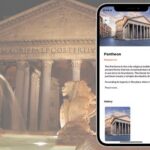
- PANTHEON
- PIAZZA DEL POPOLO
- VIA DEL CORSO
This is where Rome shifts from “monument first” to “street-life first.” Audio here is useful because squares and streets can blur together. A good trick is to listen to the audio description right when you arrive, then use your eyes to confirm what the narration highlights.
Potential drawback: these locations are high-traffic zones. Even if the audio is clear, it can be harder to concentrate if you’re constantly being bumped or distracted. That’s where the text option can save you.
Vatican Time at Your Own Pace: San Pietro Through Stanza di Raffaello

The Vatican section is one of the strongest “choose-your-moment” uses of a phone guide. The content list includes:
- SAN PIETRO
- MUSEI VATICANI
- CAPPELLA SISTINA
- PALAZZI VATICANI
- STANZE DI RAFFAELLO
This cluster works well because you’re dealing with multiple rooms and styles, and you don’t always want to hear the same story while you’re walking from corridor to corridor. With the app, you can line up the narration with what you’re actually facing.
If you’re sensitive to crowds and want breaks, the app format helps. You can pause audio, step aside, read the text, then restart when you’re ready.
Castel Sant’Angelo and the River-Edge Feeling

The guide also includes CASTEL SANT’ANGELO. This is a nice pivot point between major “must-see” zones and the more meandering stretches of Rome. Audio here can be especially helpful because you’re likely moving between viewpoints and trying to understand how the city’s layout connects.
The value of having an audio guide for this kind of stop is that it helps you stop treating it as just a photo background.
Galleria Borghese and the Art Break

If you like to mix your day, the app offers GALLERIA BORGHESE. This is a useful slot for a slower, more art-focused block. Since the guide supports reading text as well as listening, you can adjust depending on how crowded the environment feels.
You don’t need to commit to one style of sightseeing with an audio guide. One day can be temples and squares; another can be art and villas.
Rome Churches and Living Neighborhoods: From San Giovanni to Santa Maria Maggiore
The content also includes big church stops that feel like Rome’s everyday backbone:
- SAN GIOVANNI IN LATERANO
- SAN PAOLO FUORI LE MURA
- CHIESA DI SANTA MARIA DELLA VITTORIA
- CHIESA DI SAN LUIGI DEI FRANCESI
- CHIESA DI SANTA MARIA MAGGIORE
These are great for listeners who want more than landmarks. Audio helps you connect what you’re seeing to why it’s worth your attention—because churches can blend into the background if you don’t have a guide voice narrating the key points.
Where this approach shines is in pacing. You can do these as shorter listening moments rather than long sessions. Stop, listen, look, then move on.
Bocca della Verità and the Fun-Curious Stops
Two content items that make Rome feel playful are:
- BOCCA DELLA VERITÀ
- PIAZZA VENEZIA (if you want a square that feels like a junction)
Audio-guides do well with these because curiosities tend to be easier to follow when someone explains context for what you’re seeing. Even if you only have one short listening block, you’ll come away with more than a quick photo memory.
Villas and the Quiet Side: Villa Giulia and Villa Farnesina
On the quieter side, the guide includes:
- VILLA GIULIA
- VILLA FARNESINA
- plus QUIRINALE (listed as QUIRINALE)
This kind of stop is ideal when you need a break from the heaviest headline sights. The audio format helps you make sense of what you’re looking at without needing to switch into “research mode” on your phone.
Quiz Section: Turn Walks Into Tiny Learning Sessions
There’s a Quiz section with short questions about the city. I like these for one reason: they’re a low-pressure way to check whether the audio helped you absorb anything.
Use it when you’re somewhere with a bit of downtime—like after a long walk—so it feels like a review rather than work.
What I’d Do Differently Because of a Low Rating Mention
The overall rating is 4.2 from 38 reviews, but there’s also a very negative comment saying the guide was unfuctionable. That tells me to be a bit cautious and practical.
Before your first sightseeing block, I’d:
- confirm you can open the app,
- confirm the activation code works,
- test audio playback with your earphones,
- and keep your activation details handy in case you need them.
This doesn’t mean the whole experience is broken. It just means you shouldn’t rely on a last-minute setup at the exact moment you want to start listening.
Who This Audioguide Suits Best
This guide is a strong fit if you:
- want independence instead of a fixed group schedule,
- like the idea of replaying content over multiple days,
- want audio in multiple languages, including English, Spanish, French, German, Italian, plus Chinese and Russian,
- and prefer a clean setup without shared third-party devices (the guide notes you use your own phone).
It’s also a good choice for people who travel with mixed interests. One person can linger at Fontana di Trevi, while another wants to jump to the Vatican audio track, and nobody has to wait for a group leader.
If you prefer live human guidance, or you need someone to handle logistics and timing, you might find an app-only guide less satisfying.
Should You Book the Rome+Jubilee Audioguide on TravelMate?
Yes, I think it’s worth booking if your goal is to explore Rome at your own pace with professional narration, a big set of stops, and the freedom to replay the audio for years (1095 days after first activation). The price is low enough that you’re mostly buying convenience and context.
I’d hesitate only if you strongly depend on flawless tech the moment you arrive. Rome is too beautiful to let an activation glitch ruin the day. If you’re willing to do a quick setup test before you start walking, this app-style guide can turn your Rome sightseeing into something smoother and more meaningful—without trapping you in a single route.
FAQ
Is there a meeting point for the Rome+Jubilee audioguide?
No. There is no meeting point. You download the TravelMate app and start your experience straight away wherever you prefer.
How long is the Rome+Jubilee audioguide available after activation?
It is valid for 1095 days from your first activation, and it does not expire.
Can I use the audioguide offline?
Yes. The audio guide can be used online or offline.
What languages are included?
The guide includes Italian, German, French, Chinese, English, Spanish, and Russian.
How many audio items are included?
The included info lists 88 audio content pieces totaling 262 minutes, and the full point-of-interest list totals 91 audio content pieces totaling 271 minutes.
Where do I find the activation code?
You can find the activation code in the email under the barcode (a 10-digit small number). You can also access it through the GetYourGuide app by opening the ticket in the app and viewing the barcode details.