REVIEW · HANNOVER
Self-Guided Crime Tour Hannover City Center
Book on Viator →Operated by urb.safari - digitale Stadterlebnisse · Bookable on Viator
A case in Hannover, and you are the detective. This self-guided crime tour turns famous sights into puzzle checkpoints. I love the story-by-text and audio-style clues in a web app, and I like that it ends at the New Town Hall after a walk past major landmarks. One catch: the app experience depends on your phone, and the navigation can feel confusing if you miss the map/GPS tips.
You’ll spend about 3 hours moving from clue to clue with a small group (up to 5). It’s built for problem-solvers: you question suspects in the app, verify alibis, and piece together enough evidence to “crack the case.” If you prefer a live guide to explain what you are seeing, consider that you won’t get one here.
In This Review
- Key highlights for planning
- Detective Archie Cluefinder and the whole premise
- Price and time: a good value for a 3-hour walking challenge
- Where you start: the Niki-de-Saint-Phalle-Promenade meetup
- How the web app works (and what to watch for)
- The route through Hannover: stops explained like clues, not checklists
- Stop 1: Monument to Ernest Augustus
- Stop 2: Marktkirche
- Stop 3: Ballhofplatz
- Stop 4: Staatsoper Hannover
- Stop 5: Monument Gottingen Sieben
- Stop 6: Kreuzkirche
- Stop 7: The New Town Hall
- What I think you should expect from the puzzles
- Who this tour fits best (and who should skip it)
- Practical tips to make your case go smoothly
- Small-group comfort and the private format
- Languages and pacing: German and English
- Quick FAQ
- FAQ
- Where does the tour start?
- How long does the self-guided crime tour take?
- How much does it cost?
- Do I need a smartphone?
- Are headphones provided?
- What languages are available?
- Is there an entrance fee for the stops?
- What’s the age suitability?
- Can I cancel for a refund?
- Should you book this Hannover crime tour?
Key highlights for planning

- Detective Archie Cluefinder story: a full crime plot delivered to your phone with messages and audio-style prompts
- Smartphone-based gameplay: mobile ticket + web app means you bring your own device and data
- Small-group pricing: $35.09 per group (up to 5) is cheaper than many guided activities
- Landmark-to-puzzle route: the stops are major central-city sites plus a few you might not notice on a normal stroll
- Best in daylight and quiet days: easier navigation and more comfortable walking when the center is calmer
- No entrances required: the tour doesn’t include entrance fees, so plan around outdoor viewing
Detective Archie Cluefinder and the whole premise
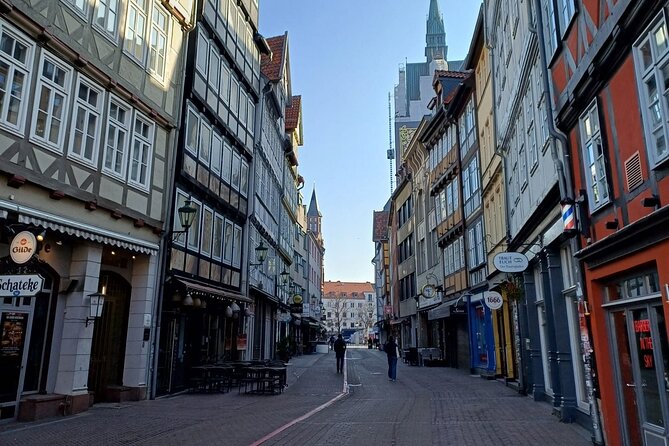
This isn’t a museum tour with facts on placards. It is a city-center mystery game built around you and your smartphone, with Detective Archie Cluefinder feeding you clues as you walk.
The premise is simple: a crime shakes Hannover, and you help stitch together what happened. You move stop to stop, solve puzzles, and use what you learn to test suspects and confirm alibis. When you have enough evidence, you finish at the New Town Hall, ready to close the case.
I like that the challenge stays tied to the place you’re standing. Even if you do not read every panel or study every detail, you still get a reason to look around—street-level, landmark-level, and “why would this matter” level. That’s a nice change from tours where you only hear a lecture and then keep walking.
Price and time: a good value for a 3-hour walking challenge

At $35.09 per group for up to 5 people, the math is usually friendly. If you’re traveling with friends or family, you’re not paying per person for a guide. You’re paying for a guided-in-your-pocket experience: the plot, the prompts, and the puzzle structure.
The duration is about 3 hours, which fits well into a half-day plan in Hannover. It’s long enough to feel like you did something on purpose, but short enough that you can still eat, shop, or visit another spot afterward.
There are a few practical considerations. You’ll need your own smartphone (and mobile data) because the tour is run through the web app. Also, headphones or speakers are not included, so if you want crisp audio-style messages, bring what you normally use with your phone.
Where you start: the Niki-de-Saint-Phalle-Promenade meetup
You meet at Niki-de-Saint-Phalle-Promenade 68, 30159 Hannover. The tour runs Monday through Sunday, from 7:00 AM to 11:00 PM, and the format supports playing during daylight as the recommended approach.
End point is simply back at the meeting point. That’s helpful because you’re not trying to figure out how to get home from a totally different area after the last clue.
Also note the practical bits: service animals are allowed, the activity is near public transportation, and the tour is suitable for ages 14 and up. If you’re bringing teens, this kind of puzzle storytelling can be a solid way to keep attention without dragging through long explanations.
How the web app works (and what to watch for)
You’ll get a confirmation at booking, and then you receive a start code by email (the start code is valid for 365 days). The tour uses that code to launch your case in the app.
Where people can get stuck is the interface: one issue is that the link in the email might not start properly until it works in the background. Another issue is that the menu navigation can feel unclear at first, especially if you’re expecting the app to show you exactly where you are on the map without adjusting settings.
Here’s the best way to keep it smooth:
- Have your phone ready before you start.
- Use GPS (the app points you to a map option that depends on your location).
- Plan to keep Google Maps open if you like a visual “follow me” layer while you learn the game flow.
- Know that the stations can be completed in the order provided in the web app, which reduces the pressure to figure out the route purely by guessing.
If you go in expecting a traditional scripted walking tour with constant guidance, you might feel thrown off when the app is more puzzle-first. If you’re okay figuring it out as you go, it turns into part of the fun.
The route through Hannover: stops explained like clues, not checklists
This case takes you through central Hannover and past the kind of places you’ll recognize from postcards and planning apps. The big advantage is that the puzzle structure gives you a reason to look closely at each stop.
The downside is that you only fully appreciate each moment if you connect the clue to what you’re seeing. If something feels disconnected, it may not be the city—it may be you haven’t found the right bridge in the story yet.
Stop 1: Monument to Ernest Augustus
You kick off at Monument to Ernest Augustus, a place that sets a tone for the investigation. I like opening at a monument because it forces you to orient quickly: where am I, what’s around me, and how does this point connect to the plot?
In a self-guided crime format, the first stop often carries your learning curve. If you nail the process here—read the prompt, follow it to the next action—you make the rest of the tour easier.
Stop 2: Marktkirche
Next comes Marktkirche, which gives you a strong landmark feel right in the center. Churches like this usually offer multiple visual angles: the building itself, nearby streets, and the overall square atmosphere.
For the game, it’s a good kind of setting because it’s visually “high signal.” You’re not hunting in a side street for something tiny. You can keep moving while still feeling like the location matters.
Stop 3: Ballhofplatz
Then you reach Ballhofplatz, a stop that feels like a hinge between major sights and the next stretch of the route. In walking games, this kind of location is useful because it helps you reset your attention: you’re no longer only collecting big “wow” visuals—you’re now thinking like an investigator.
If you’re playing as a family, this is the sort of stop where puzzles can feel more approachable. It’s not as intimidating as a very formal monument-only area, and it encourages a normal human pace.
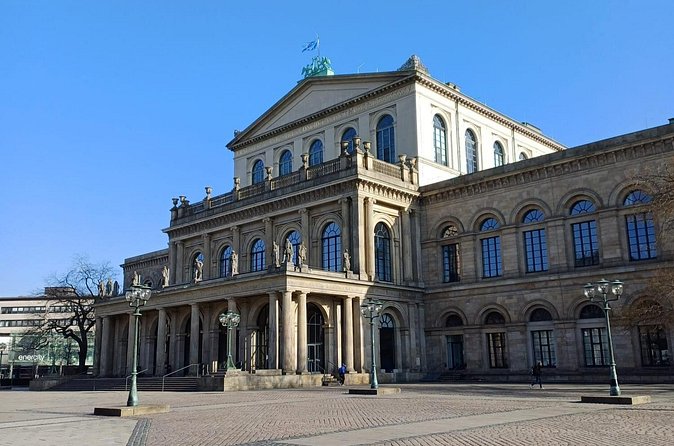
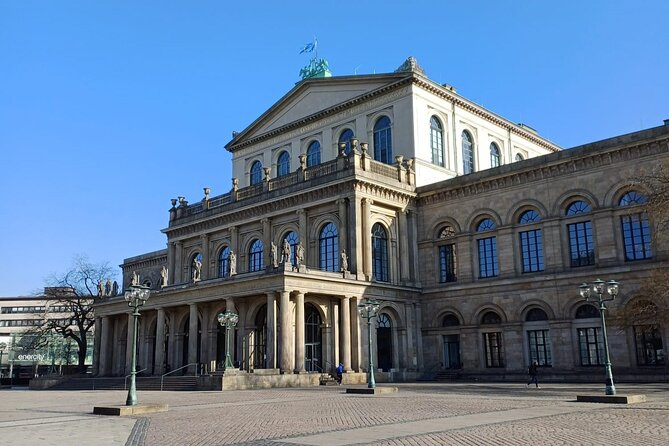
Stop 4: Staatsoper Hannover
At Staatsoper Hannover, the story gains a more dramatic civic atmosphere. The opera house area tends to feel purposeful—built for events, built for audiences—so it fits the “question suspects, verify alibis” vibe well.
A practical note: opera buildings are often near busy circulation points, depending on the day. That’s why the tour is best during quieter periods in the center.
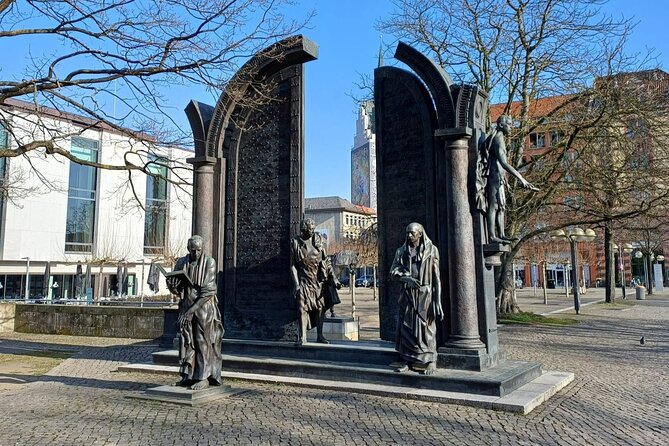
Stop 5: Monument Gottingen Sieben
Next is the Monument Gottingen Sieben. Monuments like this often work well in puzzle tours because they invite you to read symbols and context, even if you don’t have time for full research.
This stop can also reward curiosity. If you pause to look around and consider why this monument might be referenced in a crime storyline, you’ll likely feel the “aha” connections more clearly.
Stop 6: Kreuzkirche
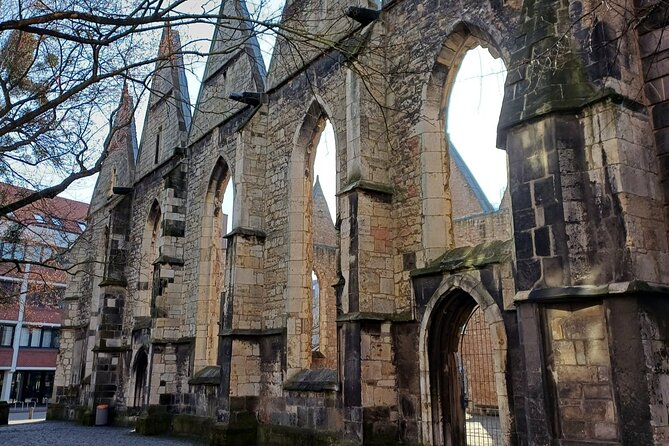
Then you head to Kreuzkirche. A church stop is rarely just a church stop in a mystery game; it’s usually a location where the app can tie tone and clues together.
If you’re worried about whether you’ll get bored by too many formal landmarks, keep this in mind: the point isn’t the building alone. The point is what the case makes you notice while you’re there.
Stop 7: The New Town Hall
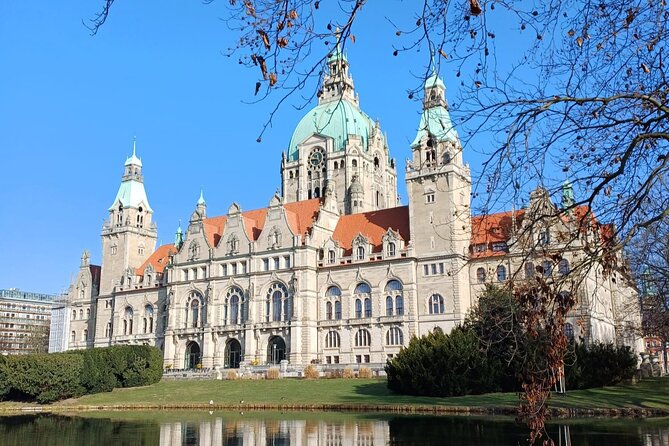
Finally, you reach The New Town Hall to crack the case. Ending at a major civic building makes sense: you’re wrapping the investigation in the kind of setting that feels like an official conclusion.
I like endings like this because it gives you a natural “stop point” after puzzles. It also works well for photos, because the last scene has gravity.
And since the activity ends back at the meeting point, you can plan your final drinks or snacks knowing where your route likely brings you afterward.
What I think you should expect from the puzzles
The standout value here is that the puzzles are designed around the sights and the criminal case. That matters, because it prevents the common problem of self-guided games where the city becomes background scenery.
The best version of the experience is when you treat each stop like a chapter. You don’t rush. You answer what the app asks. You connect the clue to the location you’re standing at.
The weaker version happens when you skip the step where the story explains how one station leads to another. One piece of feedback I saw pointed to puzzles feeling unrelated, and the response emphasized that the stops build on each other toward the solution. That tells you the tour is more linear in purpose than it appears at first glance, even if the stations are flexible in the app’s ordering.
Who this tour fits best (and who should skip it)
This is a great match if you:
- like crime stories and puzzles
- want to explore Hannover’s city center through a reason to look
- are traveling with a small group and want one ticket per group size, not per person
- want a self-guided activity you can pace at your own comfort level
It might not be your best fit if you:
- want a live guide to interpret everything on the spot
- hate tech setup, map/GPS friction, or troubleshooting links
- need clear turn-by-turn directions without relying on the app interface
Also, the tour is recommended during daylight. If you’re thinking of doing it at night, bring extra patience for navigation and a phone battery that’s fully charged.
Practical tips to make your case go smoothly
A few habits will make this tour feel easier and more fun.
First, plan your day. The tour itself is about solving the case, but your real-world walking comfort matters. A quiet center is best, especially if there are big events. One hint: avoid times when football matches or rallies might push crowds into the same streets and squares.
Second, pack for the phone experience:
- bring a charged smartphone and a backup battery if you have one
- consider headphones since audio-style prompts are part of the experience but headphones/speakers aren’t provided
- keep mobile data on
Third, get comfortable with the app map. If the map doesn’t feel helpful at first, switch on GPS and use the map’s location function. And if you prefer, keep a second map app nearby as a visual reference while you learn how the web app wants you to move.
Small-group comfort and the private format
This is a private tour/activity. That means only your group plays through the case, which helps in two ways: you can talk through clues without competing with strangers, and you avoid awkward pauses when someone else is behind.
The recommended max group size is 5. That’s a sweet spot for shared solving. With fewer people, you can spread roles (one reads the prompt, one solves the puzzle). With more than that, the group can start to talk over each other.
If you’re traveling with kids or teens, ages 14+ is the guideline. In practice, the puzzle format usually works best when someone in the group is willing to read prompts out loud and slow down.
Languages and pacing: German and English
The tour is available in German and English, which is a big deal for self-guided experiences. You won’t be stuck translating on the fly while trying to solve puzzles.
Because it’s self-guided, your pacing controls everything. If you want to sprint between stops, you can. If you want to take time with each clue, you can do that too. Just note that a 3-hour window is a real constraint, so don’t let one tricky puzzle eat the whole evening.
Quick FAQ
FAQ
Where does the tour start?
It starts at Niki-de-Saint-Phalle-Promenade 68, 30159 Hannover, Germany.
How long does the self-guided crime tour take?
The duration is approximately 3 hours.
How much does it cost?
It costs $35.09 per group, for up to 5 people.
Do I need a smartphone?
Yes. The smartphone/tablet is not included, and the tour is delivered via a web app, so you’ll need your device and mobile data.
Are headphones provided?
No. Headphones/speakers are not included.
What languages are available?
The tour is available in German and English.
Is there an entrance fee for the stops?
Entrance fees are not included.
What’s the age suitability?
The tour is suitable for ages 14 and up.
Can I cancel for a refund?
Yes. Free cancellation is available up to 24 hours in advance for a full refund.
Should you book this Hannover crime tour?
Book it if you want a playful way to see the Hannover city center, and you enjoy puzzle-solving more than passive sightseeing. The value is strongest for small groups, and the format works well because the case is tied to real landmarks like Marktkirche and the New Town Hall.
Skip it if you hate phone-based navigation or you’re expecting a traditional guided story with instant explanations. In that case, the app’s menus and link handling can be a frustrating distraction from the fun.
If you do book, go during daylight on a calmer day in the center, charge your phone fully, and treat each stop like part of a chain. That mindset is the difference between feeling like the puzzles are random—and feeling like you’re actually cracking the case.