REVIEW · NEW ORLEANS
Walking the Tremé: A Self-guided Audio Tour of New Orleans
Book on Viator →Operated by VoiceMap Audio Tours · Bookable on Viator
Tremé sounds different on foot. This self-guided VoiceMap walk turns New Orleans’ Treme into a story you hear as you move, with GPS-triggered narration and practical directions. You’ll hit key cultural stops tied to Mahalia Jackson, Louis Armstrong, and the community that built Tremé’s identity.
What I like most is the way the audio guide builds momentum. The stops feel connected, and the narration is paced so you can actually look up at what’s around you. I also like that you get offline access—audio, maps, and geodata—so you can keep going without hunting for signal.
One thing to consider: the experience depends on your phone and the app working right at the start. In some cases the tour has been reported as failing to load or play at the starting spot, and there’s also at least one stretch where the requested crossing doesn’t feel ideal for pedestrians. If you’re the type who gets irritated when tech misbehaves, plan a backup.
In This Review
- Quick, High-Impact Highlights
- Why This Walk in Tremé Feels More Real Than a Drive-By
- Price and Timing: Is $9.99 for About an Hour Good Value?
- Gear and App Setup: What You Need Before You Leave the Hotel
- On the Route: GPS Prompts, Walking Pace, and Street-Crossing Reality
- Stop 1: Saint Augustine Catholic Church and the War of the Pews
- Stop 2: Backstreet Cultural Museum for Costumes and Second Line Umbrellas
- Stop 3: New Orleans African American Museum Grounds and Tremé Villa Meilleur
- Stop 4: Mahalia Jackson Theater and Gospel Fame Back in New Orleans
- Stop 5: Louis Armstrong Park, Satchmo and Tremé Origins
- The Most Praised Parts: Audio Quality, Pacing, and Guidance That Actually Helps
- The Main Cautions: Tech Start Issues, GPS Glitches, and One Sketchy Crossing
- Who Should Take This Self-guided Tremé Tour?
- Should You Book Walking the Tremé?
- FAQ
- How much does Walking the Tremé cost?
- How long is the tour?
- Is the narration available in English?
- Does it work offline?
- What do I need to bring?
- Where does the tour start?
- Where does the tour end?
- How many people is the tour limited to?
- Can I get a full refund if I cancel?
Quick, High-Impact Highlights
- GPS-triggered narration that starts based on where you’re standing, not just a timeline
- Dazzling Mardi Gras Indian costumes and second line umbrellas at the Backstreet Cultural Museum
- New Orleans African American Museum grounds with Tremé Villa Meilleur’s original kitchen dependencies
- Mahalia Jackson Theater stories that connect gospel fame back to New Orleans roots
- Louis Armstrong Park context for Satchmo’s Tremé origin and church-to-music upbringing
Why This Walk in Tremé Feels More Real Than a Drive-By
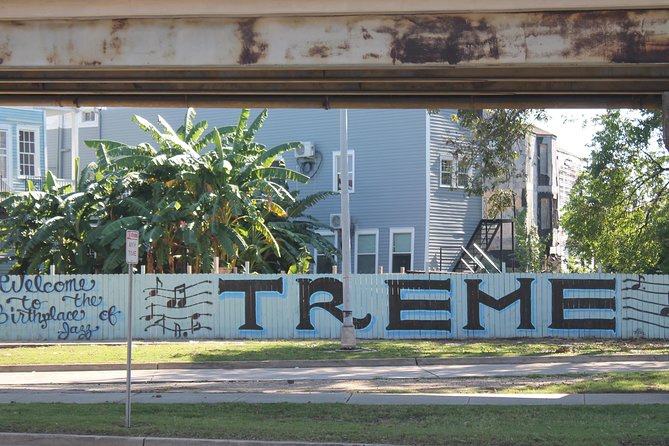
Tremé is the kind of neighborhood where a bus window can’t do it justice. This tour helps because it keeps you moving at a walking pace while the audio locks in to your location. That means you’re not just passively listening—you’re checking corners, noticing details, and letting the story land where it belongs.
The route also has a “people-first” focus. Instead of treating Tremé like a backdrop, the stops keep circling back to how community life, worship, and music shaped the neighborhood. You’ll spend time on sites tied to major figures like Mahalia Jackson and Louis Armstrong, but the tone stays grounded in Tremé’s everyday world.
Finally, I like that it’s self-guided. That’s not just convenience. It means you can linger at a façade, pause for a photo, or walk slower if the street scene has pulled you in. In an area with real history on every block, that kind of control matters.
You can also read our reviews of more tours and experiences in New Orleans.



Price and Timing: Is $9.99 for About an Hour Good Value?
At $9.99 per person, this is one of the cheaper ways to get a structured walking experience in New Orleans. The real value is that you’re not paying for a scripted group show—you’re paying for a timed set of stops with directions, offline media, and GPS-based prompts.
The time commitment is also realistic. The tour is listed at about 1 hour, which is great if you want something meaningful without eating a half-day. It also works well as an add-on to other Tremé or French Quarter plans, since you’re not locked into a long schedule.
One more value angle: you get lifetime access to the tour. So if you revisit New Orleans later, or you want to re-walk the route with a clearer head the second time, you’re not buying it again.
Gear and App Setup: What You Need Before You Leave the Hotel
This is a smartphone-dependent tour. A smartphone is not included, and the audio runs through the VoiceMap application. The good news is that offline access is included—audio, maps, and geodata—so you can plan around spotty reception.
Here’s how I’d set yourself up for a smooth start:
- Make sure your phone battery is topped off. A GPS tour eats power.
- Before you step outside, test that the tour actually starts from the location you’ll use.
- Use the offline assets, then keep your phone’s screen brightness manageable so you don’t burn battery by the hour mark.
The tour also provides directions to the starting point, and it’s clearly listed: 801 N Rampart St, New Orleans, LA 70116, USA. If you want the narration to trigger right, getting onto the correct starting spot matters.
Small detail, big help: the tour is offered in English, and the experience is capped at a maximum of 10 travelers. That cap is more relevant to how the provider manages inventory than to your walking experience, but it signals the experience is meant to stay fairly controlled.
On the Route: GPS Prompts, Walking Pace, and Street-Crossing Reality
This kind of audio tour can go two ways: either it’s a hands-on experience, or it becomes a frustrating “where am I supposed to be” exercise. The best version is when the app can detect where you are and trigger the right narration section. That’s specifically part of what makes this tour appealing—and it’s been called out positively.
You’ll also notice that the audio guide is designed to help you manage movement, including guidance around street crossing. That’s useful, especially when you’re in a neighborhood where traffic patterns can feel different from what you’re used to.
Still, take the caution seriously. One review mentioned a section where the requested crossing isn’t well suited for pedestrians. So treat the audio directions as guidance, not permission. If you feel unsafe at any point, stop and choose the safest crossing available.
If the GPS trigger doesn’t work the way it should, you may end up only catching some of the audio descriptions until the phone catches up. That’s not a reason to avoid the tour—it just means you should be patient and prepared to use common sense navigation.
Stop 1: Saint Augustine Catholic Church and the War of the Pews
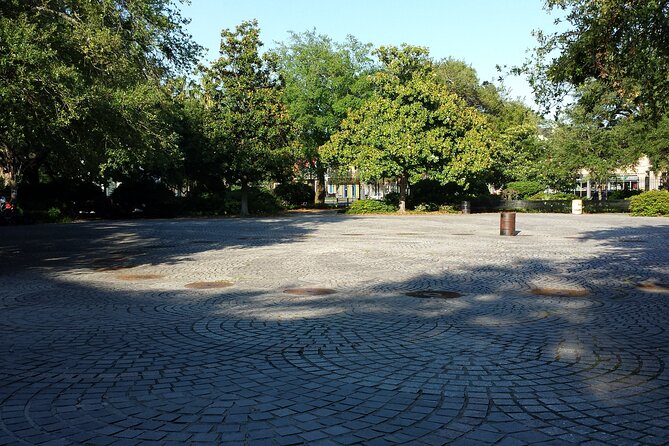
Your route is anchored by the story of worship and power inside Saint Augustine Catholic Church. The narration frames a very specific turning point: in 1842, Creoles of color began purchasing pews for their families’ Sunday worship. News spread quickly, and then a campaign began where white people bought family pews too—sparking what the tour calls the War of the Pews.
This isn’t just a dramatic historical anecdote. It gives you a lens for understanding Tremé as a place where dignity, access, and community identity weren’t granted—they were fought for. The detail about family pews makes it concrete, and you’ll likely notice how that kind of history reshapes how you read a church building.
Practical note: since the tour ends at Saint Augustine Catholic Church as well (1210 Governor Nicholls St, New Orleans, LA 70116, USA), this stop also acts like a bookend. You’re not just passing by an important address—you’re returning to it, which helps the story feel complete.

Stop 2: Backstreet Cultural Museum for Costumes and Second Line Umbrellas
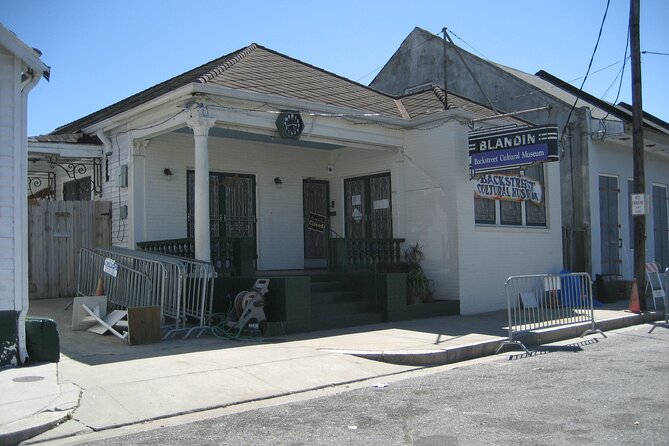
One of the most fun parts of the walk is the stop at the Backstreet Cultural Museum. This is where the tour turns visual. The audio highlights the museum’s collection of dazzling Mardi Gras Indian costumes, second line umbrellas, and photographs that capture backstreet moments.
If you care about how culture looks, not just how it’s described, this stop will do a lot of work for you. Costumes and umbrellas are community-made artifacts, and they carry meaning even when you don’t know the background names yet. The photographs also help because they make the neighborhood feel lived-in, not staged.
The main benefit of including this museum on a self-guided walking route is timing. When the audio tells you what you’re looking at, it’s easier to slow down and actually see details. Instead of rushing through a museum or skipping it because you’re “just passing,” this tour builds a reason to spend time there.
Drawback to consider: museums can be affected by visiting hours and your own stamina. The tour itself is listed as available every day, 12:00 AM–11:59 PM, but the actual on-site experience depends on the museum’s day-to-day operations. If something is closed when you arrive, you can still benefit from the narration and the walk, but you may miss the full visual payoff.
Stop 3: New Orleans African American Museum Grounds and Tremé Villa Meilleur

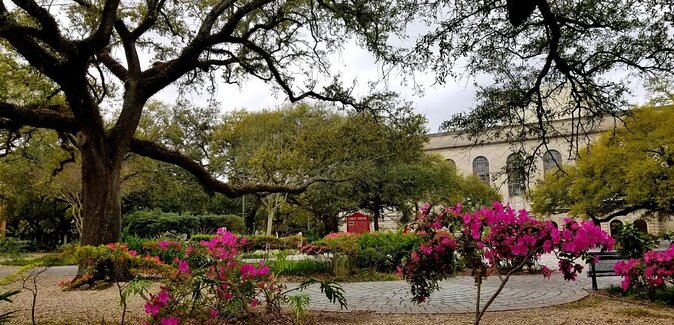
Next comes a slower, more grounded stop: the tree-shaded grounds of the New Orleans African American Museum. The tour points out the Tremé Villa Meilleur’s original kitchen dependencies and also calls attention to homes that reflect a range of local building styles.
This is a key shift from the costume stop. Instead of focusing on celebration and spectacle, you get space to think about domestic life and community infrastructure. The mention of kitchen dependencies matters because it highlights the kinds of spaces that often get left out of big-picture storytelling. It’s the supporting architecture where daily life happens.
The building-style variety is also important. Tremé wasn’t built in one single moment or style. Seeing that reflected in the homes helps you understand the neighborhood as something that evolved—layer by layer—rather than something frozen in time.
If you like museums that feel connected to place, this stop is likely a favorite. And if you don’t want to overpack your day, it also provides a natural pace break during the walk.
Stop 4: Mahalia Jackson Theater and Gospel Fame Back in New Orleans
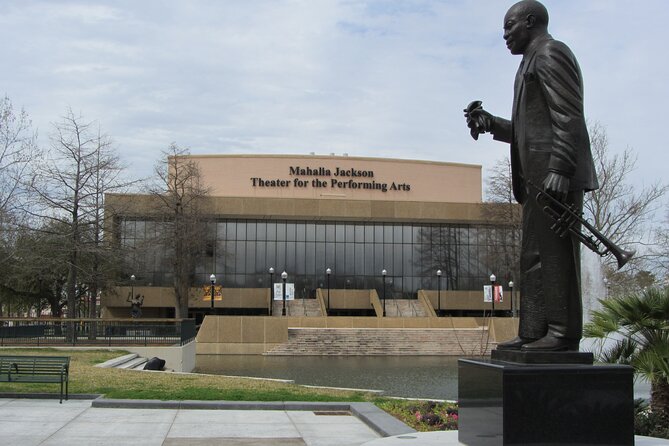
The Mahalia Jackson Theater of the Performing Arts stop connects global fame to local roots. The narration notes that Mahalia Jackson cut the highest-selling gospel song in history, then describes how she took her place on the international stage while still never forgetting her New Orleans roots.
This is more than a biography checkbox. It’s a reminder that Tremé helped shape artists who didn’t just succeed—they represented a musical and spiritual lineage. When you hear the story while you’re at a performance space named for her, it adds meaning to the building itself.
I also like how the tour keeps the focus on identity. You’re not just told she was famous. You’re reminded that the neighborhood mattered to her, and that matters when you’re trying to understand why Tremé has such a strong cultural voice.
If you’re the type who likes to connect music to geography, this stop is a strong payoff. It turns New Orleans sound into something you can point to on a map.
Stop 5: Louis Armstrong Park, Satchmo and Tremé Origins
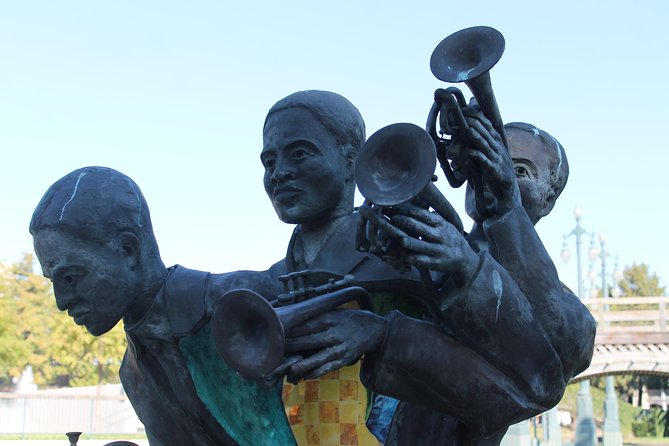
Louis Armstrong is one of New Orleans’ most honored ambassadors, and this tour uses that recognition to bring you back to Tremé origins. The narration includes his affectionate nicknames—Satchmo and Pops—and notes that Louis Armstrong was born in 1901 just outside Tremé. It also paints a picture of his upbringing around churchgoers, hustlers, pimps, and musicians.
That mix is a big reason the story works. It doesn’t turn Armstrong into a statue. It frames his early world as varied and rough around the edges, which feels accurate for the era and for the neighborhood.
Then there’s the park connection. Since the tour highlights Louis Armstrong Park, you’ll likely find yourself thinking differently while standing in an outdoor space named for him. Instead of treating it as a sightseeing stop, you’ll read it as a landmark in the continuing Tremé story.
Best use tip: take an extra minute here if you like listening. This stop is where you’ll probably want to slow down, because the narrative has multiple threads—names, birthplace, and the social world around him.
The Most Praised Parts: Audio Quality, Pacing, and Guidance That Actually Helps
The strongest theme in positive feedback is that the narration is well done. People consistently highlight how the audio guide is clear and easy to follow, and how it helps you stay oriented without taking over your brain.
Another highly praised aspect is pacing. The tour doesn’t cram you with constant talking. It gives you time to experience what you’re seeing, which is important in a place where the details are the point.
I also like the practical angle. The tour is built to help you find your way and navigate the route. Some people even noted the guidance around crossing streets, which shows the audio isn’t just “history facts.” It’s designed for walking in real conditions.
And yes, the cost comes up a lot in the best reviews. $9.99 for an hour-long, location-aware walk is a solid deal—especially if you plan to do more than one walking moment during your trip.
The Main Cautions: Tech Start Issues, GPS Glitches, and One Sketchy Crossing
No tour is perfect, and this one is no exception. The biggest tech complaint is that the tour wouldn’t start at the beginning location—stuck on a download screen or frozen. If you’re traveling on a tight schedule, that’s the type of issue that can sour your whole hour.
That’s also why I recommend doing a quick pre-walk check: confirm the tour triggers, confirm the audio plays, then start walking. If it doesn’t work, you’ll discover that problem while you still have time to troubleshoot.
The other caution is about pedestrian safety. One review described an audio instruction that asked the listener to cross a highway that isn’t made for pedestrian crossing. Use this as a warning flag. Don’t blindly obey directions from any app. If the crossing looks unsafe, step back and choose the safe route.
Finally, there’s a perspective critique worth noting. One comment called the tour somewhat sugarcoated and limited in how it frames Tremé’s struggles and relationships to outside influence. I can’t say what you’ll feel, but if you’re the kind of visitor who wants rawness and present-day context alongside historical details, plan to pair this with your own reading during the rest of your trip.
Who Should Take This Self-guided Tremé Tour?
This tour is a good match if you:
- Want a focused walking experience about Tremé’s culture and key figures
- Prefer self-guided travel with GPS prompts rather than a group itinerary
- Like audio narration that helps with orientation and pace
It also works well for people who don’t want to spend a lot of money on a guided tour but still want structure. At $9.99 for an hour, it’s an easy “try it” plan.
If you’re prone to frustration with apps or you hate relying on a phone for directions, think twice. The tour can still be excellent, but the experience depends on phone performance and GPS/app behavior.
Should You Book Walking the Tremé?
I’d book it if you want a smart, low-cost way to connect major Tremé stories to real streets and real places. The mix of church history, museum culture, and music icons gives you variety without making the walk feel random. If your phone cooperates, this is the kind of tour you’ll remember because it matches what you’re seeing.
Skip it or be extra cautious if you’re worried about tech reliability or you strongly prefer strictly controlled, fully guided experiences. Also be prepared to treat street-crossing instructions as suggestions and choose the safest crossing.
If you do book, go in with one simple mindset: walk slowly, look around, and let the audio guide your attention. That’s when $9.99 turns into an hour you actually feel.
FAQ
How much does Walking the Tremé cost?
It costs $9.99 per person.
How long is the tour?
The tour is listed at about 1 hour.
Is the narration available in English?
Yes, the tour is offered in English.
Does it work offline?
Yes. Offline access to audio, maps, and geodata is included.
What do I need to bring?
You’ll need a smartphone. A smartphone is not included.
Where does the tour start?
The starting point is 801 N Rampart St, New Orleans, LA 70116, USA.
Where does the tour end?
The tour ends at Saint Augustine Catholic Church, 1210 Governor Nicholls St, New Orleans, LA 70116, USA.
How many people is the tour limited to?
The tour/activity is capped at a maximum of 10 travelers.
Can I get a full refund if I cancel?
Yes. There is free cancellation, and you can cancel up to 24 hours in advance for a full refund. If you cancel less than 24 hours before the start time, the amount paid won’t be refunded.