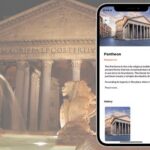
Walking into the Pantheon feels like time travel. This package pairs fast-track entry with a phone audio guide, so you can move at your own pace once you’re inside. I like that the experience stays focused on what matters: the architecture, the light through the oculus, and the fact that it still functions as a church. The one thing to plan for is that the audio depends on your phone setup, including your own headphones and likely a working mobile connection.
Mihad and Maria Luisa are two names that surfaced in the team’s service style, and that really fits what this ticket is built for: quick coordination, clear directions, and getting you to the right entrance process without turning it into a long guided march. If you want a calm visit you can pause and repeat at will, this format is a good match. The drawback is simple: if you arrive late or struggle to find the meeting spot, you can lose your chance to use the skip-the-line access.
In This Review
- Key highlights before you go
- The Pantheon, minus the headache: what you really get
- Fast-track entry: how the skip-the-line part plays out
- Audio guide on your phone: the best way to use it
- Inside the Pantheon dome and oculus: what to look for in an hour
- Portico columns and the 2nd-century floor: noticing the details
- A living monument: the Pantheon still hosts Catholic Mass
- Price and value: is $7.81 a fair deal for the skip-the-line?
- Who this ticket suits best (and who may prefer something else)
- Practical tips so your Pantheon visit stays smooth
- Should you book this Pantheon skip-the-line + audio ticket?
- FAQ
- How long does the Pantheon skip-the-line experience take?
- What’s included in the ticket?
- Are headphones included with the audio guide?
- Is there a live guide during the visit?
- Do I need internet on my phone for the audio guide?
- What language options are available?
- Is free cancellation available?
Key highlights before you go
- Fast-track entry helps you dodge the worst queue times at one of Rome’s top sights
- Audio on your phone lets you control the pace and replay sections without a group pressure
- Host assistance is designed to get you from the meeting point to the shorter line at the monument
- No live guide means you’re mostly independent inside, which is great for flexible pacing
- Your own headphones matter since headphones are not included with the audio guide
- Mobile data can affect playback when it’s crowded and signal gets weak inside
The Pantheon, minus the headache: what you really get
This is not a full live-guided tour. It’s a skip-the-line entry ticket plus an audio guide loaded to your phone and some host help to manage the handoff.
That may sound basic, but it’s exactly the point. The Pantheon is compact, iconic, and best understood by looking slowly at the details while the narration does the talking. With this setup, you get structure at the start and then breathing room once you’re inside.
It also helps you avoid the common Rome problem: you spend time queuing, then rush through the best parts because your ticket window is tight. Here, the time you save goes straight to the domed interior.
You can also read our reviews of more tours and experiences in Rome.



Fast-track entry: how the skip-the-line part plays out
The core value is the fast-Track entry process. A host meets you near the Pantheon and helps you use the smoother access lane at the entrance.
In real terms, expect something like this:
- You meet the host, receive direction and help with getting your audio set up on your phone
- You’re escorted to the shorter queue for ticket/ID checks at the monument
- After entry, you explore on your own with the audio in your ear (or at least in your bag if you forgot headphones)
That matches what many people end up wanting from a Pantheon visit: less time in line and more time staring up at the dome like you mean it.
One practical note: clear meeting-point timing is crucial. If you arrive late or can’t locate the representative, the “skip-the-line” benefit can disappear fast.
Audio guide on your phone: the best way to use it
The audio is provided as a phone-based guide, offered in multiple languages, with the booking option listed as English. The narration is designed to guide your attention while you look around.
Two things make or break your audio experience:
- Bring headphones. Headphones are not included, so plan to use your own earbuds or over-ear set.
- Mobile data/internet may be needed. The Pantheon doesn’t have reliable internet access, so the audio can require an active connection or mobile data to work properly.
Inside, crowds can affect playback. Even if your phone and app are fine, heavy visitor numbers can slow connection and cause the audio to stutter, restart, or rewind.
My practical tip: before you leave for the Pantheon, test the audio on your phone. If one device works and another doesn’t, you’ll solve the issue before you’re standing under Rome’s biggest unreinforced dome, wishing you had signal.
Inside the Pantheon dome and oculus: what to look for in an hour
Your main focus is the rotunda. The heart of the visit is the massive concrete dome and the oculus at the top.
When you look up, here’s what you’re trying to catch:
- The scale: it still holds the title of the world’s largest unreinforced dome
- The oculus: that circular opening brings in natural light, and sometimes rain, creating shifting illumination on the interior surfaces
The audio guide format works well here because it encourages you to pause, look up, then listen. If you just walk quickly, the space can feel impressive but confusing. If you slow down, the geometry starts to make sense.
Also, keep in mind that your time is short by design. The whole experience runs about 1 hour (approx.), so the smart move is to choose a rhythm: listen for one section, then scan the space visually for what the narration is pointing out.
Portico columns and the 2nd-century floor: noticing the details
Before or after your main interior listening, you’ll want to pay attention to the grand portico and the entrance-facing elements.
From inside, the details to notice are:
- The towering Corinthian columns made with Egyptian granite (a detail worth holding in your mind as you look at scale and color)
- The marble floor, described as largely original from the 2nd century AD, with geometric patterns you can spot if you look down while listening
This is where an audio guide earns its keep. It tells you what to look at, not just what to admire. The floor designs aren’t random decoration, and the guide helps you connect the patterns to the space.
If you’re visiting with someone who likes photos, this is the moment to grab them. But don’t let the camera steal your attention. The Pantheon is one of those places where your best memories will be the moments you stop filming and just watch the light.






A living monument: the Pantheon still hosts Catholic Mass
The Pantheon isn’t museum-quiet. It’s a functioning church, officially the Basilica of St. Mary and the Martyrs.
That changes the feel of your visit. You’re standing in a space that absorbed ancient pagan worship, then kept its center of gravity as Christianity took hold. The experience isn’t a reenactment. It’s a real building used for real worship.
I like that the ticket format doesn’t force a heavy script here. With an audio guide, you can match your pace to the atmosphere: listen, look, step back, then move on when the space feels right.
If you’re the type who values authenticity over production, this is the part that sticks after you leave. Rome has plenty of monuments, but not many you can visit and still experience as a working sacred place.
Price and value: is $7.81 a fair deal for the skip-the-line?
At $7.81 per person, the price is low enough that it’s easy to think, why not just buy entry and do it myself?
Here’s how I judge the value:
- The Pantheon’s line can be long, and time is one of your most expensive resources in Rome.
- This ticket’s real “product” isn’t the audio alone. It’s the fast-track entry plus host help to keep you from losing that time.
- You also get admission ticket included, so you’re not piecing together multiple parts last minute.
If you already have a plan to secure timed tickets yourself, you might skip the add-on. But if you’re trying to minimize stress and maximize sight time, this format can be a smart use of money.
Also, the audio can be genuinely helpful if you don’t want to rely on reading every sign in Italian or translating on the fly. When it works well, it turns the visit into a “look, then understand” loop.
Who this ticket suits best (and who may prefer something else)
This is a strong fit if you:
- Want short, efficient sightseeing for one of Rome’s top stops
- Prefer independent exploration over following a live guide
- Like audio explanations that you can pause, replay, and control on your schedule
- Are okay bringing your own headphones and using your phone for narration
It may be less ideal if you:
- Hate depending on mobile data or a working app connection
- Want a live guide to answer questions on the spot
- Are visiting on a day when you suspect you might arrive late or be delayed finding the meeting point
If you’re traveling with older relatives who might want to sit and listen, the audio format can actually be a win, as long as your setup works.
Practical tips so your Pantheon visit stays smooth
A few habits make a noticeable difference with this kind of entry + audio setup.
First, get to the meeting point early. The host’s ability to help is time-bound, and you don’t want to be the person searching for a sign while your entry slot passes.
Second, test your audio access before you go in. If playback fails on one phone, you’ll be glad you noticed it while you still had room to troubleshoot.
Third, plan your headphones like they’re essential. They are. Since headphones are not included, you’ll either go without audio clarity or you’ll end up sharing ear space in a way that’s not ideal.
Finally, once inside, don’t feel pressured to cover everything. With a dome that makes you want to look up repeatedly, it helps to give yourself permission to linger.
Should you book this Pantheon skip-the-line + audio ticket?
I’d book it if you want the Pantheon without the line-stress and you like learning while you look, not before you look. The combination of fast-track entry, phone audio, and host help is built for efficiency, and it keeps the experience focused on what makes the Pantheon special: the dome, the oculus light, the geometric floor, and the church still in use.
I would hesitate if you know your phone connection is unreliable, you hate troubleshooting audio apps, or you’re likely to arrive late. In those cases, a different format with a live guide might reduce friction.
Bottom line: if you show up on time, bring headphones, and check your audio beforehand, this is an easy, cost-effective way to see one of Rome’s greatest monuments on your schedule.
FAQ
How long does the Pantheon skip-the-line experience take?
It’s listed at about 1 hour (approx.).
What’s included in the ticket?
Your purchase includes fast-Track Entry Ticket, Host Assistance, and a phone audio guide (multiple language options). Admission ticket is included.
Are headphones included with the audio guide?
No. Headphones are not included, so you’ll need to bring your own.
Is there a live guide during the visit?
No, a live guide is not included. The format is skip-the-line entry plus host help and an audio guide on your phone.
Do I need internet on my phone for the audio guide?
You should plan on needing an active internet connection or mobile data, since the Pantheon has no reliable internet for the app to work.
What language options are available?
The experience is offered in English, and the audio guide is described as available in multiple languages.
Is free cancellation available?
Yes. You can cancel up to 24 hours in advance for a full refund, and the experience can be canceled due to poor weather with an option for another date or a full refund.