REVIEW · WARSAW
Warsaw at War 1939-1945: A Self-guided Audio Tour
Book on Viator →Operated by VoiceMap Audio Tours · Bookable on Viator
Warsaw’s WWII story plays out on foot. This self-guided audio walk is a practical way to connect the big events to the streets you’re actually standing on, with offline access and crisp, well-produced narration. You can wander a little, pause when you want, and still keep a clear sense of direction through Old Town.
My favorite part is the pacing: about 3 km total and roughly 90 minutes, so it feels doable even on a busy day. One thing to consider: the navigation can be picky, and an overly sensitive off-route alert can happen if you cross to the other side of a street.
In This Review
- Key Highlights You’ll Notice Fast
- A 90-Minute Warsaw Walk That Packs in 1939–1945
- Price and Logistics: Why $9.99 Can Actually Be Worth It
- Starting at Kościół Akademicki św. Anny: A Smooth Entry Point
- How VoiceMap Works Here (Offline, Audio-First, and Small-Group Friendly)
- Stop 1: Old Town Beginnings and the Directional Storytelling
- Mały Powstaniec: The Memorial to Child Soldiers at 1944’s Heart
- Walking Through Tragedy and Pride: How the City’s Rebirth Fits In
- Tomb of the Unknown Soldier: A Place to Pause and Pay Respect
- Piłsudski’s Legacy and the 1920 Fight: Ending with a Military-Political Arc
- Timing the Walk: How to Make It Feel Easy, Not Rushed
- Best Use Case: Who This Tour Fits Like a Glove
- What You Don’t Get (And Why That’s Okay)
- Should You Book Warsaw at War 1939–1945?
- FAQ
- How long is the Warsaw at War 1939–1945 self-guided audio tour?
- How far do I walk on this tour?
- Where does the tour start and end?
- Is the tour available in English?
- Do I need internet for the audio and maps?
- What do I need to bring with me?
- Are there tickets or entrance fees included?
- Can I pause during the tour?
- Is this suitable for solo travelers?
- Is there a group size limit?
Key Highlights You’ll Notice Fast
- Offline audio + maps so you’re not hunting for signal in the middle of Old Town
- Sound design and music that make the WWII-era stories feel less like a lecture
- Pauses are built in, so you can stop for photos or detours without wrecking the flow
- Child-soldier history at Mały Powstaniec, a heavy stop that’s handled thoughtfully
- A reflective finale at Piłsudski, linking the Warsaw Uprising and Poland’s fight for freedom
- Small group cap (max 10), which can make the experience feel calmer than big tours
A 90-Minute Warsaw Walk That Packs in 1939–1945
This is the kind of tour that works when you want context without a schedule that owns your day. You’re looking at Warsaw’s WWII era and its aftermath through a sequence of meaningful places, moving at a comfortable walking pace. The total walk is about 3 km and takes around 1 hour 30 minutes, but the format is flexible: you can pause anytime and explore a bit longer wherever you are.
You’ll hear stories shaped around key moments and key people, from the early occupation period through the Warsaw Uprising and into the postwar struggle for control of Poland. The narration uses sound effects and music, which matters more than you might think. It helps you emotionally track what you’re hearing while you’re physically walking through the city.
The big value here is that the experience is self-paced. That sounds simple, but it’s a big deal in Warsaw’s Old Town area, where you might want to stop for a view, step into a side street, or just take your time to absorb the setting.
You can also read our reviews of more tours and experiences in Warsaw.


Price and Logistics: Why $9.99 Can Actually Be Worth It
At $9.99 per person, this tour sits in the “easy yes” category for budget travelers—especially if you plan to walk anyway. You’re paying for an audio guide experience that you can replay thanks to lifetime access. That changes the math: even if you only do it once now, you’ve still got it for a return trip or a second pass when you learn more about the history.
A key point for value: it doesn’t bundle museum tickets. The tour is basically your route plus audio storytelling. The information is designed to work without expensive add-ons, and that’s great if you’re trying to keep your day focused and light.
Just don’t forget one practical detail: you need your smartphone. The app (VoiceMap) is your control panel and map. If you’re used to traveling hands-free with a paper guide, this is the reverse—your phone is necessary at the start and for navigation, but the experience encourages you to put your phone away and follow the audio directions once you’re moving.
Starting at Kościół Akademicki św. Anny: A Smooth Entry Point
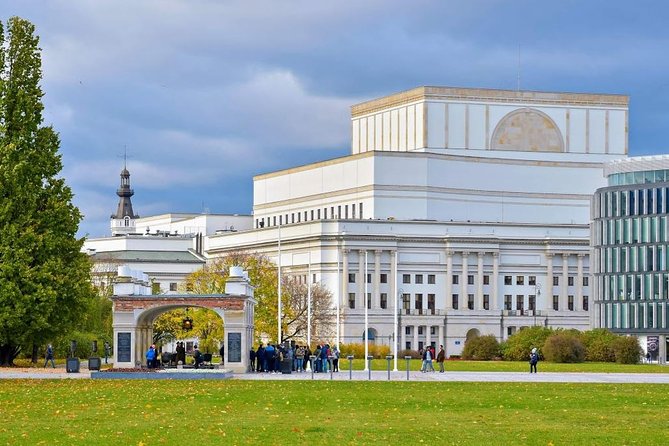
The tour starts at Kościół Akademicki św. Anny, on Krakowskie Przedmieście 68 (00-322 Warszawa). The ending point is the Statue of Józef Piłsudski, at plac Marszałka Józefa Piłsudskiego (00-073 Warszawa).
You get the advantage of starting in an area where you can easily build the rest of your day around it. Old Town-adjacent neighborhoods mean you’re never far from cafés, viewpoints, and places to wander after the audio ends. Even better, the tour is designed to be walked right through the city core rather than starting miles outside the action.
The app notes that the audio tour is available all day within the listed window (it’s essentially open from midnight to 11:59 PM). In real terms, that means you can match it to your schedule rather than reshuffling your whole day around strict hours.
How VoiceMap Works Here (Offline, Audio-First, and Small-Group Friendly)
This tour uses the VoiceMap application. One of your best advantages is the ability to download for offline use: you get offline audio, maps, and geodata. That matters a lot in Warsaw because you don’t want a signal drop to turn your guide into a buffering wheel.
The experience is also set up for different listening styles. You can use ear buds or headphones, and it even mentions carrying a small speaker for group listening. That’s not always true with self-guided audio tours, so it’s a nice touch if you’re traveling with a friend and you want to sync your experience.
There’s also a small-group cap: up to 10 travelers. Since it’s self-guided, you’re not stuck listening to a live guide. But having a smaller cap often translates into less chaotic starting conditions and fewer people crowding the same spots at the same time.
One consideration, based on real-world experience people often run into with self-guided routes: navigation can be fussy. If the tour uses off-route alerts, you might hear the warning sooner than you expect—especially if you accidentally walk on the opposite side of a street. The fix is simple: stay calm, check the map, and get back on track quickly. The stories are worth it.
Stop 1: Old Town Beginnings and the Directional Storytelling
The first leg begins just outside the famed Warsaw Old Town. From there, you’re led on a roughly 90-minute exploratory walk—again, about 3 km total. The narration is designed to keep you oriented while still letting you take breaks.
A practical tip: plan your expectations. This isn’t just a “see the sights” audio trail. It’s a story trail, with audio cues that connect the WWII context to what you’re looking at as you move. That means if you pause often for photos, you might stretch the overall time. That’s okay. The tour specifically allows you to pause and continue whenever you’re ready.
This stop is also where you’ll want to decide how heavy you want your day to feel. You might be in the mood for a quiet reset, or you might want to keep pressing forward.
You could also weave in nearby options if you want a longer lunch break. The tour description points out possible detours like the Vodka Museum, restaurants for lunch, and the Saxon Garden along the way. Those aren’t required, but they’re useful if you’re building a full half-day around the audio route instead of treating it as the whole trip.
Mały Powstaniec: The Memorial to Child Soldiers at 1944’s Heart
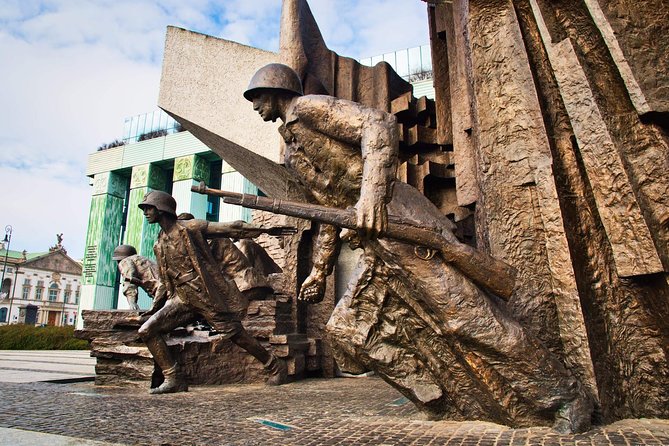
One of the most striking stops is the memorial to Mały Powstaniec, or the Little Insurgent. This is the kind of place that hits hard, because it connects the Warsaw Uprising of 1944 to the reality that children were pulled into a conflict they could never win.
The audio doesn’t treat this as a quick stop-and-go photo moment. Instead, it frames the background of the memorial so you understand what you’re looking at, and why the story matters. If you’re sensitive to wartime themes, you’ll still want to be present here—this is one of the most important stops on the route.
A practical thought: pace yourself. If you’ve had a long day, consider pausing a moment before the story begins, then listen all the way through. You’ll get more out of it if you’re not rushing your attention.
Walking Through Tragedy and Pride: How the City’s Rebirth Fits In
The audio tour also puts Warsaw in a wider emotional arc. It describes Warsaw as a phoenix, a city that rose from the ashes of WWII to become the Poland you see today—full of culture, art, and beauty.
That message isn’t just motivational wording. It’s tied to the historical struggle. You hear about Poland’s fight to hold onto its heritage while facing the pressures of two major forces of the era: Nazi Germany and Communist Russia. If you’ve ever visited Warsaw and felt that the city both remembers and refuses to shrink, this section helps explain why.
This stop section is valuable because it gives you context for what you see after the war. A lot of visitors come for the dramatic history and stop there. This tour nudges you toward the “and then what” part—the long road from destruction to cultural rebuilding.
The downside is emotional weight. If you prefer lighter storytelling, you may find this portion heavy. But if you want the truth of what the city went through, it’s the kind of clarity you’re looking for.
Tomb of the Unknown Soldier: A Place to Pause and Pay Respect
Another stop brings you to the Tomb of the Unknown Soldier. The audio sets this as a moment to pause—not just to look, but to understand what the monument represents.
You’ll learn about the history behind the sacred place, including an especially powerful detail: it contains ashes and soil from every 20th-century battlefield where Polish soldiers lost their lives.
That means the monument isn’t tied to a single battle. It’s a structure built to hold the pattern of loss across many conflicts. Listening while you’re there makes that idea feel concrete, because you’re not reading it on paper—you’re standing in the middle of it.
Practical advice: slow down here. Even if you’re a quick walker, take a few extra minutes. This is one of those stops where letting the audio finish matters, because the point is reflection and respect.
Piłsudski’s Legacy and the 1920 Fight: Ending with a Military-Political Arc
The tour’s final segment moves into the story of Józef Piłsudski—described as a political and military hero. The audio focuses on his role in fighting for Poland and against Russian control, including a key moment in 1920, when the narration mentions defeating Lenin’s Red Army at the gates of Warsaw.
The route ends at the Statue of Józef Piłsudski, where the audio frames the finale as a kind of face-to-face meeting. That works because you’re not just leaving with a name—you’re leaving with a thread of meaning: how Warsaw’s WWII suffering connects to earlier struggles and later fights for sovereignty.
If you want a tidy takeaway for the day, this is it. It’s not a “happy ending,” but it is a line from conflict to agency—how Poland fought to control its own fate rather than being pushed around by bigger powers.
Timing the Walk: How to Make It Feel Easy, Not Rushed
Even though the tour is about 90 minutes, it’s smart to think in ranges. You’ll probably finish in that neighborhood if you:
- follow the audio closely,
- take photos when the story prompts you,
- and don’t get pulled into too many detours.
You can pause anytime, which is great, but it can also expand the tour if you treat every stop like a long museum visit. If you’re short on time, keep breaks short. If you’re not, use pauses to wander the streets you’re hearing about—Old Town areas reward slow walking.
Also, because the tour is self-guided, you get to decide your listening style. If you want full focus, use headphones and keep your attention on the narrative. If you want a lighter pace, use one earbud and still listen when it’s most relevant.
One more practical tip: if the navigation alert feels too sensitive, don’t panic. Just correct quickly and keep moving. The stories are continuous, and you’ll recover fast.
Best Use Case: Who This Tour Fits Like a Glove
This is a strong choice if you:
- like learning history while walking,
- want independence over a group schedule,
- travel solo or with one friend,
- and prefer audio that’s produced like a real listening experience, not a dry narration loop.
It’s also a good fit for mixed-age groups because the format is built for all ages and can work with different audio setups.
If you hate self-guided routes and want a human guide to correct you, this might feel less satisfying. But if you’re okay with reading a phone map briefly and letting the audio do the storytelling, you’ll likely enjoy it.
What You Don’t Get (And Why That’s Okay)
The tour does not include:
- museum tickets or entrance fees,
- transportation,
- food or drinks,
- and it won’t provide a smartphone.
That sounds limiting, but it’s actually part of its appeal. You’re buying a walking story, not a bundle of paid attractions. If you want museums on top, you can add them before or after—like using spare time to visit something such as the Vodka Museum if you’re interested. The audio still works as the core experience.
Should You Book Warsaw at War 1939–1945?
I’d book it if you want a low-cost, high-impact history walk that you can do on your own terms. The offline setup is the deciding factor for me—Warsaw is walkable, but you don’t want tech hassles ruining your timing. Add the fact that you get lifetime access, and it’s easier to justify.
I’d think twice if you rely heavily on flawless navigation cues. There’s at least one clear caution: the off-route alert can be too sensitive, and it may trigger even when you’re just on the other side of a street. If you’re the kind of traveler who gets flustered by app alerts, keep a calm mindset and check your position early.
FAQ
How long is the Warsaw at War 1939–1945 self-guided audio tour?
It’s about 1 hour 30 minutes (approximately).
How far do I walk on this tour?
The walking distance is approximately 3 km.
Where does the tour start and end?
It starts at Kościół Akademicki św. Anny, Krakowskie Przedmieście 68, and ends at the Statue of Józef Piłsudski, plac Marszałka Józefa Piłsudskiego.
Is the tour available in English?
Yes, it’s offered in English.
Do I need internet for the audio and maps?
No. It includes offline access to audio, maps, and geodata.
What do I need to bring with me?
You’ll need your smartphone. The tour description says smartphone is not included.
Are there tickets or entrance fees included?
Admission tickets to any museums or attractions en route are not included, but the tour itself lists admission ticket as free for the experience.
Can I pause during the tour?
Yes. You can pause anytime and explore further wherever you are.
Is this suitable for solo travelers?
Yes. The format is self-guided, and it’s described as perfect for traveling on your own time.
Is there a group size limit?
Yes. The maximum number of travelers is 10.
If you want, tell me when you’re visiting Warsaw and what you’re most interested in (uprising sites, monuments, or Piłsudski-era history). I can suggest a smart way to pair this walk with nearby time blocks.