REVIEW · PORTLAND
Portland Maine Self-Guided Driving & Walking Audio Tour Bundle
Book on Viator →Operated by Guide With Action · Bookable on Viator
Portland has a way of pulling you toward the water first. This self-guided bundle uses hands-free GPS audio to guide you through classic neighborhoods, big city landmarks, and coastal viewpoints with a pace that feels realistic. I love the mix of short stops plus scenic driving, and I especially like that you get offline maps after a one-time download. One thing to keep in mind: it covers 4+ miles and the audio cues are tied to you staying on the route and within the posted speed.
You also get a smart kind of flexibility. You can start when you want, pause for photos or snacks, and just keep moving when the next story pops up. The main drawback is tech-dependent: if your phone is not set up right or you wander off-route, the audio can pause or seem to stop.
In This Review
- Key Highlights Worth Planning Around
- Portland in Your Ear: How the Drive-and-Walk Format Feels
- Before You Go: Download for Offline, Then Set Up Your Audio
- A quick fix if the audio ever goes quiet
- Commercial Street to Fort Williams Park: The Driving Loop (Stops 1–21)
- Stop 1: Commercial Street and Portland’s deep-water harbor
- Stop 2: Victoria Mansion (Ruggles Morse’s summer home)
- Stop 3: The Danforth and the shift from wood to brick
- Stop 4: West Street and the Barbara Bush Children’s Wing
- Stop 5: One Longfellow Square and Neal Dow, father of Prohibition
- Stop 6: Arts District Garage and the Portland creative scene
- Stop 7: Brown Street and the Wadsworth-Longfellow House
- Stop 8: Temple Street and Portland’s oldest Unitarian Universalist church
- Stop 9: City Hall and how fire shaped the city
- Stop 10: Franklin Tower, Maine’s tallest building
- Stop 11: Eastern Cemetery, oldest in Portland
- Stop 12: Portland Observatory and the ship-viewing problem
- Stop 13: Waterville Street and triple-decker housing
- Stop 14–16: Munjoy Street to Casco Bay, plus Eastern Promenade
- Stop 17–18: Walnut Street and the street name logic
- Stop 19–20: Casco Bay Bridge and Meetinghouse Hill
- Stop 21: Fort Williams Park
- From the U.S. Custom House to Lincoln Park: The Walking Stretch (Stops 22–29)
- Stop 23: Victoria Mansion (again, from a new perspective)
- Stop 24: Henry Wadsworth Longfellow Sculpture
- Stop 25: Portland Museum of Art
- Stop 26: Maine Historical Society and the Wadsworth-Longfellow House
- Stop 27: Monument Square and Our Lady of Victories
- Stop 28: City Hall and the Renaissance Revival rebuild
- Stop 29: Lincoln Park and the Great Fire of 1866
- Stop-by-Stop Practical Advice: What to Watch for (and What Might Feel Short)
- Price and Value: When $24.99 Per Person Makes Sense
- Who This Portland Audio Tour Bundle Fits Best
- Quick Booking and Start-Day Tips (No Drama Needed)
- Should You Book This Portland Audio Tour Bundle?
- FAQ
- How long is the Portland audio tour?
- Is this tour guided by a person?
- Can I use it without cell service?
- Do I need tickets to see the stops?
- How much walking is involved?
- What do I need to hear the audio in the car?
- What hours is the tour available?
- Can I cancel for a full refund?
- What devices are recommended for the audio and navigation features?
Key Highlights Worth Planning Around

- GPS-triggered audio stories that play as you reach each stop, so you do not need to keep tapping.
- Offline maps after download, which matters a lot in a city where cellular signal can be spotty.
- A drive-then-walk format that shows both Old Port landmarks and broader harbor-and-neighborhood views.
- Ticket-light sightseeing with lots of stops labeled admission free for getting the visuals and context.
- A long route with short stops, typically around five minutes each, plus 30+ audio stories total.
Portland in Your Ear: How the Drive-and-Walk Format Feels
If you like exploring without being herded, this tour hits a sweet spot. Instead of committing to one long walking slog, you split the experience into a driving loop with lots of quick look-backs, then a focused Old Port walking stretch on cobblestone streets. That structure helps you see more Portland per hour, and it keeps your legs from turning into the main event.
The audio pacing is also built for real life. Each stop is short, and the stories are designed to give you what you actually want on a street corner: what the place is, why it matters, and what details to notice while you’re standing there. I also like that the route is location-based, so it feels like the city is talking back to you as you move.
One practical consideration: the total walking/driving distance is not tiny. You should expect the full experience to be active, with the tour described as over 4+ miles long per tour. If you know you tire quickly, you will still be okay if you pause often—but you may want to plan an easy day around it.
You can also read our reviews of more tours and experiences in Portland.



Before You Go: Download for Offline, Then Set Up Your Audio

This is a phone-based tour, so setup matters more than you’d think.
First, download the tour content while you’re on strong Wi‑Fi or cellular. After that, it works offline. Offline access is included, and it’s the difference between a smooth day and a day full of refresh circles when the signal drops near the water.
Second, plan how you’ll hear the audio:
- For walking, bring headphones or earbuds.
- For driving, you can connect your phone to your car stereo using Bluetooth, USB, or AUX.
- Audio playback is compatible with Apple CarPlay, and Android Auto support is noted as coming soon.
Third, use the right starting point. There’s no staff meeting you at the start. You’re told to go to the first story’s point and let it begin automatically, then follow audio cues to the next one.
A quick fix if the audio ever goes quiet
One limitation shows up in real-world tech experiences: audio can go silent if the route logic gets out of sync. If that happens, the most reliable remedy is to start at the correct starting point and stick to the route and speed limit so the stories trigger properly. If you still hit problems, support is available.
Commercial Street to Fort Williams Park: The Driving Loop (Stops 1–21)
This part is where the tour earns its keep: you get moving-city context and harbor views without needing to navigate traffic like a mission.
Stop 1: Commercial Street and Portland’s deep-water harbor
You start with the harbor itself. Portland’s water is described as a deep-water port that generally doesn’t freeze in winter, largely because the Gulf of Maine’s strong tides mix the water column and bring deeper, warmer water up along the coast. If you’ve only seen Maine in winter photos, this is a great way to understand why Portland stays active year-round.



Stop 2: Victoria Mansion (Ruggles Morse’s summer home)
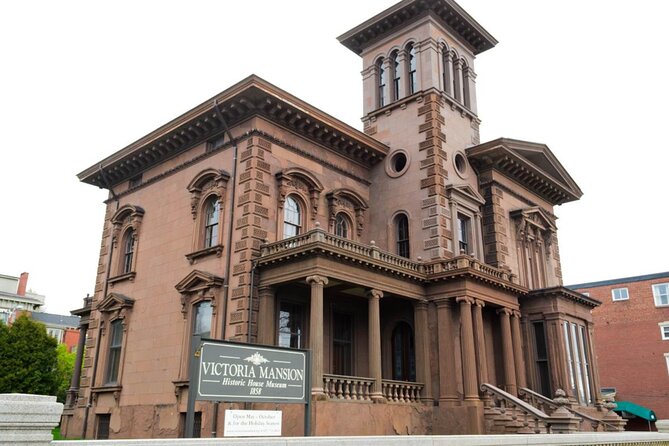
Next comes Victoria Mansion, built by Ruggles Morse and designed as his summer home. It’s named for Queen Victoria, and the tour calls it an outstanding example of Victorian architecture and decoration. The storytelling here is practical: you learn what you’re looking at, not just that it looks impressive.
One small note to watch: you’ll see slightly different build dates referenced in the tour materials (late 1850s versus 1860). Either way, the big takeaway is the same—this is a signature Portland statement from the Victorian era.
Stop 3: The Danforth and the shift from wood to brick
You pass the colorful brick rowhouses once built for the servant class. Now they’re expensive condominiums. The tour ties the brick style to fire history: after major fires, brick became the favored building material, reducing dependence on wood.
Stop 4: West Street and the Barbara Bush Children’s Wing
The Maine Medical Center’s Barbara Bush Children’s Wing is a respectful, modern counterweight to the Victorian stops. The tour notes Mrs. Bush’s connection to Kennebunkport and her long-term work raising funds for treatment of children with serious illnesses, with her legacy remembered in that children’s wing.
Stop 5: One Longfellow Square and Neal Dow, father of Prohibition
Here you meet Neal Dow, a former Portland mayor known as the father of American Prohibition. In 1851, he pushed through a statewide ban on the sale and consumption of intoxicating beverages—described as a model for the later national Prohibition movement. It’s a reminder that Portland’s influence shows up in national history, not just local streets.
Stop 6: Arts District Garage and the Portland creative scene
The Arts District area is framed as independent galleries, working studios, coffee houses, and restaurants. If you’ve ever wondered where the “creative Portland” vibe actually lives, this is where the tour points you.
It also cues you toward the Portland Art Museum area (up ahead on the right), which is helpful for deciding whether you want to visit later.
Stop 7: Brown Street and the Wadsworth-Longfellow House
You’ll be looking out for the Wadsworth-Longfellow House, described as the oldest brick house in Portland. The tour explains it was built after the Revolutionary War by Peleg Wadsworth, a general and Henry Longfellow’s grandfather. This is the kind of stop that rewards your attention—because the significance comes from family ties and timing, not just the look.
Stop 8: Temple Street and Portland’s oldest Unitarian Universalist church
The tour highlights 1st Parish Unitarian Universalist Church as the oldest church in Portland, with the building representing the second home for this congregation. It’s a quick story, but it gives the area a backbone.
Stop 9: City Hall and how fire shaped the city
Portland City Hall is described as the third building on the site after earlier ones were destroyed by fire. It’s a theme that keeps showing up in the tour: buildings change, but the city’s identity persists.
Stop 10: Franklin Tower, Maine’s tallest building
You’ll pass the Franklin Tower, built in the 1970s and noted as the tallest building in Maine at 16 stories. It’s a clean contrast with the older brick streets, and it helps you visualize how Portland grew into a modern skyline.
Stop 11: Eastern Cemetery, oldest in Portland
Eastern Cemetery is the oldest cemetery in Portland, with some headstones dating back to 1768. The tour also mentions that the oldest markers were wooden and were lost to fires. Again: history here is about what survived and what didn’t.
Stop 12: Portland Observatory and the ship-viewing problem
This stop time-travels to the 1800s. Ships entering Portland Harbor could not be seen from the docks until they rounded Spring Point Ledge and came close to the harbor. The observatory story makes the city’s geography feel like a practical system, not just scenery.
Stop 13: Waterville Street and triple-decker housing
Look for examples of the flat-top triple-decker tenement style built from the 1880s to the 1920s. It’s a useful lens for understanding how many New England cities packed workers close to jobs and transit.
Stop 14–16: Munjoy Street to Casco Bay, plus Eastern Promenade
You’ll get harbor views as you head past Munjoy Street, framed as part of Casco Bay and the Gulf of Maine coastline. Casco Bay’s story points out the land mass of South Portland with the oil tanks visible in the direction you’re looking.
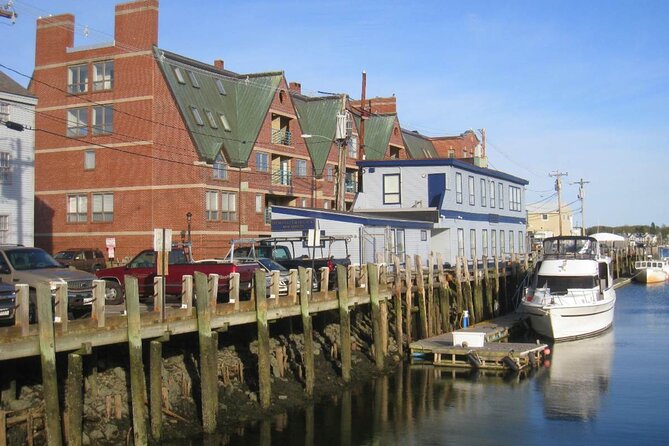
Then comes Eastern Promenade Trail, described as a favorite place for Portlanders to enjoy sea breezes and nice weather, with East End Beach at the foot of the Prom. This is one of the best parts to lean into photography—because the audio does the interpretation, but the view does the work.
Stop 17–18: Walnut Street and the street name logic
Walnut Street connects to a post-British destruction plan: Portland leaders decided they needed a fort after 1775. The green space on the right is described as the result.
Then you reach Fore Street Restaurant, used as a cue to explain Old Portland’s street naming—Fore St, Middle St, and Back St—tied to proximity to the water.
Stop 19–20: Casco Bay Bridge and Meetinghouse Hill
You’ll drive over toward Casco Bay Bridge, connecting Portland with South Portland. Then you approach Meetinghouse Hill with a classic scene: cemetery on the left, Civil War statue on the right, and a church behind the statue. This section gives you a strong sense of how the city’s story layers across neighborhoods.
Stop 21: Fort Williams Park
The loop ends by entering Fort Williams Park, where you’ll notice multiple military installations. Even if you do not go deep into the grounds, the audio framing helps you understand why this area matters on Portland’s coastal edge.
From the U.S. Custom House to Lincoln Park: The Walking Stretch (Stops 22–29)
After the driving loop, you switch into a walk that keeps things tight and scenic. This walking portion is described as around 3+ miles long, taking roughly 1–2 hours to cover with the audio.
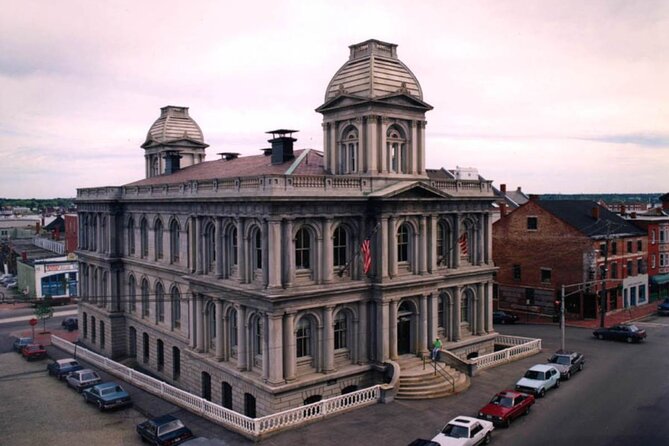
You start at the United States Custom House, and the tour sets the tone for Old Port. The focus here is on famous corners and the stories behind them, with the audio guiding you along historic streets.
Stop 23: Victoria Mansion (again, from a new perspective)
You revisit Victoria Mansion during the walking route too. That is not a mistake if you think about it: you get different angles and different neighborhood context once you’re on foot in Old Port.
Stop 24: Henry Wadsworth Longfellow Sculpture
A dedicated stop for the poet Henry Wadsworth Longfellow. It’s a short stop designed to help you connect the name on the buildings to the person behind it.
Stop 25: Portland Museum of Art
The museum is described as one of the oldest art institutions in the country, founded in 1882. The story also notes the museum’s growth challenges over time, including space, storage, and administrative problems. If you’re the type who wonders why institutions evolve the way they do, this adds real context.
Stop 26: Maine Historical Society and the Wadsworth-Longfellow House
Longfellow lived and wrote some of his best-known works here, including his first poem at 13. Paired with the earlier Wadsworth house story, it becomes a strong two-part narrative: architecture first, then what happened inside.
Stop 27: Monument Square and Our Lady of Victories
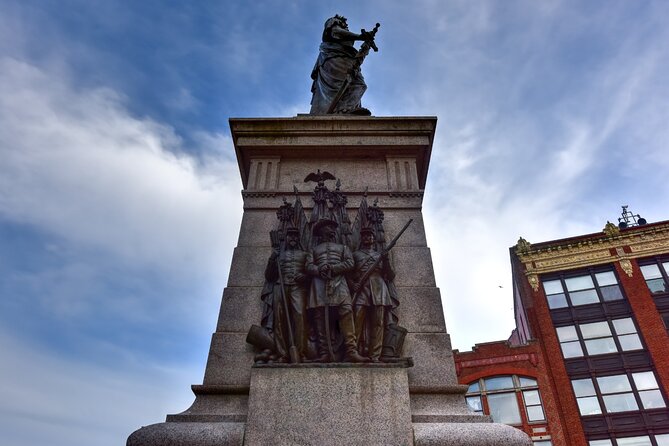
At Monument Square, the statue is described as Our Lady of Victories, inspired by the Greek goddess of wisdom and war, Minerva. It’s the kind of detail you’d miss if you were just passing through.
Stop 28: City Hall and the Renaissance Revival rebuild
The walking route calls out that the current Renaissance Revival structure was completed in 1912, replacing another city hall destroyed by fire in 1908. This is one of the best ways to feel Portland’s resilience without reading a book.
Stop 29: Lincoln Park and the Great Fire of 1866
Lincoln Park is framed as rising from the ashes of the Great Fire of 1866, which the tour positions as a testament to Portlanders’ resilience.
This final stretch lands well because the stories move from buildings to community identity. You finish with a sense that Portland keeps rebuilding itself—then gives you landmarks to prove it.
Stop-by-Stop Practical Advice: What to Watch for (and What Might Feel Short)
Most stops are designed for quick exterior viewing, with short stories that steer your attention to details: architecture style, street naming logic, ship-navigation constraints, or why brick replaced wood after fires. If you like learning while you look, you’ll enjoy the pace.
Here’s how I’d plan your attention span:
- Spend about the allotted time at each stop, then move on. The tour is built around short segments.
- When you see a thematic repeat, like the brick-and-fire stories or the harbor-and-coastline stories, slow down for one extra minute. Those themes are where the tour really clicks.
- For museum and house-related stops, remember the bundle does not include attraction passes or entry tickets. You can still learn from the exterior cues and audio, but if you want interior time, plan to buy tickets separately.
A possible drawback is simply stamina and timing. The entire experience is estimated at 3 to 5 hours, and it is described as over 4 miles long per tour. If you start late in the day, daylight and energy can become your limiting factor faster than you expect.
Price and Value: When $24.99 Per Person Makes Sense
The price is listed as $24.99 per person, but there’s also guidance that driving tours can be purchased per car, which can be more affordable than guided options. In practice, the value is strongest when:
- You’re traveling in a group that can share one car.
- You’re happy with self-guided pacing instead of paying for live narration.
- You want a long route with lots of story triggers and offline usability.
You should also factor in what is not included. Attraction passes, entry tickets, and reservations are not part of the bundle. That means your total day cost depends on whether you add museum or house visits.
What you do get is the structure: route guidance, offline playback, and stories that connect the dots. It’s a good use of money if you want the city to explain itself as you go.
Who This Portland Audio Tour Bundle Fits Best
This works best for you if:
- You’re comfortable navigating on your phone and following a route.
- You want a blend of neighborhood and landmark sightseeing rather than only Old Port.
- You’d rather control the pace than match a group schedule.
It also makes sense for first-time Portland visitors. The tour naturally covers a lot of the city’s personality in a single day: Victorian architecture, brick and fire history, harbor views, and the mix of civic and cultural landmarks.
If you dislike walking or you need lots of seated breaks, I’d treat this as a choose-your-own pace day. Pause often. Use the audio as a motivation to get to the next view, not as a timer you must beat.
Quick Booking and Start-Day Tips (No Drama Needed)
- Start the tour from the designated starting point shown in your app instructions. No one meets you at the start.
- Bring headphones for the walking portion.
- Download the tour while you have strong connectivity so offline audio actually works later.
- For the best trigger accuracy, stick to the tour route and speed limits.
If you want a smooth day, plan one simple thing: charge your phone fully before you leave and keep a power cable handy. Audio + GPS can drain battery, especially if you’re outdoors and moving.
Should You Book This Portland Audio Tour Bundle?
I think you should book if you want an efficient, low-stress way to experience Portland across eras—Victorian mansions, brick rowhouses, Prohibition history, harbor geography, and the Old Port core—without committing to a guided group schedule. The drive-then-walk plan is the standout, and the offline capability is a big quality-of-life upgrade.
I’d hesitate only if you already know you struggle with self-navigation or you’re likely to wander off-route and stop for long stretches without moving. Since the stories trigger by location, staying on the intended path keeps the experience smooth.
FAQ
How long is the Portland audio tour?
It’s estimated at about 3 to 5 hours. The route is also described as taking about 2 to 3 hours per tour to complete, with a separate note that the walking portion covers about 3+ miles in roughly 1 to 2 hours.
Is this tour guided by a person?
No. It’s self-guided. You start at the first story’s point, and the audio plays automatically based on your location. It ends back at the meeting point.
Can I use it without cell service?
Yes, after downloading. You need strong Wi‑Fi or cellular connection to download the tour, and it works offline afterward.
Do I need tickets to see the stops?
Attraction passes, entry tickets, and reservations are not included. Many stops are indicated as admission ticket free for viewing, but entries into paid attractions are not covered.
How much walking is involved?
The tour notes say it is over 4+ miles long per tour, and the Old Port walking stretch is described as 3+ miles.
What do I need to hear the audio in the car?
The tour guidance recommends connecting your phone to the car stereo using Bluetooth, USB, or AUX. It’s also compatible with Apple CarPlay, with navigation features noted as coming soon.
What hours is the tour available?
The tour listing shows operating hours from 6:00 AM to 9:00 PM, Monday through Sunday, within the listed date range.
Can I cancel for a full refund?
Yes. You can cancel up to 24 hours in advance for a full refund.
What devices are recommended for the audio and navigation features?
The guidance lists an iPhone on iOS 15 or later, Android version 9 or later, or an iPad/tablet with GPS and cellular connectivity as recommended for navigation.