REVIEW · PORTLAND
Ultimate Portland Self-Guided Driving GPS Audio Tour
Book on Viator →Operated by Guide With Action · Bookable on Viator
Portland feels like a story you can drive through. This self-guided GPS audio tour turns key streets into walk-up-history moments, with offline maps and hands-free narration that follows your location. My favorite parts are how easy it is to run on your schedule and how much history you pick up without reading a thing. One thing to plan for: if a road closure or construction blocks the route, the audio may not automatically reroute you back to the right spot.
You’re paying $16.99 per group (up to 4), not per person, and that changes the value equation fast. I also like the “start anytime, pause anywhere” style, because it works well for families, couples, or anyone who just wants a smart driving loop with stops that actually matter. The main trade-off is that you’re on your own for driving and spotting where each stop is, so you’ll want a reliable phone setup and you’ll benefit from going a bit slower at each cue.
The full route clocks in at over 12 miles with more than 33 audio stories, and it’s designed for about 1–2 hours depending on how long you linger. You won’t get admission tickets or entry perks built into the tour, so think of this as a guide that points you to places and explains them, not a ticket bundle.
In This Review
- Key points to know before you go
- Driving GPS audio in Portland: what it really feels like
- Price and value: $16.99 for up to four is the real headline
- West Street to Portland Harbor: mansions, prohibition, and the art district
- Brown Street and Temple Street: Longfellow’s early home and the oldest congregation
- Franklin Street and Eastern Cemetery: skyline height and old Portland visibility
- Waterville Street and Munjoy Street: tenements, Casco Bay, and the Eastern Promenade
- Walnut Street to Fort Williams Park: forts, street names, and Civil War era landmarks
- How to make the tour go smoothly: setup, pacing, and the real-world stuff
- Who should book this Portland driving GPS audio tour
- Should you book this Ultimate Portland Self-Guided Driving GPS Audio Tour?
- FAQ
- How much does the Ultimate Portland Self-Guided Driving GPS Audio Tour cost?
- How long does the tour take?
- Is the tour available in English?
- Does it work offline?
- Is the audio hands-free?
- Where do I start the tour?
- What hours can I use the tour?
- Do I need admission tickets included in the price?
- Can I reuse the tour on another trip?
- Is there someone meeting me at the start?
Key points to know before you go

- Offline maps and location-based audio mean you can keep moving even with spotty cell service.
- Priced per car (up to 4 people), which is a strong value versus buses or private guides.
- Hands-free playback: the audio moves along based on where you are.
- A tight highlight loop: Victorian-era homes, prohibition history, cemeteries, tenements, and Casco Bay views.
- Built for flexibility: start when you like, pause for photos and snacks, then resume.
- Rerouting can be imperfect if construction or closures force you off the planned road.
Driving GPS audio in Portland: what it really feels like

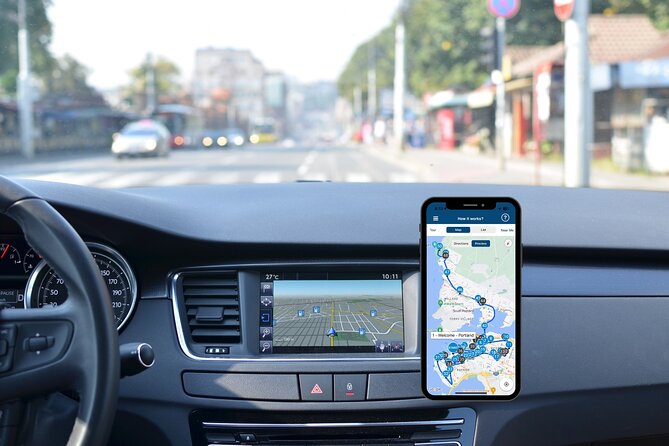
This is a self-guided driving tour, so your “guide” is the app on your phone plus the GPS cueing. Once you download the tour content (while you have strong Wi‑Fi or cellular), the narration and maps work offline. That matters in Portland because you can still get good coverage around the waterfront and downtown without treating your phone like a fragile science experiment.
You’ll set it up by loading Action’s Tour Guide App, entering the password from your email/text instructions, then launching the correct tour version for your starting direction. On the road, the stories play automatically based on your position, so you’re not constantly tapping the screen. If you want the cleanest experience, connect your phone to the car stereo using Bluetooth, USB, or AUX.
One practical note: audio playback is tied to the tour flow, and if you’re driving faster than the safe pace for your surroundings, you can miss bits. I’d treat the tour speed limit cue as a friendly reminder that the app wants you to roll through slowly enough to hear and locate the next landmark.
You can also read our reviews of more tours and experiences in Portland.

Price and value: $16.99 for up to four is the real headline
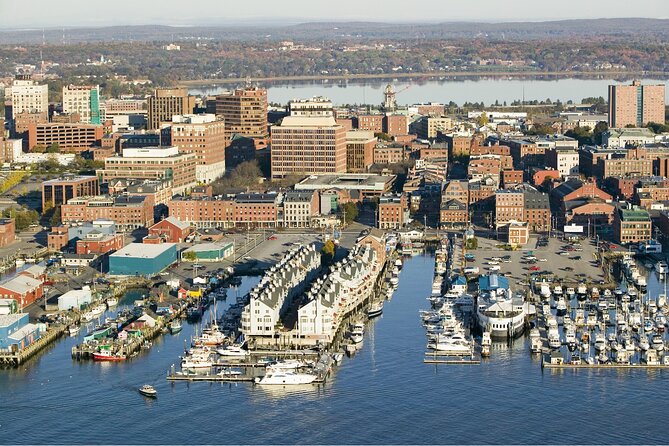
At $16.99 per group up to 4, this tour often ends up being cheaper than a guided option that charges per person. If you split it between two or four people, the effective cost becomes low enough that you can justify trying it even if you’re unsure about your interest level in local history.
Here’s the bigger value point: you’re buying time-efficient sightseeing. You get a curated loop through places like Portland’s Victorian architecture, the harbor area, and city landmarks, wrapped in narration so you understand what you’re seeing. That’s different from a “drive around and hope” plan where you stop only when you already know what you’re looking at.
The one cost you’ll still own: time. The route is designed for 1–2 hours, but your actual experience depends on how often you pull over and how long you linger at views and buildings. If you want to turn the tour into a deeper outing, budget extra time.
West Street to Portland Harbor: mansions, prohibition, and the art district
The tour starts right by the Visit Portland, Maine Information Center at 14 Ocean Gateway Pier, so you’re near the waterfront and in the right mindset for a harbor city. From there, the first stretch on West Street leans hard into “why Portland looks the way it does.”
You’ll hear about the Maine Medical Center and the Barbara Bush Children’s Wing, including Mrs. Bush’s long fundraising work for kids with serious illnesses and her legacy in the Children’s wing. It’s a human, modern thread that keeps the history from feeling dusty.
Next comes Victoria Mansion, built by Ruggles Morse in 1858 as his summer home. The story includes the name choice, tied to Britain’s Queen Victoria, and the fact that it’s celebrated as one of the best standing examples of Victorian art, architecture, and decoration. Even if you don’t step inside, the narration helps you see why locals treat this building like a must-know.
A few cues later, you’ll be thinking about Portland’s building materials. You’ll pass colorful brick rowhouses that were originally built for the servant class and are now high-end condominiums. The narration also explains how major fires shaped the city’s building choices, pushing brick use and limiting wood in the urban fabric.
Then the tour shifts to water and economics. You’ll learn why Portland’s Harbor is a deep-water port that generally doesn’t freeze in winter, plus the Gulf of Maine’s strong tides that mix the water and bring warmer water up along the coast. This is one of those “aha” stories that makes the geography feel alive.
Right after that, you’ll pass the home of Neal Dow, a former Portland mayor known as the father of American Prohibition. The story centers on how, in 1851, he pushed through a statewide prohibition banning the sale and consumption of intoxicating beverages, which became a model later used nationally.
Finally, you’ll reach Portland’s Arts District, with independent art galleries, working studios, coffee houses, and restaurants. The Portland Art Museum is up ahead, and even if you skip an entry stop, you’ll walk away understanding why this area draws creatives.
What to watch for here: this first cluster is where you build your Portland “map in your head.” If you’re the type who likes your sightseeing with context, this stretch delivers.
Brown Street and Temple Street: Longfellow’s early home and the oldest congregation
On Brown Street, you’ll hear about the Wadsworth Longfellow House. It’s described as the place where the poet grew up, built after the Revolutionary War by Peleg Wadsworth, a Revolutionary War general and the grandfather of Henry Longfellow. The tour also notes it’s the oldest brick house in Portland, which helps you understand why this stop feels like a time anchor.
This is a good moment to slow down. Brick, age, and architectural intent are easier to appreciate when you’re not racing to the next cue.
Then you move to Temple Street, where the big story is the 1st Parish Unitarian Universalist Church. The narration calls it Portland’s oldest church, and it also explains that the building is the second one to house this congregation. That gives you a sense of continuity, not just a single landmark.
You’ll also pass Portland’s City Hall, described as a beautiful building for a small city. The tour notes it’s the third City Hall building on the same site, and that the earlier ones were destroyed by fire. That detail matters because it connects the city’s civic identity to its past setbacks.
Small drawback to consider: if you’re hoping the app will always tell you exactly where to look like a video tour, you may still want to keep your eyes up. Several stops here are close to streets, so careful driving and quick scanning help.
Franklin Street and Eastern Cemetery: skyline height and old Portland visibility
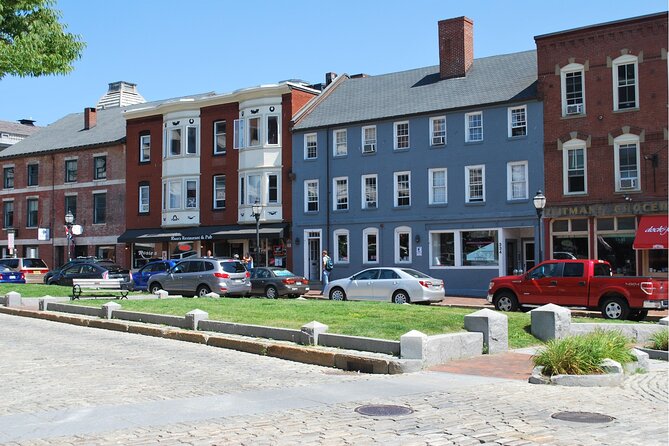
On Franklin Street, you’ll spot the Franklin Tower, a tall brick and concrete building built in the 1970s. The tour states it’s the tallest building in Maine at 16 stories. This is the urban counterweight to all the older architecture you’ve already been hearing about.
From there, you’ll move toward Eastern Cemetery, the oldest cemetery in the City of Portland. The narration includes that some headstones date back to 1768, and that earlier wooden markers were lost to fires. That’s a reminder that even “history” is often a story of survival and loss.
One of the more cinematic bits comes next. You’ll go back to the 1800s and learn how ships entering Portland Harbor weren’t visible from the docks until they rounded Spring Point Ledge and were almost in the harbor. It’s a practical geographic clue that makes you think differently about sightlines, arrival, and daily life tied to the sea.
How I’d use this section: park time is optional, but your attention time shouldn’t be rushed. The cemetery and shipping visibility stories reward slow listening.
Waterville Street and Munjoy Street: tenements, Casco Bay, and the Eastern Promenade
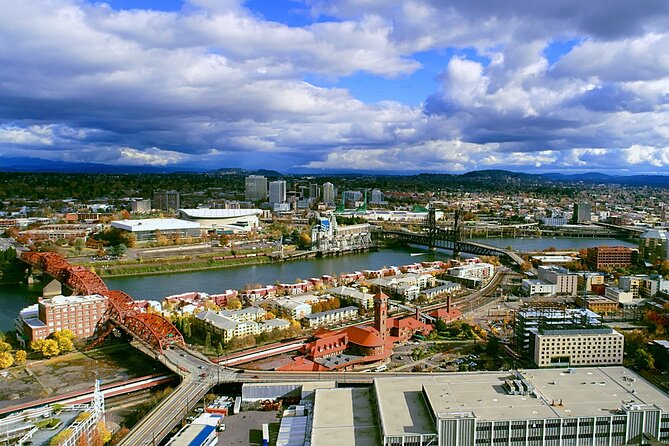
On Waterville Street, you’ll see the “flattop triple-decker” tenement style, described as typical for New England. The tour places these buildings in the 1880s to 1920s timeframe. This is where Portland becomes more than mansions and public buildings. You get a sense of how working-class housing shaped city neighborhoods.
Then you shift to Munjoy Street, where the harbor returns as the main character. You’ll learn that Portland Harbor is part of Casco Bay, an inlet on the southern Gulf of Maine coast. The narration also explains how Portland sits along the southern edge of the bay, and that the Port of Portland lies within it.
A fun way to understand the scale is that you’ll look back for City of South Portland and its oil tanks area. The point isn’t just industrial trivia; it helps you see how the harbor connects cities across the water.
The route then highlights the Eastern Promenade, described as a space where Portlanders get outside for nice weather and sea breezes. The East End Beach is mentioned as a little beach at the foot of the Eastern Prom. Even if you don’t stop to walk in this moment, the narration sets up why Portland is so outdoorsy even without big mountains nearby.
Tip: if the weather’s good, plan a short pause here. The Eastern Promenade area is one of those places you can feel in your body, not just your ears.
Walnut Street to Fort Williams Park: forts, street names, and Civil War era landmarks

Next comes Walnut Street, where the story turns to defense. After the British destroyed the city in 1775, Portland’s leaders decided to build a fort, and the tour points out the green space on the right as a result of that decision. It’s a useful way to see history embedded in the present-day urban plan.
You’ll also get a quick Portland navigation lesson: many Old Portland street names relate to their proximity to the water, including Fore St, Middle St, and Back St. It’s the kind of explanation that sticks, and it can make the city feel smaller and more logical as you explore after the tour.
From there, the drive includes the Casco Bay Bridge, connecting Portland with South Portland. Hearing about the bay and seeing the bridge in motion helps you grasp the geography quickly.
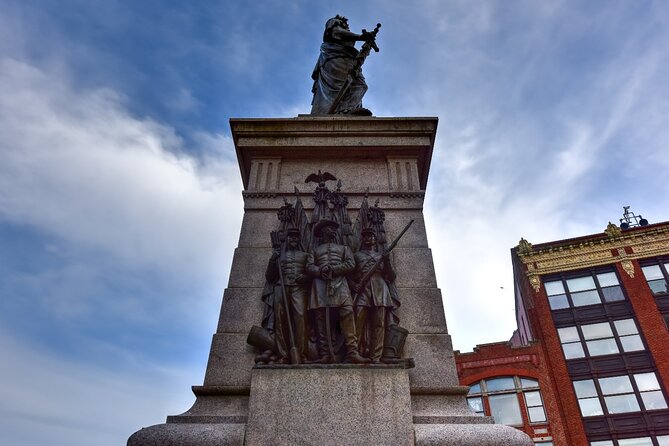
Then you enter Meetinghouse Hill, described as an almost classic New England scene in South Portland. The narration calls out the cemetery to the left, the Civil War statue to the right, and a beautiful church behind the statue. This section works well if you like your history in layers: city, cemetery, war memory, then religion and community space.
Finally, you’ll approach Fort Williams Park, where you’re told to notice several military installations in the park. Even if you don’t go inside anything (the tour is driving-focused), the narration helps you read the space as more than a view.
Practical caution: this last stretch can feel like a lot of cues in a short time. Keep your car position steady, listen for the next landmark, and don’t let the phone distract you at turns.
How to make the tour go smoothly: setup, pacing, and the real-world stuff

I like self-guided tours most when the tech disappears and the experience takes over. This one has a few “small things” that can make a big difference.
First, download while you’re on strong Wi‑Fi or cellular. The tour app needs that time upfront so the offline part actually works later. I also suggest checking volume before you leave the start area, so you’re not fighting car noise mid-route.
Second, pair your phone with your car stereo if possible. Bluetooth, USB, or AUX all work per the tour’s setup guidance. This keeps the narration clear and helps you avoid holding the phone while driving.
Third, keep an eye on speed and route changes. The tour is location-based and designed to keep audio aligned with where you are. If you hit a road closure, you may end up off-route. In that case, your best move is to get back on the planned road as soon as you can, because the tour may not automatically recognize a detour.
Fourth, if audio ever seems cut off or glitchy, slow down to normal safe speeds and repeat the cue by listening again. The tour is meant to be listened to in sequence, and rushing can cause a frustrating mismatch.
And finally, don’t worry if you need breaks. This is built for pausing at your pace—snacks, photos, a quick walk, whatever fits your day.
Who should book this Portland driving GPS audio tour
This tour fits best if you:
- Want a smart first pass at Portland with minimal planning.
- Like history and architecture, but don’t want to buy tickets for everything.
- Prefer a flexible schedule over waiting for group check-ins.
- Plan to drive anyway and want your trip to feel purposeful.
- Travel in any season, since a driving format can be kinder than walking when weather gets unpredictable.
It may be less ideal if you:
- Want a fully guided experience with staff steering you around closures.
- Expect the app to perfectly redirect you when you’re forced off-route.
- Prefer detailed “standing on exactly this sidewalk, look at exactly this sign” directions at every moment.
Should you book this Ultimate Portland Self-Guided Driving GPS Audio Tour?
If you’re heading to Portland with a car and want a history-forward driving loop you can run on your timing, I think this is a strong buy. The combination of offline maps, hands-free GPS audio, and high value per group makes it easy to justify, even for a short visit.
I’d book it if you like learning while you travel and you’re comfortable staying focused on the road. I’d hesitate only if you know you’ll hit lots of road chaos or you dislike any tech-dependent experience where rerouting isn’t guaranteed.
FAQ
How much does the Ultimate Portland Self-Guided Driving GPS Audio Tour cost?
It costs $16.99 per group for up to 4 people.
How long does the tour take?
The tour takes about 1–2 hours.
Is the tour available in English?
Yes, the tour is offered in English.
Does it work offline?
Yes. The tour includes offline maps, so it works without cellular or Wi‑Fi after you download it.
Is the audio hands-free?
Yes. Audio stories play automatically based on your location, and the tour is designed to be hands-free.
Where do I start the tour?
You start at Visit Portland, Maine Information Center, 14 Ocean Gateway Pier, Portland, ME 04101, USA. The tour ends back at the meeting point.
What hours can I use the tour?
The stated opening hours are 6:00 AM to 9:00 PM, daily, within the listed date range.
Do I need admission tickets included in the price?
No. Attraction passes, entry tickets, or reservations are not included.
Can I reuse the tour on another trip?
Yes. The tour is described as lifetime access with no expiry, so you can use it on any trip as many times as you want.
Is there someone meeting me at the start?
No. It’s self-guided, and you’ll follow the audio cues to the next story.