REVIEW · PORTLAND
Mount Hood Loop Scenic Drive Self Guided Audio Tour
Book on Viator →Operated by Drive with Action · Bookable on Viator
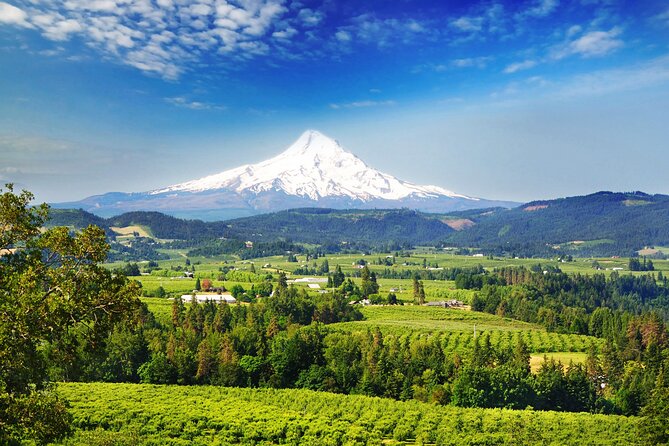
Mount Hood is a strong draw, but the real fun is the drive. This self-guided audio loop links major views, historic stops, and waterfall country with location-triggered stories you can pause and skip at will. I like that it works as a true road trip, not a rushed checklist.
Two things I especially like: the hands-free, location-based audio (it plays as you approach each stop) and the fact that you get offline maps once you download. One possible drawback: you have to start the tour in the exact start zone, because the route and audio can wait until you’re there.
In This Review
- Key Highlights You’ll Feel Right Away
- Why This Mount Hood Loop Works So Well as Self-Guided Touring
- Price and Value: $16.99 Per Group (Up to 4) Really Changes the Math
- App Setup: How Offline Audio and Maps Make or Break the Day
- How Long It Takes: 3–4 Hours vs the Full 120+ Mile Circuit
- The Columbia River Gorge: Stops 2–11 and the Waterfall Run You’ll Remember
- Corbett: Staying on the Good Side of the River
- Historic Columbia River Highway State Trail: A Road Built for Views
- Vista House: The Crown Jewel Kind of Stop
- Multnomah Falls: The Big Name Falls Stop
- Eagle Creek Trail: Choose Your Own Hiking Length
- Latourell Falls: Fast Access, Big Drop
- Shepperd’s Dell Falls: Double Waterfall on a Short Stroll
- Bridal Veil Falls State Park: The One That Costs Some Effort
- Angel’s Rest: The Workout With the Big Bluff Views
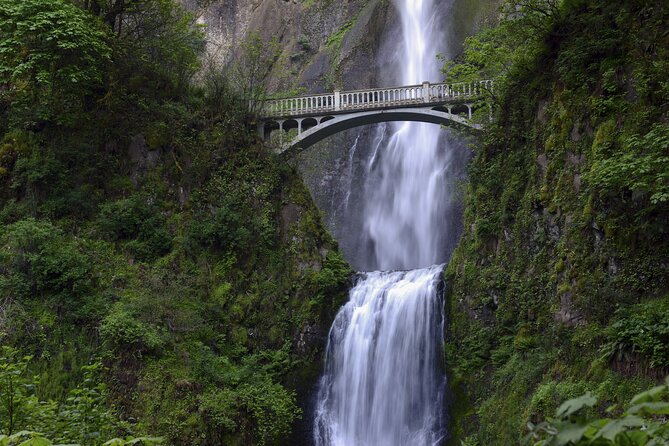
- Wahkeena Falls: The Gorge Showstopper Section
- Optional Waterfall Add-Ons Near the Gorge Route
- Bonneville Dam, the Pacific Crest Trail, and Starvation Creek: Scenic With Context
- Bonneville Dam: New Deal-Era Engineering and River Views
- Pacific Crest National Scenic Trail Connection: Bridge of the Gods
- Starvation Creek State Park: Short Trail, Lots of Water
- Hood River: Stroll Time, Museums, and a Brewery Stop That’s Easy to Love
- Full Sail Brewing Company: A Practical Break in the Fruit-Canning Era
- Back Toward Mt. Hood: Cloud Cap Inn, Timberline Lodge, and the Mountain’s Iconic Stops
- Cloud Cap Inn: The First Permanent Mt. Hood Resort
- Elk Meadows and the Timberline Trail Connection
- Timberline Lodge: National Historic Landmark Architecture
- Mirror Lake: A Glacial-Cirque Story You Can See
- Silent Rock: A Myth-Loaded Stop
- Ramona Falls: A Final Waterfall Worth Linger Time
- Walking and Safety Reality Check: How to Pick Stops That Match Your Energy
- The Best Ways to Drive It Smoothly (Especially With Limited Time)
- Should You Book This Mount Hood Loop Scenic Drive Audio Tour?
- FAQ
- How much does the Mount Hood Loop Scenic Drive self-guided audio tour cost?
- How long does the tour take?
- Is the audio tour available offline?
- Are attraction admission tickets included?
- When can I start the tour?
- Do I meet a guide at the start?
Key Highlights You’ll Feel Right Away
- Hands-free audio that triggers by location, so you don’t have to tap through menus
- Offline navigation and maps after download, useful in spots with spotty signal
- Pickup-and-go flexibility: start anytime within opening hours, pause for photos, bail if you run out of time
- A waterfall-heavy Columbia Gorge stretch, with quick roadside stops plus a few optional hikes
- Lifetime access with no expiry, so you can reuse it on a future trip
- Value per car: one purchase covers up to 4 people
Why This Mount Hood Loop Works So Well as Self-Guided Touring
A driving tour like this is perfect when you want freedom but still want guidance. The audio does the heavy lifting: it tells you what you’re seeing, why it matters, and what’s nearby worth stepping out for. You’re not stuck following a group schedule, and you’re not left guessing where the best photo angles are.
You’ll also like how the route mixes big scenery with small moments. One stop is all about a classic overlook; the next is a short walk to a waterfall you can reach in minutes. That pacing is key. It keeps the day fun even if you’re traveling with different energy levels.
You can also read our reviews of more tours and experiences in Portland.



Price and Value: $16.99 Per Group (Up to 4) Really Changes the Math
At $16.99 per group (up to 4 people), the cost works best when you’re sharing the ride. If you’re traveling as a family, a couple, or a small friend group, it can be dramatically cheaper than paying per person for bus tours or guided walks.
It’s also worth thinking about what you skip. You’ll have to pay nothing extra for the audio itself, but most attraction admission is not included. That’s fine if you treat this as a drive-and-photo tour. You can also plan optional paid stops only where they’re actually worth it to you.
Bottom line: this is a good value if you’re the type who enjoys stopping when the view looks good, not when a tour leader says so.
App Setup: How Offline Audio and Maps Make or Break the Day
This experience uses a phone-based audio app (Action’s Tour Guide App). Plan your tech like you would for a long hike.
Here’s what matters most:
- You’ll get an email/text with setup instructions and a password.
- The tour audio download needs strong wifi/cellular while you’re in good coverage.
- After download, it works offline.
- You start the audio in the app once you’re onsite, and it plays based on your location.
For sound in the car, you can connect through Bluetooth, USB, or AUX. The app audio is also compatible with Apple CarPlay (Android Auto is noted as on the way). If you plan to do short walks from parking areas, you might prefer headphones so you hear the stories clearly without competing road noise.
One more practical tip: keep your phone charged. This is a full road day with lots of photo stops, and you’ll want navigation and audio to stay reliable.
How Long It Takes: 3–4 Hours vs the Full 120+ Mile Circuit
The timing you’re given is twofold:
- The experience is listed as about 3 to 4 hours.
- The full loop route is described as over 120 miles with 60+ audio stories, and it can take 7–8 hours to complete.
So what’s the real-world strategy? Treat the shorter time as the version where you move briskly and only spend a few minutes at each main stop. The longer time is what happens when you linger for overlooks, do the optional walks, and take breaks.
A smart move is to decide your “stop style” before you go:
- If you want a half-day drive: keep walks short and let the audio guide you to quick lookouts.
- If you want a slower, fuller experience: plan a longer day and include the hikes that call for a bit more effort.
The Columbia River Gorge: Stops 2–11 and the Waterfall Run You’ll Remember
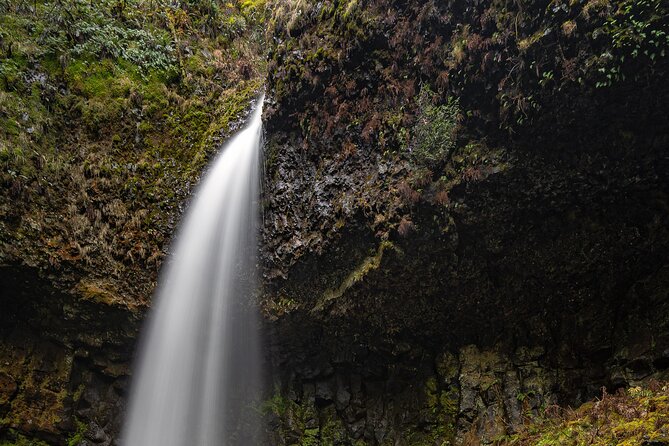
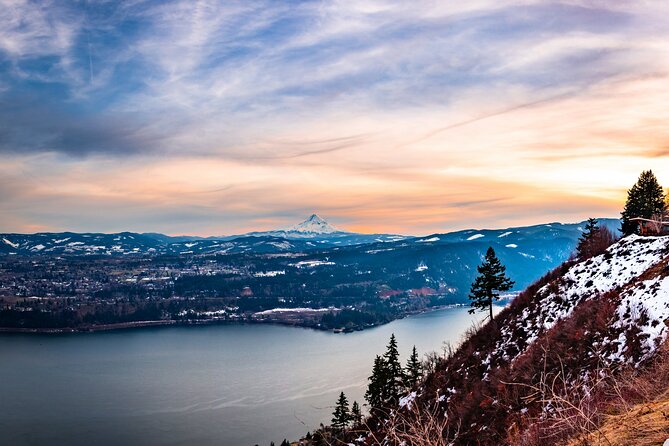
If you love waterfalls, this is the part of the trip that feels like it was planned by nature. The route sweeps along the gorge with classic stops in a tight sequence—some are pull-offs with short walks, and some are better if you’re willing to stretch your legs.



Corbett: Staying on the Good Side of the River
You start with Corbett, where the interstate runs along the gorge. The tour steers you away from the less interesting route and toward the more scenic drive. This is a small detail that matters: it keeps your viewpoints and stops aligned with where you actually want to pull over.
Historic Columbia River Highway State Trail: A Road Built for Views
The next stretch is along the Historic Columbia River Highway, constructed between 1913 and 1922 to showcase the gorge beauty. Even if you don’t do a long walk, the story context makes the roadside feel more meaningful—like you’re driving through a planned viewpoint system, not just random curves.
Vista House: The Crown Jewel Kind of Stop
Then comes Vista House, described as a standout view on the highway. This is one of those stops where you’ll want to park, step out, and take in the gorge lines from the right angle. The audio gives you enough background to understand why this spot became so famous for looking.
Multnomah Falls: The Big Name Falls Stop
Multnomah Falls is highlighted as the second-tallest year-round waterfall in the United States and the most-visited natural recreation site in the Pacific Northwest. Plan this like a headline act: it’s not just the waterfall, it’s also Multnomah Falls Lodge nearby, which gives you a natural place to stretch your legs before continuing.
Eagle Creek Trail: Choose Your Own Hiking Length
Eagle Creek Trail follows the creek through lush canyon scenery with waterfalls. The full trail is 23 miles, but you don’t have to commit. This is ideal for travelers who want waterfall scenery without the stress of doing the entire route.
If you’re short on time, treat this as a choose-your-distance walk: go far enough to feel the canyon vibe, then turn back. The audio keeps you oriented.
Latourell Falls: Fast Access, Big Drop
Latourell Falls is a dramatic 224-foot cascade with columnar basalt cliffs. The key advantage is convenience: it’s a short walk from the parking lot. This is a great stop if you want something impressive without a long hike.
Shepperd’s Dell Falls: Double Waterfall on a Short Stroll
Shepperd’s Dell Falls takes only about a tenth-of-a-mile stroll from the parking area. You’ll see a double-decker waterfall beside an old bridge built in 1914. It’s quick, scenic, and easier on legs than some of the other gorge hikes.
Bridal Veil Falls State Park: The One That Costs Some Effort
Bridal Veil Falls is another strong waterfall stop: a powerful two-tier cascade of 120 feet. Getting to it requires a moderate 2/3-mile hike, so this is the stop where you should check your legs and weather.
If conditions are slick or crowded, take your time. This is one of those places where slow feet get you better photos.
Angel’s Rest: The Workout With the Big Bluff Views
Angel’s Rest is explicitly a climb. Expect 1,500 feet of elevation gain over 2.4 miles to a bluff overlook. From there, you get views that reach toward Beacon Rock, Silver Star Mountain, and Portland.
This is worth it if you want the payoff of a real viewpoint hike. If you just want quick waterfall photos, you might skip it and enjoy the roadside falls instead.
Wahkeena Falls: The Gorge Showstopper Section
Wahkeena Falls is listed as the first of the gorge showstoppers, with 242 feet of waterfall power through a narrow gorge. The description also hints at a “see it, then see what comes next” feeling—perfect if you want the day to build toward bigger sights.
Optional Waterfall Add-Ons Near the Gorge Route
The audio also points out additional walking options from this direction:
- Access a nice five-waterfall loop connected from the area
- A straight hike to Ponytail Falls, about 1 mile round trip
This is exactly where self-guided audio shines. You can follow the main plan, or add a short side mission if your timing feels good.
Bonneville Dam, the Pacific Crest Trail, and Starvation Creek: Scenic With Context
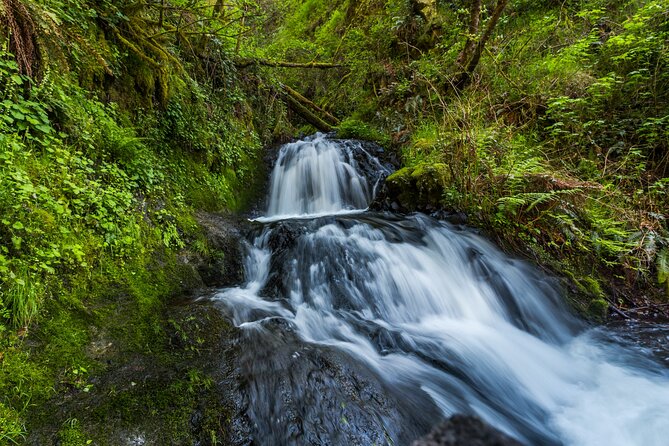
After gorge waterfalls, the route shifts into history and trail culture. It’s a nice change of pace from all that wet-rock drama.
Bonneville Dam: New Deal-Era Engineering and River Views
Bonneville Dam is part of the first federal dam project on the Columbia River, built in 1938 under the New Deal. There’s a historic building on Bradford Island with the Bradford Island Visitor Center, exhibits, and an observation deck.
This is a good stop even if you don’t want to do a long visit. The observation deck gives you river context and helps you understand the gorge at a bigger scale.
Pacific Crest National Scenic Trail Connection: Bridge of the Gods
Next is the Bridge of the Gods, described as part of the Pacific Crest Trail (PCT). The PCT is a 2,650-mile long-distance path from Mexico to Canada. That fact turns a simple bridge stop into a “wow, this is part of something huge” moment.
Starvation Creek State Park: Short Trail, Lots of Water
Starvation Creek State Park is a moderate, short trail with cascades. In about a mile, you can see four cascades, and you can also walk about a tenth of a mile east to glimpse Starvation Creek Falls.
This stop is ideal when you want a bit of walking without committing to a major hike.
There’s also a suggested quick side trip to Cascade Locks, which has a few attractions worth checking out. If you’re the type who enjoys strolling towns and grabbing a bite, this is a logical add-on.
Hood River: Stroll Time, Museums, and a Brewery Stop That’s Easy to Love
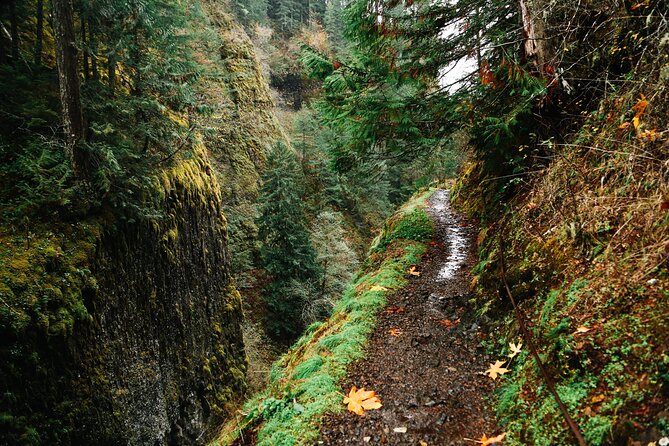
As the route moves toward Hood River, it stops being purely scenic and becomes more about the fun of a small city day.
Downtown Hood River is described as great for strolling, with boutique shops, art galleries, restaurants, wineries, and breweries. It’s also a good weather-saver: if you don’t feel like hiking, you can still enjoy the day by wandering and snacking.
If weather is less cooperative, there’s also a specific indoor option: the History Museum of Hood River County, with exhibits covering Indigenous cultures of the gorge through settlers, loggers, and Japanese Americans. That gives you a way to understand the human side of the landscape.
Full Sail Brewing Company: A Practical Break in the Fruit-Canning Era
If it’s near the right time of day for it, the tour suggests Full Sail Brewing Company. It opened in 1987 in a former fruit canning factory, making it one of Oregon’s early microbreweries. If your group likes beer or just wants a relaxed sit-down break, this is a very doable stop between scenery.
Back Toward Mt. Hood: Cloud Cap Inn, Timberline Lodge, and the Mountain’s Iconic Stops
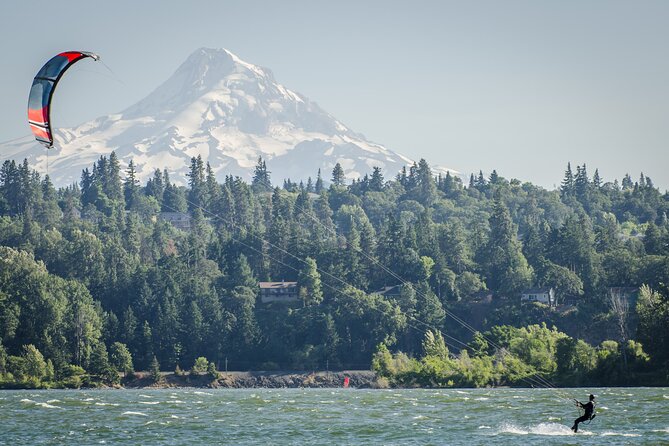
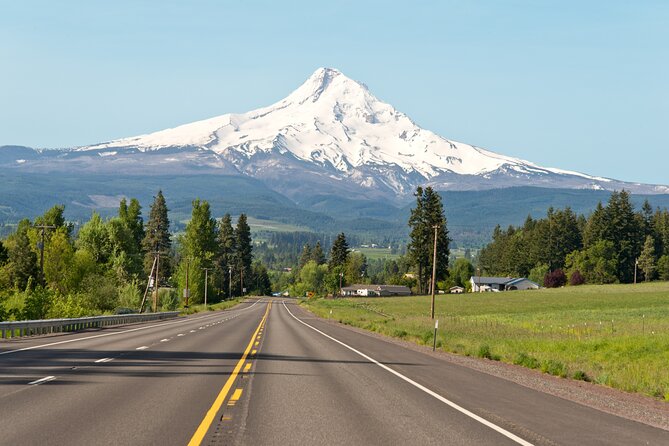
The later part of the route leans back into Mount Hood itself—historic buildings, iconic views, and a few hikes that feel like they belong on a postcard.
Cloud Cap Inn: The First Permanent Mt. Hood Resort
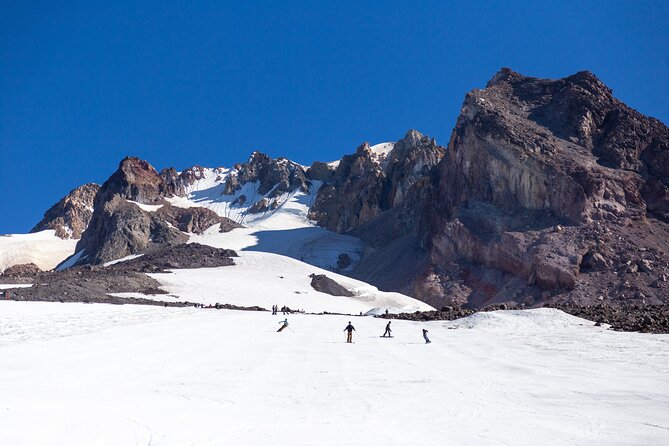
The Cloud Cap Inn was built at about 6,000 feet on the northeast side of Mt. Hood. It’s described as the first permanent resort on the mountain and opened in 1889. The audio story highlights the stone-and-timber construction, fine dining, rooms for 30 guests, and even the evolution toward flush toilets.
Even if you don’t go inside, learning the timeline makes it feel more than just another roadside stop.
Elk Meadows and the Timberline Trail Connection
From the Elk Meadows trailhead, the audio notes routes connecting Elk Meadows Trail to Newton Creek Trail, then to part of the Timberline Trail. This is a helpful concept even if you don’t hike far, because it clarifies how this area feeds into bigger Mt. Hood routes.
Timberline Lodge: National Historic Landmark Architecture
Timberline Lodge is called out as a National Historic Landmark, finished in 1937. It’s noted for Cascadian architecture style. This is one of the easiest “worth the stop” attractions because the building itself is the viewpoint.
Mirror Lake: A Glacial-Cirque Story You Can See
Mirror Lake is reached by a hike, and it’s framed as having a picture-perfect view of Mt. Hood. The audio connects it to geology: a glacial cirque lake in an amphitheater-shaped basin carved by glaciers. That story makes it easier to appreciate the landscape even if you’re just there for photos.
Silent Rock: A Myth-Loaded Stop
Silent Rock comes with folklore: some stories link it to a trucker accident and a curse, while others mention construction accidents or even older Native stories. Even if you don’t treat legends as fact, this kind of storytelling is part of what makes an audio tour fun.
Ramona Falls: A Final Waterfall Worth Linger Time
Near the end, you reach Ramona Falls—a 120-foot waterfall flowing over a black cliff of volcanic columnar basalt. Given the waterfall density earlier, this one works as a strong final payoff.
Walking and Safety Reality Check: How to Pick Stops That Match Your Energy
This route is built from quick roadside pauses and optional walks. So it’s not “one size fits all.” Use the hiking effort clues in the stories to set your own pace.
What you can expect from the effort levels mentioned:
- Very short walks: Shepperd’s Dell (about 0.1 mile), plus multiple falls you can reach quickly from parking
- Short hike to a waterfall: Starvation Creek side look (0.1 mile for a quick glimpse) and Ponytail Falls (about 1 mile round trip)
- Moderate hike: Bridal Veil Falls (about 2/3-mile, described as moderate)
- Big workout: Angel’s Rest (about 2.4 miles with 1,500 feet elevation gain)
One safety note the audio flags: Devils Kitchen is under popular mountaineer routes, and a slip or fall could lead to fumarole hazards. If you’re staying on normal visitor paths, follow posted guidance and don’t try to “shortcut” toward mountaineer terrain.
The Best Ways to Drive It Smoothly (Especially With Limited Time)
A few practical choices make the day feel effortless:
- Start early enough to enjoy viewpoints without racing the clock. Opening hours are 6:00 AM to 6:00 PM.
- Treat the audio as your pacing tool: most stops are time-boxed around short listening and quick walks, with some longer options.
- If your group has mixed hiking tolerance, pair them up with different “missions.” Someone can do a longer viewpoint hike while the rest enjoy the nearby falls and overlooks.
Also, if you plan to listen in the car while walking, consider using headphones. It helps you catch the stories even when you’re juggling photo stops.
Should You Book This Mount Hood Loop Scenic Drive Audio Tour?
Book it if you want a scenic drive with guidance, but you don’t want to commit to a guided group pace. The best reasons are straightforward: hands-free location audio, offline readiness after download, and a route that layers easy roadside stops with a few optional hikes.
Skip it (or at least shorten your expectations) if you want everything to be fully ticket-included or if you hate phone-based planning. Since admission tickets aren’t included, you’ll still decide on any paid attractions yourself. And because the tour activates around the exact start zone, you’ll want to be careful about where you begin.
If you’re traveling as a car group of up to four, and you want Mt. Hood plus the Columbia Gorge waterfalls in one day, this is a smart use of time—like getting a great driver’s co-pilot for the road.
FAQ
How much does the Mount Hood Loop Scenic Drive self-guided audio tour cost?
It costs $16.99 per group, with the group size listed as up to 4 people.
How long does the tour take?
It’s listed as about 3 to 4 hours, though the full loop route is described as over 120 miles and can take about 7 to 8 hours if you complete everything.
Is the audio tour available offline?
Yes. You’re instructed to download the tour while you have strong wifi/cellular, and it works offline after that.
Are attraction admission tickets included?
No. Attraction passes, entry tickets, or reservations are not included.
When can I start the tour?
Opening hours are Monday through Sunday from 6:00 AM to 6:00 PM.
Do I meet a guide at the start?
No. This is a self-guided experience, and you start the audio in the app at the onsite starting point. The activity ends back at the meeting point.