REVIEW · CHARLOTTETOWN
A 7th-Gen Local’s View of Downtown Charlottetown: An Audio Tour
Book on Viator →Operated by VoiceMap Audio Tours · Bookable on Viator
Charlottetown gets explained one corner at a time. This 75- to 90-minute walking audio tour uses GPS-triggered stops to stitch together PEI’s European past, British rule, independence, and Confederation—while you stroll a compact downtown loop.
I really like the auto-start feel (audio kicks in when you reach each waypoint) and the way you can walk at your own pace instead of being pulled along by a group schedule. You also get offline access to the audio and maps, which matters in a city where reception can be hit-or-miss.
One thing to plan around: this is not a guided museum tour, so you’ll be looking from the sidewalk unless you choose to pay to enter places on your own. And since it’s waypoint-based, you’ll want your phone charged and be willing to reset if GPS gets confused by construction or winter conditions.
Key things I’d center on before you book
- GPS-triggered stops that start the audio when you arrive at each location
- Offline audio and maps so you’re not stranded if your signal drops
- A tight downtown route that hits major sites like Province House and St Dunstan’s Basilica
- Stories beyond postcards, including ghost lore and quirky local details
- Lifetime access in English, so you can redo it later (or listen again)
In This Review
- Why a self-guided audio walk fits Downtown Charlottetown
- Price and time: what you get for $11.99
- Meeting at Port Charlottetown (and how to avoid “where is Weymouth St?” stress)
- VoiceMap setup: offline access, audio start/stop, and why headphones matter
- The walking loop: what the route is really doing for you
- Port Charlottetown: the story begins at the waterline
- Founders Food Hall, market, and the downtown stop you’ll actually use
- St Dunstan’s Basilica: one landmark that anchors your whole mental map
- Confederation Center of the Arts and Anne of Green Gables history
- Province House: the birthplace of Canadian Confederation (and why you’ll want a slow look)
- Civic Charlottetown: City Hall, Government House, and the side of power you can spot
- Church spotting: St James Presbyterian, St Peter’s Cathedral, plus the biggest and smallest
- Sidewalk quirks and Connaught Square: cannon, executions, and dark corners
- The PEI Railway and crooked curves: history with a sense of engineering
- Waterfront ending: Charlottetown Marina, Peakes Quay, and Victoria Row
- Who this audio tour suits best
- When I would skip it (or choose another way)
- Should you book the Downtown Charlottetown audio tour?
- FAQ
- How long is the Downtown Charlottetown audio tour?
- What does the tour cost?
- What do I get with the tour?
- What do I need to bring?
- Where does the tour start and end?
- Is this tour guided by a person?
Why a self-guided audio walk fits Downtown Charlottetown

Downtown Charlottetown is built for walking. It’s compact enough that you can see the key “named places” in a reasonable time, but spread out enough that you benefit from a route that tells you what you’re looking at while you’re actually there. This VoiceMap setup does exactly that.
You’re not just getting dates and facts. Each waypoint is timed to real streets and real buildings—so you learn what something means as you approach it, not after you’ve already moved on. That’s especially useful for Charlottetown’s Confederation-era story, where it’s easy to remember names but harder to understand why they mattered.
Also, the tour’s style is practical: you get directions and stop-by-stop context, and you can pause to shop, duck into a church if you want, or just stand and look longer at a landmark without feeling rushed.
Price and time: what you get for $11.99

At $11.99 per person, this is one of those “small price, big usefulness” travel buys. You’re paying for a self-guided narrator and a structured route, not for a staff member escorting you inside every building.
The tour runs about 1 hour 15 minutes to 1 hour 30 minutes. In real life, I’d expect it to be closer to the upper end—or even longer if you keep stopping to take photos, read plaques, or want a bathroom break. That extra time can be worth it because the route includes a long list of downtown anchors: Province House, multiple churches, Government House, plus waterfront areas near the end.
Two value boosters you should know:
- You get lifetime access, so you can replay the audio later without buying it again.
- You get offline access, which turns the tour into something you can actually rely on on your walk.
Meeting at Port Charlottetown (and how to avoid “where is Weymouth St?” stress)
The tour starts at Port Charlottetown, 1 Weymouth St, Charlottetown, PE C1A 8W1 and ends back at the same place.
Here’s my practical advice: don’t assume your phone will nail the exact starting point the first try, especially if there’s construction around downtown. One downside that shows up with waypoint-based tours is simple: if you’re off by even a little, the app can refuse to start or keep you stuck.
So, do this before you begin:
- Make sure you’re at the Port Charlottetown area first, then confirm you’re at the correct side of Weymouth St.
- Give yourself a few minutes buffer so you can orient before the audio begins.
- If you’re lost, use the tour’s on-screen map/directions in the VoiceMap app instead of guessing.
It’s not dramatic once you’re there—it’s just easier if you treat the first 5 minutes like setup, not like part of the main event.
VoiceMap setup: offline access, audio start/stop, and why headphones matter
This tour includes the VoiceMap app (Android/iOS) and offline access to audio, maps, and geodata. It’s built to work without you needing cellular data the whole time, which is a big deal for walking tours.
What’s not included: your smartphone and headphones. So bring both. If you hate wearing earbuds while walking, at least consider headphones that fit securely. Audio matters here because the stories are the core product.
From a user-experience standpoint, the most praised feature is how smoothly the audio follows your location: the guidance is designed to start when you arrive at each stop and help keep you on track while you’re moving. That means less scrolling, less tapping, and fewer “wait, what street am I on?” moments.
My one tech tip: download your tour content before you leave home. Even though offline is included, you still want everything cached so the app is ready to play the second you hit the start point.
The walking loop: what the route is really doing for you
The downtown route is basically a story arc in physical form. You start at the port, then work inward through civic sites, cultural anchors, churches, and the waterfront again. The walking order matters because the narration connects “who had power when” with places where those decisions were made.
Expect a lot of back-and-forth thinking even if the route itself is straightforward. For example, you’ll hear about European discovery and British landlord rule, then you’ll move past landmarks tied to political independence and Confederation. That structure helps you connect history to geography, instead of treating it like a random list.
You’ll also pass places that are easy to treat as optional—food hall, restaurants, and a culinary-focused stop—so you can mix learning with real downtime instead of making this just another “tight schedule” activity.
Port Charlottetown: the story begins at the waterline
The tour kicks off by starting and ending at Port Charlottetown, and that choice makes sense. The narration opens with how Europeans discovered PEI and how control shifted to British landlords.
Why I think this works: when you start at the port, the story feels less like classroom history and more like how power moved—ships, arrivals, rule, and bargaining. Even if you don’t love maritime history, you get a sense of why this city became a political and cultural hub.
Then you immediately transition into the longer independence and Confederation arc, which sets up the rest of the walk. By the time you reach the political landmarks later, you’re primed to understand what you’re seeing.
Founders Food Hall, market, and the downtown stop you’ll actually use

One of the named waypoints is Founders Food Hall and Market. Even though the tour is not a guided museum-style experience, this is a smart placement because you can grab a snack or browse while the narration keeps you oriented with context as you walk past.
If you’re traveling with kids or anyone who needs regular breaks, this kind of waypoint is valuable. It gives you a natural “reset point” without breaking the logic of the route.
My suggestion: if you plan to stop for food, do it right here or at a similar downtown break point—so you don’t lose momentum near the more tightly clustered heritage sites.
St Dunstan’s Basilica: one landmark that anchors your whole mental map

You’ll pass St Dunstan’s Basilica, described as one of only 26 basilicas in Canada and a highly visible landmark in the city.
Even if you don’t go inside (and you usually won’t on this kind of sidewalk-focused audio route), it’s still a useful waypoint because:
- It gives you a clear visual anchor.
- It helps you understand the city’s religious architecture and civic identity.
- It provides a landmark you can remember later when you compare “churches on PEI” to what you saw in other Canadian cities.
This is also a good stop if you enjoy architecture from street level. The narration helps you look with intention rather than just noticing the building and walking on.
Confederation Center of the Arts and Anne of Green Gables history

Another highlight is Confederation Center of the Arts, where productions of Anne of Green Gables were held annually until the pandemic hit. That’s a key detail because it ties local heritage storytelling to a real stage history.
Why this matters: it shows that Charlottetown isn’t only about politics and founding documents. It’s also about how Canada tells its stories—through visual and performing arts—and how that links back to the city’s identity.
Even if you don’t enter the center, just walking past gives you a sense of why this place became a cultural magnet.
Province House: the birthplace of Canadian Confederation (and why you’ll want a slow look)
You’ll see Province House National Historic Site, one of the oldest functioning parliamentary buildings in the world, and the birthplace of the Canadian Confederation.
This is the stop where the tour’s “why this happened here” story really clicks. A building can be impressive, but the value comes from understanding its role. You’re not just photographing an old façade—you’re learning why this kind of site carried weight for the future of the country.
My advice: if you only do one “linger” moment during the tour, make it Province House. Even a short pause helps your brain connect narration to visible detail.
Civic Charlottetown: City Hall, Government House, and the side of power you can spot
The tour also includes time to hear about:
- Charlottetown City Hall
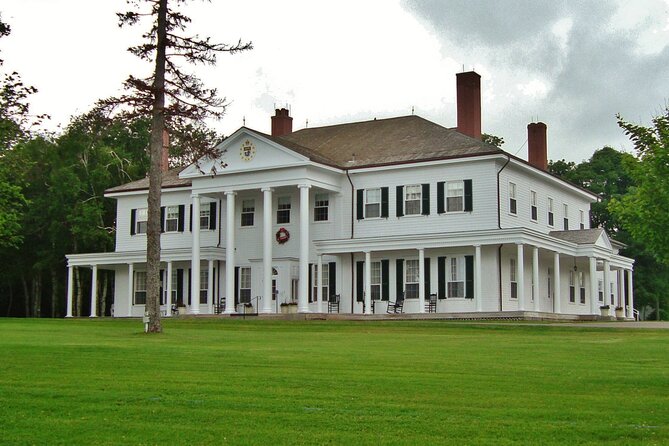
- Government House
These are important because they show how power wasn’t only political in the narrow sense. Civic and governmental institutions also shape daily life—who gets heard, how the city runs, and what leadership looks like in architecture and location.
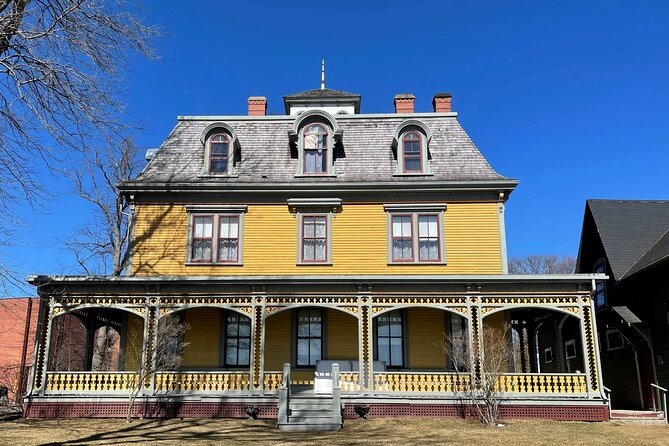
You’ll also pass Beaconfield Historic House, and the audio uses that waypoint to pivot to a different kind of PEI story: the rail system.
Church spotting: St James Presbyterian, St Peter’s Cathedral, plus the biggest and smallest
One of the most fun parts of this tour is that it treats churches like wayfinding landmarks and story markers.
You’ll see:
- St James Presbyterian Church (with a unique nod to the character Eckhart, the mouse from The True Meaning of Crumbfest, located outside)
- St Dunstan’s Basilica Cathedral and All Souls Chapel (the largest and smallest churches on the island, according to the tour narration)
- St Peter’s Cathedral
Why I like this approach: it turns a “random set of buildings” into a coherent theme. You can track the tour’s story while using churches as physical reference points that help you stay oriented.
If you enjoy quirky details, the Eckhart moment is exactly that kind of playful pause that keeps the tour from feeling like a lecture.
Sidewalk quirks and Connaught Square: cannon, executions, and dark corners
This part of downtown includes several memorable, heavier stories and odd landmarks.
You’ll hear about:
- A canon planted in the sidewalk
- Connaught Square, tied to the last public execution in the province (George Dowie was hung three times before being declared dead, per the narration)
- Ghost stories connected to a burning phantom ship
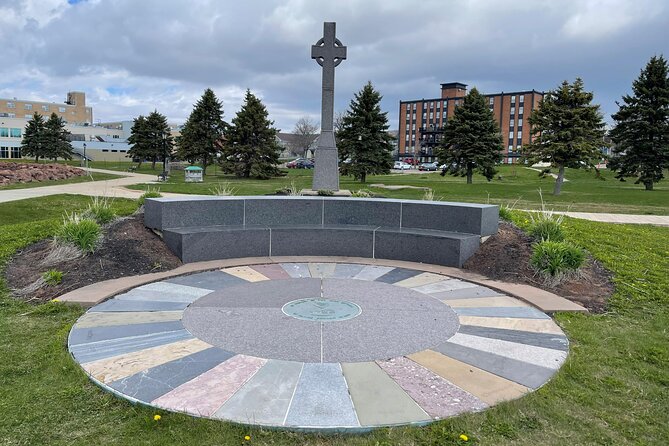
- An exiled Irish God said to lurk near the rocks near the Irish Settlers Monument
I won’t sugarcoat it: if you prefer only light entertainment, some of these sections may feel intense. But if you like history that includes the messy parts—then these waypoints are where the tour feels most real.
Practical advice: slow down for these. Dark stories land better when you take 30 seconds to look around and let the place sink in.
The PEI Railway and crooked curves: history with a sense of engineering
After Beaconfield Historic House, the narration explains how the PEI Railway became famous for one of the world’s most crooked rail beds, because a third of its total line is made up of curves.
This is a good mid-tour shift. Instead of repeating political milestones, you get a technical, place-based explanation that makes PEI’s physical geography part of the story.
If you like engineering, transportation history, or just unusual facts, this is one of the more “brain-awake” sections.
Waterfront ending: Charlottetown Marina, Peakes Quay, and Victoria Row
As the tour moves toward the end, it goes through Charlottetown Marina, Peakes Quay, and down Victoria Row, a pedestrian street tied into the city’s founding and early Canadian history.
This ending is smart. You’ve spent most of the walk learning power centers, civic institutions, and churches. Ending near the waterline reminds you this city grew from movement, arrival, commerce, and later culture.
Also, these areas are easier to enjoy at the end of a walk because they’re natural places to stop for a meal or just sit and recover your legs.
Who this audio tour suits best
This is a strong pick if you:
- Like history but don’t want a formal guided group pace
- Enjoy learning while walking and want clear help staying on route
- Prefer a low-cost option compared to a full coach or live guide
It’s also a decent family option since it gives you structure plus flexibility. Still, if your group struggles with phone-based navigation or hates waypoint timing, you’ll need extra patience at the start.
When I would skip it (or choose another way)
I’d think twice if:
- You’re traveling in harsh winter weather and you don’t want to chase exact GPS start points in snow or slippery conditions.
- You don’t want to use your phone outdoors for navigation and audio.
- You’re hoping for inside-the-museum access or guided entry. This tour keeps you mostly outside, and if you want to go in, you’ll pay separately.
Should you book the Downtown Charlottetown audio tour?
I think you should book it if you want an efficient, story-driven walk that hits major downtown landmarks and adds color through local details and unusual history. For $11.99, the GPS-triggered audio, offline access, and lifetime replay make it good value—especially if you’re the kind of traveler who likes stopping where something interesting is happening.
Book it with a couple of expectations set:
- Download everything ahead of time and bring headphones.
- Plan for a start-point moment where you may need to confirm you’re exactly where the tour expects you.
- Treat some darker or quirky stories as part of the real Charlottetown experience, not scary surprises.
If that sounds like your style, this walk is an easy win.
FAQ
How long is the Downtown Charlottetown audio tour?
It’s about 1 hour 15 minutes to 1 hour 30 minutes, depending on your pace and how often you pause.
What does the tour cost?
The price is $11.99 per person.
What do I get with the tour?
You get lifetime access to the tour in English, the VoiceMap app, and offline access to audio, maps, and geodata.
What do I need to bring?
You’ll need your smartphone and headphones (they are not included).
Where does the tour start and end?
It starts at Port Charlottetown, 1 Weymouth St, Charlottetown and ends back at the same meeting point.
Is this tour guided by a person?
No. It’s self-guided with audio, and you won’t be guided through museums or other attractions en route. If you choose to enter places, you pay independently.