REVIEW · ROME
Rome: Colosseum, Forum, & Palatine Hill with Audio Guide
Book on Viator →Operated by Doooing Experience · Bookable on Viator
Rome’s ancient power grid in three stops. This visit works because it’s self-paced and built around a downloadable audio guide, so you can linger over details without feeling rushed. I also like the smart flow: three classic sites in one tidy plan, with admission folded in.
What really makes it worth it is the way the audio narration helps you read the ruins instead of just looking at stone. People have even praised Alex/Alexandra for turning the history into stories you can actually follow. One thing to keep in mind: this is audio-guide only, not a live guide, so bring earphones and set expectations accordingly.
In This Review
- Key highlights at a glance
- The value of a self-paced route through Rome’s power sites
- Entering the Colosseum: what you’ll see (and what you may need to upgrade)
- Roman Forum ruins: how to read a field of stone
- Palatine Hill viewpoint: the emperor’s-eye picture
- Using the audio guide app well (so it actually works)
- Timing tips, weather, and Jubilee route changes
- Price and value: is $42.30 a fair deal?
- Who this is best for (and who should look elsewhere)
- Should you book this Colosseum, Forum & Palatine Hill audio experience?
- FAQ
- Is this experience offered in English?
- How long should I plan for the Colosseum, Forum, and Palatine Hill visit?
- Does the price include admission tickets?
- What document do I need to bring for entry?
- Is there a live guide with this experience?
- Will the Jubilee affect monument access or routes?
- What if I cancel, or the weather is poor?
Key highlights at a glance

- Downloadable audio guide app so you’re not stuck doing mental homework while standing in crowds
- Admission included for the Colosseum, Roman Forum, and Palatine Hill
- Colosseum access is upper levels by default, with an option to upgrade for the Arena Floor
- Palatine Hill viewpoint gives you an emperor-style perspective over ancient Rome
- ID and exact names matter for entry, plus possible route changes during the Jubilee
The value of a self-paced route through Rome’s power sites
Rome’s ancient center can feel chaotic if you’re trying to coordinate timing, ticket lines, and interpretation all at once. This format helps because you’re not chained to a strict group cadence. You can pace yourself—fast when you want the big wow moments, slow when you want to understand what you’re seeing.
You also get a practical setup: you’ll download the audio guide app ahead of time and use it on-site. That means you can spend your energy on the monuments rather than searching your phone for context or screenshots that never load when you’re standing in bright sun.
Finally, it’s built for efficient sightseeing. With three core stops packed into a short window, you get a full sense of the city’s political and social engine without needing a long, complicated itinerary.
You can also read our reviews of more tours and experiences in Rome.


Entering the Colosseum: what you’ll see (and what you may need to upgrade)
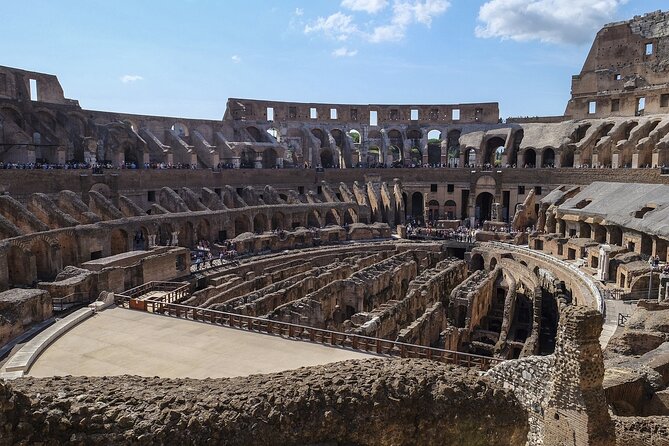
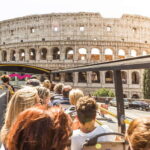
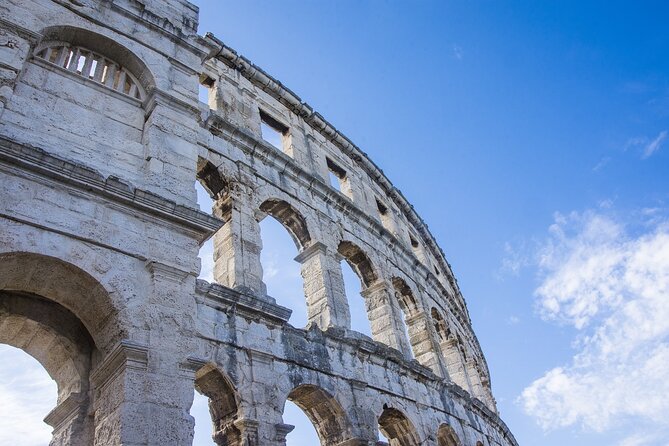
The Colosseum is the reason most people come. The key detail here is what access includes by default: you’ll be in the stadium interior, with upper levels included. From those galleries, you can get a strong sense of scale and structure—how the seating and corridors were laid out, and how the building still dominates the skyline.
The experience gets even better if you plan for the possibility of upgrading to access the Arena Floor. The default option can be great for photos and orientation, but stepping onto the floor changes the perspective completely. It’s the difference between viewing the Colosseum as a monument and feeling like you’re part of the arena setting.
Practical note: Colosseum entry depends on correct names. You’ll need to show a document such as a passport or ID to access. If the names for all participants don’t match what you booked, entry can be denied, so double-check this before you leave your hotel.
Roman Forum ruins: how to read a field of stone
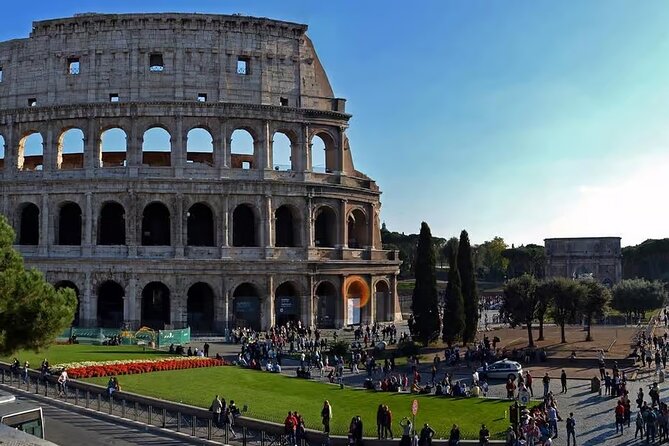
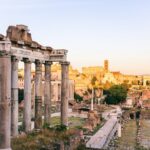
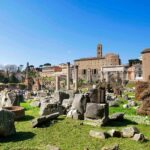
The Roman Forum can look like a jumble at first glance—temples here, arches there, columns scattered like someone dropped a model kit. What makes it click on this visit is the audio storytelling that helps you connect the ruins to the daily machinery of power.
This stop is all about understanding the city’s political center. You’ll see the ruins of the Forum, and the audio guide helps you focus on the big themes: how Rome organized authority, where crowds gathered, and why certain spaces mattered. Without that guidance, you can end up walking the right area and still leaving with only a blurry impression.
One consideration: the Forum is outdoors, and visibility depends on weather and lighting. If it’s sunny, midday glare can make inscriptions harder to spot. If it’s rainy or too bright, plan your walking rhythm accordingly so you can keep your attention on what the audio prompts you to look for.
Palatine Hill viewpoint: the emperor’s-eye picture
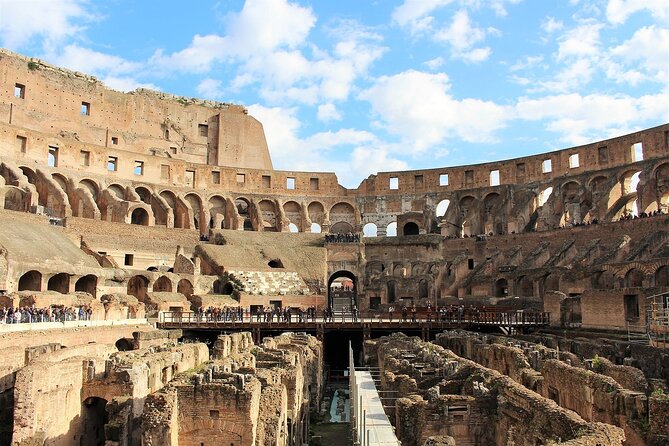
Palatine Hill is where Rome gets personal. You’re not just looking at ruins—you’re looking from a spot that historically mattered to the people at the top. The standout here is the viewpoint: you’ll get an emperor’s-eye view of the ancient city layout.
This hill works especially well for people who like to connect dots. From here, you can better understand why certain neighborhoods and buildings were positioned where they were. It’s also a great place for photos that show more than one landmark at once, because the elevation helps you frame the broader ancient cityscape.
The hill can also be physically more demanding than it sounds, depending on your pace and the day’s conditions. Wear shoes that handle uneven ground, and build in a little extra time if you’re stopping often to look back and re-check angles.
Using the audio guide app well (so it actually works)
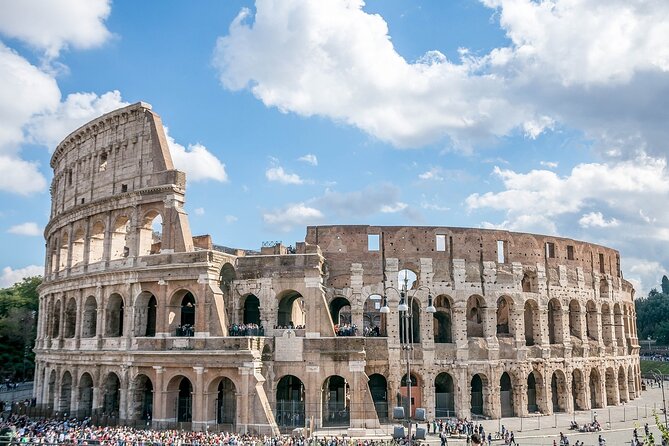
Since this is audio-guided, your success depends on setup. Download the app ahead of time so you’re not scrambling with weak signal or dead battery at the entrance. Then use earphones so the narration stays clear.
There’s a real-world reason this matters. Noise around the Colosseum and Forum is loud—footsteps, tour clusters, background sound from nearby areas. If you don’t use earphones or if your device volume isn’t high enough, you’ll miss parts of the story. You can still see everything, but you won’t get the full value.
A fun twist from the way the narration is described by people who enjoyed it: it’s not just facts. It’s written like a guided conversation, with a story rhythm that makes the ruins feel less like random artifacts and more like places with intention. People specifically called out Alex/Alexandra for being informative and for handling questions gracefully in their experience—while the format here is audio-first, that praise is a sign the material aims to feel human, not robotic.




Timing tips, weather, and Jubilee route changes
This experience works in a flexible time window, listed as roughly 1 to 3 hours. In practice, that range depends on how often you stop, how long you take on photos, and how deeply you listen to the audio.
It also has a weather requirement. If weather becomes an issue, you should expect a different date or a full refund (this is stated as the fallback). Rome weather can change fast, so check the forecast the day before and plan layers if the temperature swings.
Then there’s the Jubilee factor. Due to the Jubilee, some monuments may be under restoration, and access routes could change. The best move is simple: check your messages before you go and be ready to follow updated paths on-site. You don’t need to panic—just keep a little margin in your schedule so route changes don’t wreck your timing.
Finally, this is popular. It’s commonly booked about 23 days in advance, so if your dates are firm, don’t wait until the last week to line it up.
Price and value: is $42.30 a fair deal?
At $42.30 per person, the value depends on what you compare it to. You’re paying for a bundle: entrance to three major sites plus audio interpretation that keeps you from wandering with no context.
For many people, that’s a win. Paying separately for each attraction adds up quickly, and time lost to planning eats into a Rome trip. Here, the structure helps you spend more energy on the sights and less on logistics.
But there’s a trade-off. Because it’s audio-only, you’re not paying for a live expert guiding every question in real time. If you crave a back-and-forth conversation, you may prefer a fully guided option instead of audio-first. If you’re happy with self-guided sightseeing and you like learning while you walk, the pricing feels more reasonable.
Also consider the access choice in the Colosseum. If you care most about standing inside the arena setting, check whether upgrading to the Arena Floor is worth it for you. Default upper-level access still delivers the big wow, but the upgrade is the difference-maker if that’s your top priority.
Who this is best for (and who should look elsewhere)
This experience fits best if you want Rome’s ancient core in a compact visit and you’re comfortable guiding yourself with audio. It’s a good match for people who like control over pacing and want to skip the pressure of keeping up with a group.
It’s also a nice fit for independent sightseeing because it’s designed to work at your own tempo. You can spend an extra five minutes on an interesting section of the Forum or pause on Palatine Hill for photos without asking permission.
Where it may fall short is simple: if you strongly prefer a live guide, this one is likely not your match. Since it’s audio-first, it asks you to bring the right gear (earphones) and the right expectations.
One more practical detail: service animals are allowed, and the pickup point is described as near public transportation, which helps if you’re combining this with other Roman stops.
Should you book this Colosseum, Forum & Palatine Hill audio experience?
If you want a smooth, ticket-included route through Rome’s most famous ancient sites—and you’re good with audio narration—this is a solid buy. The best reasons to choose it are straightforward: efficient sightseeing, downloadable guidance, and the chance to get a real view from Palatine Hill.
I’d think twice if your main goal is a hands-on, question-answering experience with a person leading you step-by-step. Also take the ID-and-name requirement seriously. Double-check the names for everyone in your group, and bring a document like a passport or ID so entry doesn’t become a last-minute stress.
If your schedule can flex a little and you’re willing to check your messages for Jubilee updates, this can be a confident way to see the ancient heart of Rome without turning it into a stressful project.
FAQ
Is this experience offered in English?
Yes. The audio guide is listed as available in English.
How long should I plan for the Colosseum, Forum, and Palatine Hill visit?
The duration is listed as approximately 1 to 3 hours.
Does the price include admission tickets?
Yes. Admission tickets are included for the Colosseum, the Roman Forum, and Palatine Hill.
What document do I need to bring for entry?
You must show a document such as a passport or ID to access. Your booking names also need to match for entry to be granted.
Is there a live guide with this experience?
This is described as an audio guide experience. It does not require a physical guide for the standard format.
Will the Jubilee affect monument access or routes?
Yes. Due to the Jubilee, some monuments may be under restoration and access routes could change. It’s advised to check your messages for updates before you visit.
What if I cancel, or the weather is poor?
The experience is non-refundable and cannot be changed for any reason. If it’s canceled due to poor weather, you’ll be offered a different date or a full refund. If the minimum number of travelers isn’t met, you’ll be offered a different date/experience or a full refund.