REVIEW · ISTANBUL
Istanbul:Basilica Cistern Skip-the-Line Ticket & Audio Guide
Book on GetYourGuide →Operated by Istanbul Tourist Pass® · Bookable on GetYourGuide
Underground columns feel otherworldly fast. This Basilica Cistern skip-the-line ticket plus English audio guide is a smart way to see Istanbul’s biggest underground space without burning time in ticket queues. I like that it’s self-paced all day, and I love that the audio helps you connect what you’re looking at to the story behind it. One catch: you still can’t skip security lines, and there might be a line at the entrance.
The cistern itself is massive—built in Byzantine times during the reign of Emperor Justinian I (527–565)—and it sits just southwest of Hagia Sophia. Locals call it Yerebatan Cistern because of the marble columns you’ll walk among underground, and the guide helps you spot the details that make it feel like a hidden city. If you hate stairs, this site may feel a bit heavy, since you descend 52 steps to reach the water reservoir space.
The package also includes limited-time free internet via eSIM, which can be a lifesaver for looking up nearby sights or translating street signs while you’re in the Sultanahmet area. You’re not just buying entry—you’re buying time, clarity, and that exact kind of history lesson that sticks because you can see it while it’s happening.
In This Review
- Key things that make this Basilica Cistern ticket worth it
- How your Basilica Cistern visit runs with QR entry and an audio link
- Getting there fast: what skip-the-line really means on site
- The 52-step descent: what you’re stepping into under Hagia Sophia
- 336 columns and the “forest” effect: classical orders in a reservoir
- Spotting the Medusa heads: myth, Roman art, and why they’re used as supports
- What the audio guide adds beyond the underground space
- Price and value: is $54 a smart deal for this Istanbul stop?
- How long you’ll spend there and how to pace it well
- Practical tips to make your skip-the-line ticket feel truly “easy”
- Should you book this Basilica Cistern skip-the-line + audio guide?
- FAQ
- What’s included with the Basilica Cistern skip-the-line ticket and audio guide?
- Do I get a skip-the-line ticket even if I only buy the audio guide?
- How do I receive my tickets and audio?
- Can I skip security lines?
- Is the audio guide available in English?
- How long is the ticket valid?
- Is there a cancellation option?
Key things that make this Basilica Cistern ticket worth it

- Skip-the-ticket-line access for the Basilica Cistern (Yerebatan Cistern)
- English audio guide that explains what the 336 columns and layout mean
- Instant e-tickets (Show&Go) delivered as QR codes, so you can move quickly
- Yerebatan scale: 140 meters long, 70 meters wide, with 12 rows of columns
- Medusa heads at the northwest edge, plus the myth-and-logic behind them
- Free eSIM internet (limited time only) included with the experience
How your Basilica Cistern visit runs with QR entry and an audio link
This is set up for a self-guided visit, which is great when you want to control your pace. You’ll receive your entry ticket QR codes and your audio guide link in separate emails from the supplier Istanbul Tourist Pass. That split delivery is useful: you can get your audio ready early, then use the QR code when you’re at the entrance.
Because this isn’t a guided walking tour with a group moving together, you can spend extra time on the parts that pull you in. If you’re the type who likes photos, you’ll probably linger under the columns and along the central aisles. If you’re more about structure and engineering, you’ll want to focus on the layout and building materials described by the audio.
One practical mindset shift: the “skip-the-line” part helps at the ticket stage, but you still need to go through the mandatory security process. Plan on some waiting at the entrance anyway, especially during peak hours.
You can also read our reviews of more tours and experiences in Istanbul.



Getting there fast: what skip-the-line really means on site
The ticket is designed to help you bypass the ticket queue for the Basilica Cistern. That matters because this is one of Istanbul’s most in-demand sights, and time lost in a line can ruin your rhythm.
Still, you should expect an entrance flow that includes security. The key point for your planning: you’re not skipping security lines, and a line can form at the entrance for everyone. So treat the skip-the-line benefit as saving you time at the ticket counter, not guaranteeing instant entry through everything.
If you’re trying to fit this into a day that also includes Hagia Sophia area stops, going earlier in the day is the easiest way to keep the visit relaxed. Even without a group schedule, crowds can still affect how long you’ll stare at each row of columns.
The 52-step descent: what you’re stepping into under Hagia Sophia

The Basilica Cistern is located southwest of Hagia Sophia, and the experience starts the moment you descend. You’ll go down a staircase of 52 steps into the underground reservoir space. It’s a dramatic change in air and light, and that makes the architecture hit harder once you’re inside.
This cistern was built during Justinian I’s reign, around 527–565, and the audio guide context helps you understand what you’re seeing isn’t just decorative. It’s a functioning water structure turned into a monumental interior.
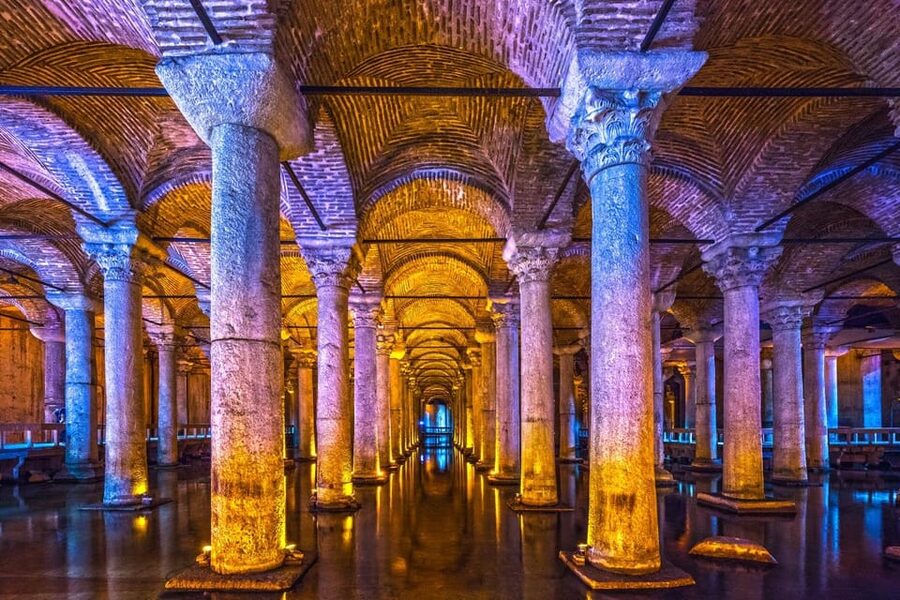
Once you’re underground, you’ll feel the geometry. The room stretches about 140 meters long and 70 meters wide, covering a broad rectangular area. The guide’s pacing makes it easier to stop treating it like one big hall and start seeing it as a precise system of aisles, rows, and supporting structures.
336 columns and the “forest” effect: classical orders in a reservoir
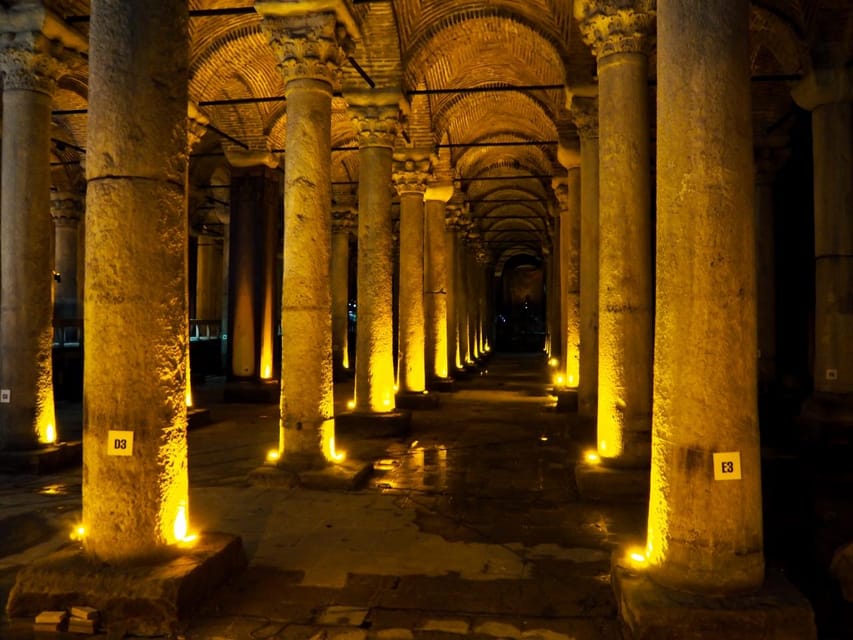
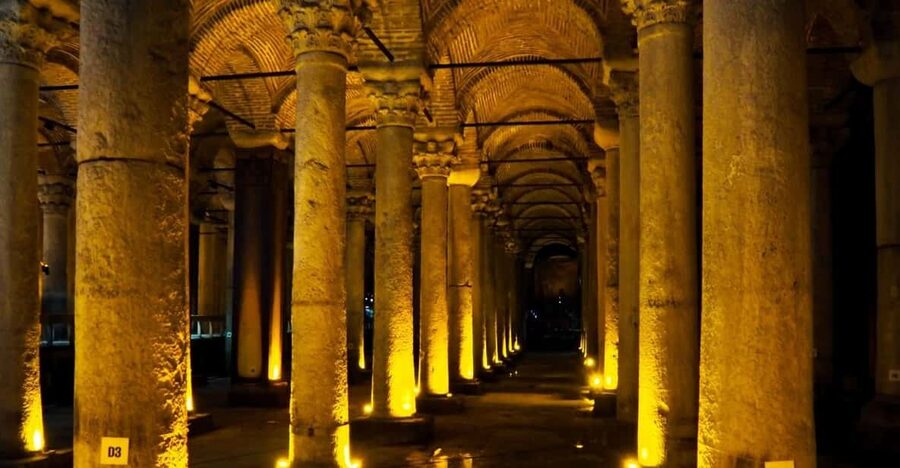
Inside the cistern, the headline feature is the columns. You’re surrounded by 336 towering columns that reach about 9 meters high. They’re arranged in 12 rows, with 28 columns in each row, creating a repeating rhythm that’s both visually calming and slightly surreal.
The audio guide adds value by helping you notice that these columns weren’t all made new. Many were taken from earlier structures and reworked from different types of marble. That’s why the overall look can feel unified, but not identical everywhere.
You’ll also learn there are two classical styles present:
- Corinthian-style columns: 98 of them
- Dorian-style columns: the rest
Even if you don’t know how to identify them instantly, the guide’s explanations can teach you to look for the differences in the column design. The “water reservoir” function is part of the story, but the structural design is what makes it unforgettable in person.
The spacing helps too. Columns stand about 4.80 meters apart, and the brick walls rise about 4.80 meters as well. The floor is brick and plastered with thick brick dust mortar to keep the water tight—an engineering detail that turns your awe from purely visual into something more grounded.
Spotting the Medusa heads: myth, Roman art, and why they’re used as supports
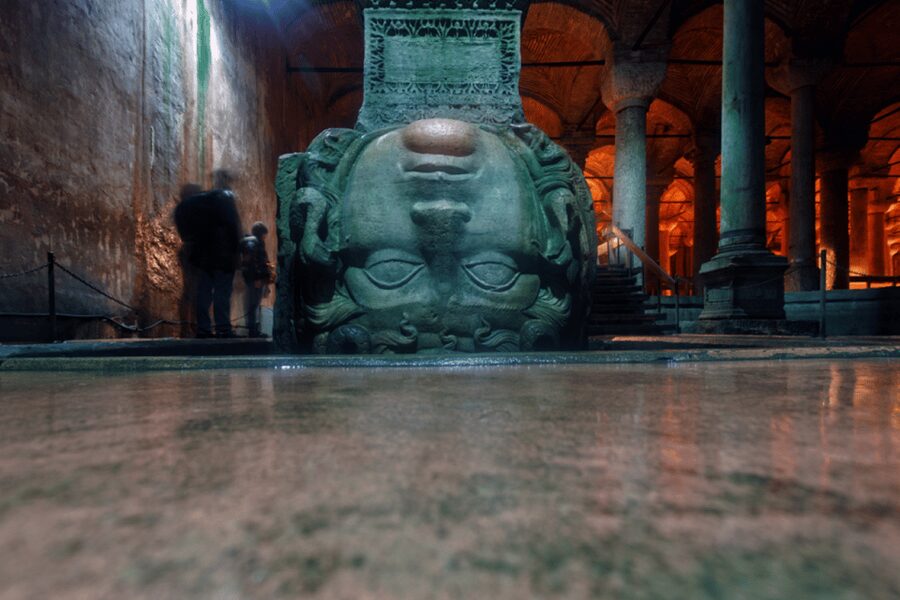
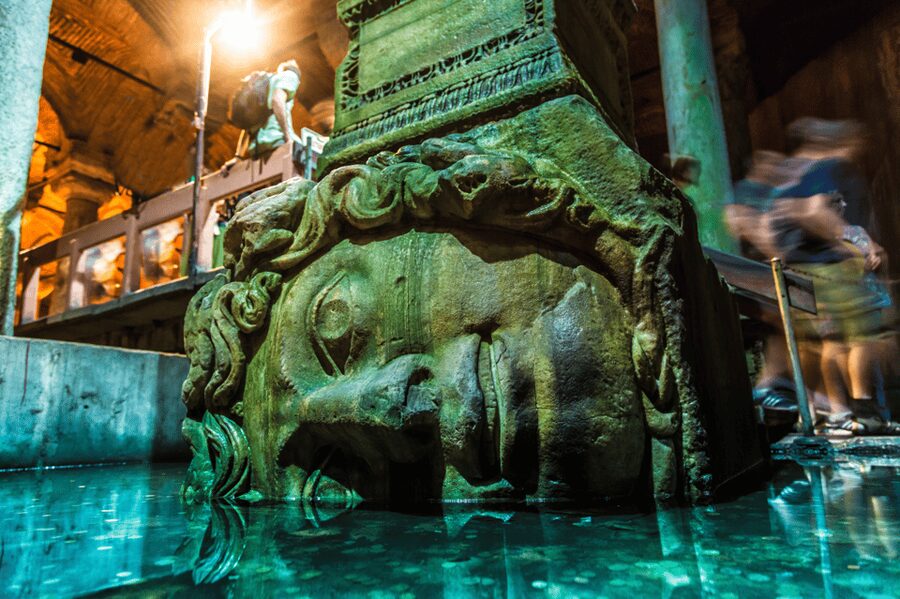
The Medusa heads are the feature that most people remember, and for good reason. You’re meant to notice two carved Medusa heads that act as supports under columns on the northwest edge of the cistern.
These works date back to the Roman period, but their exact origins aren’t fully known. The audio guide helps connect the dots between what we can observe on site and what researchers speculate: the heads may have been brought here to help support columns during construction.
The cultural layer is where it becomes more than an art object. In Greek mythology, Medusa was one of the Gorgons, with snakes for hair and the power to turn anyone who looked at her into stone. In earlier Greek and Roman thinking, images of Gorgons were sometimes used as protective symbols for important spaces. In other words, you get both a building-systems explanation and a “why would anyone place this here?” explanation.
If you only remember one moment from the cistern, make it this. It’s the place where you stop seeing abstract decoration and start seeing intentional symbolism.



What the audio guide adds beyond the underground space
Even though the main site is the Basilica Cistern, the experience is designed to add context from the larger Istanbul story. The highlights include references to the Golden Horn and Bosphorus viewpoints, so the audio helps you connect this underground world to the city around it.
It also includes Hagia Irene—described as the second biggest church of Istanbul. That detail matters because it trains your eye for the neighborhood’s layered religious architecture. If your day in Sultanahmet is planned around Hagia Sophia and nearby buildings, having Hagia Irene explained through your audio guide can make the area feel like a coherent map rather than separate stops.
The practical benefit for you: you’ll be better at understanding what you’re seeing next, because you’re not treating each site like a standalone postcard.
Price and value: is $54 a smart deal for this Istanbul stop?
At $54 per person, this isn’t a budget ticket. But it does bundle the things that reduce friction and improve understanding—two big quality-of-life upgrades in a busy city.
Here’s what you’re paying for, in practical terms:
- Skip-the-ticket-line entry to the Basilica Cistern (this is the value you feel immediately)
- A professional English audio guide, so you’re not wandering with blank-brain syndrome
- Free eSIM internet (limited time only), which can help you plan, navigate, and look things up as you go
The audio guide inclusion is especially worth it here because the cistern’s scale and design are complex. The difference between seeing it as “a lot of columns” and understanding the column styles, the layout, and the waterproofing choices is huge—and it all happens while you’re standing inside.
One caution on value: the entry ticket is not included if you only purchase the audio guide option. With this specific experience, you’re buying the skip-the-line entry along with the audio, but double-check what you selected if you’re mixing options.
How long you’ll spend there and how to pace it well
This experience is valid for 1 day, with starting times shown when you check availability. That flexibility helps because Basilica Cistern visits don’t need a tight minute-by-minute schedule. The building is large, and your energy level matters.
A good way to pace it:
- Start by orienting yourself to the overall room, then pick one aisle/row to follow
- Spend extra time at features called out by the audio, like the Medusa heads
- Only after you’ve got the “layout picture” clear should you go column-by-column for detail
If you’re the type who likes to take lots of photos, build in time for regrouping. The repeating rows can tempt you into snapping constantly, but the best shots come when you pause and reposition—especially around the Medusa-support area.
Practical tips to make your skip-the-line ticket feel truly “easy”
A few small, useful habits can make the visit smoother:
- Have your QR codes ready before you reach the entrance. You’ll want your phone charged enough to show them quickly.
- Expect security time anyway. The experience helps you with ticket lines, not all lines.
- Use the audio early. The audio guide is where the column count, styles (Corinthian vs. Dorian), and building measurements become meaningful.
- Slow down near the northwest edge when you reach the Medusa heads, so you can actually take in the idea of them being used as supports.
- Plan your next stop nearby. Since the experience context includes Hagia Irene and viewpoints over the Golden Horn and Bosphorus, you’ll get more out of the day if you keep moving through the Sultanahmet area rather than hopping across town.
Should you book this Basilica Cistern skip-the-line + audio guide?
I’d book this if you want an efficient, self-paced way to see one of Istanbul’s most famous architectural spaces without wasting energy in ticket queues. The strongest reason to choose it is the mix of skip-the-line entry and an English audio guide that explains what you’re actually looking at—columns, layout, and the Medusa heads story.
Skip it if you’re perfectly happy with a quick pass and you don’t care about understanding the details. Also, if you know you struggle with stairs or you prefer very low-effort experiences, remember you descend 52 steps and you’ll spend time walking through a large underground room.
If your goal is to get the most value out of one visit—time saved, context gained—this is a practical way to do Basilica Cistern.
FAQ
What’s included with the Basilica Cistern skip-the-line ticket and audio guide?
You get skip-the-line entry to the Basilica Cistern plus a professional English audio guide. Limited-time free internet is included via eSIM.
Do I get a skip-the-line ticket even if I only buy the audio guide?
No. The skip-the-ticket-line entry is not included if you only purchase the audio guide option.
How do I receive my tickets and audio?
You receive both entry ticket QR codes and the audio guide link via separate email messages from the supplier Istanbul Tourist Pass.
Can I skip security lines?
No. You cannot skip security lines, and there could be a line at the entrance since security is mandatory for all visitors.
Is the audio guide available in English?
Yes, the audio guide included is in English.
How long is the ticket valid?
The ticket is valid for 1 day. Starting times depend on availability.
Is there a cancellation option?
Yes. You can cancel up to 24 hours in advance for a full refund.