REVIEW · ISTANBUL
Istanbul: Theodosius Water Cistern Tickets & Audio Guide
Book on GetYourGuide →Operated by Cosmic Tickets & Audios · Bookable on GetYourGuide
An Istanbul secret lives under your feet. Theodosius Cistern, Şerefiye Sarnıcı, is a 5th-century Byzantine water reservoir where 32 marble columns and vaulted ceilings still look remarkably intact, and the audio guide helps you understand what you’re seeing. One catch: at around $26 per person, the ticket price can feel steep if you’re expecting a full-blown show.
You’ll move at your own pace through a dim underground space lit with an atmospheric light effect. The standout for me is how quickly you can shift from wow-factor architecture to basic engineering reality—this wasn’t built to be ornamental.
A little planning helps. The cistern is cool underground and the floors can be slippery, so comfortable shoes matter. And it’s not set up for wheelchairs, or for anyone with claustrophobia.
In This Review
- Key things that make this cistern ticket worth your time
- Theodosius Cistern (Şerefiye Sarnıcı): what you’re walking into
- Entering smoothly: ticket value, skip-the-line, and the audio guide setup
- The lighting and light-mapping effect: why it divides opinions
- Architecture you should actually look for (not just photograph)
- Using the audio guide app so it actually helps
- Practical comfort: cool air, slippery floors, and what to wear
- Who should book this ticket (and who should skip it)
- Price and value: is $26 reasonable for a cistern ticket?
- Should you book the Theodosius Cistern ticket?
- FAQ
- What does the ticket include for the Theodosius Cistern?
- How much is the Theodosius Cistern ticket?
- How do I get my QR code ticket?
- Is hotel pickup or a guided tour included?
- Are flash photos allowed inside the cistern?
- Is the cistern visit suitable for wheelchair users or claustrophobia?
- How long is the ticket valid?
Key things that make this cistern ticket worth your time
- Skip-the-line express security means less waiting before you get underground
- A ready-to-use audio guide app gives you the historical context while you walk
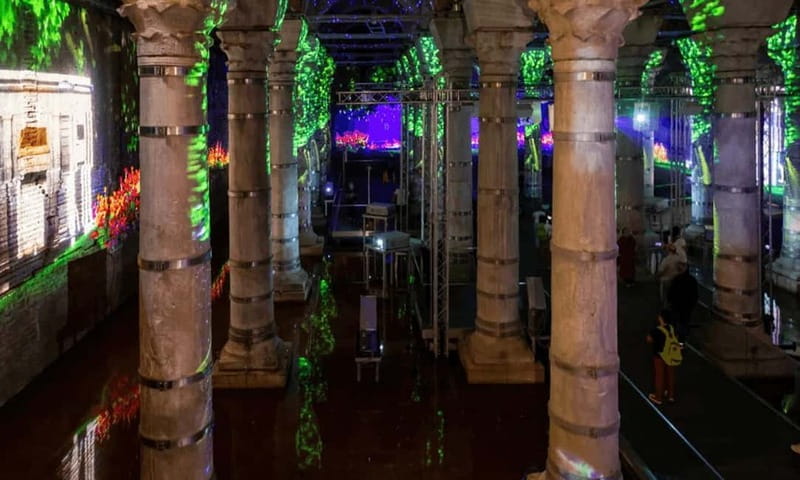
- 32 marble columns create that signature forest of stone
- Atmospheric lighting (including light-mapping effects) can make the space feel much more dramatic
- No flash photography keeps the lighting and surfaces protected
Theodosius Cistern (Şerefiye Sarnıcı): what you’re walking into
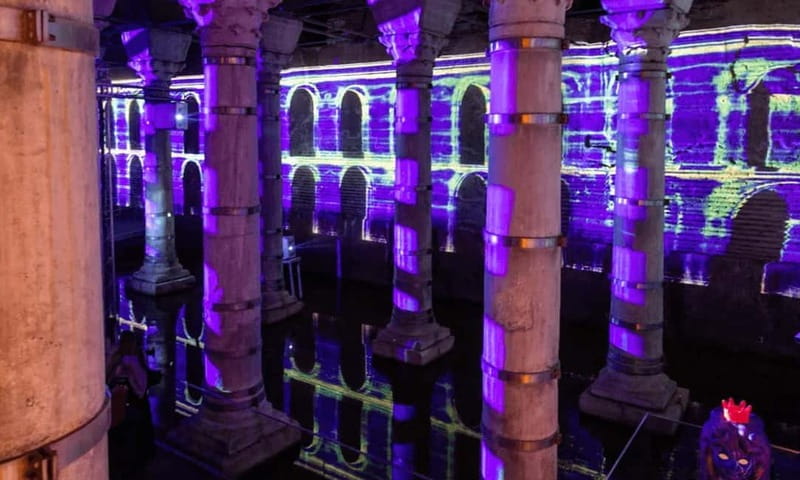
The Theodosius Cistern is an ancient underground reservoir built in the 5th century during the reign of Emperor Theodosius II. In plain terms, it was part of how Byzantine Constantinople managed water storage—an engineering solution that also became architecture.
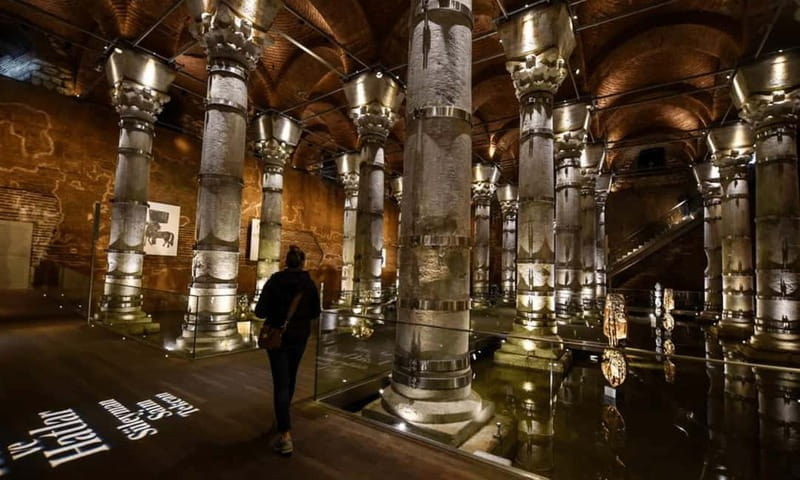
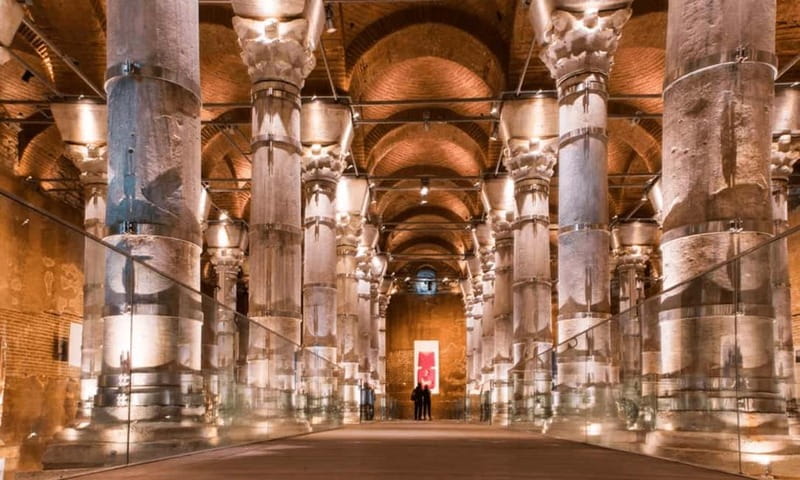
What hits first is the scale of the space. You’re not in a small “basement room” feeling. Instead, you’re surrounded by 32 marble columns supporting the vaulted ceilings, arranged in a way that makes the ceiling feel higher than you expect. Even without fancy explanations, the columns and stonework create a strong visual rhythm.
You’ll also see that it’s well-preserved. That matters because a lot of old ruins can feel like scattered fragments; here, the structure still reads as a functioning reservoir. The exhibits and displays help connect the stones to their original job: storing water for the city.
And yes, the lighting plays a role. When light and shadow hit the columns, the space becomes more than a photo stop—it becomes a sense-making place.
You can also read our reviews of more tours and experiences in Istanbul.



Entering smoothly: ticket value, skip-the-line, and the audio guide setup
This experience is basically a straightforward, self-paced visit. Your ticket includes the entrance, skip the ticket lines, and an audio guide app. That trio is the core value: you’re paying for time savings and context, not a long guided program.
How it works for most people is simple. You get a QR code ticket from the supplier Cosmic Tickets after 6 PM the day before your visit. If you book on the same day, the QR code is sent immediately. Once you have it, you head to express security rather than waiting in a standard queue.
When you’re underground, getting the entry process right matters. One practical lesson you should take from the kind of issues that can happen at busy sights: if your QR code isn’t loading, don’t panic—keep your confirmation handy and be ready for a manual check. You’ll want to conserve your patience for the next part: putting on headphones and starting the audio as soon as you can.
The audio guide app is there so you don’t just look at columns. It gives you a guided way to understand the cistern’s role in the water supply system and why this engineering was worth building in the 5th century.
The lighting and light-mapping effect: why it divides opinions
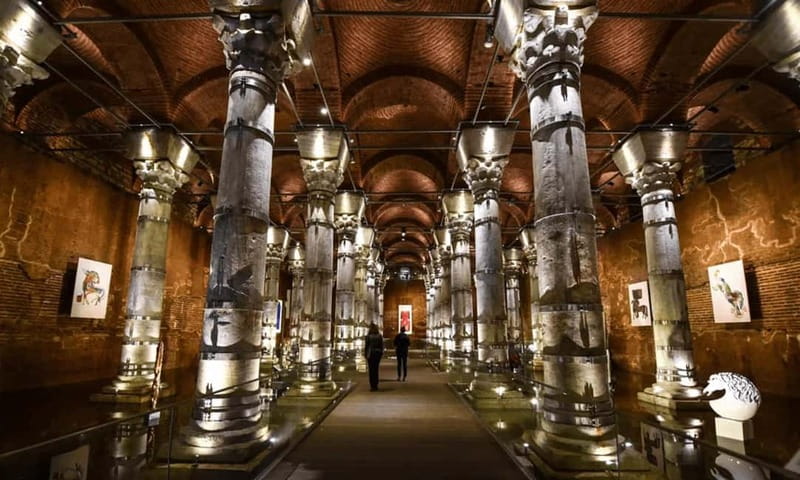
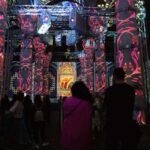
The cistern is famous partly for its visual mood. The lighting is atmospheric by design, and some versions of the experience use mapping or light effects to emphasize the architecture. In practice, this can make a big difference between a dim room you walk through and a memorable one you actually pay attention to.
I get why the lighting can feel like a game changer. Marble columns look flat in daylight. Under controlled light, they start to show depth and texture. The effect also helps your brain read the space as a reservoir rather than only a monument.
Still, here’s the drawback to keep in mind. The ticket price can feel like a lot for what is essentially one site with self-guided time. Some visitors feel that way even when the lighting is good. If you’re the type who needs a long guided tour, multiple stops, or a hands-on component, this might not hit your expectations.
A good way to balance that: go in ready to focus. Give yourself time to look slowly, not just walk to the best photo corners.
Architecture you should actually look for (not just photograph)
The cistern is built around repeating stone elements: columns, vaulted ceilings, and the underground geometry that creates a grid-like feel. That repetition can become hypnotic if you let it.
Here’s what you should target visually during your walk:
- Columns: The 32 marble columns are the main show. Notice how closely spaced they are, and how the perspective lines guide your eyes toward the center.
- Ceilings and vaults: The vaulted shape reinforces the underground storage function. It’s part of why the space feels structured and stable.
- Walls and stone surfaces: Even if you’re not an architecture buff, you can usually spot the difference between decorative wear and functional aging.
The displays and exhibits help you connect these shapes to purpose. You’re not just admiring old stone; you’re learning how the Byzantine system stored water and how the cistern worked as part of a larger urban infrastructure.
One more practical note: keep your camera behavior in check. Photography is allowed, but flash photography is not permitted. Flash can bounce off stone surfaces and ruin the lighting effect for everyone nearby, so stick to regular light or your camera’s existing settings.
Using the audio guide app so it actually helps
The audio guide app is one of the best parts of the ticket because it gives you a way to listen while you walk. If you’re tempted to ignore it, I’d rethink that. The cistern becomes much more meaningful when you know what each major visual element represents.
As you move through the chamber, the audio is meant to act like a low-pressure timeline—helping you understand:
- when it was built (5th century, during Theodosius II)
- how it functioned as a water storage facility for Byzantine Constantinople
- why the architecture is so distinctive (columns and vaulted ceilings in a reservoir layout)
You don’t need to pause constantly or follow any strict script. It’s self-paced, so you can time listening to what you’re currently staring at. Start it right at entry so you get oriented, then let it guide your attention as you go.
If you run into any entry friction—like QR verification delays—try not to start the audio too late. Once you’re in, you’ll get better value when your first few minutes include the historical framing.




Practical comfort: cool air, slippery floors, and what to wear
This cistern is underground, so it may be cooler than it is outside. That’s a small comfort plus, especially during warm Istanbul days, but it also means you should dress like you’ll be standing still and walking a bit in a cooler space.
You should also plan for footing. The floors can be slippery, so skip anything with worn soles. Comfortable shoes aren’t a suggestion here—they’re the difference between a relaxed visit and cautious walking.
And because the space is not designed for lingering comfort like a museum café area, keep your rhythm:
- arrive with shoes ready for slow, careful steps
- don’t rush to the exit
- give yourself time to pause in places where you can actually listen
The cistern is a short self-guided experience, but it’s still a real walking route. You’ll feel it in your legs if you’ve been on your feet all day around Sultanahmet.
Who should book this ticket (and who should skip it)
This is a good fit if you like history that you can see in front of you. The cistern is one of those Istanbul sights where the story is tied directly to what’s in the room: Byzantine Constantinople stored water here, and you can still trace the structure.
You’ll also enjoy it if you appreciate architecture with mood. The lighting helps the room feel cinematic, and that’s not nothing when you’re paying for admission.
It’s not a match if either of these applies:
- Claustrophobia: it’s an underground space and not positioned as an airy open area
- Wheelchair users: it’s listed as not suitable for wheelchairs
Also, if you were hoping for an all-in-one package with hotel pickup, a staffed tour, and food, this isn’t that. There’s no hotel pickup or drop-off, no guided tour included, and food and drinks aren’t included. You’ll want to pair it with nearby stops and your own snack plan.
Price and value: is $26 reasonable for a cistern ticket?
At about $26 per person, this ticket sits in the category of Istanbul attractions that can feel like a recurring entry-fee project. That’s the part that can annoy people: you’re paying for a single underground site and a self-paced experience.
So the value depends on what you want from it:
- If you care about architecture and you’ll actually use the audio guide app, the money makes more sense. You’re paying for context plus a smooth entry process.
- If you mainly want spectacle, the lighting can help, but you may still feel the price doesn’t fully match the duration and simplicity of a one-site visit.
- If QR entry or staffing at the front gate is glitchy on your day, you may feel the frustration more sharply—because there isn’t a guide to smooth the situation.
My practical take: consider this a “quality attention” stop. If you’re the type who can slow down and read the room, it’s easier to justify the cost. If you’re collecting checklist sights and moving on fast, you might feel shortchanged.
Should you book the Theodosius Cistern ticket?
Book this if you want a self-guided Istanbul history moment that’s built into the architecture itself. You’ll get skip-the-line entry, a QR-based ticket, and an audio guide app that connects what you’re seeing to why it was built. The lighting effects can add extra drama, and the 32 columns are the kind of detail that rewards calm attention.
Skip or rethink it if you need wheelchair access, have claustrophobia, or you only like tours where someone narrates everything from start to finish. Also be honest with yourself about price: at $26, you’ll get the best value when you use the audio and take your time instead of rushing through.
If you’re planning your day around Sultanahmet, this is a strong “one solid stop” choice—just go in with good shoes, your flash off, and a little patience for any QR checks at peak hours.
FAQ
What does the ticket include for the Theodosius Cistern?
Your ticket includes the entrance to the cistern, skip-the-ticket-line express security, and an audio guide app.
How much is the Theodosius Cistern ticket?
The price listed is $26 per person.
How do I get my QR code ticket?
You receive your QR code ticket directly from the supplier Cosmic Tickets after 6 PM the day before your visit. Same-day bookings are sent immediately.
Is hotel pickup or a guided tour included?
No. There is no hotel pickup/drop-off and no guided tour included.
Are flash photos allowed inside the cistern?
Photography is allowed, but flash photography is not permitted.
Is the cistern visit suitable for wheelchair users or claustrophobia?
No. It is not suitable for wheelchair users, and it’s also noted as not suitable for people with claustrophobia.
How long is the ticket valid?
The ticket is valid for 1 day (duration is listed as 1 day).