REVIEW · VENICE
The Heart of Venice: A Self-Guided Audio Tour
Book on Viator →Operated by VoiceMap Audio Tours · Bookable on Viator
Venice gets easier when your phone talks. This self-guided audio tour pairs auto-start narration with a GPS walk through the city’s most famous center, so you’re free to linger while the stories keep pace.
I like that it covers big-name places and explains what you’re looking at, not just what it used to be. You also get offline audio and maps, so you can move through Venice without hunting for signal.
One thing to keep in mind: you’ll need a smartphone to run the VoiceMap app, since it’s not included. The upside is that once you’ve got it set up, the tour stays simple and low-stress for about an hour.
In This Review
- Key points to know
- The VoiceMap setup: a self-guided GPS tour that still feels guided
- Piazza San Marco: the Piazza where centuries of drama happened
- Campo San Salvador: the 1898 column tied to the 1848 revolt
- Teatro Comunale Carlo Goldoni and La Fenice: opera and comedy in Venice’s dialect
- Teatro Comunale Carlo Goldoni: when comedy felt like real life
- La Fenice: where major opera premieres first appeared
- Palazzo Cavalli and the Centro Maree: where Venice checks the tides
- Rialto Bridge: the third crossing, shaped by ships and masts
- Price and timing: $11.99 for an hour that you can replay
- Should you book The Heart of Venice audio tour?
- FAQ
- How long is The Heart of Venice audio tour?
- What language is the tour offered in?
- Do I need mobile data during the tour?
- Where does the tour start and end?
- What do I need to bring with me?
- Is the tour always available?
- Is there an extra Venice access fee on some dates?
- Can I cancel for a refund?
Key points to know
- Audio triggers as you reach each stop, so you’re not stuck staring at a screen
- Offline access includes audio, maps, and geodata, which helps in patchy network areas
- English narration keeps the stories clear and easy to follow
- Lifetime access means you can replay the same route later
- A tight loop from San Marco to Rialto makes good use of limited time
- Civil marriage and tide science show up on the route, not just monuments
The VoiceMap setup: a self-guided GPS tour that still feels guided
This is a one-hour, self-guided walking experience built around the VoiceMap application. You start at Piazza San Marco and end at Rialto Bridge, and the audio is designed to play automatically when you arrive at each spot. That matters in Venice, where one wrong turn can send you down a dozen “pretty but not helpful” alleys.
The big practical win is offline access to audio, maps, and geodata. In plain terms: you download enough once, then you can keep going even if your data connection acts weird. I also like that the tour includes directions to the start location, so you’re not guessing where to begin once you’re already in the thick of Venice.
Your route is private to your group. That doesn’t change the self-guided nature, but it does mean the experience is not mixed into a larger shared tour vibe.
You can also read our reviews of more tours and experiences in Venice.

Piazza San Marco: the Piazza where centuries of drama happened
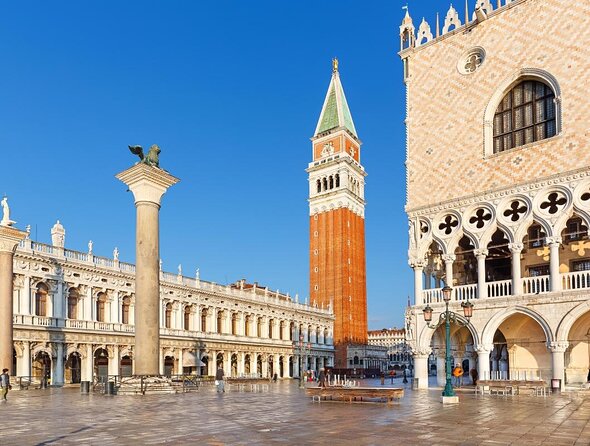
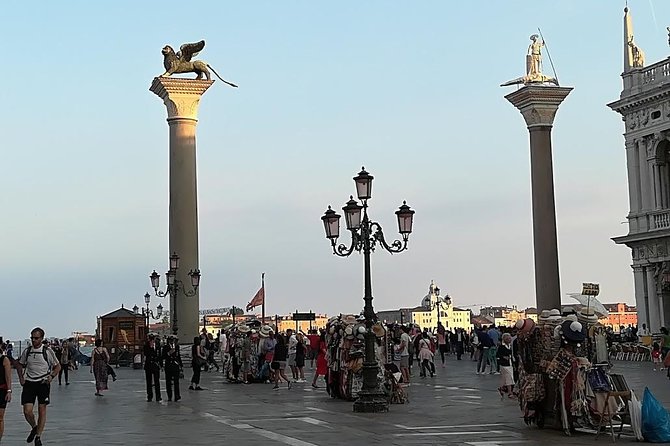
Piazza San Marco is the center of Venice in the most literal way. It’s the place people have visited for about a thousand years, and it has been called the drawing room of Europe, even if Venetians mostly just call it the Piazza. On your walk, this stop sets the tone: grand space, big events, and stories that explain why the square still feels important.
The audio here focuses on the kinds of moments that played out in this space over time: state visits of popes and emperors, public executions, religious processions, and Carnival. The good part is that you’re not just hearing names. You’re learning what kinds of power, performance, and ceremony filled this square.
What to watch for: don’t just treat San Marco like a photo backdrop. Pause and take in the scale, because the narration is pointing you to why it’s been a stage for centuries. If you want quick sightseeing, you can move on fast. If you like slowing down, this is where you’ll probably want the extra minutes.
Campo San Salvador: the 1898 column tied to the 1848 revolt
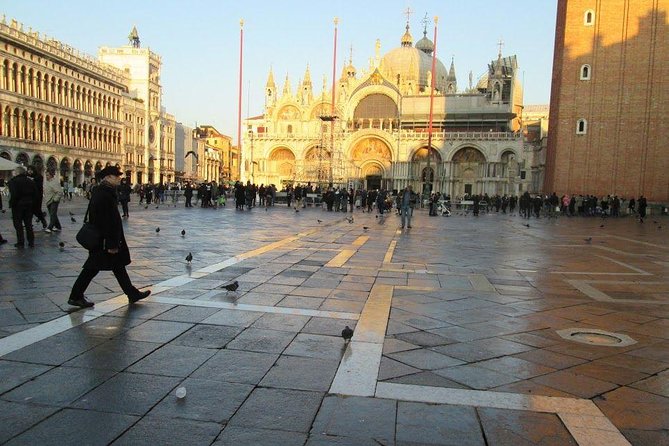
Campo San Salvador is quieter than San Marco, but the story is intense. In the middle of the square stands a tall marble column set up in 1898. The point of it is remembrance: it commemorates the 17-month Venetian revolt against the Austrian occupation of Venice in 1848 and 1849.
This stop is valuable because it adds depth to Venice beyond the postcard angle. You’re in a real neighborhood square with a real memorial, and the audio helps you connect the stone to a specific struggle and timeline. It’s the kind of historical context that makes later sights feel less like separate attractions and more like parts of one city.
A consideration: Campo San Salvador can feel like a “pass-through” if you’re only on a photo mission. Give it a full audio listen, even if it’s quick, because this is where the tour turns from major landmarks to lived local meaning.
Teatro Comunale Carlo Goldoni and La Fenice: opera and comedy in Venice’s dialect
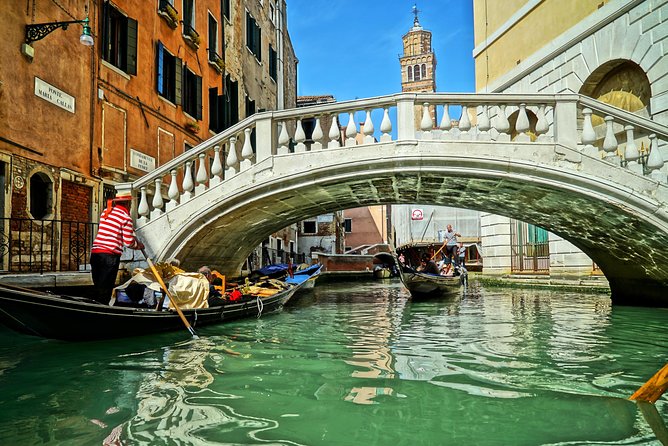
Your route pulls in two different sides of Venetian performance: theater comedy and opera grandeur.
Teatro Comunale Carlo Goldoni: when comedy felt like real life
The Teatro Comunale Carlo Goldoni takes its name from Carlo Goldoni, a Venetian playwright from the 1700s. The narration highlights that he wrote comedies in the Venetian dialect and that he was revolutionary for his time. The key idea is that his characters felt like real people, with quirks from ordinary Venetians.
Why this matters on a self-guided audio route: it helps you read the building as a cultural machine, not just a façade. You’re hearing about a style of storytelling rooted in local speech, and that makes Venice feel more specific to itself rather than generic “Italian art.”




La Fenice: where major opera premieres first appeared
Then comes La Fenice, still one of Italy’s important opera houses. The tour spotlights that famous operas had their first performance there, including Rigoletto and La Traviata.
If you’re a music person, this stop gives you easy, concrete anchors. Even if you’re not, it still adds payoff: the narration gives you reason to look twice, because you’re not just seeing an opera-house name. You’re seeing a place tied to first performances of heavyweight works.
Practical note: La Fenice can also be a place where people mill around. Use the auto-trigger audio as your pacing tool. Let the story finish before you move on, especially if you want to connect the building to what you heard.
Palazzo Cavalli and the Centro Maree: where Venice checks the tides
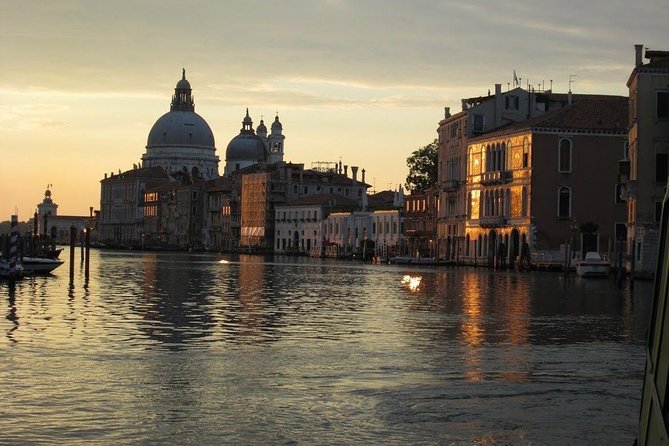
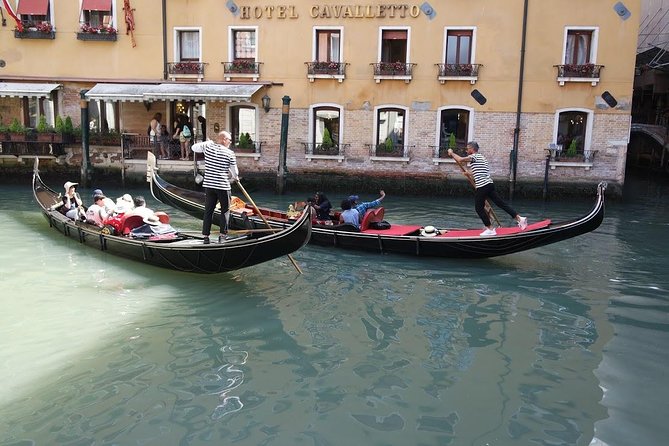
This is one of the most interesting stops because it blends civic life with real-world forecasting. Palazzo Cavalli is where civil marriage services are conducted. That alone makes it different from many “look-but-don’t-touch” sights.
But the narration adds a second role: the building also houses the Centro Maree, or Tide Center. This is where monitoring happens for data tied to tides and weather. The daily tide predictions are made there, especially around high tide, called acqua alta.
This stop is surprisingly useful because it teaches you how Venice thinks about water. Even if you don’t plan a long stay, acqua alta is part of the city’s rhythm, and the tour shows you there’s an actual monitoring operation behind the drama.
Drawback to consider: if you’re hoping for a hands-on museum experience, this audio stop is more about interpretation than interactive exhibits. You’re listening while you’re near the building, and you’re using the story to understand why the city prepares for the tide every day.
Rialto Bridge: the third crossing, shaped by ships and masts
Rialto Bridge is the walk’s finish line, and the audio gives you a clear way to interpret what you’re seeing. It explains that Rialto is the third bridge of its kind at this spot. Earlier Rialto bridges were made of wood, and they were bascule bridges.
Bascule means the center section could be raised to let ships with masts pass through. That detail turns the bridge from a static landmark into a piece of moving infrastructure that had to handle Venice’s water traffic.
When you reach the bridge, take a moment to think about what the audio is saying: the shape you’re seeing was influenced by navigation needs. That makes the structure feel more functional, less purely decorative. It’s a great way to end the route, because it ties the city’s architecture back to the water that drives everything here.
Price and timing: $11.99 for an hour that you can replay
At $11.99 per person for about an hour, this tour is priced like a smart add-on to sightseeing—not like a full-day production. The value comes from two things you actually feel while using it: offline support and auto-triggered audio. Both reduce stress, which matters in Venice, where getting lost costs time.
Also, you get lifetime access to The Heart of Venice tour. That’s not just a nice-to-have. It means you can come back and do the same loop later, after your first day helps you understand the city’s layout. If your first visit is hectic, this is one of those purchases that still makes sense because you can replay when you’re calmer.
One more practical factor: smartphone required. If you have one and the VoiceMap app is allowed to run on it, you’re set. If you don’t, the tour price won’t help you, because the audio experience depends on that device.
Timing-wise, the route is built for a focused hour from Piazza San Marco to Rialto Bridge. That’s ideal if you want a “core Venice” highlight walk. If you’re trying to cover Venice in a single sweep, you’ll still want more time on your own after the tour ends.
Should you book The Heart of Venice audio tour?
Yes, if you want a clear, low-effort way to experience central Venice with context. This is especially a good fit if you like the idea of self-guided walking but still want a narrative backbone that kicks in at the right spots. The automatic playback is a big deal, and the offline audio and maps make it feel reliable in the real Venice world.
I’d skip it (or adjust expectations) if you want a live guide and back-and-forth Q&A. This is storytelling through a phone app, not guided conversation. And because it’s about one hour, it’s best as a core loop rather than your entire Venice plan.
If you’re heading to Piazza San Marco and ending around Rialto anyway, this tour is a practical way to turn that route into something more meaningful than just walking from landmark to landmark.
FAQ
How long is The Heart of Venice audio tour?
It takes about 1 hour.
What language is the tour offered in?
The tour is offered in English.
Do I need mobile data during the tour?
No. It includes offline access to audio, maps, and geodata.
Where does the tour start and end?
It starts at P.za San Marco, 328, 30124 Venezia VE, Italy and ends at Rialto Bridge (Ponte de Rialto), 30100 Venezia VE, Italy.
What do I need to bring with me?
You’ll need a smartphone. It’s not included with the tour.
Is the tour always available?
The information provided lists hours as Monday through Sunday, 12:00 AM to 11:59 PM, within the displayed date range. You should still plan to check current access when you book.
Is there an extra Venice access fee on some dates?
Yes. On certain dates, people staying outside Venice who are visiting for the day may be required to pay a €5 access fee. Details and exemptions are listed at https://cda.ve.it.
Can I cancel for a refund?
Yes. Free cancellation is available, and you can cancel up to 24 hours in advance for a full refund. Canceling less than 24 hours before start time is not refunded.