REVIEW · BIG ISLAND OF HAWAII
Hawaii Volcanoes National Park Self-Guided Driving Audio Tour
Book on Viator →Operated by History with Action · Bookable on Viator
A volcano park that talks back. This self-guided audio driving tour uses GPS-triggered stories to explain Kīlauea’s drama, from wartime ruins to steam vents and sea arch views. You follow a roughly 24.5-mile route built around 43+ audio moments, finishing in about 2–3 hours at a pace that fits your day.
I love two things right away: the hands-free GPS audio that plays automatically as you reach each spot, and the fact you get offline use after downloading once. One key consideration: Hawai‘i Volcanoes National Park entry fees are not included, so you’ll still need to budget for the park pass before you start driving.
In This Review
- Quick hits: what makes this audio drive worth your time
- Price and value: one audio pass per car, not per person
- Setup that actually matters: download, app password, and car audio
- How the route works: 24.5 miles, 43+ stories, and flexible pacing
- Stop-by-stop: Kīlauea Military Camp to Holei Sea Arch
- Entrance Station area and visitor center warm-up
- Kīlauea Military Camp: WWII internment story
- Steam Vents: what underground heat looks like
- Sulphur Banks Trail: short walk, big smell
- Kīlauea Overlook: crater drama without the usual volcano look
- Kīlauea Iki Trailhead: a crater loop that takes effort
- Nahuku – Thurston Lava Tube: walk inside old lava
- Luamanu Crater: forest to crater change
- Puhimau Crater: formations shaped by eruption activity
- Pauahi Crater: steep-sided pit, depth you can feel
- Pu‘u Huluhulu Trailhead: a cinder cone with a name story
- Kipuka Puaulu: an island of life in lava fields
- Mauna Ulu Lookout: panoramic grey with toadstool shapes
- Pu‘u Loa Petroglyphs: 23,000 ancient rock carvings
- Holei Sea Arch: the picture-perfect end you’ll plan for
- Volcano Art Center Gallery: a quiet art pause
- What you actually learn from this kind of driving tour
- Who should book this and who should skip it
- My practical planning tips before you hit the road
- Should you book this Hawaii Volcanoes National Park audio drive?
- FAQ
- How much does the Hawaii Volcanoes National Park self-guided audio tour cost?
- How long does the audio tour take?
- Is the tour language English?
- Does the price include Hawai‘i Volcanoes National Park admission?
- Does the tour work offline?
- Do I need cellular signal during the drive?
- How do I start the tour once I arrive at the park?
- Can I pause and resume while driving?
- What do I use for audio in my car?
- What if my plans change and I need a refund?
Quick hits: what makes this audio drive worth your time
- $16.99 per group (up to 4) means one purchase covers the whole car, not each person.
- Lifetime access, no expiry so you can reuse it on future Big Island trips.
- Offline maps + offline audio after the initial download, so weak signal is less of a worry.
- GPS-triggered stories keep you oriented even if you stop for photos or a short walk.
- Route made for timing: it’s built around a 2–3 hour loop with frequent “story stops.”
- A mix of geology and human history, including Kīlauea Military Camp WWII internment context.
Price and value: one audio pass per car, not per person
At $16.99 per group (up to four people), this tour is priced for families, couples, and small friend groups who want the park experience without paying for a full guided bus. The smart value here is not just the cost—it’s that you’re buying control: you decide when to pause, when to walk a short trail, and when to speed through a viewpoint.
Also, the access is lifetime, which matters if you’re the type who returns to Hawai‘i Volcanoes National Park more than once. You’re not “renting” this experience for one trip. In a place as spread out as this park, that reuse can turn one purchase into multiple good visits.
One more value note: park stops on the route are described as free to access, but the park entrance fee is still required. So treat the audio as the value-add, not the ticket.
You can also read our reviews of more tours and experiences in Big Island of Hawaii.



Setup that actually matters: download, app password, and car audio
This is a self-guided experience, so you’re the driver and the producer. The process is straightforward, but you’ll want to do it before you’re hungry, hot, and parked.
Here’s the essentials:
- After booking, you’ll get setup instructions plus a password via email/text.
- You download Action’s Tour Guide App (you need strong Wi-Fi/cellular at download time).
- On-site, you open the app, enter the password, and start the version that matches your planned starting direction.
For sound, the tour is designed to work with your phone connected to your car’s stereo system via Bluetooth, USB, or AUX. If you plan to step out for short walks (Sulphur Banks, Lava Tube, petroglyph area), consider using headphones for better clarity while you’re on foot.
There’s a practical timing tip baked into the design: the narrator needs time. Keep your driving near the posted speed limit so the audio can finish each story before the next cue.
How the route works: 24.5 miles, 43+ stories, and flexible pacing
The drive runs about 24.5 miles and is built around 43+ audio stories, designed for roughly 2–3 hours. Each location is cued, and the audio plays on its own based on where you are—so you’re not constantly checking your screen.
You can pause and resume whenever you want. That freedom is why this works well when your day includes side stops, bathroom breaks, or a quick scramble for the best photo angle.
One thing to keep in mind: the tour is designed around the recommended start area and following the intended route flow. If you try to run it in the opposite direction, you might find it less smooth than starting where it suggests.
Stop-by-stop: Kīlauea Military Camp to Holei Sea Arch
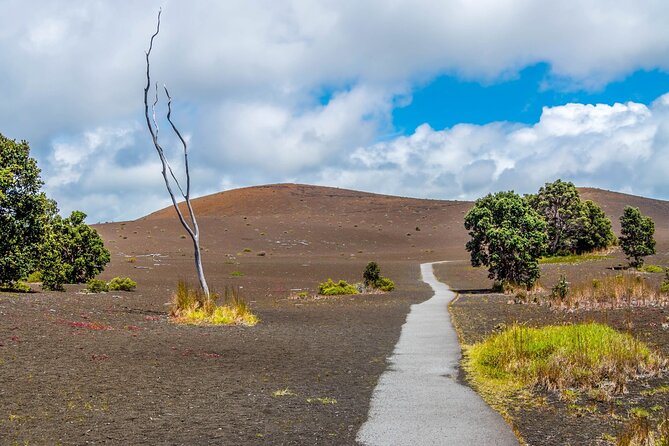
Below is the sequence you’ll follow, and what each stop adds to the story. The audio chunks are short (around 10 minutes per main stop), but you’ll likely spend extra time when a viewpoint or trail pulls you in.
Entrance Station area and visitor center warm-up
Your journey begins at the Entrance Station in Volcano. You drive through the gate and start with the area around the visitor center so you can get oriented before the tour starts stacking up the deeper stories.
This first stretch is useful. It’s your “settling in” section: you figure out the audio volume, confirm your connection, and let the GPS-based cues start doing their job.
Kīlauea Military Camp: WWII internment story
At Kīlauea Military Camp, the setting is a recreational facility—but the history is heavy. During World War II, this became an internment camp for both prisoners of war and innocent Japanese citizens.
This stop gives the park more than a natural-science angle. You leave thinking about how Hawai‘i history and Hawai‘i geology both shaped people’s lives here.
Steam Vents: what underground heat looks like
Next you’ll hit the Steam Vents, where Kīlauea’s heat warms groundwater trapped underground. The rising steam is a visible indicator that the volcano is active beneath your feet.
It’s one of those “wait, is that really steam?” moments. When you see it after the explanation, it’s easier to connect the surface signs to the bigger volcanic system.
Sulphur Banks Trail: short walk, big smell
Right after the vents comes the start of the Sulphur Banks Trail. The name is a joke by nature—this area is extremely smelly, so don’t treat it like a perfume stop.
Still, it’s worth it. A short walk here gives you a sensory understanding that the words alone can’t replicate.
Kīlauea Overlook: crater drama without the usual volcano look
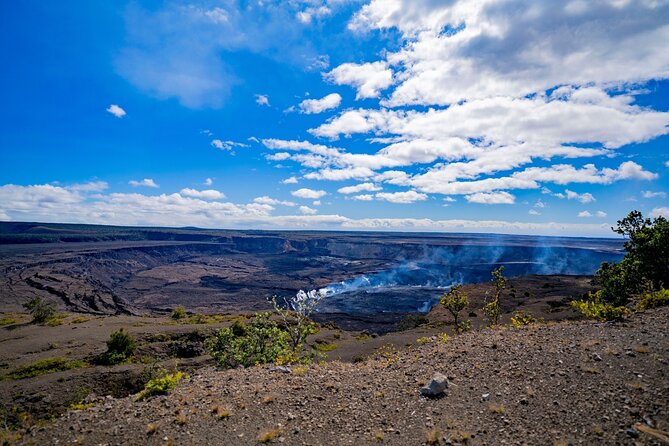
At Kīlauea Overlook, you’re staring across a crater view that doesn’t look like a classic volcano shape. The audio explains why it’s still one of the most active volcanic systems on Earth.
This is a strong stop for first-timers because it frames the whole park. You get a sense of the scale and how active ground can look strangely ordinary from far away.
Kīlauea Iki Trailhead: a crater loop that takes effort
At Kīlauea Iki Trailhead, the tour points you toward the 3.3-mile loop through Kīlauea Iki crater. The audio notes it takes about three hours, and the elevation change can be strenuous.
If your goal is “see the crater, not train for it,” you can choose how much of the trail you attempt. But if you do the full loop, plan for real hiking time, not a quick photo and go.
Nahuku – Thurston Lava Tube: walk inside old lava
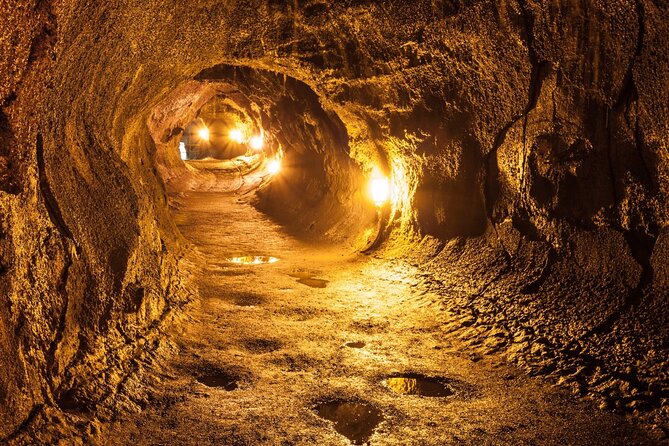
Nahuku – Thurston Lava Tube is formed from molten lava flows that created a tunnel as the outside cooled while the inside kept moving. The lava tube system dates back over 500 years, and today you can explore the cave-like space.
This is one of the best “wow” stops. You’re not just watching geology; you’re walking through the consequence of an eruption pattern that happened long ago.
Luamanu Crater: forest to crater change
At Luamanu Crater, the audio notes it was once filled with a dense forest, and that changed in a single day. Even if you’re not a geology specialist, that contrast lands fast.
It’s the kind of stop that makes you look at the ground differently. One day can flip what took years to establish.
Puhimau Crater: formations shaped by eruption activity
Puhimau Crater is presented as a volcanic feature where you can witness distinctive geological formations created by volcanic activity. Expect the story to focus on how eruption processes leave legible marks in the terrain.
This stop is especially good if you like learning how to read landforms, not just seeing them.
Pauahi Crater: steep-sided pit, depth you can feel
Pauahi Crater is described as a steep-sided pit crater formed by explosive volcanic activity. It’s approximately 330 feet deep and 1,000 feet in diameter, with features like lava spatter deposits and fumaroles that emit steam and gases.
If you’re the kind of person who likes numbers, this one delivers. The audio helps you connect the scale of the pit with the signs still active today.
Pu‘u Huluhulu Trailhead: a cinder cone with a name story
At Pu‘u Huluhulu, you’ll learn it’s a cinder cone and the name means “hairy hill” because low shrubs grow across it. From a distance, the growth can look fuzzy—hence the nickname.
This is a nice break in pace. You can stand back, watch the slopes, and let the name story turn the view into something personal.
Kipuka Puaulu: an island of life in lava fields
Kipuka Puaulu explains kipukas—areas where lava flows surround older vegetation. Over time, that older life keeps thriving, creating a kind of island of life with its own microclimate, soil, and moisture conditions.
This is one of the stops that makes the park feel alive, not just dramatic. It’s a reminder that volcanic ground can support ecosystems in surprising ways.
Mauna Ulu Lookout: panoramic grey with toadstool shapes
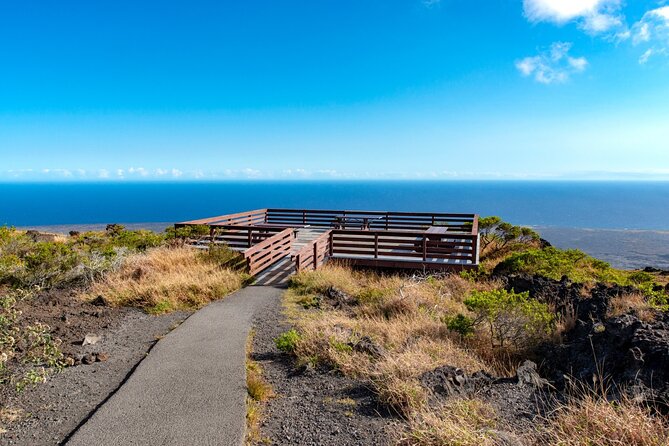
At Mauna Ulu Lookout, you get panoramic views of the Mauna Ulu lava flow. The area is mostly flat and gray, but the audio encourages you to look for toadstool-shaped formations.
This stop rewards slow looking. If you rush it, you’ll miss the details the audio is pointing out.
Pu‘u Loa Petroglyphs: 23,000 ancient rock carvings
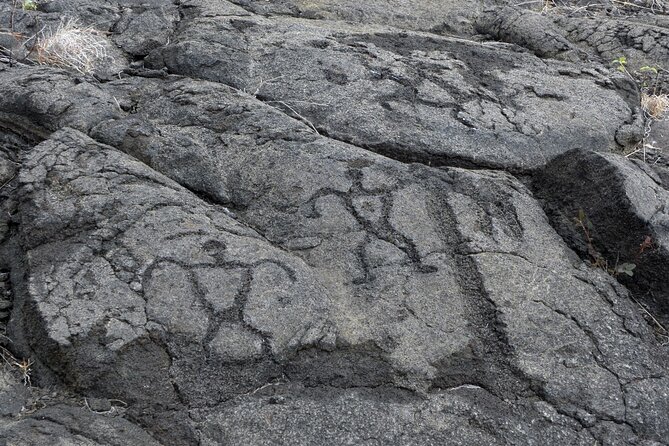
Pu‘u Loa Petroglyphs is a historical site with over 23,000 ancient petroglyphs etched into hardened lava rock. It’s the park’s human-time layer—art that survived where volcanic rock kept everything else in place.
If you like history that’s tied directly to place, don’t treat this as a quick stop. Give yourself time to see patterns and understand the scale.
Holei Sea Arch: the picture-perfect end you’ll plan for
Holei Sea Arch is the famous natural arch and it’s exactly the kind of viewpoint that makes the drive feel worth it. The audio frames it as a sea cliff formation shaped into an arch by natural forces.
This is the stop many people remember. If you only do a portion of the route, try to protect time for this one.
Volcano Art Center Gallery: a quiet art pause
Finally, the Volcano Art Center Gallery is described as a small building separate from the visitor center. It’s a good option if you enjoy fine arts and want a calmer stop after hours of open-air walking and driving.
It also breaks up the intensity. The park can be all geology all the time—this gives you a different kind of connection to Hawai‘i.
What you actually learn from this kind of driving tour

A self-guided audio route is more than convenience. In a park like Hawai‘i Volcanoes National Park, it helps you connect three big ideas:
First, surface signs have meanings. Steam vents and fumaroles aren’t just visuals; they’re evidence of underground activity.
Second, time is the hidden character. You’ll hear about features that formed centuries ago and also about changes that happened in a day, which makes the park feel less random.
Third, the park has human layers, too. The WWII internment context at Kīlauea Military Camp and the petroglyphs at Pu‘u Loa both add perspective beyond eruption stories.
If you’re on a short schedule, the tour’s timing structure is helpful. You get a lot of essential grounding without needing to do all the research on your own while you’re stuck on windy roads.
Who should book this and who should skip it
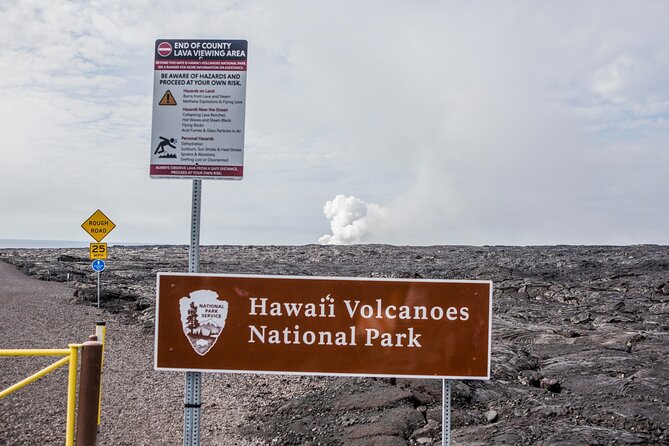
You’ll likely love it if you want:
- A self-paced way to see major park highlights in a single driving window.
- A guide that tells you what you’re looking at, without crowd noise or fixed group timing.
- A plan for days when you don’t want to read a stack of signs but still want real context.
You might want to rethink if you’re hoping for:
- A fully reverse-route experience without starting in the recommended direction.
- A “hands-off” day where you don’t need to manage phone audio setup and download.
Also, the park entry fee is separate, so factor that into your budget early.
My practical planning tips before you hit the road
- Start early enough to avoid rushing. This tour is timed for a 2–3 hour flow, and speeding up can cut off narration.
- Do the download in strong Wi-Fi/cellular, then rely on offline mode for the drive.
- If you want the best sound, plan your connection (Bluetooth/USB/AUX) before you leave the parking area.
- Give extra time to the lava tube, Kīlauea Iki trail options, and petroglyphs. Those are the spots where a quick stop turns into real time.
And because conditions can change anywhere, it’s smart to check official updates for closures. If there’s any kind of emergency warning, check the latest guidance on tsunami.gov.
Should you book this Hawaii Volcanoes National Park audio drive?
Book it if you want an organized, story-led way to experience Hawai‘i Volcanoes National Park by car without paying for a guided tour. The GPS-triggered audio, offline access, and one price per car model are a strong combo here—especially if you’re juggling limited time or want to stop for walks on your schedule.
Skip it (or at least keep expectations modest) if you’re only interested in one or two sights, or if you hate the idea of setting up your phone audio. Otherwise, this is a very practical way to turn a long, spread-out park drive into a coherent, satisfying route—ending at a sea arch that truly earns the detour.
FAQ
How much does the Hawaii Volcanoes National Park self-guided audio tour cost?
It costs $16.99 per group, and each group can include up to 4 people.
How long does the audio tour take?
The tour takes about 2 to 3 hours to complete.
Is the tour language English?
Yes, the tour is offered in English.
Does the price include Hawai‘i Volcanoes National Park admission?
No. An entrance fee is required to visit Hawai‘i Volcanoes National Park, and it is not included with this tour.
Does the tour work offline?
Yes. After you download the tour while you have strong Wi-Fi/cellular, it works offline on your device.
Do I need cellular signal during the drive?
You don’t. The audio and offline maps are designed to work without cellular or Wi-Fi once the download is complete.
How do I start the tour once I arrive at the park?
You open Action’s Tour Guide App while you’re onsite, launch the correct tour version for your planned starting point and direction, then begin at the starting story point. No one meets you at the start.
Can I pause and resume while driving?
Yes. The tour is designed so you can start and pause whenever you like and take breaks for photos or snacks.
What do I use for audio in my car?
You connect your phone to your car’s stereo using Bluetooth, USB, or AUX. Headphones may also be helpful when walking.
What if my plans change and I need a refund?
You can cancel for a full refund up to 24 hours before the experience start time. If you cancel within 24 hours, the amount you paid will not be refunded.