REVIEW · BIG ISLAND OF HAWAII
Self-Guided GPS Audio E-Bike Tour Hawaii Volcanoes National Park
Book on Viator →Operated by Bikevolcano.com · Bookable on Viator
Riding through Kīlauea by e-bike feels like cheating the traffic rules. I love the self-guided pace (pause, snack, turn around, repeat) and the GPS audio that gives you real geology and mythology while you’re actually rolling past the sights. The trade-off: you’re riding with your phone, so you’ll want a fully charged, working smartphone and a plan for battery drain.
This half-day tour is built for comfort: the route is set up for mostly downhill, level, and paved riding, with helmets, a lock, parking, restrooms, and staff on hand. You’ll pass through rainforest, steam vents, craters, and lava fields, then finish back where you started—ready to spend the rest of your day doing whatever your Big Island schedule allows.
In This Review
- Key things to know before you roll
- Why this e-bike GPS tour beats a car day at Volcanoes National Park
- Getting set up fast at BikeVolcano: bikes, locks, and your phone reality check
- The crater rim day: riding less-traveled paths at your own speed
- Nahuku Crater and Thurston Lava Tube: a short hike with a cool payoff
- Kīlauea Visitor Center: the fast way to understand what you’re seeing
- Keanakakoi Crater Overlook: Pele views from a bike-accessible perch
- What the ride feels like: fitness level, hills, and wet-weather caution
- Price and value: what $159 buys, and what you’ll likely pay extra
- Who this tour suits best (and who should rethink it)
- Should you book this self-guided GPS e-bike tour?
- FAQ
- Do I need a smartphone for the GPS audio app?
- Is the National Park entrance fee included in the $159 price?
- What’s included with the e-bike rental?
- Where does the tour start?
- What should I wear or bring?
- Are there age or weight limits?
Key things to know before you roll
- Mostly downhill, paved riding makes it easier than a typical park loop
- Smartphone required for the GPS audio app, and battery can run low
- Exclusive crater viewpoints by bike beat what many visitors can reach quickly
- A short hike plus a big lava-tube payoff at Nahuku and Thurston
- Summit weather can be a mood swing: cooler temps, wind, and mist are common
- Wet-road riding needs extra care if conditions turn slick
Why this e-bike GPS tour beats a car day at Volcanoes National Park
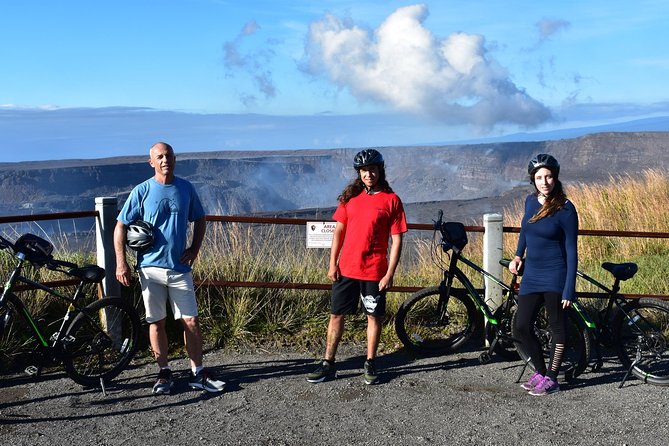
If you’ve ever tried to enjoy Hawaii Volcanoes National Park by car, you already know the pattern: you park, sprint, scan, and repeat. This tour flips that script. You bike the views, not just between them. The e-bike assist means you can focus on noticing details—ferns, quarry stories, steam, crater walls—without turning your visit into a workout.
I also like that it’s designed as a relaxed “choose your pace” ride. The experience isn’t asking you to keep up with a crowd or hit a strict sequence of stops. If you want extra time at a lookout, you can. If you’d rather get moving again, you can do that too.
One more reason this works: you get a tour-style narrative without being locked into a group schedule. The GPS audio doesn’t replace ranger talks, but it does a good job helping you connect what you’re seeing to why it’s happening—lava formation, volcanic history, and the Pele stories that swirl through the park.
You can also read our reviews of more tours and experiences in Big Island of Hawaii.

Getting set up fast at BikeVolcano: bikes, locks, and your phone reality check
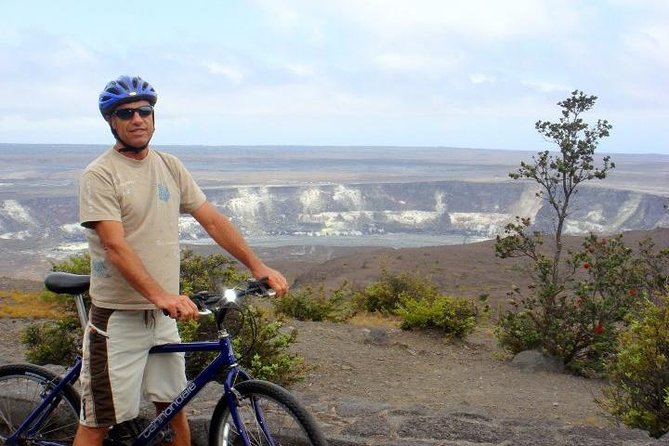
Your start is at Bike Volcano (Old Volcano Rd). The operation includes secure parking, restrooms, and a canopy staging area where you’ll get oriented and reviewed on safety before you roll. You’ll pick up your electric comfort hybrid bicycle, get a helmet and a lock, and then you’re off on your own with live staff nearby for safety and park guidance.
Here’s the practical part that can make or break your day: the GPS app lives on your smartphone. The tour specifically requires a fully functioning smartphone, and reviews point out that the GPS/audio experience can drain battery fast. Bring a charger or power bank if you have one, and make sure the app is ready to go before you head out.
Also pay attention to fit. One review tip was to tell the team if you’re tall so you get the right frame size. It’s not a minor detail: a comfortable bike fit makes the ride steadier when you’re cruising along curves and crater edges.
Before you go, remember you may need a rain jacket (you can buy one at the Kīlauea General Store), plus closed-toed shoes, sunscreen, and layers. The summit can be 12 to 15 degrees cooler than sea level, and Kīlauea’s weather can turn rainy and chilly anytime in the year.
The crater rim day: riding less-traveled paths at your own speed
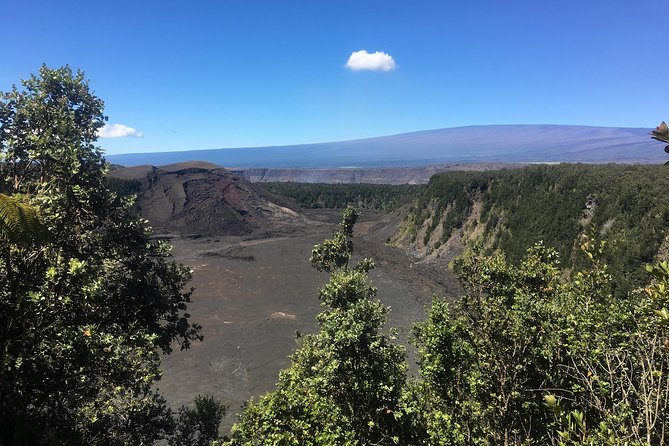
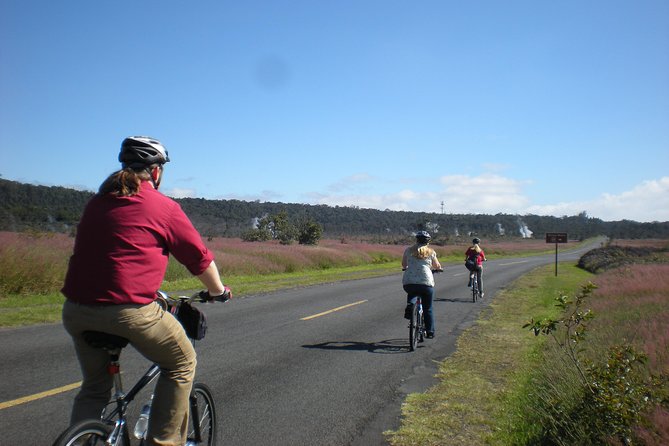
Your main ride starts inside Hawaii Volcanoes National Park. After a short ride to the bike trail entrance, you’ll follow paths that are set up for easier biking—less than a mile to get to the trail, then a route that keeps things mostly downhill, level, and paved.
This is where the “e-bike advantage” shows up. You’ll get access to crater rim riding along scenic trails that are closed to most guided tours. Translation: you’ll be seeing angles and viewpoints that most people only reach by car pull-offs, quick walks, or crowded schedules.
During this part of the ride, expect a mix of big and small volcanic moments:
- Lush fern rainforest along shaded stretches
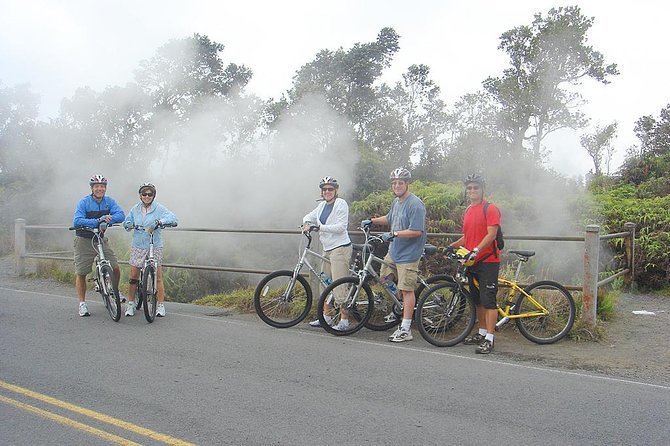
- Steam vents where warm air reminds you the island is active
- Massive craters and stark volcanic fields that make the terrain feel otherworldly
- Time to stop and eat lunch at Volcano House, with crater views
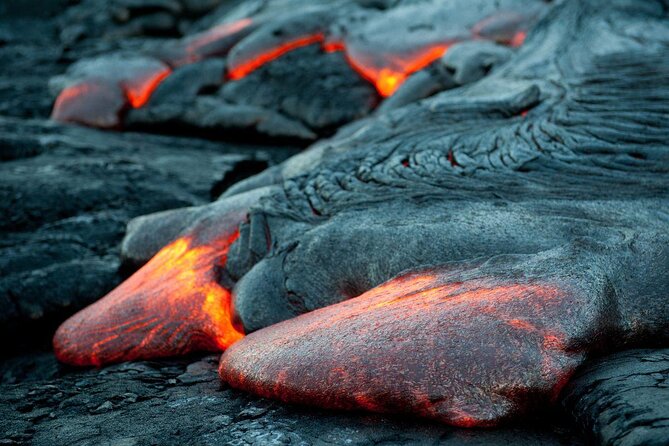
On rare days when conditions allow, you might even see active lava flowing into the sea. Even without that, the crater rim route still gives you that sense of scale—what erosion, eruption, and rebuilding look like when you move slowly enough to notice.
Two small cautions. First, park riding rules matter. One review flagged that park rangers may not like bike touring on walking trails, so stay on the bike-approved path and markings. Second, the ride can feel deceptively easy until you hit a curve or slick patch—so don’t treat it like a casual neighborhood ride.
Nahuku Crater and Thurston Lava Tube: a short hike with a cool payoff
This isn’t a long trek, but it’s one of the most memorable pieces of the day. You’ll do a 15-minute loop hike through native rainforest to Nahuku Crater, a pit crater about 500 years old. The shaded crater path is lined with native flora, including towering Hapuʻu ferns, which make the area feel like a natural greenhouse.
You’ll also get your first of two GPS audio lectures here. The audio focuses on the ecosystem and its cultural significance—why these plants matter, and how the place is connected to Hawaiian understanding of the land.
Then comes the big moment: Thurston Lava Tube. You walk through a massive lava-formed cave system. The tube is cool, sensory, and visually dramatic—smooth walls, openings that let light spill in, and vegetation growing around where lava once carved its path.
The second GPS lecture guides you as you walk the tube’s winding passages. If you love photos, this is your window: take your pictures before you rush ahead, because once you’re moving deeper into the route, you may not want to backtrack just to grab one more shot.
Kīlauea Visitor Center: the fast way to understand what you’re seeing
After the lava tube, you’ll stop at the Kīlauea Visitor Center for a short break. This is worth treating as more than a restroom stop. The exhibits connect the geology you’re riding through to the bigger story of a living volcano system. You’ll also find context on native wildlife and the cultural heritage tied to Pele.
If you like practical travel planning, this is where you can ask questions. Park rangers are available to answer safety questions, and they can help point you toward good exploration options within the park. There’s also a bookstore and gift shop if you want to grab an educational map or a reference you can use later.
Time-wise, plan for a short stop. Use it to orient yourself mentally: once you have the center’s overview in your head, the crater views you bike past land with more meaning.
Keanakakoi Crater Overlook: Pele views from a bike-accessible perch
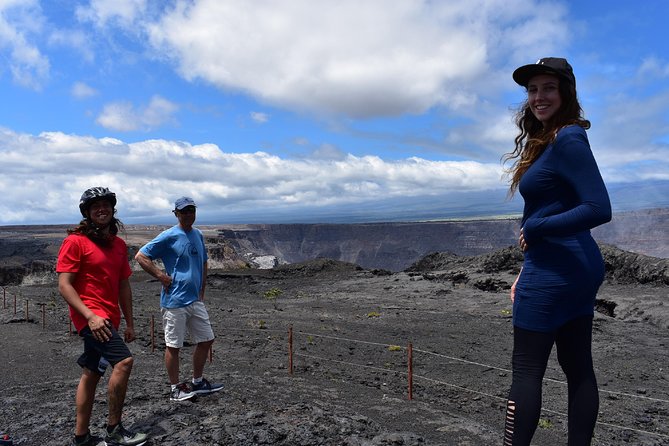
This is the kind of lookout that feels unfair—like you’re getting an insider route. Keanakakoi Crater Overlook is accessible only by bike or foot on this self-guided GPS route, and it offers panoramic views of Halemaʻumaʻu Crater, which is tied to Madame Pele in Hawaiian tradition.
Depending on current activity, you may see lava fountains reaching over 1,000 feet. Even when the day is quieter, the view across volcanic features is still the main event.
What I like here is the “choose your angle” flexibility. You can stop, look, then move on, rather than waiting in a car line and walking with everyone else. The route also passes through koa and ʻōhiʻa forests, blending tree cover with the volcanic terrain—so you’re not just looking at rock, you’re seeing the living systems around it.
This part of the ride sets you up with photo opportunities and a sharper sense of scale. It’s also a great moment to decide how much time you want to spend on the lava viewing area, since you’ll be biking toward it along the planned bike trail.
What the ride feels like: fitness level, hills, and wet-weather caution
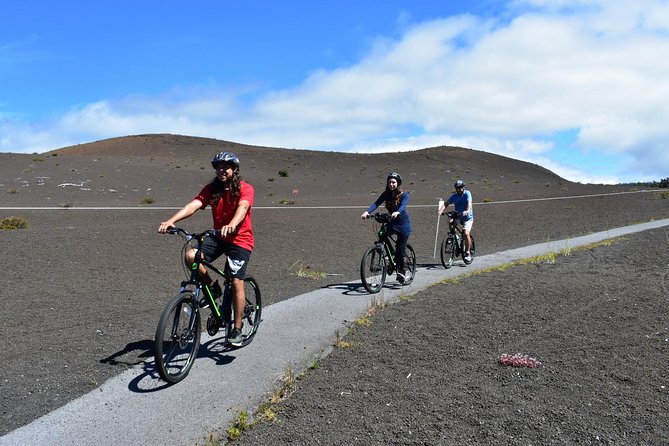
The route is set up to be manageable: mostly downhill, level, and paved. That’s the big reason first-timers often have a good time. One review even noted the ride was easy with just a couple of hills and “mostly pleasant” conditions.
Still, you shouldn’t treat the tour as zero-effort. You do need moderate physical fitness, and you need to be able to steer, shift, and balance on gravel and paved terrain. If you’re brand-new to riding, this may feel more stressful than you expect.
Also, weather matters. Summit conditions can be rainy, windy, and misty. One of the most important practical warnings from reviews: if roads get wet, don’t ride at a speed that assumes dry pavement. Slick roads can lead to skids, and while accidents aren’t something anyone can predict, you can control your pace and braking style.
My advice: ride like you’re carrying a cup of hot coffee. Slow down before turns. Give yourself extra stopping room. If the assist is strong, it’s tempting to let it pull you along—use it, but don’t let it replace good speed control.
Price and value: what $159 buys, and what you’ll likely pay extra
At $159 per person for roughly 4.5 hours, this tour can be good value if you care about getting multiple viewpoints without parking headaches. You’re paying for the e-bike, helmet, lock, GPS audio app access, and on-site support. You also get the benefit of a route designed to reduce time spent fighting traffic and hunting for a place to stop.
But budget for what’s not included:
- National Park entrance fee (listed as $15 per person, available to buy online)
- Rain jacket (sold at Kīlauea General Store)
- Smartphone (required)
- Backpack rental is available ($5)
- Bottled water can be purchased (price not listed)
There’s also a $1,500 pre-authorized equipment deposit per party, which shows up as a authorization rather than a direct purchase, but it’s still money you should be prepared to have tied up temporarily.
If you’re considering the cost versus convenience, the e-bike is the main driver. You’re not just paying to move through the park; you’re paying to access areas and angles that are harder to manage by car and foot in a half-day window.
Who this tour suits best (and who should rethink it)
This is a strong match if you:
- Want a self-paced way to explore the Volcanoes National Park area
- Prefer biking with motor assist instead of hiking every step
- Like getting context from GPS audio while you ride past real sights
- Want to avoid the biggest crowd pressure and parking scramble
It may be less ideal if:
- You rely on a phone that isn’t reliable, or you won’t be able to keep it charged
- You’re a brand-new cyclist and aren’t comfortable steering and shifting on mixed surfaces
- You’re sensitive to cool, misty, windy summit weather (layers help, but the conditions can still be a factor)
- You fall outside the limits: the tour is not available for riders under 15, and it is not available for persons weighing over 270 lbs
One more small note: some parts of the experience hinge on using the GPS audio app well. Reviews mention that audio playback at certain points can be a little cumbersome due to technical setup, so expect you might need a few taps before the narration starts.
Should you book this self-guided GPS e-bike tour?
I’d book it if you want a half-day plan that feels like real park time—not just a drive-by checklist. The combination of e-bike ease, bike-access viewpoints (including Keanakakoi), and a structured-but-flexible set of stops (lava tube hike, Visitor Center context, crater rim riding) gives you more variety than a typical car day.
Skip it or plan carefully if you’re not ready for the smartphone requirement, aren’t comfortable riding on mixed surfaces, or you know you won’t handle changing summit weather. And if conditions look wet, commit to slower speed and careful turns.
If you do book, my best advice is simple: charge your phone to the top, pack a backup power source if you can, and arrive early enough to get fitted and oriented without rushing.
FAQ
Do I need a smartphone for the GPS audio app?
Yes. A fully charged, functioning smartphone is required to use the GPS audio app during the tour.
Is the National Park entrance fee included in the $159 price?
No. National Park entrance fees are not included and are listed as $15.00 per person. You can purchase them online.
What’s included with the e-bike rental?
You get an electric comfort hybrid bicycle, a helmet, and a lock, plus secure parking and restroom access, a shaded staging area for orientation and safety, and live human operator assistance.
Where does the tour start?
The start meeting point is listed as Bike Volcano, 19-3972 Old Volcano Rd, Volcano, HI 96785. A separate pickup location is listed as Hilo Hawaiian Hotel, 71 Banyan Dr., so check your confirmation for the exact plan for your day.
What should I wear or bring?
Wear layered clothing, closed-toed shoes, sunscreen, and sunglasses if you have them. The tour also recommends bringing a hat and closed-toed shoes, plus a rain jacket can be purchased at the Kīlauea General Store.
Are there age or weight limits?
Yes. The tour is not available for cyclists under 15 years old, and it is not available for persons weighing over 270 lbs.