REVIEW · LONDON
Haunted London: Ghost Hunt Self-Guided Walking Adventure
Book on Viator →Operated by Questo · Bookable on Viator
London has its spooky shortcuts. This self-guided smartphone ghost hunt turns Mayfair’s luxury streets into a clue-filled walking game, with a flexible start time that lets you fit it around your day. I especially like the exact step-by-step directions built into each clue, so you spend less time guessing and more time noticing what’s around you.
The main thing to consider is that this is a puzzle-first experience. If you hate thinking through clues or you’re expecting a live guide giving nonstop explanations, you might find a few challenges a bit too brain-on for a quick stroll.
Key things to know before you play
- Smartphone game format: You solve 10 challenges with a spooky storyline.
- No guessing the route: Clues provide the next exact directions.
- Flexible start time: Choose when you begin within the day.
- Mayfair-to-St James’s route: Bond Street to Berkeley Square, then Green Park, and ending at St James’s Palace.
- You learn as you go: Each stop mixes location history with a dark question to answer.
- Private group setup: Only your group participates.
In This Review
- Why This Bond Street Ghost Hunt Works as a Walking Game
- Entering Mayfair’s Luxury Layer: Bond Street at Night-Adjacent Pace
- Berkeley Square: Trees Planted in 1789 and a Statue With a Dark Answer
- Green Park’s Canada Memorial: A Quiet WW1 and WW2 Detour
- Queen’s Chapel by St James’s Palace: Palladian Beauty With Royal Secrets
- What the Game Actually Feels Like: Clues, 10 Challenges, and No Live Guide
- Timing and Route Length: 1 to 2 Hours of Mayfair-to-St James’s Walking
- Value at $7.85: A Budget-Friendly Choice for Puzzle Lovers
- Who Should Book This Haunted London Ghost Hunt
- FAQ
- FAQ
- How long does the Haunted London ghost hunt take?
- Is this a guided tour with a live guide?
- What language is the experience offered in?
- Do I get help with finding the next stop?
- Can I choose when to start?
- Where does the tour start and end?
- How much does it cost?
- What is the cancellation policy?
- My verdict: should you book this ghost hunt?
Why This Bond Street Ghost Hunt Works as a Walking Game
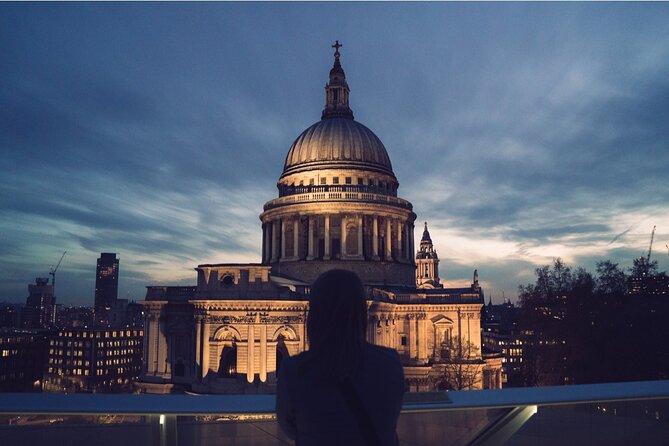
This is the type of London activity that rewards slow looking. Instead of following a guide’s script, you follow prompts. Each clue tells you where to go next, and you solve puzzles to move forward, which keeps the walk from turning into aimless wandering.
The format also fits real travel days. You can pause and resume anytime, and you can start whenever you want. That matters in London, where you might be hopping between theaters, museums, and shopping streets with no interest in being stuck to someone else’s schedule.
Most importantly, the route design helps you. The game’s directions are specific enough that you do not need to constantly check maps. That is a big deal on a self-guided experience—especially around Mayfair streets where one wrong turn can send you a block away from where you meant to be.
Entering Mayfair’s Luxury Layer: Bond Street at Night-Adjacent Pace
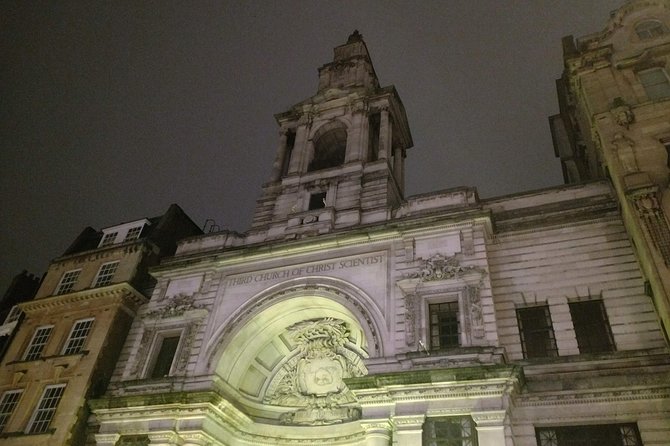
You begin the story with Bond Street, often described as the Champs-Elysées of London. In daylight, it is all designer windows, jewelry, luxury goods, and brands that make you walk a little slower. In this game, it becomes the setup for something darker.
The idea is simple: you stand in a very polished place, then you’re asked to spot clues tied to the area’s secrets. In practice, this makes Bond Street feel less like a shopping corridor and more like a layered neighborhood. Even if you are not a ghost-hunter type, you will likely start noticing architectural details you normally glide past.
A practical plus here is pacing. Because each checkpoint pushes you forward with a question and directions, you can handle the walk in 60 to 90 minutes without it feeling long or repetitive. If you want an activity that gives you structure without locking you into a strict tour time, this one does the job.
You can also read our reviews of more tours and experiences in London.



Berkeley Square: Trees Planted in 1789 and a Statue With a Dark Answer
After Bond Street, the game moves you to Berkeley Square, a green town square in Mayfair. It is the kind of place where you can hear birdsong and lose the noise of Oxford Street nearby. The trees here were planted in 1789, which makes the square feel older than the surrounding streets.
This stop is built for contrast. Around you are grand homes associated with famous names like Winston Churchill, Horace Walpole, and Charles Rolls. Then there is the Woman of Samaria statue by Alexander Munro. The statue looks innocent at first glance, but the game pushes you to read the surroundings differently—so you end up paying attention to meaning, not just scenery.
In a puzzle game, Berkeley Square also gives you space to slow down. You’re not fighting traffic at every second, and you have enough quiet corners to solve the clue without feeling rushed. If your group likes a little teamwork—one person reading the question, others scanning the area—you’ll probably enjoy this checkpoint the most.
Green Park’s Canada Memorial: A Quiet WW1 and WW2 Detour

Next comes a discreet stop near Buckingham Palace: the Canada Memorial in Green Park. The game positions it as a small, easy-to-miss tribute, tucked alongside trees rather than in the middle of big monuments.
The memorial honors Canadian soldiers who died during WW1 and WW2. The inscription includes the idea that in two world wars, one million Canadians came to Britain and joined the fight for freedom, and that from danger shared, friendship prospers. It also uses Maple Leaf symbolism, pointing to the long UK–Canada bond.
What I like about this checkpoint is how it changes the mood without turning the experience into something heavy or overly solemn. You go from shopping-street luxury to neighborhood squares, and then to a moment of remembrance tucked into a park setting. The puzzle here makes you look closely at what the memorial is saying and what symbolism you might overlook when you are just passing through.
If you are short on time, this stop is still worth it. It is close enough to central sights to fit in a short session, but different enough to feel like a real detour.
Queen’s Chapel by St James’s Palace: Palladian Beauty With Royal Secrets
The final stretch brings you to the Queen’s Chapel, beside St James’s Palace. This is one of those London places that feels like it should be famous—but often isn’t on typical quick itineraries.
The game highlights its Palladian style and an interior with richly gilded, finely detailed work. It was built by Inigo Jones between 1623 and 1625, which gives you real architectural weight to end on. And it has a notable royal connection: royals like the Queen Mother and Lady Diana lay in their coffins here before their funerals.
In other words, the finale is not just spooky. It is meaningful. The game’s final question invites you to treat the chapel like a place with layers—art, design, and the kind of London story that sits under the surface of everyday sightseeing.
When the game ends, you do not just walk away with a set of answers. You walk away with a stronger sense of how London’s power centers and ceremonial spaces shaped the city’s identity.
What the Game Actually Feels Like: Clues, 10 Challenges, and No Live Guide
You should expect a smartphone-led experience with 10 puzzle challenges. The storyline is part of the fun, but the mechanics matter more than the plot. Each location comes with a clue and a puzzle, and once you solve it, you get indications for where to go next—plus something to learn about the place you just reached.
That design is a big part of why this works. You are not left to interpret maps while trying to figure out what the puzzle expects. The game handles routing so you can focus on the questions and the surroundings.
Also, you are not getting a physical tour guide. That is not a drawback for everyone, but you should know what it means. You will not get spontaneous explanations, and you will not get a friendly human correcting your interpretation. If you like independent problem-solving and you enjoy reading small details, you’ll probably feel satisfied by the experience. If you want a narrator, you may prefer a guided ghost walk instead.
One more reality check: puzzle difficulty can vary. If your group enjoys a real challenge, that’s a plus. If you want a light, easy stroll, you might find a few clues take longer than expected. The good news is that the experience is built for 1 to 2 hours, so even if you slow down, you’re not trapped for half a day.






Timing and Route Length: 1 to 2 Hours of Mayfair-to-St James’s Walking

This is listed as about 1 to 2 hours. That range matters because it usually reflects how long it takes to solve puzzles at a comfortable pace.
You’ll be walking through a central London area that connects luxury shopping zones and quieter squares and parks. The good part is that you do not need to plan for a long transit day. The bad part is that you should still wear decent shoes. Even with clues and nearby routing, you’ll cover enough ground to make basic comfort important.
The start and end points also tell you what kind of trip this is. You start at 377 A40, London W1C 1JW, and you end at St James’s Palace, Marlborough Road, London SW1A 1BQ. In plain terms: this is designed to finish near one of London’s key landmarks, which is great for rolling into an evening plan.
Value at $7.85: A Budget-Friendly Choice for Puzzle Lovers
At $7.85 per person, this sits in the low-cost end of London attractions. The value comes from what you get for that price: a smartphone game, a flexible start time, 10 puzzle challenges, and a route that guides you with exact directions.
It also helps that it is designed for groups. There are group discounts, so if you’re traveling with friends or relatives, the per-person cost can feel even easier to justify. For couples, it can also work well as a shared activity—one person solving, the other scanning the setting.
The key value trade-off is your time and attention. You’re paying for an experience you actively participate in. If you want a passive sit-and-listen tour, the price-to-excitement ratio may not feel as good. But if you like solving, walking, and learning through small challenges, it’s a solid deal.
Who Should Book This Haunted London Ghost Hunt
I think this is best for travelers who enjoy puzzles and like to explore at their own pace. It is also a strong fit for groups, since the game format naturally turns sightseeing into a friendly competition.
It is also a good choice if you want ghost-hunt energy without committing to a long nighttime event. You get spooky clues, but you also end with real London architecture and royal significance at Queen’s Chapel.
You might skip it if:
- you hate phone-based activities or you dislike puzzle games
- you want lots of live storytelling and commentary
- you only want famous landmarks with no time spent looking for small clue details
FAQ
FAQ
How long does the Haunted London ghost hunt take?
It runs about 1 to 2 hours.
Is this a guided tour with a live guide?
No. It is a self-guided smartphone walking adventure with no physical tour guide.
What language is the experience offered in?
The experience is offered in English.
Do I get help with finding the next stop?
Yes. Each clue provides exact directions to the next place, so you do not need to guess the route.
Can I choose when to start?
Yes. The game has a flexible start time, so you can choose when you play.
Where does the tour start and end?
It starts at 377 A40, London W1C 1JW, UK. It ends at St James’s Palace, Marlborough Rd, London SW1A 1BQ, UK.
How much does it cost?
The price is $7.85 per person.
What is the cancellation policy?
You get free cancellation. You can cancel up to 24 hours in advance for a full refund.
My verdict: should you book this ghost hunt?
Book it if you want a low-cost, self-paced way to explore Mayfair and St James’s while solving 10 puzzle challenges. The clue-by-clue directions make it feel easier than many self-guided games, and the stops hit a nice mix: luxury streets, leafy squares, a WW1 and WW2 memorial, and the Queen’s Chapel by St James’s Palace.
Skip it if you want a traditional guide-led tour with lots of spoken storytelling. This experience rewards attention and a little patience with puzzles, not just walking past famous facades.