REVIEW · MUNICH
Munich: Self-guided sightseeing scavenger hunt for families
Book on GetYourGuide →Operated by StadtLandTour – unterwegs · Bookable on GetYourGuide
Munich turns into a game fast. This self-guided hunt keeps kids busy with puzzles and sight stops, guided by the Lili&Oskar mascots as you walk central Munich. I like the free pacing (pause for snacks, detours, or a museum mood swing), and I like how the tasks feel made for kids rather than just adult sightseeing. One catch: it’s German-only, and some of the printed text may feel long or dry for younger readers.
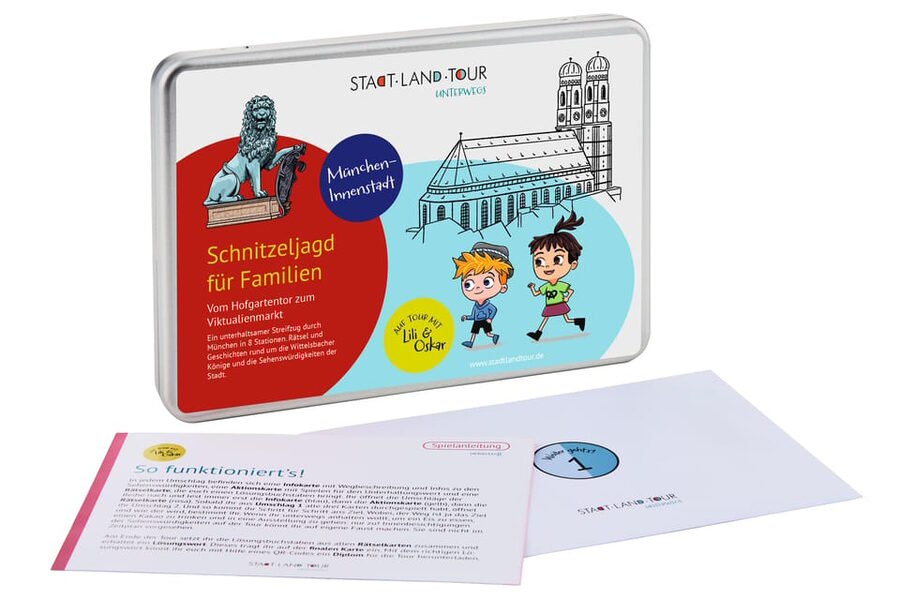
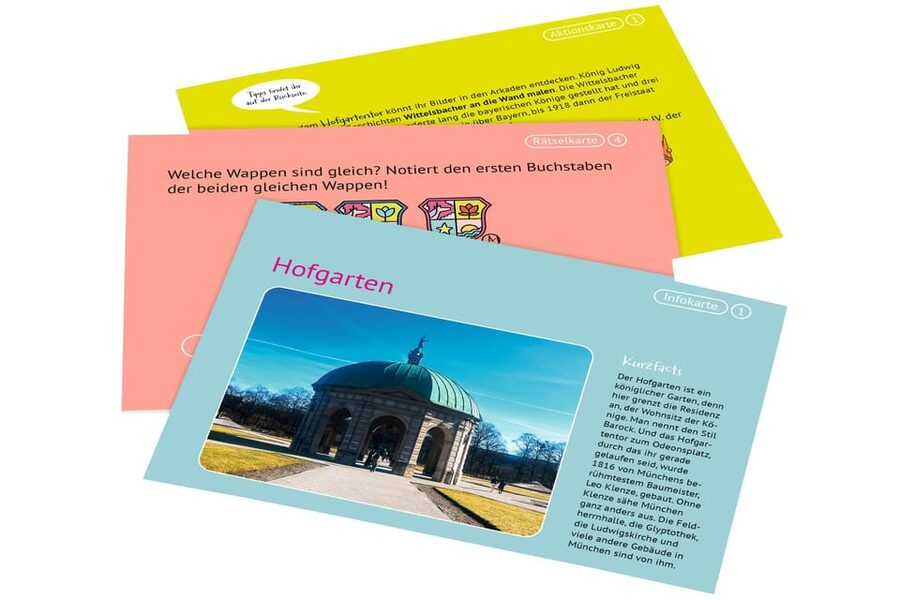
You’ll get the whole experience as a mailed box, with an envelope system that moves you station to station at your own speed. It starts at the Hofgarten and finishes at Viktualienmarkt, which is a smart end point when everyone is ready for something to eat and drink.
In This Review
- Key highlights to know before you go
- Why this Munich family hunt feels different from a standard walk
- Getting your box and starting at Hofgarten (no guide needed)
- The envelope system: how eight stations keep everyone engaged
- What you actually do at each stop (puzzles, tasks, and local facts)
- Lili&Oskar and the Munich dialect angle (and how it helps kids)
- Bonus rounds you can add on: museums, playgrounds, and the detour mindset
- Finishing at Viktualienmarkt: a break that feels like a reward
- Price and value: $47 per group up to 8 for 150 minutes
- Language reality: German-only means you need a plan
- Who this scavenger hunt suits best (and who should skip it)
- My booking decision: should you do this in Munich?
- FAQ
- How does the scavenger hunt work?
- Where does the tour start and where does it end?
- Is there a guide with you during the hunt?
- How long does the hunt take?
- What language is it in, and will non-German speakers manage?
- What do we need to bring, and when should we order?
Key highlights to know before you go
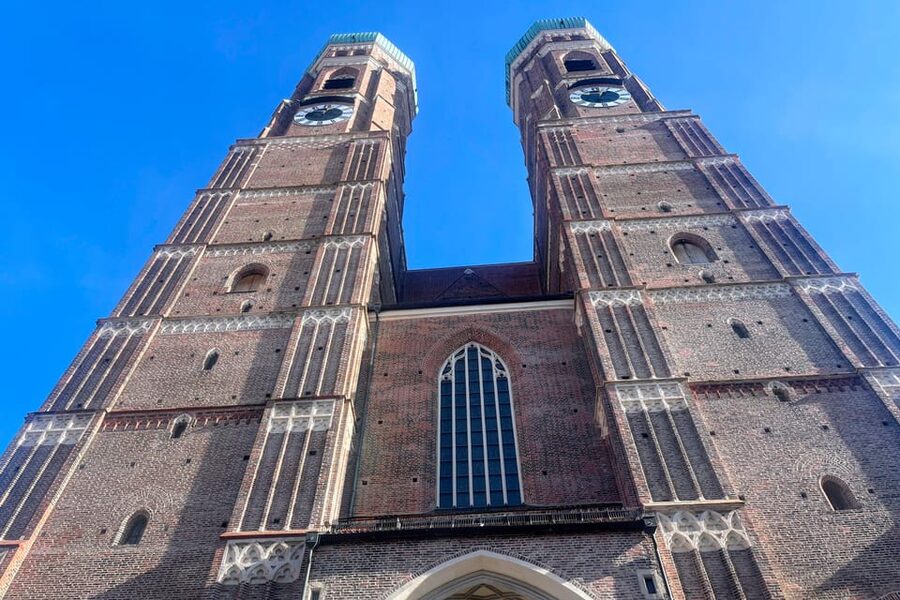
- Mailed scavenger hunt box with envelopes, metal case, puzzles, maps, and illustrations
- Eight station envelopes plus a motivational envelope if your group needs a reset
- Two Munich mascots: Lili&Oskar with kid-friendly info and light dialect learning
- Bonus-round sightseeing tips for optional museum, playground, or park detours
- Final envelope surprise after you solve the solution word (with helpful hints if needed)
Why this Munich family hunt feels different from a standard walk
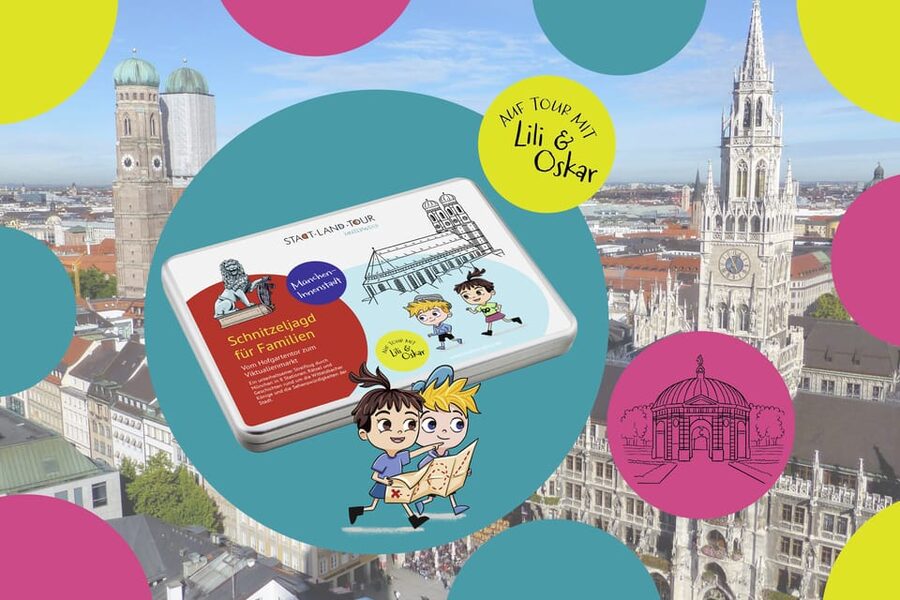
This isn’t a checklist of landmarks where kids get bored while adults read plaques. It’s built as a playful route through central Munich, where each step has something to do—solve, look closer, answer, and move on. For families, that matters because motivation is the real currency on city sightseeing days.
You’re also not stuck with a live guide’s schedule. You can start at your convenience, take breaks when your crew needs them, and keep the pace comfy. One review praised the freedom in timing, which is exactly what makes a self-guided format work for kids.
The hunt is designed to teach while you play. Along the way, you’ll get information about the city, its people, and Bavarian themes (including famous kings and local history references). And because Lili&Oskar are the focus, adults don’t have to do all the entertaining.
You can also read our reviews of more tours and experiences in Munich.


Getting your box and starting at Hofgarten (no guide needed)
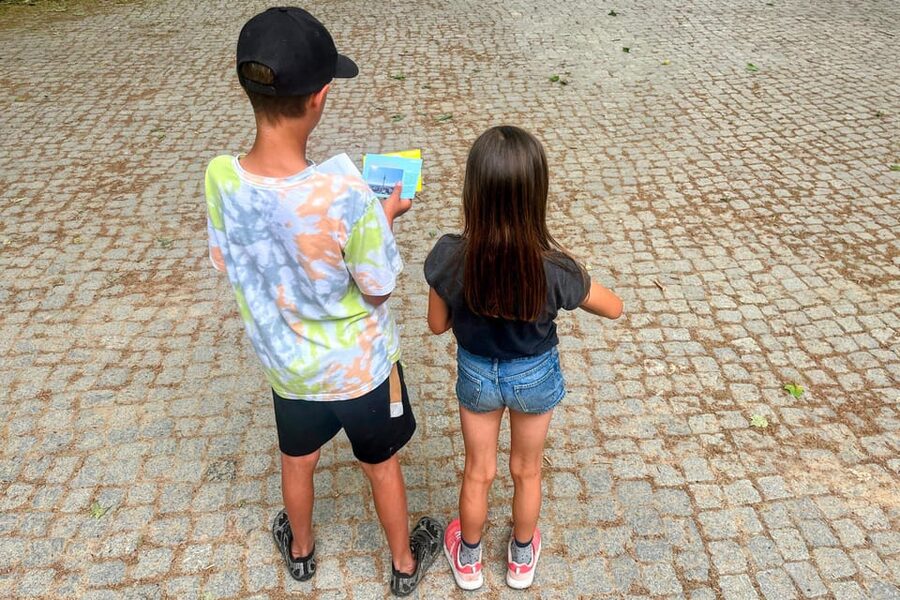
The logistics are refreshingly simple: you order the scavenger hunt box online, and it gets shipped to your home or directly to your hotel in Munich. Expect at least 2–4 working days within Germany, so don’t plan this as a last-minute add-on.
When the box arrives, you’ll find instructions that tell you the starting point and directions. There’s no guide waiting at a meeting point, and the tour can be started anytime. That flexibility is helpful if you’re juggling nap schedules or planning around meal times.
Start point: Hofgarten in central Munich. The nice bonus here is that you can also detour to the English Garden if your family wants a greener break mid-walk. Even if you don’t do the detour, you still get that sense that the route lives in real Munich, not just a ticketed route.
What to bring is minimal: comfortable shoes, the game box, and a pen. (The pen isn’t included, so plan to pack one.)
The envelope system: how eight stations keep everyone engaged
The heart of the experience is the envelope-by-envelope design. You start with a map in the box that gives directions and your starting instructions. Then you move forward by opening one envelope at a time as you reach each station.
There are eight stations, and each one is meant to do three things:
- Share information about the attraction you’re at
- Give your kids a task or puzzle to complete
- Get you moving on without dragging out the whole day
If your group runs out of steam, you get an additional motivational envelope—basically a built-in way to reset energy. And if you get stuck on the solution word, there’s a solution envelope with help, so you’re not stuck guessing for ages in the middle of the city.
The end is its own moment. Once you solve everything, you open the final envelope and get a little surprise. That’s a small detail, but for families it often makes the last stretch feel worth it.
What you actually do at each stop (puzzles, tasks, and local facts)
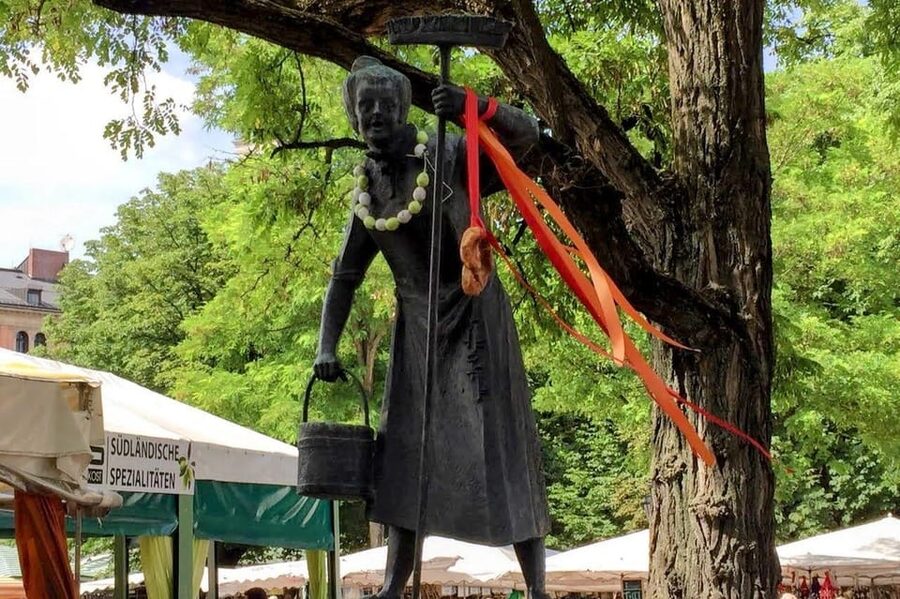
Each station combines sightseeing with active tasks. Instead of reading a long wall of text, your kids will usually have something to do with the information at hand—solve a clue, complete a small challenge, and use what you’re seeing to progress.
The tour leans into family-friendly learning. The included materials are explicitly made for children, while still offering enough fun information for adults. You also learn about Munich’s inhabitants and culture, and the mascots deliver fun facts with a wink and a joke tone meant to keep everyone amused.
A detail that helps parents: the hunt isn’t only about finding the solution word. The stated goal is to spend an entertaining day with your children, learning a bit along the way without turning the day into school homework.
One pacing note: the design assumes you’ll be willing to stop briefly. That’s great for most families, but if your group’s style is more get-in, get-out, you’ll want to plan a lighter attitude toward stopping.
Lili&Oskar and the Munich dialect angle (and how it helps kids)
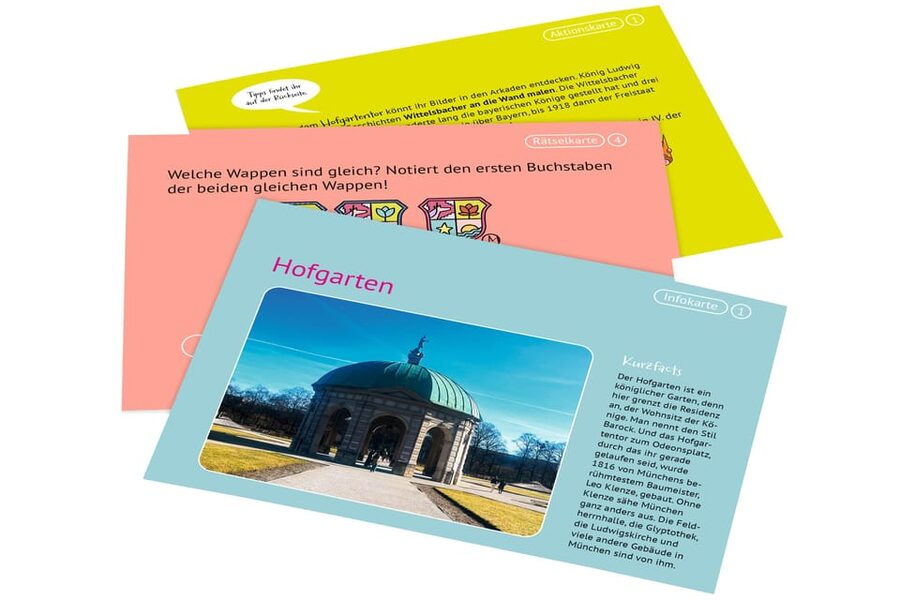
The mascots are the “main attraction” here. Lili&Oskar guide you through the hunt and act as the voice of the experience, bringing local insight and playful explanations. They’re also tied to the dialect and local flavor of Bavaria, so you get a little language exposure without needing a phrasebook.
This part is especially useful when kids are curious but adults want an easy way to answer. If a child asks what something means, the hunt’s info format gives you prompts instead of forcing you to invent explanations on the spot.
One small caution: since the tour is available only in German, the dialect and wording are part of what you receive. The good news is that the materials are illustrated and described as understandable even for non-Bavarians. Still, if your family reads very slowly or avoids German text in general, plan on taking reading breaks and letting the tasks carry momentum.


Bonus rounds you can add on: museums, playgrounds, and the detour mindset
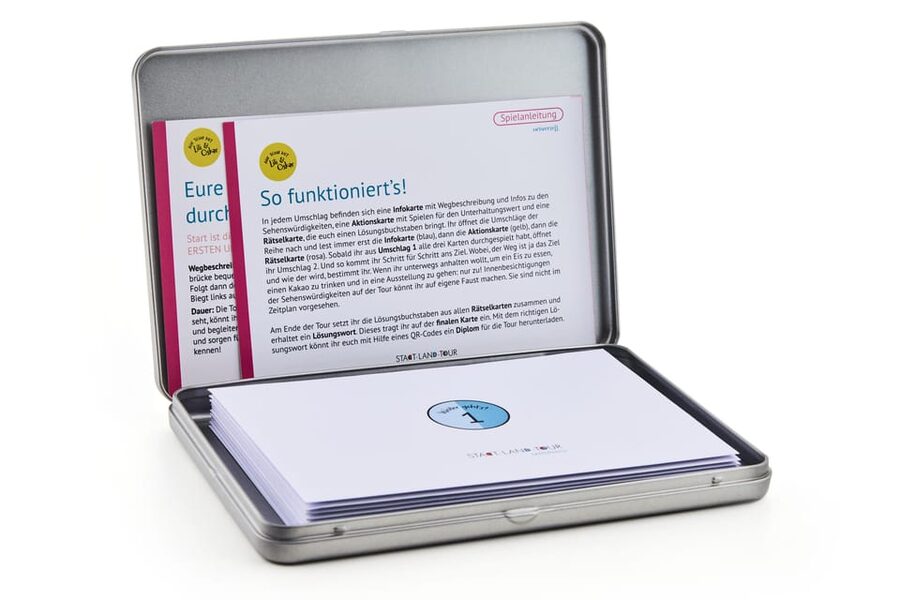
A smart perk is that the tour route passes beautiful central Munich spots even when they’re not part of the core station sequence. You’ll receive tips on what’s worth seeing along the way, and then you choose whether to pause for a museum, playground, or park.
This matters because families rarely want to do one rigid activity for 150 minutes straight. Kids may need to run, adults may want coffee, and everyone may suddenly have a strong opinion about ice cream. The hunt is built to allow that kind of reality without collapsing the plan.
Think of the bonus tips as guardrails. They keep you from feeling stuck at your own mercy, while still letting you decide what makes the day fun for your specific group.
Finishing at Viktualienmarkt: a break that feels like a reward
The route ends at Viktualienmarkt, which is a practical finish line. By the time you reach the end, you’re likely ready to sit down, snack, and talk through what you solved and what surprised you.
Viktualienmarkt also works as a visual reward: the hunt gives you an endpoint with a natural reason to slow down. If you have energy afterward, you’re still in a place designed for lingering.
And because the hunt includes a final envelope surprise, the end sequence isn’t just “walk back and hope you remember your highlights.” You get that satisfying close, then you can turn the day back into normal sightseeing or just relax.
Price and value: $47 per group up to 8 for 150 minutes
At $47 per group up to 8, this is priced like a family activity rather than like an individual ticket. That’s key for budgeting, because families often pay per adult and per kid on many city activities.
What you’re getting for that money goes beyond “a map and a brochure.” You receive a sturdy metal box, eight envelopes, puzzles, child-friendly information, illustrations, and built-in support through a motivational envelope and a solution envelope. The structure does the heavy lifting—parents don’t need to moderate a live session or create scavenger logic from scratch.
It’s also a format that can reduce friction. If your kids are willing to participate, this can replace a more expensive guided tour and still give you a guided feel through the step-by-step envelopes.
One value question to consider: you don’t get museum admissions included, and you won’t receive public transport tickets. So if you want extra indoor stops, you’ll pay those costs separately.
Language reality: German-only means you need a plan
This hunt is only available in German. You’re ordering the box online and receiving it by post, and all the material is in German.
So who will enjoy it most? Families who are comfortable with German text can fly through the stations. Families who aren’t fully comfortable will still likely enjoy the visual puzzle structure, because the hunt is illustrated and includes local context meant to be understandable for non-Bavarians.
But here’s the honest tradeoff: one piece of feedback noted that some texts can feel too long and dry for children. That doesn’t mean it’s unusable, just that you may want to:
- Keep reading moments short
- Let kids focus on the puzzle task first
- Use any hints when needed instead of turning it into a battle
If your child hates reading on a screen or paper, you might still find it fun because the task-driven format can keep attention. Still, go in knowing the language is part of the package.
Who this scavenger hunt suits best (and who should skip it)
This works especially well if you want:
- A family activity that blends walking with puzzles
- A flexible start time with no guide meeting you
- A day plan that tolerates detours for snacks and breaks
- A city route that doesn’t require constant adult explanations
It’s also a solid fit for mixed ages, because the hunt is designed for children but provides information that adults can enjoy too.
You might skip it if:
- Your group wants an English-speaking guide or a live storyteller
- Your family doesn’t want to handle any German text at all
- You prefer a highly structured, never-stop walking pace
One review also highlighted a Nachtwächter-style character for how well he engaged children. If your box includes that kind of story voice in the station flow, it can be a real attention-getter—especially for kids who like characters more than facts.
My booking decision: should you do this in Munich?
I’d book this if your family likes scavenger hunt energy and you want to explore central Munich without locking yourself into a strict schedule. The self-guided envelope format, the kid-focused tasks, and the Lili&Oskar mascot vibe are the big reasons it feels like more than just another sightseeing route.
I’d think twice if German text will slow your kids down too much. The format helps, but the tour is still German-only, and at least some feedback points to text length as a potential friction point.
If you have a family who enjoys puzzles and you’re happy to read prompts in short bursts, this is a strong value way to spend around 150 minutes in Munich.
FAQ
How does the scavenger hunt work?
You’ll receive a mailed box with a map and instructions. Open the first envelope at the starting point, then open the next envelope at each station, moving through all eight stations to find the solution word. A motivational envelope helps if you need energy, and a solution envelope provides help if you get stuck.
Where does the tour start and where does it end?
The scavenger hunt starts at Hofgarten in central Munich. The route continues through the city center and ends at Viktualienmarkt, which is a convenient place to stop for refreshments.
Is there a guide with you during the hunt?
No. There is no guide at the meeting point. You’ll follow the directions inside the scavenger hunt box and start whenever you like based on the instructions.
How long does the hunt take?
The duration is 150 minutes. That timing can work best if your family also plans for small breaks along the way.
What language is it in, and will non-German speakers manage?
The tour is only available in German. The information is described as understandable even for non-Bavarians, and the box includes illustrations, but the written content is still German.
What do we need to bring, and when should we order?
Bring comfortable shoes and your own pen. The box is shipped by post within Germany and can take at least 2–4 working days, so order with enough lead time. You can cancel up to 24 hours in advance for a full refund, and you may be able to reserve now and pay later.