REVIEW · GHENT
Ghent Walking Tour with Audioguide on Your Smartphone
Book on Viator →Operated by TouringBee · Bookable on Viator
That first bridge view in Ghent is hard to beat. This self-guided smartphone audio tour strings together the city’s most memorable sights with clear narration, an offline route map, and 31 in-app audio stops. I like it because it feels like walking with a calm local tutor, not waiting for a group.
I especially like the freedom of pace. You can pause, slow down for photos on the canals, or skip whatever doesn’t catch your eye, and the route still makes sense. The audio is built to help you spot landmarks fast with app illustrations, and the directions are simple enough for a first-time audio-guide user.
One possible drawback: you’re responsible for the basics—bring your own headphones and make sure your phone is charged. If the download/install doesn’t cooperate, you’ll need to troubleshoot (and the provider support contact is [email protected]).
In This Review
- Key things to know before you start
- Smartphone-Only Walking Tour: Why This Format Works in Ghent
- What the App Actually Delivers (and What You’ll Need)
- The Route Starts at St Michael’s Bridge (and It’s a Smart First Move)
- Grasbrug Bridge: Canal Views and Medieval Mechanisms
- Old Meat Market Hall: Where Architecture Meets Everyday Food Culture
- Groentenmarkt: A Square You Can Feel Right Away
- Gravensteen Castle and Rabot Gatehouse: Power in Stone
- Patershol: Cobblestones, Colorful Houses, and Side-Street Charm
- Vrijdagmarkt and the Belfry Area: Civic Pride on Full Display
- Werregarenstraat Graffiti Street: A Contemporary Contrast That Fits
- St Bavo’s Cathedral and St Nicholas: Big Church Energy, Guided by Audio
- How Long It Really Takes (and How to Walk It Smoothly)
- Price and Value: Why $8.42 Can Be a Great Deal Here
- Who This Tour Fits Best (and Who Might Want a Different Option)
- A Quick Booking Decision: Should You Book This Ghent Audio Tour?
- FAQ
- How long is the Ghent walking tour with the smartphone audioguide?
- Is there a human guide on this experience?
- What do I need to bring with me?
- Where does the tour start and end?
- Is the audio guide available offline?
- Is this tour in English?
- Are entrance tickets included?
- Is free cancellation available?
Key things to know before you start
- Self-guided, no human guide: you follow the route on your phone at your own pace
- Offline map + GPS route: you don’t have to rely on cell signal
- 31 audio recordings: enough narration to make each stop feel connected
- Landmark illustrations: helps you recognize what you’re looking at, even when streets branch off
- Mostly admission-free stops listed: the route includes sights marked as admission ticket free
- Bring headphones and plan for battery: the tour lives entirely on your device
Smartphone-Only Walking Tour: Why This Format Works in Ghent
Ghent is the kind of city where the best moments happen when you’re not rushed. Canals, bridges, church towers, and market squares are scattered in a way that rewards wandering—but wandering without context can feel random.
This tour solves that by keeping you moving along a logical route while staying self-guided. The narration ties each place to what you’re seeing right now: medieval architecture, civic power, and how different neighborhoods developed. You get a guided feel with a solo-walk rhythm.
It’s also a practical choice when you want value. At about $8.42 per person for a ~3-hour experience, you’re paying for content and navigation, not for transport or a human guide. For many travelers, that’s the sweet spot.
You can also read our reviews of more tours and experiences in Ghent.

What the App Actually Delivers (and What You’ll Need)
Included is an audio guide app for iPhone and Android, plus an offline map with the route. There are 31 audio recordings, and the app uses illustrations to help you recognize landmarks as you approach them.
You’ll also need to bring your own phone setup:
- Smartphone (not included)
- Headphones (not included)
- Enough battery for a few hours of GPS and audio playback
Also note that the tour date and time shown at checkout are approximate. Practically, that means you’re not locked into a strict tour-slot schedule—you activate and use it when you’re ready during that day.
The Route Starts at St Michael’s Bridge (and It’s a Smart First Move)
Meeting point is St Michael’s Bridge at Sint-Michielsplein in Ghent. Starting on a bridge is clever because it gives you instant orientation: you’re already above the action, looking toward key landmark clusters.
From here, you’ll get a strong first read on the cityscape, with medieval architecture and the canal setting in full view. The narration calls out major details you might otherwise miss, including the Castle of the Counts and St. Nicholas’ Church as you take in the skyline.
What I like about beginning at a vantage point: you’re not stuck guessing where you’ll walk next. By the time you move on, your mental map is already built.
Grasbrug Bridge: Canal Views and Medieval Mechanisms
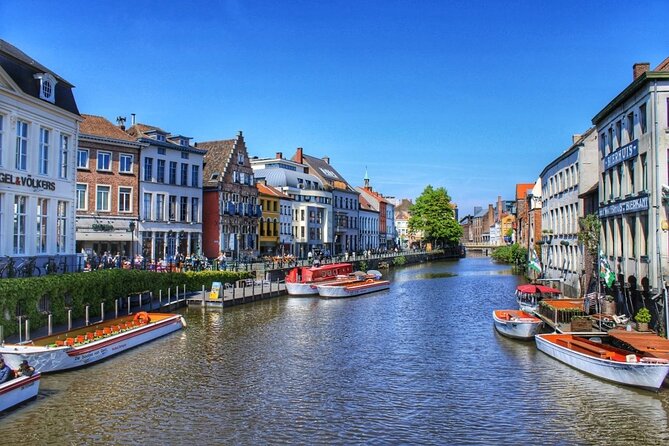
Next comes Grasbrug Bridge, the drawbridge spanning the Leie River between the Graslei and Korenlei embankments. This is one of those spots where the city looks like a postcard, but the best part is what the bridge represents.
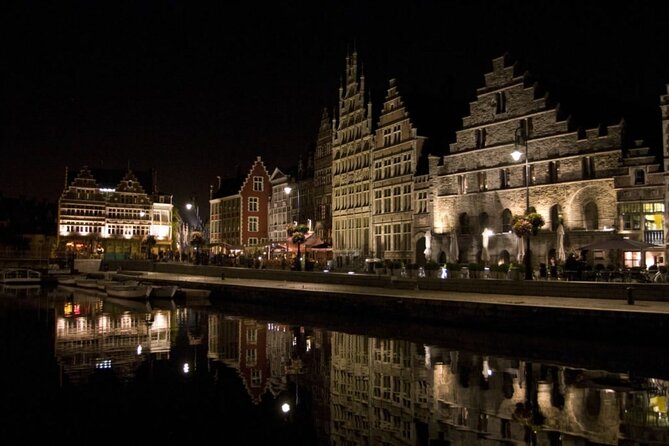
The audio focuses on the drawbridge mechanism and the way the bridge connects two classic waterfront sides. You’ll also get views toward historic guild houses along the river—enough context to understand why Ghent developed the way it did around these water edges.
Practical tip: pause on this one if you like photos. The route moves quickly, but this canal section is the kind you’ll want to revisit while the light is good.
Old Meat Market Hall: Where Architecture Meets Everyday Food Culture
Then you’ll walk to the Old Meat Market Hall, now used as a cultural hub. The building’s medieval bones are the star, but the modern use is part of the point: the space still serves the public, just in a newer way.
Inside, you’ll find trendy food stalls and artisanal shops, so even if you’re not buying anything, you’ll get a sense of how Ghent mixes old structure with present-day life. This stop is especially good for understanding the city beyond monuments.
One consideration: because it’s a market-type environment, it can feel busier than the bridges. If you prefer quiet, keep your time here purposeful—look, listen, then move on.
Groentenmarkt: A Square You Can Feel Right Away
From the hall you’ll head to Groentenmarkt, the historic vegetable market square. This isn’t just a photo stop. It’s a lived-in square surrounded by historic buildings and lined with cafes where people linger.
The audio helps you read the space: why this square matters, what kinds of everyday activity happened here, and how the layout supports that street-life vibe. You’ll also have an easy place to pause and reset your legs before the next stretch.
If you want a low-stress break, this is where to do it. Grab a drink if you feel like it, but you don’t need to commit—this stop works even if you’re just stretching and people-watching.
Gravensteen Castle and Rabot Gatehouse: Power in Stone
Now the route turns dramatic with two medieval landmarks.
First, Gravensteen Castle—the medieval fortress known as the Castle of the Counts. Expect narration that frames it as a symbol of power and governance. You’ll be pointed toward the castle’s darker dungeon feel, battlements, and the panoramic views from above.
Then you’ll move to Rabot, the iconic medieval gatehouse. Here the audio shifts tone: Rabot once served as a toll gate and now functions as a symbol of Ghent’s resilience. The surrounding neighborhood gives you a “history next to real life” feeling.
One practical note: if you plan to go up for viewpoints, plan your energy. Even with a self-guided route, climbing and walking takes time. This part of the tour is where comfortable shoes matter most.
Patershol: Cobblestones, Colorful Houses, and Side-Street Charm
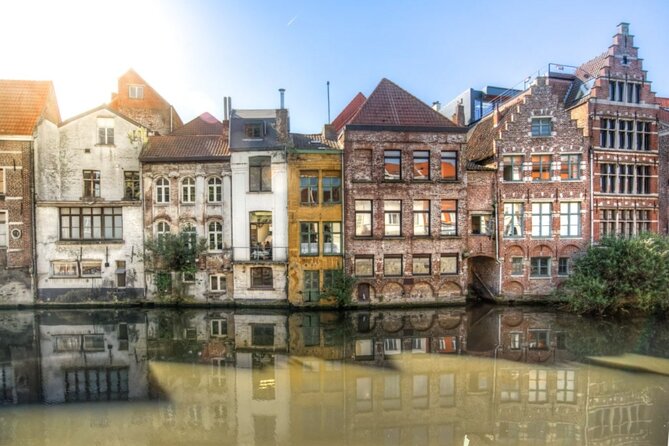
Next is Patershol, Ghent’s historic quarter. This is where the city gets more intimate. Expect cobblestone streets, colorful facades, and small lanes lined with boutiques and cozy eateries.
The audio doesn’t just list sights—it explains the area’s identity as a former artisan neighborhood, which helps you connect the street feel to its past. You’ll also likely find small squares and little garden-like corners that make wandering here feel natural.
If you like walking through places that feel lived-in rather than museum-like, Patershol is the kind of stop that can steal 30 minutes from your schedule. That’s not a problem if you came for atmosphere.
Vrijdagmarkt and the Belfry Area: Civic Pride on Full Display
From Patershol, you’ll reach Vrijdagmarkt, Friday Market Square. This is a centerpiece for Ghent’s public life, with historic architecture around it—especially the Belfry and St. Nicholas’ Church in the skyline.
The audio ties the square to civic identity: how guild houses and public landmarks shaped daily life, and why the belfry matters. You’ll be encouraged to pay attention to the tower details and the relationship between buildings at ground level and the power symbol above.
Then, you’ll also have the Ghent’s Belfry stop with a focus on the 300 steps and panoramic views. Even if you don’t do every climb, listening for the dragon weathervane and carillon melodies helps you see the tower as more than a big structure.
Important planning thought: since entrance fees aren’t included, if anything you want requires a ticket, you’ll need to handle it on-site. The route is designed to keep most stops manageable, but treat this as a “check before you go in” moment.
Werregarenstraat Graffiti Street: A Contemporary Contrast That Fits
After the big medieval monuments, the tour adds a modern creative break with Graffiti Street, also known as Werregarenstraat. The idea works well because Ghent isn’t just Gothic stone.
Here, the narration frames the street as an ever-changing canvas of local and international street artists. The murals add color and a sense of today’s city energy, without feeling like it’s trying to replace the old town. It’s a palate cleanser before the final cluster of churches.
If you’re the kind of person who enjoys urban art, don’t rush this one. Take a lap down the street and let your eyes adjust to what’s new and what’s layered.
St Bavo’s Cathedral and St Nicholas: Big Church Energy, Guided by Audio
Next you’ll encounter St. Bavo’s Cathedral, a Gothic masterpiece. The audio calls out the Mystic Lamb altarpiece by the Van Eyck brothers and encourages you to appreciate the scale and artistry of the space. If you’re interested in art history, this is one of the stops that will feel worth the detour.
After that, you’ll also visit St. Nicholas’ Church. The narration emphasizes its intricate facade and the chance to step inside for medieval beauty. The church setting works as a quieter interlude compared with market squares and castle areas.
Finally, you’ll also reach St Michael’s Church, described as a Gothic treasure with stained glass, an elegant altar, and a serene atmosphere. This final church stop is often a good way to round out the day: you’ve moved through castles, markets, bridges, and civic towers—then you end in calm.
Tip for maximum enjoyment: lower your pace in these churches. Even if you’re not lingering for long, take time to listen to the audio while you look, not while you walk past.
How Long It Really Takes (and How to Walk It Smoothly)
The tour runs about 3 hours on average, with transfers of roughly 10–15 minutes of walking between each stop. That’s a reasonable pace for city sightseeing, especially because you’re also taking in views along the way.
To keep it comfortable:
- Wear shoes you can stand and climb in
- Expect a little extra time at castle areas and inside churches
- Keep your phone at ready volume so you’re not fumbling with settings mid-walk
The route ends back at the meeting point, so you don’t need to worry about planning a separate return. You’ll basically loop your walk into a tidy circuit.
Also remember: it’s offered in English. If you prefer another language, the app includes 1 year access in your preferred language setting during checkout, but the tour is listed as English for this offering.
Price and Value: Why $8.42 Can Be a Great Deal Here
At $8.42 per person, the biggest value isn’t just the audio recordings—it’s the mix of navigation help and context. In a place like Ghent, where a lot of sights are close but easy to miss details, having 31 guided touchpoints makes the walk feel more intentional.
You’re not paying for transportation, and you’re not paying for an in-person guide. Instead, you’re paying for the convenience of an offline route and explanations you can replay as you walk.
Two quick reality checks:
- Food and drinks aren’t included (so plan your own snack breaks)
- Entrance fees aren’t included, even if many stops are marked as admission ticket free on the route
If you’re the type who enjoys architecture and wants context without booking a timed group, the value is strong.
Who This Tour Fits Best (and Who Might Want a Different Option)
This works best if you like:
- Walking at your own tempo
- Seeing landmarks without waiting for someone else
- Learning while moving (and not getting trapped in a lecture)
It’s also a nice first “audio guide” choice. One of the best practical compliments for this tour is that the speaker is easy to understand and the map makes it easy to follow, which is exactly what you need when it’s your first time.
If you’re traveling with people who hate using apps on the street, this may feel like work. You’re still walking together, but you’ll all be dependent on phone audio and the route screen.
A Quick Booking Decision: Should You Book This Ghent Audio Tour?
I’d book it if you want a smart, low-cost way to see Ghent’s highlights in one loop. Starting at St Michael’s Bridge and ending back at the meeting point is clean and stress-free, and the mix of bridges, markets, castles, churches, and one modern art stop makes the walk feel balanced.
Skip it only if you strongly prefer a human guide or you know your phone downloads and battery life are usually a struggle. If you’re set up with headphones and your app is ready offline, this is a fun way to get street-level context without paying for a bigger tour package.
FAQ
How long is the Ghent walking tour with the smartphone audioguide?
It lasts about 3 hours on average.
Is there a human guide on this experience?
No. It is a self-guided tour. You follow the route using the mobile app map.
What do I need to bring with me?
You’ll need your smartphone and your own headphones. Food, drinks, and transportation are not included.
Where does the tour start and end?
The tour starts at St Michael’s Bridge (Sint-Michielsplein, 9000 Gent, Belgium) and ends back at the same meeting point.
Is the audio guide available offline?
Yes. The tour includes an offline map with the route for GPS navigation.
Is this tour in English?
The tour is offered in English, and you get 1 year access in your preferred language.
Are entrance tickets included?
No. Entrance fees/tickets are not included, though the route includes stops listed as admission ticket free.
Is free cancellation available?
Yes, you can cancel for a full refund up to 24 hours before the experience starts.