REVIEW · GHENT
Discover Ghent with a self-guided Outside Escape city game tour!
Book on Viator →Operated by Outside Escape · Bookable on Viator
Ghent feels different when you chase clues. This Outside Escape self-guided walk turns famous spots into a story, using smartphone puzzles to point you toward lesser-noticed corners. I particularly like the flexibility to start whenever you want, and I like that it’s built around a concrete route you can finish without scheduling a meeting.
Two more reasons it appeals: it’s only about 2.5 kilometers, so the walking feels realistic even if you stop for photos, and each location comes with a clear “why you’re here” fact that makes the city stick. One thing to consider is that the puzzle style may be a little demanding if you prefer instant answers, and one report mentioned the route can end abruptly rather than with a long wrap-up text.
Below is how it plays in real life, stop by stop, plus who it suits best in Ghent.
In This Review
- Key highlights to know before you go
- How the Outside Escape city game works in Ghent
- Vrijdagmarkt: the medieval square that sets the tone
- St. Veerleplein: Gravensteen, rivers, and a clue built on geography
- Sint-Niklaaskerk: Scheldt Gothic details and a lantern tower
- Stadshal and Emile Braunplein: modern city design in the historic center
- Geeraard de Duivelsteen: the devil castle and the trading settlement story
- Bishop’s Palace area near Bisdomplein: authority in stone
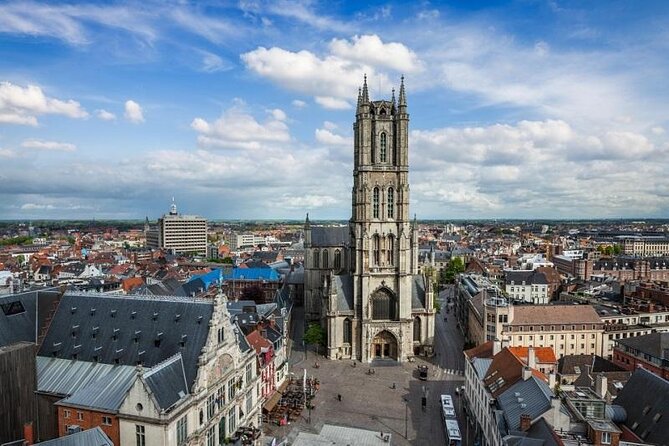
- St. Bavo’s Cathedral: where the story lands
- Price and value: $28.66 per group for a 1–2.5 hour phone adventure
- Who this tour is best for (and when it’s not)
- Practical tips so you don’t get stuck
- FAQ
- FAQ
- Where does the tour start and where does it end?
- How long does the Ghent game tour take?
- How far do you walk?
- Do I need a smartphone?
- Can we start the tour at any moment we choose?
- What’s the group size and age guidance?
- Is there admission cost for the stops?
- What hours is the experience available?
- Can I cancel for a full refund?
- Should you book this Ghent city game tour?
Key highlights to know before you go
- Start anytime: you choose your own start moment and pace instead of joining a fixed group tour.
- Smartphone with mobile data: the whole experience runs on your phone, so plan for signal and battery.
- A compact loop: roughly a 2.5 km walk for about 1h30 to 2h30.
- Puzzles tied to place: story clues connect to real Ghent landmarks, from medieval squares to major churches.
- Team friendly: designed for up to 5–6 players (age 15+; younger players need supervision).
- Free to look around: the listed stops have free admission noted for each site.
How the Outside Escape city game works in Ghent
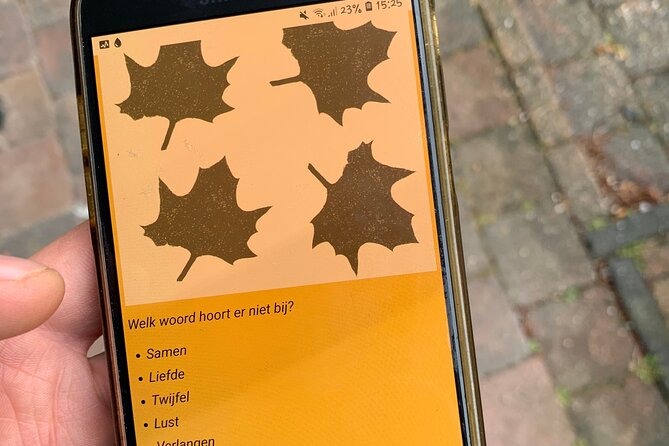
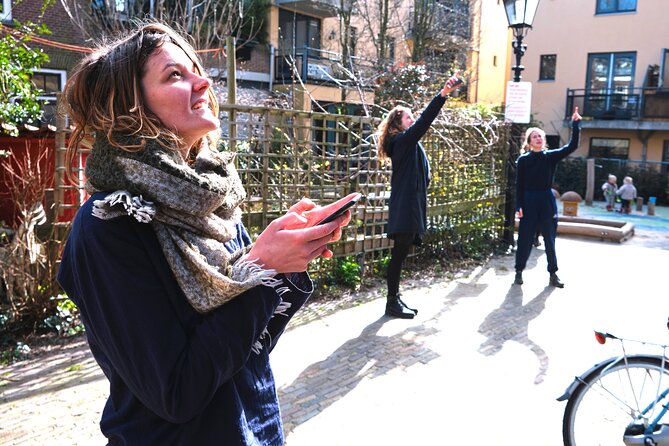
Think of this as a guided walk where the guide is in your pocket. You load a mobile ticket on your phone, then follow the route at your speed. Instead of listening to a talking guide, you solve puzzles that nudge you from place to place—and (this is the point) make you notice details you’d normally walk right past.
You’ll need a smartphone with a mobile data plan. That’s the main “logistics” piece, and it matters. If your data is weak, the game can feel annoying. If your battery is low, you’ll feel rushed at the wrong time. I’d treat this like any phone-based navigation day: bring a power bank.
This isn’t a “race.” It’s a story you work through. Because it’s private for your group, you’re not stuck with a random mix of paces. If your group includes someone who loves history facts and someone who just wants the hunt part, you should be able to balance it.
You can also read our reviews of more tours and experiences in Ghent.


Vrijdagmarkt: the medieval square that sets the tone
Your walk begins at Vrijdagmarkt, one of Ghent’s oldest squares. The clue trail starts with the feeling that you’re stepping onto a page from an older city—this square is about one hectare, and it played a major role in Ghent’s history.
What I like here is how quickly it gives you context. Even if you’ve visited Ghent before, Vrijdagmarkt tends to be “the place you pass.” In this game, it becomes a starting question: what happened here, and why does it matter to the story?
Practical tip: if your group likes to take photos, Vrijdagmarkt is where you’ll want to do your first set. It’s large enough that you won’t feel like you’re blocking traffic while you reset your eyes for the next clue.
St. Veerleplein: Gravensteen, rivers, and a clue built on geography
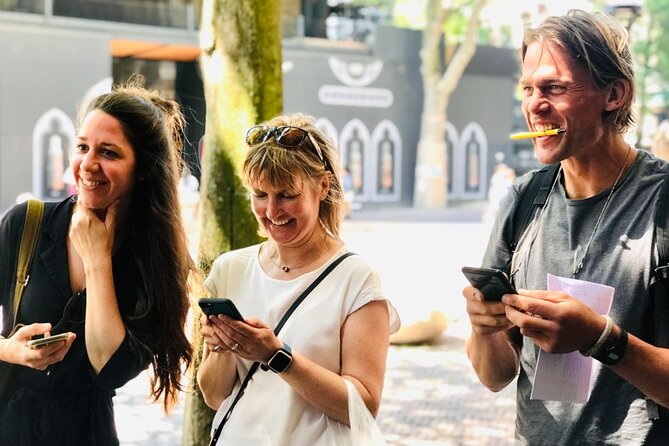
Next you hit St. Veerleplein, a square that’s basically geography in plain sight. On the north side, you see Gravensteen (the Castle of the Counts). The Lieve runs west of the square behind buildings, and the Leie river sits to the south. To the east is Patershol, one of Ghent’s well-known historic neighborhoods.
What makes this stop useful is that the game uses spatial knowledge. Rivers, building lines, and nearby landmarks aren’t just scenery—they’re part of how you interpret the clues. So you’re not just learning facts. You’re building a mental map of the old city.
A small consideration: squares and river-adjacent spots can be breezy and busy at peak times. If you want a calmer puzzle moment, start a bit earlier in the day and give yourselves a minute to find quiet footing before you tap into the next prompt.
Sint-Niklaaskerk: Scheldt Gothic details and a lantern tower
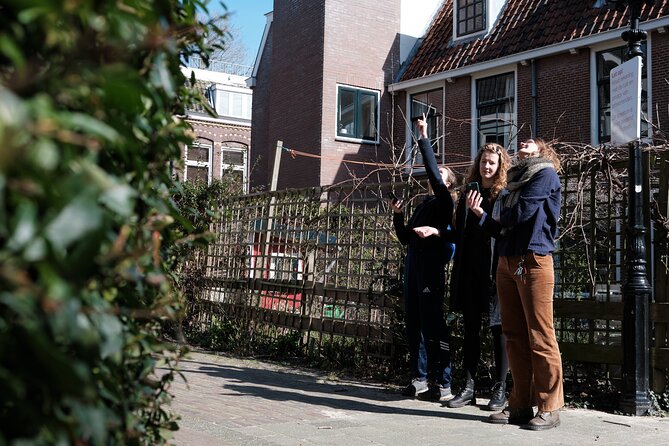
At Sint-Niklaaskerk you’re in Scheldt Gothic territory. The church is dedicated to Nicholas of Myra, and one feature stands out fast: a lantern tower above the crossing. It illuminates the transept and the flying buttresses of the main choir. The tower height is noted as 76 meters, so it’s not subtle.
This is a good stop for groups who like “look closer” moments. When you’re solving puzzles here, the building isn’t just a backdrop—it becomes a source of shapes and positions. If your group enjoys architecture more than museum rooms, this will feel like the right kind of challenge.
Possible drawback: churches can be visually complex. If your team is more about quick answers than observation, the puzzle might feel slower here. That’s not a bad thing—just know what kind of experience you’re signing up for.
Stadshal and Emile Braunplein: modern city design in the historic center
Then you reach Stadshal, the Stadshal van Gent on Emile Braunplein. It’s described as a large open canopy construction, part of the KoBra project, a larger urban development effort in Ghent’s center.
This stop is a reminder that Ghent isn’t only medieval stone. In the game, you get a shift from old forms to a modern urban design approach. And because it’s a puzzle, you’ll be forced to “see” the space instead of just walking past it.
The value here is pacing. After church architecture, it helps to have a newer open structure where the clues can feel less about gothic geometry and more about orientation—how wide the space is, how the surrounding buildings frame it, and what stands where.
Geeraard de Duivelsteen: the devil castle and the trading settlement story
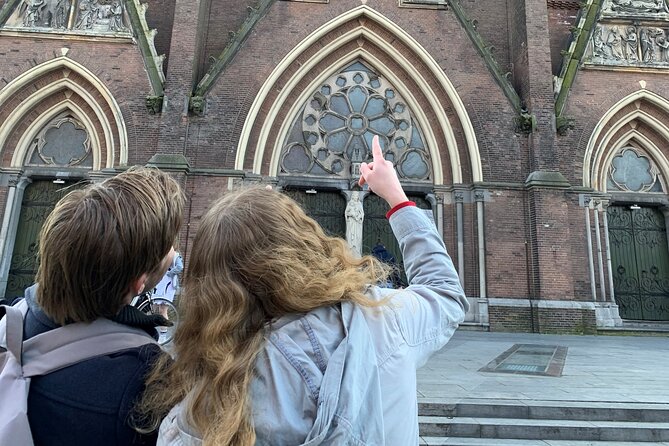
Your next landmark is Geeraard de Duivelsteen, also called the Castle of Gerald the Devil. The name sounds like a legend—and the provided context ties that tone to something practical: it played an important role in the defense of Portus aan de Reep, a trading settlement that stood at the cradle of Ghent’s birth.
This is where the game feels especially clever. Instead of treating “defense” and “trade” like textbook terms, it gives you a place-based hook. The idea is: Ghent grew because of movement and commerce, and this building mattered in protecting that world.
What to watch for: names like devilsteen can make you expect more fantasy details than you’ll actually get. Here, the story is grounded in function and history. So go in with the mindset that you’re solving for meaning, not chasing cinematic scenes.
Bishop’s Palace area near Bisdomplein: authority in stone
Stop six points you toward the Bishop’s Palace of Ghent, described as the administrative seat of the Diocese of Ghent and the residence of the bishop. The current building is associated with the area around Bisdomplein and is protected as a monument.
Even without stepping into interiors, this kind of stop works well in a self-guided puzzle format because it’s all about reading the civic landscape. The game can help you understand why this area feels different from market squares. You’re moving from public trade and community space toward institutional power.
If your group likes to learn the “who ruled here” angle of history, this is a good moment to slow down. Look for the way the buildings and surroundings communicate importance.
St. Bavo’s Cathedral: where the story lands
Finally, you end at St. Bavo’s Cathedral (St.-Baafs cathedral). It’s described as originally a parish church dedicated to John the Baptist. In 942, Transmar, the bishop of Tournai, consecrated it as the Sint-Janskerk.
This is the kind of finish that makes sense for a city game. Big churches often serve as narrative gravity points in walking routes, and St. Bavo’s is one of Ghent’s best-known destinations. Even if your group isn’t chasing every detail of the religious history, the cathedral setting gives a satisfying sense of arrival.
One consideration from an earlier experience account: the ending may feel sudden, with less of a concluding text than some people expect. So if your group likes closure, keep a minute at the end to talk it over—what clue did you think was the key, and what did you miss?
Price and value: $28.66 per group for a 1–2.5 hour phone adventure
The price is listed as $28.66 per group, up to 5 (the experience description also references up to 5–6 players). That’s the first value question to ask: is it cost-effective for your group size?
For one or two people, you’ll be paying a per-group fee for the right to play on your own schedule. For a full small team of friends, it starts to look much better because everyone shares the cost. It’s also not a tour with a guide staffing hours on top of your ticket—you’re buying a route-and-story package you can run at your own pace.
Time-wise, you’re looking at about 1h30 to 2h30 and around 2.5 kilometers total. That’s ideal for a day when you want something more engaging than a standard walking circuit, but you still need the option to wander afterward.
The best value angle is the “attention boost.” If your group tends to read little captions and then forget everything later, a puzzle format can make facts stick—because you’re locating them in the real city while you’re solving.
Who this tour is best for (and when it’s not)
This works well for:
- Groups who like scavenger-hunt style problem-solving with a story
- Friends who want to walk together without a strict pace imposed by a guide
- People comfortable using their phone while walking (and who don’t mind stopping to think)
It’s less ideal if:
- Your group hates puzzles or wants a purely sightseeing experience with no problem solving
- Your phone battery is unreliable, or you don’t have a data plan
- You prefer a long human-led explanation at the end
If you’re traveling as a couple or small group, you’ll probably enjoy the freedom. If you have a mixed group with different stamina levels, the flexibility to pause and resume can help a lot.
Practical tips so you don’t get stuck
A few things will make this run smoother:
- Bring a power bank. A puzzle walk plus photo-taking is a battery tax.
- Do a quick phone check before you start. Make sure you can load the mobile ticket and that data works.
- Use a simple strategy for teams: one person reads the clue, one person scans the surroundings, and one person keeps the route moving when you’re ready.
- Wear comfortable walking shoes. The route is short overall, but you’ll still want sure footing on cobbles and sidewalks.
- Start earlier if you want calmer puzzle moments. You have a wide daily window (see FAQ), but streets feel different as the day warms up.
This isn’t hard travel. It’s just phone travel with real-world walking.
FAQ
FAQ
Where does the tour start and where does it end?
The tour starts at Vrijdagmarkt, 9000 Gent, Belgium and ends at Saint Bavo’s Cathedral (Sint-Baafsplein 1, 9000 Gent, Belgium).
How long does the Ghent game tour take?
It takes approximately 1 hour 30 minutes to 2 hours 30 minutes.
How far do you walk?
The total distance is approximately 2.5 kilometers.
Do I need a smartphone?
Yes. You need a smartphone and you’ll need a mobile data plan.
Can we start the tour at any moment we choose?
Yes. The experience description says you can start your adventure at any moment you choose.
What’s the group size and age guidance?
It’s suitable for a team of up to 5–6 players aged 15 and older. For younger players, supervision is recommended.
Is there admission cost for the stops?
The information provided for the listed stops shows admission ticket free.
What hours is the experience available?
The opening hours listed are Monday to Sunday, 7:00 AM to 11:00 PM.
Can I cancel for a full refund?
Yes. There is free cancellation, and you can cancel up to 24 hours in advance for a full refund.
Should you book this Ghent city game tour?
Book it if you want a light, self-guided way to see Ghent with your brain switched on. The short route, the story-based puzzles, and the mix of medieval squares, Gothic church details, and St. Bavo’s Cathedral make it a smart use of a couple of hours.
Skip it if you’d rather have a classic sightseeing tour with a guide doing all the talking, or if your group is likely to get frustrated without an instant solution. If you’re comfortable with phone-based navigation and you like figuring things out together, this is a solid value at $28.66 per group.