REVIEW · FLORENCE
Florence: Accademia Gallery David Entry & Audio Guide App
Book on GetYourGuide →Operated by Tours About · Bookable on GetYourGuide
Michelangelo’s David is a must-see, and this ticket setup helps you get there fast. You’re walking in with a pre-reserved timed entry, then moving through the museum at your own pace with a POP Guide audio app. The main tradeoff: you have to plan for app access and possible crowd pacing inside.
I like that this visit isn’t only about one statue. You’ll also see unfinished Michelangelo work in the main hall, the Gipsoteca with original plaster models, and Medici-era musical instruments (including Stradivari examples). The drawback to keep in mind is that the skip-the-line effect can shrink when security and entry controls slow things down, and the audio depends on your phone and connection.
In This Review
- Key Points Before You Go
- Accademia in Florence: What This Timed Entry Really Does For You
- Meeting Point on Via Ricasoli: How to Find Your Host Without Stress
- Skip the Ticket Office: Getting In When Crowds Are High
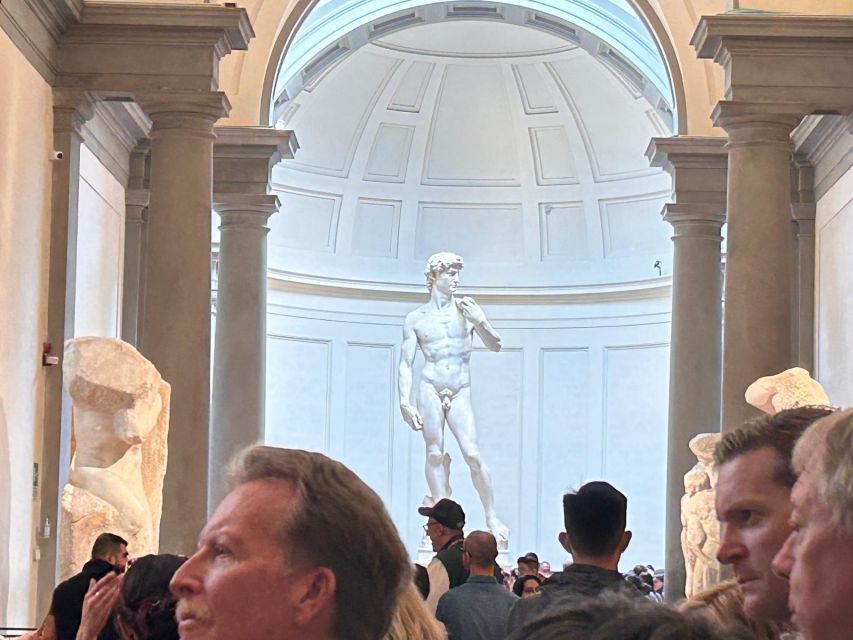
- Michelangelo’s David and the Main Hall: The Part Everyone Remembers
- Gipsoteca: The Plaster-Model Section That Makes Art Feel Real
- Medici Musical Instruments (Including Stradivari Pieces): Unexpected and Worth It
- Painting Galleries: Medieval and Renaissance Works (Giotto, Botticelli, and More)
- Top Floor Altarpieces: The Finish That Feels Like a Payoff
- Audio Guide App Reality Check: POP Guide on Your Phone
- Timing, Walking, and Heat: How to Survive a Smooth Florence Visit
- Price and Value: Is $38 Worth It?
- Who This Experience Fits Best (And Who Might Want Another Option)
- Should You Book This Accademia Entry?
- FAQ
- How long does this Accademia Gallery experience last?
- Does the ticket include the audio guide app?
- Are headphones included?
- Do I need internet access for the audio guide?
- Where do I meet the host and exchange the voucher?
- Is it wheelchair accessible?
- Are pets or large bags allowed?
- Is there a discount for kids?
Key Points Before You Go
- Timed entry + a separate entrance: less time wrestling with the ticket office chaos.
- David and unfinished sculptures: you see both the finished masterpiece and the studio-side story.
- Gipsoteca plaster models: original working forms by 19th-century Florentine sculptors, not just copies.
- Medici musical instruments: including original pieces from the Medici collection (and multiple Stradivari instruments).
- Audio guide reality check: POP Guide runs on your smartphone, and headphones are not included.
Accademia in Florence: What This Timed Entry Really Does For You
If you’re headed to Florence for art, the Accademia Gallery is one of the high-speed stops. Michelangelo’s David draws huge crowds, and the museum can get strict about entry times. This experience is built to reduce the pain: you arrive, trade your voucher for a physical ticket, and use a special entrance so you’re not stuck in the main ticket line.
The value here is mostly practical. For about $38 per person, you’re paying for saved time and smooth admission, plus an audio guide app that helps you make sense of what you’re seeing. If you already know a few artists and want to explore independently, that combo can be a sweet deal.
Still, don’t assume everything will be perfectly frictionless. Security and crowd management can delay entry slightly when the museum limits how many people are inside. One reviewer even described the outside wait as hot and tiring, even though the overall visit was worth it. Plan for some waiting, just not the hours-long ticket-office slog.
You can also read our reviews of more tours and experiences in Florence.
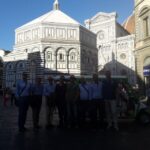
Meeting Point on Via Ricasoli: How to Find Your Host Without Stress
The meeting point is very specific, which matters when you’re in a busy part of Florence. You’ll meet your host in front of the Carrefour express supermarket at Via Ricasoli 115, with the red-number spot. Look for staff holding a white flag that says ENJOY ROME.
Here’s the move that keeps this day calm: arrive a little early. Multiple reviews praised the staff for being on time and for making directions easy, but the people who reduced stress did it by showing up ahead of their start time. If you arrive right on the dot, you’re more likely to be rushed while you’re downloading the app and getting logged in.
Also, note what your plan needs to include before you get there. The POP Guide instructions say you should download the app before arriving, and that at the meeting point, staff provide login credentials. In real life, that can go smoothly—or it can feel stressful if you’re missing data, your signal drops, or your phone battery is low.
Skip the Ticket Office: Getting In When Crowds Are High
This is the core reason to book a timed entry package like this. The Accademia is famous for lines, and even when you prebook, the entrance can still get chaotic. The good news: this ticket uses a separate entrance intended to shorten the process.
That said, treat “skip the line” as “skip the longest main line,” not as “zero waiting.” A couple of people reported line backups even with a prebooked ticket, and at least one mentioned waiting around 30 minutes in total. The museum also controls access by the number of people inside, which can mean your scheduled entry gets nudged back.
If you want your best odds:
- Go early and stay patient near the entrance.
- Keep your phone charged so you’re not scrambling for the audio login.
- Bring your own headphones (they’re not included).
Michelangelo’s David and the Main Hall: The Part Everyone Remembers
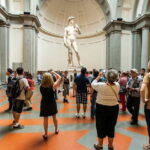
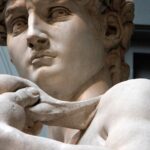
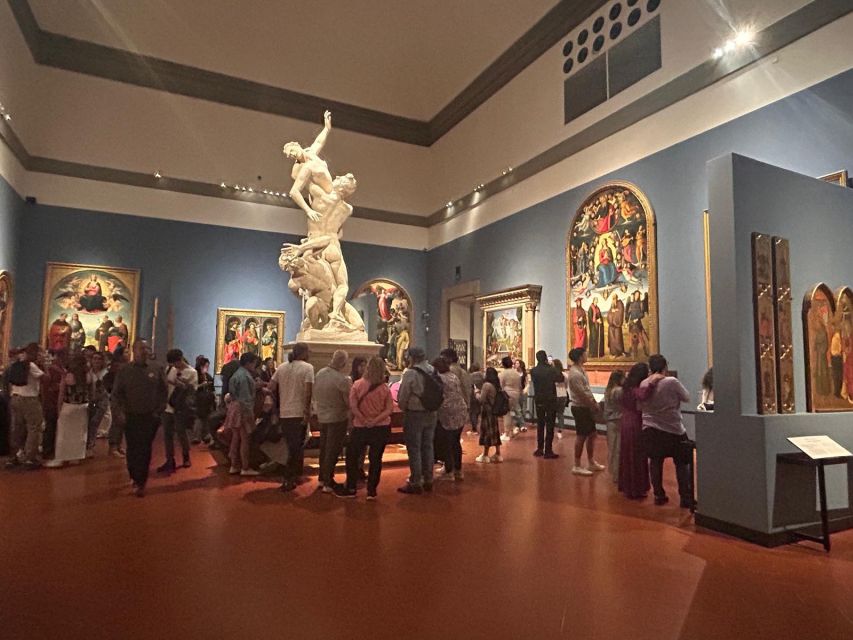
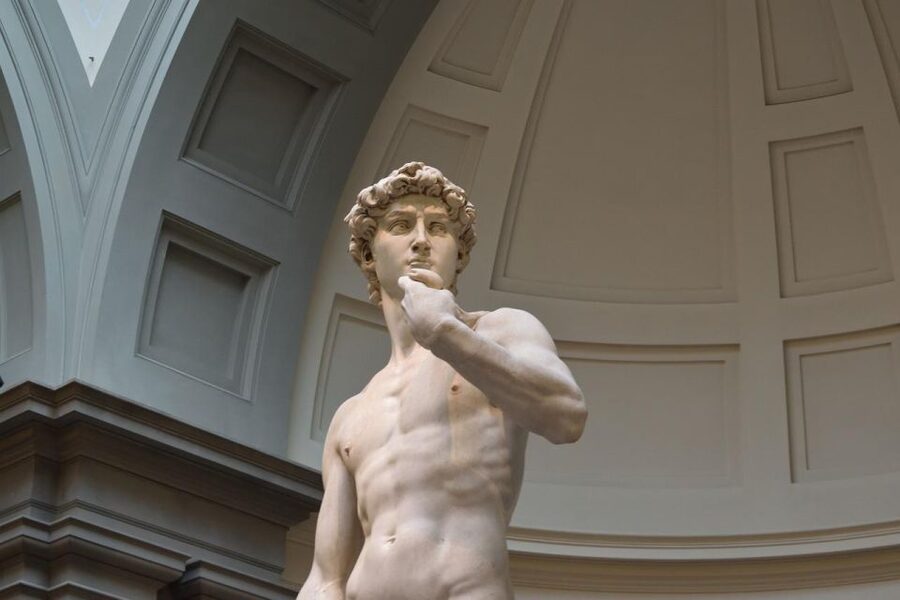
The highlight is obvious for a reason. Michelangelo’s David is the signature moment, and seeing it in person changes the way you think about sculpture. It’s not just “big.” It’s tense, detailed, and sharply human—especially when you’re close enough to notice the craft in the surface.
In the main hall, you don’t only get the finished David. You can also see Michelangelo’s unfinished works. That’s a powerful contrast because it shows you the process: the idea of a statue isn’t born fully formed—it gets carved, revised, and corrected. If you only see the finished masterpiece, you get a final product. If you also take in the unfinished pieces, you get the studio logic behind the magic.
Practical note: this is also where crowds concentrate. Move at a steady pace, pause when you want detail, and don’t get stuck because you’re waiting for the perfect photo angle. In a timed, high-demand museum, your energy matters more than capturing every angle.
Gipsoteca: The Plaster-Model Section That Makes Art Feel Real
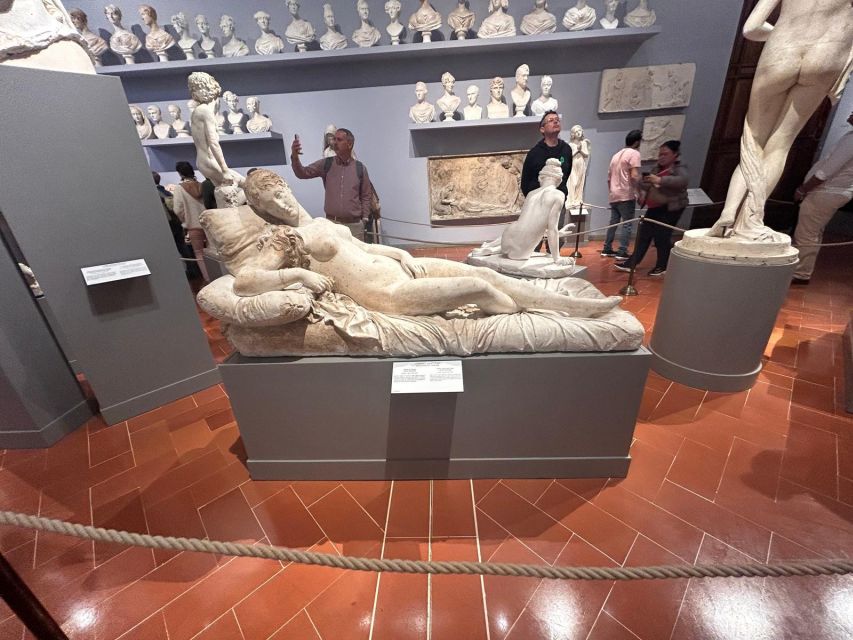
After David, the museum shifts into the kind of art history you can actually picture. The Gipsoteca is where you’ll see original plaster models created by 19th-century Florentine sculptors. These are not modern-looking “teaching aids.” They’re part of the sculptural tradition that connects skill, restoration, and how artists study form.
This stop is valuable for two reasons:
- Plaster models help you understand how forms are planned and refined.
- It keeps the visit from turning into a single-statue sprint.
If you’re the type who likes to know how things are built—not just what they look like—this section will feel like the museum’s secret engine.



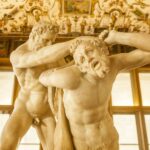
Medici Musical Instruments (Including Stradivari Pieces): Unexpected and Worth It
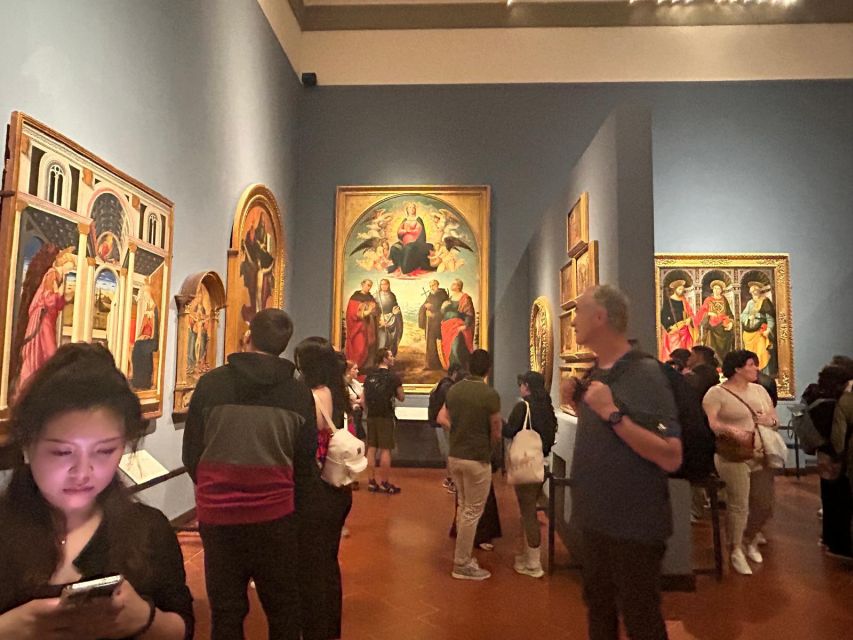
Most people come for sculpture and paintings, then get pleasantly surprised by the museum’s musical instrument collection. You’ll see original instruments from the Medici collection, including three Stradivari instruments.
It’s a clever contrast. Art galleries can sometimes feel one-note—visual only. Instruments introduce another sense of cultural life: patronage, craftsmanship, and the broader court world around Florentine art. Even if you’re not a classical music superfan, the existence of these instruments inside an art museum makes the bigger point: Renaissance art wasn’t made in isolation. It sat inside a whole ecosystem of talent and patronage.
If you want a small strategy, use this stop to slow down. It’s a good moment to reset before you head into the painting galleries.
Painting Galleries: Medieval and Renaissance Works (Giotto, Botticelli, and More)
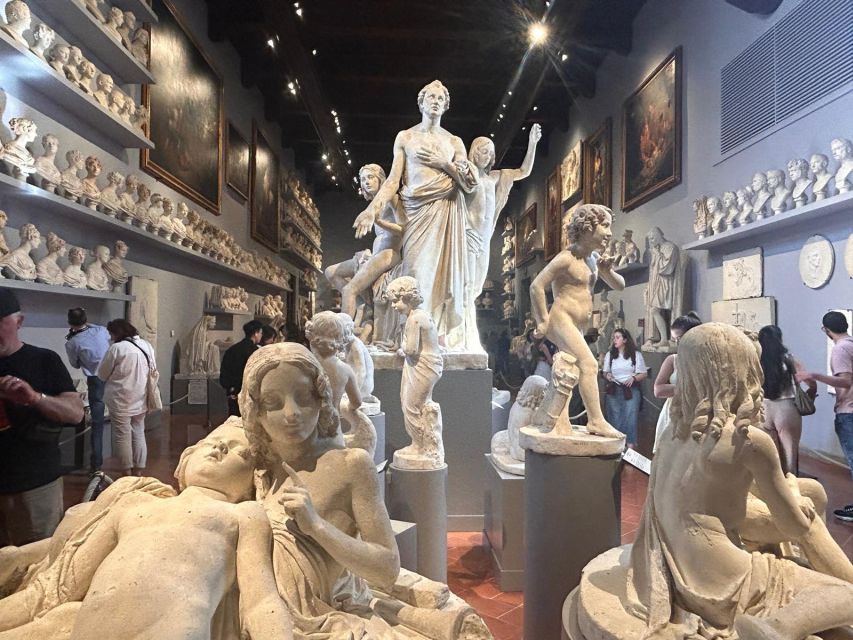
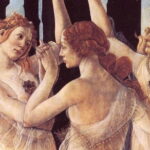
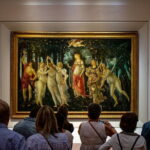
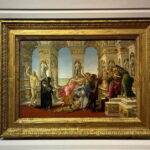
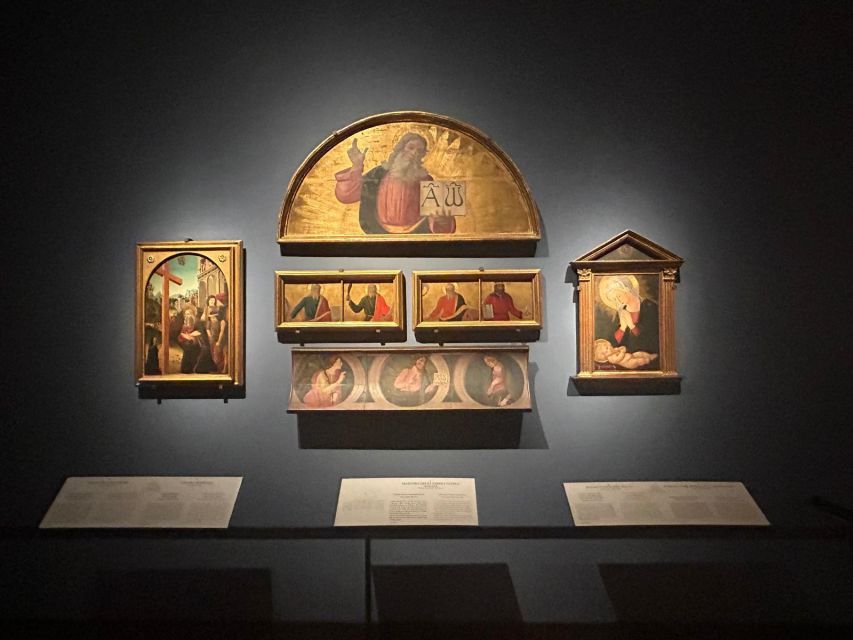
Now you shift from sculpture to paintings. The museum’s painting galleries focus on Medieval and Renaissance-era masterpieces, with references to artists like Giotto and Botticelli.
This matters because it shows change over time. Medieval painting tends to feel more symbolic and structured. Renaissance painting pushes toward realism, perspective, and human detail. You don’t need to be a scholar to feel the difference—you just need time to look.
For me, the key is not trying to “finish” the paintings. Instead, pick a couple of works per room and read the audio context carefully. The POP Guide app is designed for this kind of pacing, and a good audio track can help you notice what you’d otherwise miss—why a figure is posed a certain way, what themes are being repeated, or how style shifts across rooms.
Top Floor Altarpieces: The Finish That Feels Like a Payoff
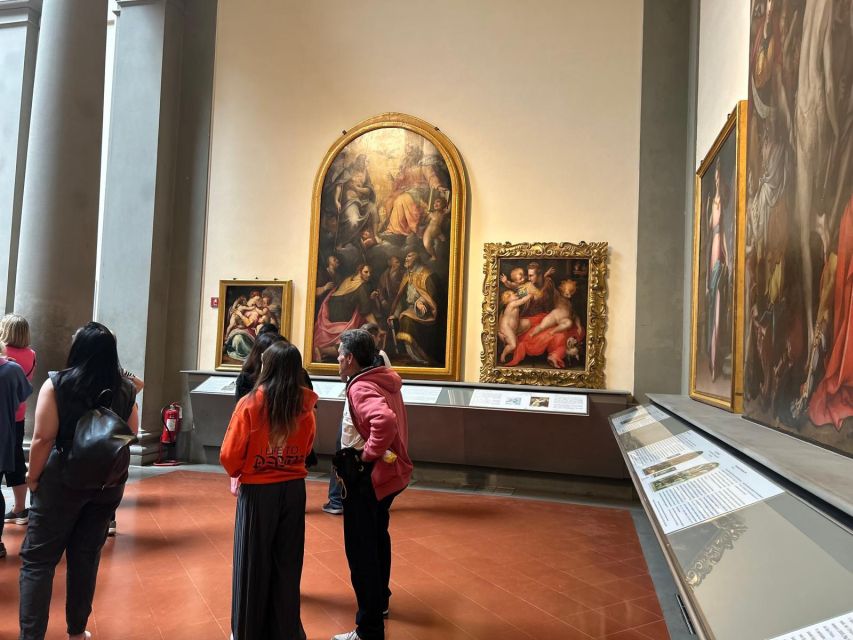
On the way out, you’ll reach the top floor to see altarpieces. This is where the museum often feels most dramatic, because altarpieces were built to be seen with reverence and attention. Even if religious art isn’t your default interest, altarpieces tend to reward you with composition and detail.
If crowds are heavy, the top floor can help because it’s often less frantic than the David area. Still, manage your expectations: you’re in a timed-entry museum, and you’ll likely move through this in a flow with others. Your best bet is to stop longer where the audio guide tells you what to look for.
Audio Guide App Reality Check: POP Guide on Your Phone
The included POP Guide audio guide app is a plus—if you’re set up for it. You get audio programming (and in some situations, the host staff may help with login), but you need:
- a charged smartphone
- internet access for downloading and/or using the guide
- your own headphones (not included)
One reviewer flagged that without data connection, the audio could be an issue. Another reviewer said the audio didn’t work offline even though expectations were different. Translation: treat it as an on-phone experience that depends on your device setup, not as a guaranteed offline player.
One practical tip from the real-world feedback: when people struggled with the app at the entrance, staff or guides sometimes provided wifi access, which helped them get the program running. Since that may not be consistent for every group, I’d still plan to have your own working data plan or connectivity.
Also, the app map can be confusing. If you’re the type who gets lost easily, you’ll want to keep an eye on room flow and signage, not just the on-screen map.
Timing, Walking, and Heat: How to Survive a Smooth Florence Visit
This museum involves walking and concentrated viewing. Even when you’re moving on schedule, expect to stand, look up close, then relocate. One reviewer specifically reminded people to bring water and noted the heat can be intense.
That’s not a small detail. If you arrive under-prepared, the museum becomes harder to enjoy, especially when you’re waiting outside before entry.
My advice:
- Bring water, even if you think you’ll be fine.
- Wear shoes that can handle repeated stops.
- Plan your day so the Accademia isn’t the one activity that gets you rushed.
Price and Value: Is $38 Worth It?
At $38 per person for entrance plus the POP Guide app, the value comes down to what you want most from the day: saved time and an easy self-guided flow.
If you go without a timed setup, you risk wasting the best part of your morning on lines. Multiple people explicitly praised the skip-the-line concept as a headache-saver. In a high-demand museum like the Accademia, that alone can justify the price.
You also get more than the David. The ticket leads you through:
- main hall (including unfinished works)
- Gipsoteca
- Medici instruments with Stradivari pieces
- painting galleries with major Renaissance names
- top-floor altarpieces
If you want a fully guided, licensed art-history tour inside every gallery, you may still feel the audio app is basic compared with a real-person guide. But if you like your independence while still having context, this package can be a very workable middle ground.
Who This Experience Fits Best (And Who Might Want Another Option)
This experience fits best if you:
- want a fast, scheduled entry into a major Florence museum
- enjoy art at your own pace
- can handle smartphone audio (and have headphones)
- like a mix of sculpture, paintings, and surprising side collections like instruments
You might want to look at a different setup if you:
- don’t want to rely on mobile data/internet for the audio
- hate app-based navigation and troubleshooting
- expect a hands-on guide inside every room (this experience focuses on entry + audio)
Should You Book This Accademia Entry?
Yes, I’d book it if your priority is getting into the Accademia Gallery without spending your morning in lines. The timed ticket setup and separate entrance are the right kind of practical value, especially when you also plan to use the POP Guide audio.
Book it with a small readiness plan: bring your own headphones, keep your phone charged, and download or prepare for the app before you arrive. If you do that, you’ll spend your time on art—not on logistics. And when you reach David, you’ll understand why people build a whole Florence day around this statue and the works around it.
FAQ
How long does this Accademia Gallery experience last?
It’s listed as a 1-day visit, with timed starting points based on availability.
Does the ticket include the audio guide app?
Yes. The experience includes the POP Guide audio guide app.
Are headphones included?
No. You should bring your own headphones.
Do I need internet access for the audio guide?
The important info says to bring internet access, and one review mentioned audio download issues without data connection.
Where do I meet the host and exchange the voucher?
Meet in front of Carrefour express, Via Ricasoli 115, at the red number. Look for a staff member holding a white flag that says ENJOY ROME.
Is it wheelchair accessible?
Yes, the experience is listed as wheelchair accessible.
Are pets or large bags allowed?
No. Pets are not allowed, and luggage or large bags are not allowed.
Is there a discount for kids?
For the discounted ticket, visitors aged 6–17 need to present valid photo ID with their birth date. Without it, they have to buy the full adult ticket.