REVIEW · AMSTERDAM
Cursed Houses of Jordaan: Self-Guided Mystery Walk in Amsterdam
Book on Viator →Operated by Questo · Bookable on Viator
One phone. One story. A string of short puzzles that lead you through the Jordaan at your own pace. I like that Cursed Houses of Jordaan turns Amsterdam’s streets into a guided outing without feeling like a rigid tour, and I also like the crafted narrative starring Lysa Jansen with phone directions that keep you moving.
The best parts are practical: you get a walkable route through major and lesser-known spots, and the game structure gives you a reason to stop and look closely—especially around the places tied to the story like Anne Frank memorial sights and the small, specific streets of the neighborhood. One caveat: the whole experience runs on your phone, so if the app struggles, you’ll feel it fast.
In This Review
- Key Highlights at a Glance
- A Phone-Run Mystery Walk Through the Jordaan
- Price and Value: Is $8.70 a Good Deal?
- How the App-Based Clues Actually Run (and What to Do If It Fails)
- Stop-by-Stop: Westerkerk to Bloemgracht in About Two Hours
- 1) Westerkerk (Westertoren) – Start with the first clue
- 2) Anne Frank Monument – The story turns personal
- 3) Prinsengracht 70 – Study and decide
- 4) Noordermarkt – A lively square moment
- 5) Prinsengracht 2 – Follow directions precisely
- 6) Brouwersgracht – Pause longer if you want
- 7) Het Raepenhofje – Another chance to slow down
- 8) Lindengracht – Keep exploring at your speed
- 9) Karthuizersstraat 61 – View and continue
- 10) Westerstraat – The miniature houses and story payoff
- 11) Bloemgracht – Finish the game
- What Makes This Experience Feel Different (Even If You Go Fast)
- Walking Comfort Tips for Jordaan’s Streets
- Who Should Choose This Self-Guided Mystery Walk?
- The Real-World Trade-Offs: Difficulty and App Reliability
- Should You Book Cursed Houses of Jordaan?
- FAQ
- Where does Cursed Houses of Jordaan start and end?
- How long does the self-guided walk take?
- What does it cost?
- What app do I need to play?
- Do I need tickets to attractions along the route?
- Is it free to cancel?
Key Highlights at a Glance

- Phone-led mystery game (Questo app) with step-by-step directions
- Jordaan route in 1.5 to 2 hours, from Westerkerk to Bloemgracht
- Story beats at multiple famous and quieter streets, including Prinsengracht and Westerstraat
- Designed stops where you can pause longer, not just a quick pass-through
- Hands-on features tied to the route, like the story of the 7 miniature houses on Westerstraat
A Phone-Run Mystery Walk Through the Jordaan
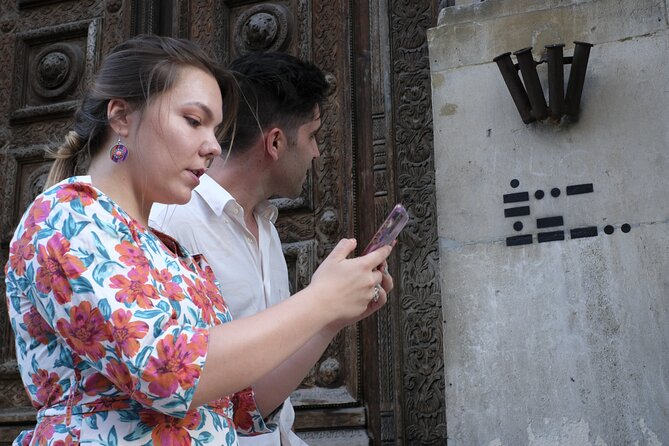
This isn’t a “sit and listen” tour. It’s a self-guided Amsterdam adventure where you solve challenges on your phone and follow the next directions the app gives you. The game is built around a storyline: Lysa Jansen finds intriguing postcards, and as you work through the prompts, the narrative carries you from one stop to the next.
What I like for your planning is how simple the format is. Each location is paired with a clue and a task, then you walk to the next spot. It’s paced for real street time, not just standing around. And because you can keep moving at your own speed, you’re not stuck waiting for a slow group or getting rushed by a tight schedule.
You’ll also notice the route blends the big names with the less obvious ones. You’ll pass through areas tied to major landmarks and also enjoy side streets where the neighborhood texture shows up—small canals, bridges, and shopfronts that make the Jordaan feel like a real place, not a theme park.
The major consideration is the dependency on the app. In the feedback I saw, at least one person had trouble getting the game to function because the app froze and the game wouldn’t progress normally. If your phone is low on battery or you’re traveling with weak signal, I’d treat that as a real factor and plan accordingly.
You can also read our reviews of more tours and experiences in Amsterdam.



Price and Value: Is $8.70 a Good Deal?
At $8.70 per person, this sits firmly in the budget-friendly category. The trick is understanding what you’re paying for: not a guide’s time, not attraction entry, and not a classic guided lecture. You’re paying for a route-based game system—a phone app with a story and directions—that lasts about 1 hour 30 minutes to 2 hours.
For a lot of people, that’s the value sweet spot. You get a structured way to explore Amsterdam that’s still flexible. And because it’s mobile-ticket based, you don’t need to stand in line for entry to “start” the experience. The experience information also notes that you don’t need admission tickets to complete it.
Where the value can shift is how you feel about puzzles. One piece of feedback described the questions as repetitive and the challenges as not challenging enough, with an overall vibe of “cheap, just ok.” If you’re the type who wants brain-burn puzzles, you might end up walking more than solving. If you like light mystery play that keeps you moving through a neighborhood, the setup makes sense.
Also worth noting: the format is a private activity for your group, so you won’t be squeezed into a large tour cluster. And if you’re traveling in a group, the listing mentions group discounts, which can make the price even easier to swallow.
How the App-Based Clues Actually Run (and What to Do If It Fails)
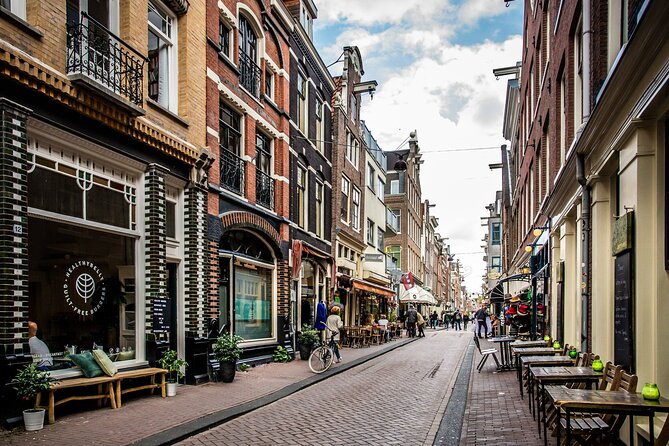
After booking, you receive an email with instructions to download and play the game on your phone, using the Questo app. The game gives you clue prompts and then sends you to the next stop with exact directions.
In theory, it’s smooth: you follow the story beat, read your clue, answer the prompt, and then the app tells you where to go next. The experience even includes 24/7 customer support, which matters if you hit a glitch.
In practice, the feedback includes a harsh downside: one person reported issues getting the game unlocked, the app repeatedly freezing and needing to restart, and then receiving unhelpful responses from support. That’s not something you can ignore.
So here’s the practical way to protect your afternoon:
- Arrive with your phone ready to go, and don’t treat charging as optional.
- Keep a spare plan for getting oriented around the route. Even if the app misbehaves, you’re still walking through a classic Amsterdam grid of canals and streets.
- If the game won’t load, use the provided support pathway fast rather than trying random restarts for too long.
One more detail that can help: the recommendation is that each user purchases a ticket for the optimal experience, but multiple people can share a phone. That’s useful if you’re traveling as a family or a small group and want to avoid each person needing their own device.
Stop-by-Stop: Westerkerk to Bloemgracht in About Two Hours
The itinerary is built from short segments, with many stops designed as about 5 minutes each. A few locations explicitly allow you to linger as long as you want before continuing. Here’s what to expect from each step, and why each location is worth your attention.
1) Westerkerk (Westertoren) – Start with the first clue
You begin at Westerkerk, near Westertoren, where the first clue starts the storyline and points you toward the next stop. I like this start because Westerkerk is a strong “anchor” landmark—easy to orient around, and it gives your walk an official beginning.
Watch-out: you’ll want to be ready to scan and respond immediately. This first step sets the rhythm for the whole game.






2) Anne Frank Monument – The story turns personal
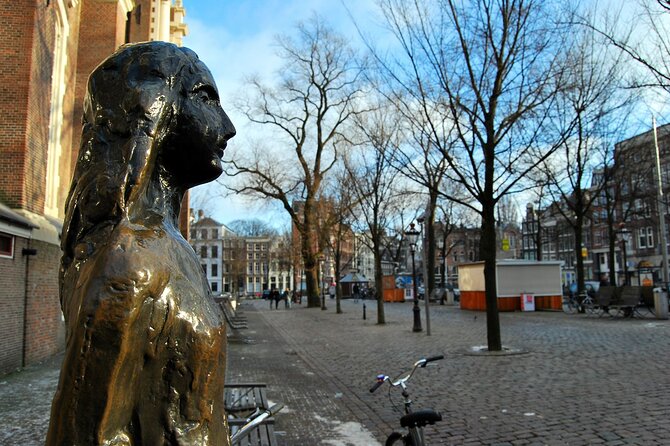
Next you’ll find the Anne Frank Monument, where you get a clue to solve the next challenge and move forward. Even if you know Amsterdam’s Anne Frank story already, seeing it in the neighborhood context helps you feel how the city’s layers sit side by side.
The clue-and-move structure keeps you from lingering too long if you’re short on time. If you want deeper reflection, you may want to slow down after the game instruction finishes.
3) Prinsengracht 70 – Study and decide
At Prinsengracht 70, you’ll be asked to look closely at the next clue. Prinsengracht is one of Amsterdam’s signature canals, and the game nudges you to pay attention to the exact spot rather than just admire the view from the bridge.
This segment works well if you like puzzles where the answer depends on reading what’s in front of you.
4) Noordermarkt – A lively square moment
The stop at Noordermarkt gives you the next clue to unlock the story’s next part, and you’ll keep your pace moving through the square area. Noordermarkt is one of those places where Amsterdam street life feels real—shops, small streets, and people going about their day.
The practical benefit: this is a good “reset stop” where you can glance around, grab a quick drink later if you need it, and then head back into the game.
5) Prinsengracht 2 – Follow directions precisely
At Prinsengracht 2, you study the clue and get correct directions to the next location. This is the kind of stop where the app’s directions matter, because small changes in street position can shift what you see.
If you’re the type who dislikes second-guessing directions, pay attention to the phone guidance carefully here.
6) Brouwersgracht – Pause longer if you want
You’ll receive a clue at Brouwersgracht, and this stop specifically notes that you can stop for as long as you like and continue at your own pace. That’s great if you want to linger near canal-side views or simply take a breath in a quieter pocket of the Jordaan.
In a self-guided outing, these flexible moments are gold. They let the walk feel like a stroll, not a checklist.
7) Het Raepenhofje – Another chance to slow down
Next is Het Raepenhofje, again with the option to take more time before continuing. Courtyard or hofje-style spaces (when you can find them on foot) often reward calm looking—doors, passages, and tucked-in architecture that you miss when you rush.
Even without extra time, the stop gives you a story reason to pay attention to the area, not just pass it.
8) Lindengracht – Keep exploring at your speed
At Lindengracht, you receive another clue and can continue exploring at your own pace. This is a good stretch for anyone who likes canal views but doesn’t want a “photo tour” vibe.
If the app is running smoothly, this segment keeps momentum. If you’ve had trouble with the app earlier, it’s also a good point to check if it’s behaving before you move deeper into the final stretch.
9) Karthuizersstraat 61 – View and continue
At Karthuizersstraat 61, you enjoy the view and keep going around a place referenced as Coöperatieve Vereniging. You’ll be guided by the clue structure, but this stop is described as a “look, then continue” moment.
I like this kind of segment because it reduces the pressure to solve something every minute. Even if your brain is tired, you can still enjoy the walk.
10) Westerstraat – The miniature houses and story payoff
Then comes Westerstraat, where the story’s final clue for the walk is tied to your next steps. This stop is a highlight: the experience calls out the story of the 7 miniature houses on Westerstraat, which is exactly the kind of detail you might otherwise miss in a casual walk.
If you enjoy small architectural curiosities, you’ll likely enjoy this final “payoff” section more than the earlier generic canal segments.
11) Bloemgracht – Finish the game
You finish at Bloemgracht, where both the story and the city exploration game end. The final stop is short, about 5 minutes, but it’s the kind of ending that feels clean: you reach a natural endpoint, rather than wandering without closure.
If you still have energy, you’ll already be oriented to continue on your own through the Jordaan.
What Makes This Experience Feel Different (Even If You Go Fast)

Plenty of Amsterdam walking routes exist. What makes this one different is the blend of:
- a fictional storyline with a named main character (Lysa Jansen),
- a phone-led challenge format, and
- a route that hits multiple street-level sights without requiring entry tickets.
The info also points to a couple standout themed elements:
- the 7 miniature houses on Westerstraat
- a stop connected to one of the oldest cafes in Amsterdam
Even if you’re not 100% sure what you’ll see at each exact spot, that story framing gives you a reason to look closely at what’s in front of you. That’s the practical win: you end up walking the same streets you would anyway, but with sharper attention.
Still, keep your expectations realistic. One review called it too easy, with challenges that feel similar. That doesn’t make it a bad product—it just means it leans toward casual play, not hard-core puzzle solving.
Walking Comfort Tips for Jordaan’s Streets
Because the experience is mostly short segments strung together, comfort matters more than you might expect. Plan on:
- wearing shoes that work well on typical Amsterdam sidewalks,
- checking your phone brightness so you can read clues easily,
- keeping your pace steady so you don’t arrive at each stop confused about what to do next.
Also, since you’re moving through canals and crossings, don’t let the game make you rush decisions in traffic-heavy areas. Treat the phone prompts as “check in,” not “run now.”
Who Should Choose This Self-Guided Mystery Walk?

This is a good fit if you:
- like exploring neighborhoods on your own schedule,
- enjoy light mystery-style prompts,
- want structure without a group guiding you every step,
- value a low-cost activity that lasts about two hours.
It may be less satisfying if you:
- need deep, difficult puzzles to stay interested,
- get frustrated quickly by apps that freeze or fail to progress,
- prefer a human guide to interpret what you’re seeing.
If your travel style is “I want to learn, but I also want freedom,” this lands in the middle.
The Real-World Trade-Offs: Difficulty and App Reliability
Let’s talk about the two big themes that show up in the available feedback.
First: the difficulty level. One reviewer felt the questions were too easy and repetitive. If you’re someone who wants escalating challenges, you might finish the game thinking you mostly took a walk with occasional prompts.
Second: app performance. Another reviewer had a much bigger issue: they couldn’t get the experience to work properly, the app froze, and they had to restart repeatedly. They also felt the helpdesk responses weren’t kind or useful enough.
So you should book with your preferences in mind. If you’re comfortable troubleshooting phone apps while traveling and you’re okay with puzzles that don’t feel like a brain test, this can be a fun, low-cost way to see the Jordaan. If app reliability is a dealbreaker for you, you may want to consider alternatives that don’t depend on the phone.
Should You Book Cursed Houses of Jordaan?
I’d recommend booking if you want an easy-to-manage Amsterdam outing that guides your feet through the Jordaan with a story you can follow on your phone. At $8.70, it’s a strong value for the time, especially since admission tickets aren’t required for the route.
I would think twice if you rely on technology for everything and you’re sensitive to frustration from app crashes. The negative feedback about the game not working properly is serious, and that can ruin a two-hour plan quickly.
My best-fit summary: casual puzzle lovers and neighborhood walkers will likely enjoy this. People chasing difficult mystery-solving or seamless app performance should look closely before committing.
FAQ
Where does Cursed Houses of Jordaan start and end?
It starts at Westerkerk (with the meeting point listed as Prinsengracht 279, 1016 DL Amsterdam) and ends at Bloemgracht.
How long does the self-guided walk take?
The experience takes about 1 hour 30 minutes to 2 hours.
What does it cost?
The price is $8.70 per person.
What app do I need to play?
You’ll use the Questo app on your phone. After booking, you’ll get an email with instructions to download and play.
Do I need tickets to attractions along the route?
No. The experience notes that entry tickets to attractions are not needed to complete the walk.
Is it free to cancel?
Yes—free cancellation is available. You can cancel up to 24 hours in advance for a full refund.
If you want, tell me when you’re going (morning or evening) and whether you’re traveling solo or as a group, and I’ll help you judge if this format matches your pace.