REVIEW · AMSTERDAM
Self-Guided Audio Tour of The Red Light District
Book on Viator →Operated by SOUNDWALKRS · Bookable on Viator
The Red Light District has a second story. This self-guided audio walk lets you explore Amsterdam’s notorious streets with offline chapters, creative sound design, and a pace you control.
I also like the way it pairs street-level scenes with real landmarks so you’re not just listening to rumors. You’ll finish with a route that threads through churches, canals, and quirky museums.
Here’s the main catch: some stops are museums and you may need separate admission tickets, plus you’ll rely on your phone and headphones since those aren’t included.
In This Review
- Key Highlights at a Glance
- A Self-Guided Red Light District Story With Control in Your Hands
- Price and Value: Is $6.72 Really Enough?
- What You Need (and Don’t) Before You Start
- Where You Start and End: Finding the Route Without Stress
- Basilica of Saint Nicholas to Dam Square: The Neighborhood’s Jolt of Meaning
- The Erotic-Themed Museum Stop: Context Over Shock
- Canals as a Reset Button: Amsterdam Looks Better Than the Headlines
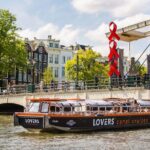
- MX3D Bridge: A Modern Detour You’ll Actually Feel
- A 17th-Century House and an Orate Catholic Church Hidden Above
- The Souvenir Stop: A Small Choice That Makes the Walk Stick
- Museums With Kitschy Oddities: The Weird Stuff That Completes the Story
- How to Keep It Respectful and Still Enjoy the Walk
- Sound Effects, Scripts, and the Offline Advantage
- Should You Book This Self-Guided Red Light District Audio Tour?
- FAQ
- How long is the self-guided audio tour?
- Is the tour offered in English?
- Does it work offline?
- What does my $6.72 ticket include?
- What isn’t included?
- Where do I start the tour?
- Where does the tour end?
- Is this private, and can I cancel?
Key Highlights at a Glance
- Offline audio + maps: no expensive roaming needed, and you can keep going at your own pace
- Fun scripts and sound effects: the tone stays lively, not dry
- Landmark stops: Madame Tussauds Amsterdam near Dam Square and the Royal Palace area
- Modern-meets-old moment: the MX3D bridge, a fully functional stainless-steel bridge
- Contrasts everywhere: Roman Catholic churches, canal views, and erotic-themed museums in the same loop
- Only your group participates: private vibe, no random strangers tagging along
A Self-Guided Red Light District Story With Control in Your Hands
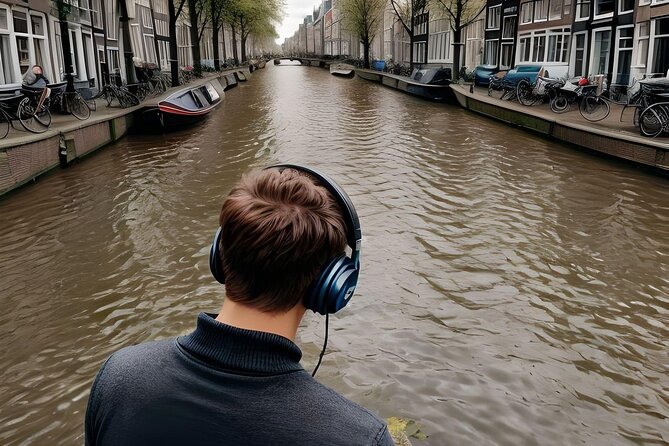
Amsterdam’s Red Light District can feel like a blur when you’re walking with a crowd. This format is different. You get an audio story that moves with you, but you set the pace—stop when you want to read a building’s details, walk on when you want momentum.
What I like most is the attitude of the narration. The stories aim to give context and separate fact from the easiest myths. In practice, that means you’re more likely to notice the neighborhood as a real Amsterdam neighborhood, not just a headline.
The tour is built around chapters, so your experience doesn’t hinge on a single guide at a single time. That matters if you like to wander, pause for photos, or simply want to hear the story when you’re standing in the right spot.
You can also read our reviews of more tours and experiences in Amsterdam.


Price and Value: Is $6.72 Really Enough?
At $6.72 per person, you’re not paying for museum entry or transportation. You’re paying for the structure: a mobile ticket, an audio experience in English, and the support tools (offline chapters, maps, tips) that help you move through an area that can be confusing.
So the value depends on what you bring to the table. If you’re the type who wants the area explained while you walk, this is a budget-friendly way to do it. If you’re expecting every stop to be fully ticketed and included, you may feel the limit quickly—because monument admissions are not included.
The good news: you can still get a strong “story experience” even if you skip any paid museum entries. The audio is designed to connect the dots across streets, architecture, and canals, so you’re not wasting your time.
What You Need (and Don’t) Before You Start
This is an easy tour on paper, but phone reality matters in Amsterdam. The essentials you should have with you are:
- A smartphone (the tour uses a mobile ticket and an app experience)
- Headphones (not included)
- Battery life you can trust
Not included also means no snacks and no transport. You’ll want to plan your day so you’re not starving in the middle of an audio chapter.
Also note the practical detail: the meeting instructions say to locate yourself at the canal shore at the start point. That’s a classic Amsterdam move—streets can shift quickly, but the waterline helps you orient fast.
Where You Start and End: Finding the Route Without Stress
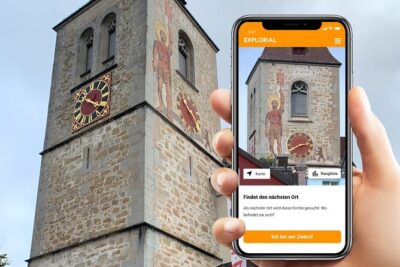
You begin at Basilica of Saint Nicholas (Prins Hendrikkade 73, 1012 AE Amsterdam). From there, your walk unfolds through Red Light District sights and adjacent landmarks, and you end at Sofitel Legend The Grand Amsterdam (Oudezijds Voorburgwal 197, 1012 EX Amsterdam).
The endpoint matters more than you’d think. A lot of self-guided walks dump you somewhere inconvenient. Here, ending near a major hotel area puts you in a more straightforward place to continue exploring or head back.
You’ll also be glad to hear it’s near public transportation, and the experience allows service animals. Most travelers can participate, so you’re not likely to run into hidden barriers from a logistics angle.
Basilica of Saint Nicholas to Dam Square: The Neighborhood’s Jolt of Meaning
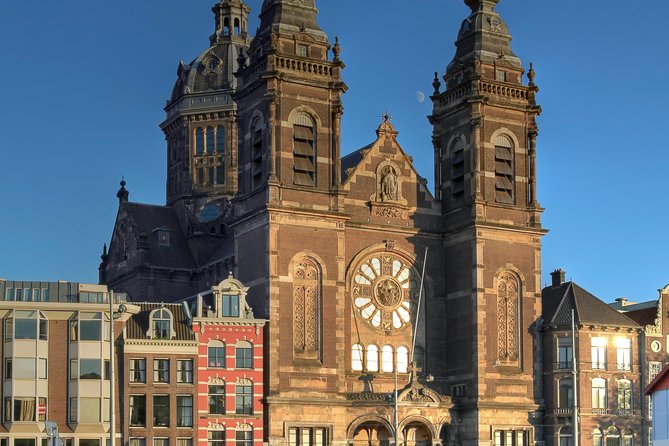
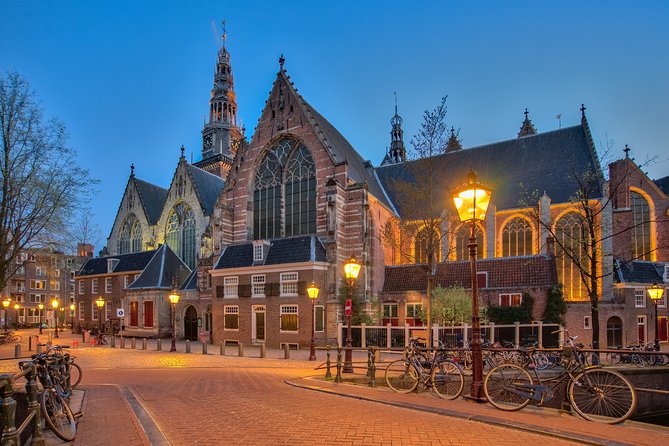
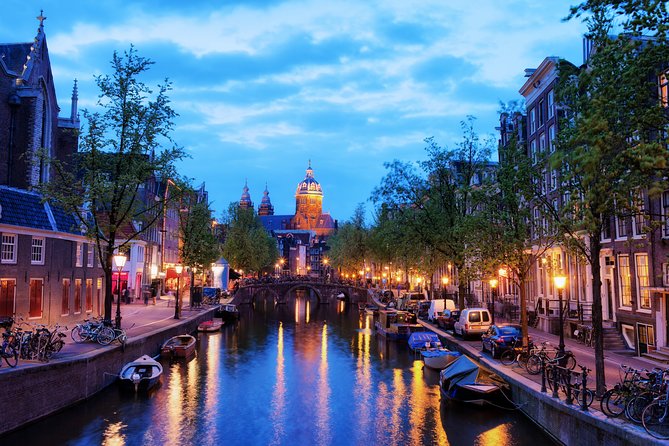
Starting at the Basilica of Saint Nicholas sets the tone in a smart way. The audio doesn’t frame the district as only one thing. It places the neighborhood in a longer Amsterdam story where Roman Catholic churches still stand as active landmarks.
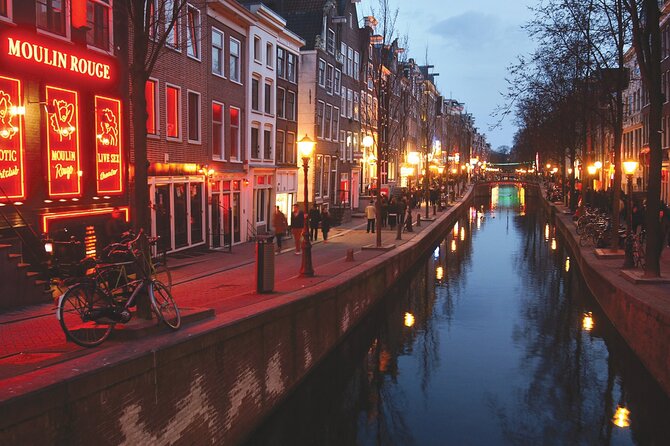
That contrast is a big part of why this walk works. As you move from church architecture to the Red Light District’s more adult-themed sites, the narration helps you read what’s around you. You stop treating the area like a single mood and start seeing it as a set of overlapping eras and functions.
After that, you reach Madame Tussauds Amsterdam, located on Dam Square near the Royal Palace. This is a tourist magnet, but it’s a useful stop for perspective. The audio uses big, familiar, visual landmarks to anchor you—so you don’t feel like you’re wandering through a maze of small side streets with no signposts.
One caution: since entry tickets to monuments aren’t included, you’ll need to decide whether to pay for any museum you hit along the way. The audio still helps even if you only glance at the facade and keep walking, but if you want the full inside experience, budget extra.


The Erotic-Themed Museum Stop: Context Over Shock
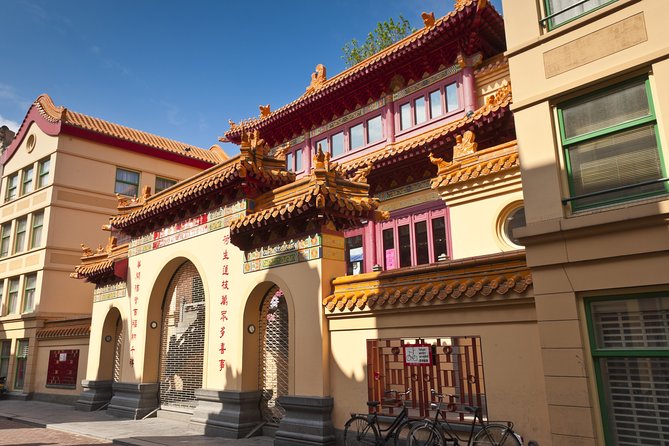
One of the chapters centers on what’s described as the world’s first and only museum with this theme. The theme is adult-oriented, so your comfort level matters. If you’re easily embarrassed, you might prefer to treat that stop as a quick look outside and move on when you’re ready.
But if you can handle it, this is where the tour’s goal shows clearly. The point isn’t scandal—it’s context. The narration focuses on what that kind of museum represents in Amsterdam’s story: attitudes toward sex, art, and public discussion across centuries.
How to approach this stop:
- Don’t rush. Take 2–3 minutes to let the audio set expectations before you decide how long to stay.
- If you go inside and it’s not your thing, you can still come back to the street story right after.
Canals as a Reset Button: Amsterdam Looks Better Than the Headlines
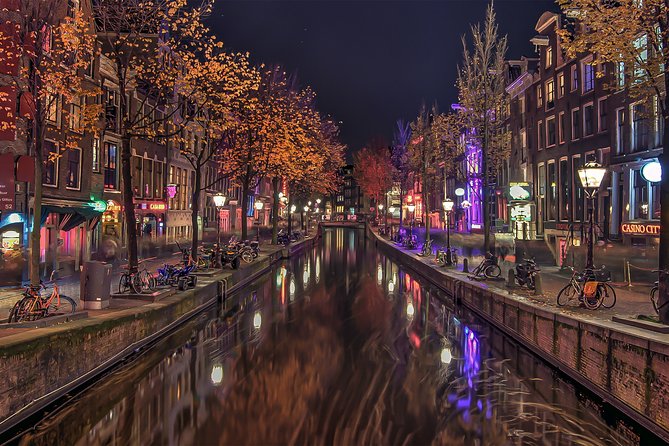
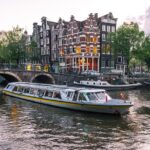
The audio tour makes room for what you came to Amsterdam for in the first place: the city itself. One of the chapters explicitly points out the beauty of Amsterdam’s canals, which is smart because the Red Light District can otherwise blur into just one narrow lens.
As you walk, look for the rhythm canals create. They compress space, reflect light, and make the streets feel connected. Even in an adult-focused neighborhood, the city’s water-and-brick look still does its job.
This is also a helpful mental break. If you find the subject matter heavy or intense, a canal view chapter gives your brain a safe landing without making you feel like you’re skipping content.
MX3D Bridge: A Modern Detour You’ll Actually Feel
Then comes a very different kind of sight: the MX3D bridge, described as a fully functional stainless steel bridge. This is the kind of stop that breaks the mood in a good way—less talk, more physical experience.
Even if you don’t go deep into details, the inclusion of MX3D signals that the tour isn’t just about shock value. It’s about how Amsterdam layers old and new. The bridge is a strong contrast to the older buildings nearby, and it gives you something you can sense with your body, not just your ears.
Practical tip: if you’re photographing, watch your footing and give yourself time to rejoin the audio route. Self-guided tours work best when you don’t get lost in side quests.
A 17th-Century House and an Orate Catholic Church Hidden Above
Another chapter takes you to a 17th-century house with an ornate Catholic church hidden on the top floor. That phrasing matters. Hidden-in-plain-sight is very Amsterdam. You might walk past a building and never guess what sits behind doors and floors above street level.
This stop is about paying attention to the architecture and the layout—not just the obvious street facade. It’s also a reminder that the Red Light District’s surroundings include major religious heritage, not only adult-themed businesses.
Drawback to watch for: since monument admissions aren’t included, the “hidden church” may or may not be something you can access without paying. The audio still adds meaning if you can see exterior cues or if the spot is accessible, but your inside experience depends on the rules for that specific site.
The Souvenir Stop: A Small Choice That Makes the Walk Stick
One of the chapters is simply a reminder to pick up a great souvenir for you and your friends to take home. That sounds minor, but it’s actually good design. The tour covers mood, history, and architecture. A souvenir stop turns your story into something you can keep.
Don’t treat it like pressure to buy. Think of it as a moment to decide: do you want a physical memory, or do you prefer to spend your money on a final snack somewhere nearby?
Museums With Kitschy Oddities: The Weird Stuff That Completes the Story
The tour includes a chapter for a museum with kitschy oddities, including shrunken human heads and rare animal skeletons. This is the kind of stop that can feel “too strange” unless you let it land as part of Amsterdam’s quirky attraction culture.
Again, monument entry isn’t included, so you’ll want to decide whether to pay for full access. If you’re curious, this can be a memorable contrast to the other museum themes on the route. If you’re not into oddities, you can still treat it as a contextual waypoint and move on with the audio.
How to Keep It Respectful and Still Enjoy the Walk
This tour name screams adult content, and it does include adult-themed museums and sites. But the audio format encourages a more thoughtful approach than just looking or reacting.
Here’s how I’d do it to keep things comfortable:
- Keep expectations grounded. The tour aims to share history and explain streets, not just hype the district.
- If you’re with friends, agree on boundaries ahead of time. You control how long you spend at any adult-themed stop.
- Use the canal and church chapters as anchors. They help you reset and keep the walk from feeling one-note.
The tone described across the reviews is also important. The audio is described as fun, funny, and myth-busting. That helps you feel like you’re learning, not being scolded.
Sound Effects, Scripts, and the Offline Advantage
The experience is described as using creative scripts and lively sound effects. That matters because self-guided tours can get flat. When the narration adds atmosphere, you’re more likely to stay engaged and remember details.
The biggest practical win is offline functionality. Amsterdam is great for walking, but roaming can add cost fast. Offline maps and chapters mean you can focus on the walk and not on your data plan.
One more small point: because you’re on your own schedule, you can match audio timing to your route choices. If you want photos, take them. If you’d rather skip a museum stop, keep moving and let the next chapter carry you.
Should You Book This Self-Guided Red Light District Audio Tour?
Book it if you want:
- an offline, self-paced way to understand the Red Light District
- a mix of church landmarks, canals, modern architecture, and museums
- a budget-friendly option at $6.72 per person that pays for the story, not paid attractions
Skip it (or go in with eyes open) if:
- you need a fully hosted experience where every entrance ticket is included
- adult-themed museum content is a hard no for you
- you don’t want to use your own smartphone and headphones
My take: this is a smart value choice for curious walkers who like context and don’t mind a mix of Amsterdam’s contrasts. If you’re expecting only prostitution-and-party vibes, the audio steers you toward something broader.
FAQ
How long is the self-guided audio tour?
It’s listed as about 1 to 2 hours.
Is the tour offered in English?
Yes, it’s offered in English.
Does it work offline?
Yes. The audio chapters and supporting tools are described as working offline, so you don’t need expensive roaming.
What does my $6.72 ticket include?
It includes all chapters with offline use, plus maps and tips to explore Amsterdam, with a mobile ticket.
What isn’t included?
Not included are snacks, your smartphone, headsets, transportation, and admission tickets to monuments.
Where do I start the tour?
Start at Basilica of Saint Nicholas, Prins Hendrikkade 73, 1012 AE Amsterdam, and the guidance says to locate yourself at the canal shore.
Where does the tour end?
The tour ends at Sofitel Legend The Grand Amsterdam, Oudezijds Voorburgwal 197, 1012 EX Amsterdam.
Is this private, and can I cancel?
It’s listed as private, meaning only your group participates. The experience has free cancellation, with a full refund if you cancel up to 24 hours in advance of the start time.