REVIEW · ST AUGUSTINE
America‘s Oldest City: An Audio Tour of St Augustine
Book on Viator →Operated by VoiceMap Audio Tours · Bookable on Viator
One town, many rulers. This audio tour strings St. Augustine’s story together as you walk, with GPS-style guidance and offline narration. You’ll move from the Spanish outpost beginnings to the military grit of Castillo de San Marcos and the sea wall that helped the city survive.
I love the at-your-own-pace setup, so you can linger at St. George Street or speed up when you just want to keep moving. I also like how the route mixes big-name stops with lots of architectural details, including places like the Gingerbread House and the Oldest Wooden Schoolhouse.
One thing to keep in mind: it’s a walking audio experience, and admission tickets aren’t included, so you’ll need to plan any museum time separately if you want to go inside.
In This Review
- Key highlights at a glance
- How the VoiceMap audio walk works in St. Augustine
- Start at the Governor’s House Cultural Center: the city’s big beginning
- Cathedral Basilica and St. George Street: where faith and everyday life meet
- Peña-Peck House, Greek Orthodox roots, and the Spanish-British mix
- The Oldest Wooden Schoolhouse and the lesson of survival
- Old City Gates and Plaza de la Constitución: the public center of power
- Castillo de San Marcos: the fort built to outlast an attack
- Sea wall, Bridge of Lions, and the city’s ongoing fight with water
- Spanish Military Hospital, Ximenez-Fatio, and the houses you’ll recognize
- Saint Francis Barracks and the palace-style contrast around the historic district
- Price and timing: is $19.99 a good value for this walk?
- Who this audio tour suits best (and who might want something else)
- Should you book America’s Oldest City: An Audio Tour of St Augustine?
- FAQ
- What language is the audio tour offered in?
- How long does the tour take?
- How much does it cost?
- Where do I start the tour?
- Do I need tickets for the attractions along the route?
- Is the tour available offline?
- What do I need to bring?
- Is this tour refundable?
- Is it a private tour?
Key highlights at a glance
- Offline access to audio, maps, and geodata so you’re not hostage to cell service
- VoiceMap app + GPS directions that help you stay oriented through the historic district
- Spanish and British architecture on the same route, from cottages to mission-era church landmarks
- Major “must-see” anchor sites, including the Cathedral Basilica and Castillo de San Marcos
- A resilience theme that comes through clearly at the sea wall, wooden schoolhouse, and city gates
How the VoiceMap audio walk works in St. Augustine
This is a self-guided audio tour using the VoiceMap app on Android or iOS, and the big win is that you get lifetime access in English. You’re not waiting for a group to catch up. You’re also free to pause for photos, read street signs, or just take your time deciding where to turn next.
You’ll also get offline audio, maps, and geodata. That matters in older city areas where signal can be spotty. Still, do yourself a favor and start the download before you head out—offline is only useful once you’ve got the files on your phone.
Two practical notes: you supply your own smartphone and headphones. The tour does not include transportation, and it doesn’t include food or drink. So I recommend you plan for a snack stop or a water break, especially if you’re doing the full route without rushing.
You can also read our reviews of more tours and experiences in St Augustine.

Start at the Governor’s House Cultural Center: the city’s big beginning
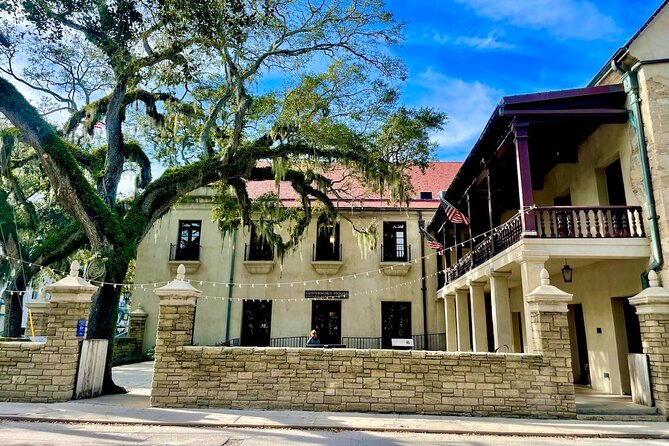
Your walk starts at the Governor’s House Cultural Center & Museum on King St. The first stop sets the tone by framing St. Augustine as a Spanish outpost that later became a Gilded Age jewel. That context helps the rest of the landmarks make sense, because you’ll hear why different architectural styles show up in the same neighborhoods.
From here, the audio narration nudges you forward in a logical sequence: first origins, then religious roots, then the historic heart. That order is helpful if you’re trying to understand St. Augustine as a layered city rather than a checklist of pretty buildings.
Timing tip: the route is about 1 hour 15 minutes to 1 hour 30 minutes. If you want longer photo stops or you’re stopping for lunch, I’d treat it as a flexible target rather than a strict deadline.
Cathedral Basilica and St. George Street: where faith and everyday life meet
Next up is the Cathedral Basilica of Saint Augustine, described as the oldest parish church and the birthplace of Christianity in the US. Hearing it framed this way gives you a reason to pay attention, even if you’re not a church architecture super-fan. The narration also connects religious influence to what you’ll see later in the historic district.
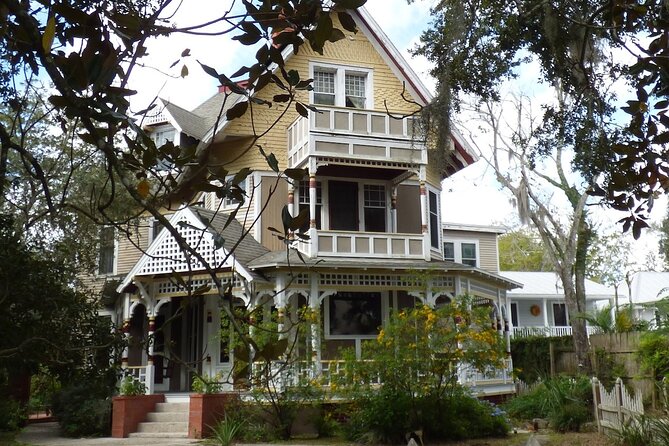
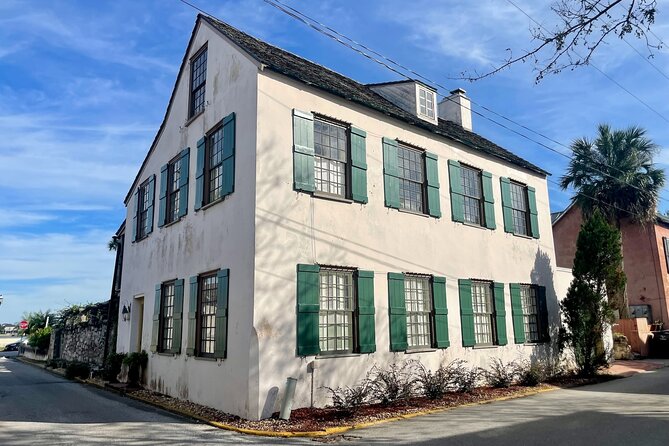
Then you step into St. George Street, which is the walking heartbeat of the area. This is where the tour becomes fun for detail lovers, because you hear about the Prince Murat Cottage and the Stanbury Cottage, which the tour calls the Gingerbread House. Those names are a good cue that you’ll be looking for charm in the small stuff—trim, shape, and style—rather than only looking at street-level scale.
If you like the feel of walking a real neighborhood, this part delivers. You’re not just staring at monuments; you’re moving through the streets where people actually build life on top of old history.
Peña-Peck House, Greek Orthodox roots, and the Spanish-British mix
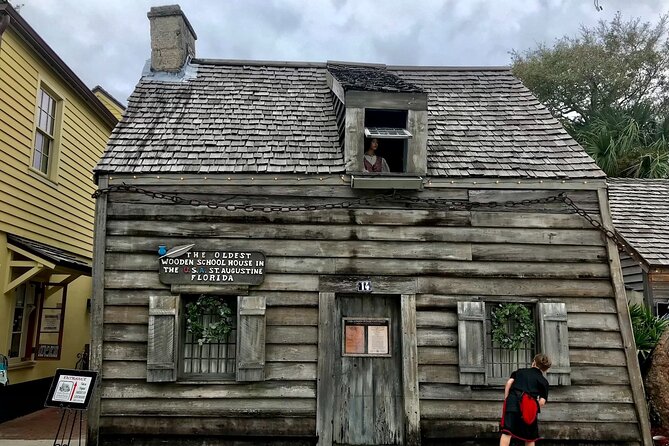
The route then adds more architectural variety, including the Peña-Peck House. The narration helps you practice spotting influences—specifically Spanish and British—so you’re not just hearing facts. You’re learning a way of looking at the buildings as evidence.
You’ll also pass by St Photios Shrine Greek Orthodox National Shrine. Even without a long stay inside, it adds an important reminder: St. Augustine’s story isn’t only Spanish. Over time, different communities left marks, and this stop points you toward that broader heritage.
Another stop worth your attention is the Salcedo House & Kitchen. The tour ties it back to the architectural blend you’re seeing across the district. That theme is useful because it makes the city feel cohesive: you’re not bouncing between unrelated stops, you’re tracking the same story through different examples.
The Oldest Wooden Schoolhouse and the lesson of survival
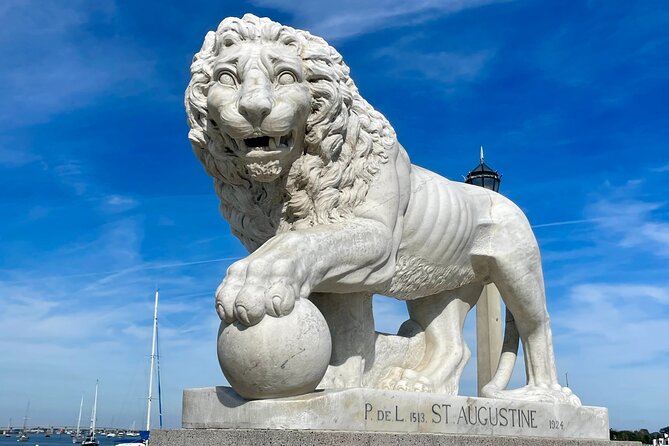
One of the strongest “why this city matters” moments comes when you reach the Oldest Wooden Schoolhouse. The audio explains its survival against hurricanes, and that is a big deal in a coastal city like this. It also changes how you interpret the rest of the route, because now you’re hearing history as something that had to withstand real weather, not just “happened once.”
The theme continues later when the tour returns to resilience elements like the sea wall and other historic structures tied to survival and rebuilding. That repetition isn’t filler. It’s the audio tour doing its job: making you connect the dots between disaster, repair, and long-term identity.
If you’re the type who likes stories of endurance, this is one of the places you’ll remember.
Old City Gates and Plaza de la Constitución: the public center of power
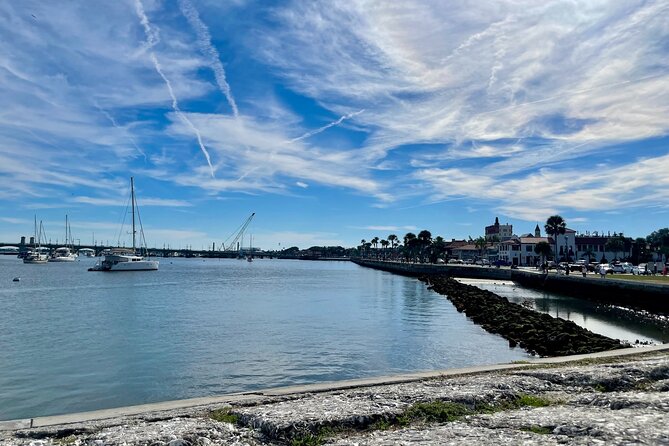
As you move onward, you pass through the Old City Gates and enter Plaza de la Constitución, which the tour notes as the oldest public space in the US. This is the kind of stop that can feel like a pause in the route—good, because it lets you look around and reset your bearings.
You’ll also hear about the secrets behind the square’s obelisk. The audio framing here encourages you to slow down for a minute and actually look at where you are. Even if you don’t go deep into symbolism, you’ll walk away with a clearer sense of how public space worked in the city’s early days.
Castillo de San Marcos: the fort built to outlast an attack
Then comes the big anchor: Castillo de San Marcos. The tour explains it as a formidable military defense and highlights why its construction was hard for the English to penetrate during its 23-year construction. The narration uses a memorable description of the fort’s walls as cheese-like, which makes the engineering story easier to remember.
Once you’re there, the audio keeps you in the moment with tales of epic battles and legendary stories tied to the monument. You’re not only learning when it was built—you’re hearing how people fought, waited, and rebuilt around it.
This is the part of the tour that justifies the walk. Even if you’re short on time, you’ll feel like you hit a core St. Augustine experience.
Sea wall, Bridge of Lions, and the city’s ongoing fight with water

After the fort, the audio shifts from military defense to environmental defense. You’ll learn about the St. Augustine Sea Wall, framed as a testament to citizen resilience against massive flooding. That matters because it shows the city’s strength isn’t only about wars. It’s also about daily survival.
The tour then brings in the iconic Bridge of Lions, described as a symbol of the city’s triumphs and tribulations. That line makes the bridge more than a photo stop. It becomes a point on the timeline where hardship and recovery show up again and again.
If your travel style leans toward meaning—not just sight-seeing—this section delivers. It turns the coastal geography into part of the narrative.
Spanish Military Hospital, Ximenez-Fatio, and the houses you’ll recognize
The route includes ghostly legends as you pass the Spanish Military Hospital and again around the Oldest Wooden Schoolhouse. This is where the audio tour adds personality. It keeps you from zoning out when you’re moving through streets with lots of buildings that look similar at first glance.
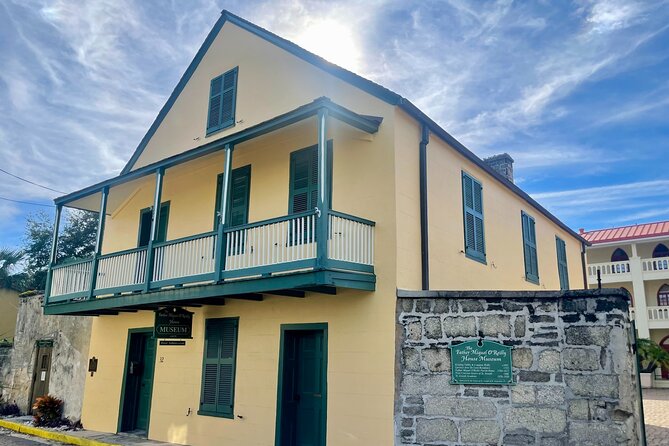
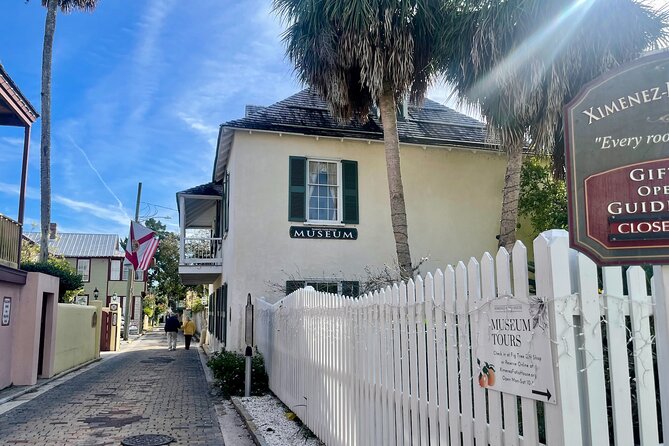
Next comes Ximenez-Fatio House, followed by Father Miguel O’Reilly House. These stops are presented as parts of the city’s architectural and cultural evolution, and they help fill in the in-between spaces that many walking routes skip.
You’ll also see Sanchez House and Gonzalez Alvarez House, including mention of the Gonzalez Alvarez House as St. Augustine’s oldest house. Even without going into any interior details, knowing you’re near the oldest helps you interpret what you’re looking at.
Saint Francis Barracks and the palace-style contrast around the historic district
Military history shows up again with Saint Francis Barracks, which adds another layer to the city’s fort-and-battles theme. After that, the tour circles back across older streets where Spanish and British influences are said to be especially visible.
Then you get into the “palaces and institutions” zone, with Upham Winter Cottage and other historic residences. The audio names several standout examples: Palacio Postal, Palacio de Iturbide, and Palacio de Mineria. The key takeaway is variety. You’re not only seeing one style; you’re seeing how different eras and design ideas show up in the same walk.
You also pass Prince Murat House and the Stanbury Cottage again, reinforced as architectural highlights. If you love the visual signature of St. Augustine’s historic district, this is a good loop to catch what you might have missed earlier.
Religious and educational landmarks enter near the end too, including Trinity Parish Church and Ponce De Leon Hall. Finally, you reach Historic Tours of Flagler College, connecting the city’s historical architecture to education and culture.
Price and timing: is $19.99 a good value for this walk?
At $19.99 per person, the value depends on how you travel. If you like structure while walking and you want a guided narrative without buying multiple tickets, this is a strong deal for an area packed with landmarks.
You’re also getting lifetime access, which is underrated. If you return to St. Augustine later, you can replay the audio and pick up what you missed. Offline maps and geodata also reduce stress, because you’re not constantly checking service or fighting battery drain.
The tradeoff is that museum entrance fees aren’t included, and the tour doesn’t provide transportation. Also, since it’s designed for about 1 hour 15 minutes to 1 hour 30 minutes, you’ll need to decide whether you want to add extra stops after the audio ends.
If you want a long day of ticketed interior visits, this tour works best as your backbone—then you add museums on top.
Who this audio tour suits best (and who might want something else)
This self-guided format is ideal if you want freedom. The narration supports walking at your own pace, and the route is long enough to feel substantial without becoming a whole-day hike.
It also fits well if you like practical technology. One-earbud listening is an easy way to keep aware while you walk, and the tour’s GPS-style guidance helps you keep moving in the right order.
For couples and solo travelers, it’s a clean way to get an orientation to St. Augustine. For families, it can work if everyone is okay with listening instead of joining a live guide.
A personal note on flexibility: one walker did bring a dog and still managed the route at a comfortable pace. That doesn’t mean every situation will be the same, but it suggests the walk is manageable and not overly rushed.
If you only want the most famous attractions and you’re not interested in architecture details, you might feel the route is broader than you need. But if you enjoy connecting dots—Spanish beginnings, British influence, forts, churches, and houses—this one clicks.
Should you book America’s Oldest City: An Audio Tour of St Augustine?
Yes, if you want a walkable, story-driven way to see St. Augustine without paying for lots of individual guided experiences. The $19.99 price is easier to justify because you get offline support, GPS-style help, and a route that covers major landmarks plus the kind of architectural details people tend to skip.
Book it with a simple plan: bring your smartphone and headphones, download for offline use, and expect a focused walk rather than a museum day. If you’re the type who likes to understand why the city looks the way it does—Spanish and British mix, fort engineering, sea-wall survival—this tour gives you a clear path and keeps you looking.
FAQ
What language is the audio tour offered in?
It’s offered in English.
How long does the tour take?
The duration is approximately 1 hour 15 minutes to 1 hour 30 minutes.
How much does it cost?
The price is $19.99 per person.
Where do I start the tour?
You start in front of the Governor’s House Cultural Center & Museum, 48 King St, St. Augustine, FL 32084, USA.
Do I need tickets for the attractions along the route?
No. Tickets or entrance fees for museums or other attractions along the route are not included.
Is the tour available offline?
Yes. The VoiceMap app includes offline access to audio, maps, and geodata.
What do I need to bring?
You need a smartphone and headphones. Transportation and food/drink are also not included.
Is this tour refundable?
No. The experience is non-refundable and cannot be changed for any reason.
Is it a private tour?
Yes. It’s a private activity, so only your group will participate.