REVIEW · ROME
Colosseum,Arena,Palatine Hill & Roman Forum with Audio Guide App
Book on Viator →Operated by Bayroutes · Bookable on Viator
Walk the arena and the stands.
This self-guided circuit is interesting because it strings together Colosseum + Palatine Hill + Roman Forum in one day, with an audio guide app doing the storytelling while you keep control of your timing. I like the simple structure: you can move when you want, stop when you need, and skip the stress of herding behind a person. I also like that you get a true inside/outside perspective with access to both spectator levels and the Arena Floor, so your photos and your understanding land in two different ways. The main drawback is that this isn’t a live-guided tour—so you’ll want to follow directions carefully and be comfortable navigating on your own.
One big win here is pacing. The Colosseum area alone can feel like a maze, and having the audio context means you don’t have to rush to “do the highlights.” At the same time, a couple of planning hiccups do pop up in real life—especially around entry times and last entry/closing timing—so you’ll want to double-check your time and plan for heat. If you’re expecting a staff member standing there to escort you every step, this is more self-sufficient than you might guess.
Key points at a glance
- Arena floor access + spectator levels: You see the Colosseum from two angles, not just one.
- Audio guide app, in English: Context that helps the ruins make sense while you go at your pace.
- Three major sites in one day: Colosseum, Palatine Hill, and Roman Forum are all checked off.
- Priority reservation included: A reservation fee and Colosseum ticket with arena access are part of what you pay for.
- Flexible touring within the day: You’re not locked into a fast group schedule.
- No live guide: You’ll rely on the app and your own wayfinding at the meeting point.
In This Review
- Two Ticket Perspectives: Arena Floor and the Spectator Levels
- Entering The Colosseum: Priority Access and the Security Reality
- Palatine Hill: Imperial Power on a Hill You Actually Walk
- Roman Forum: Temples, Government Ruins, and Staying Oriented
- The Audio Guide App: How It Adds Meaning (Not Just Background Noise)
- Timing in Rome: Heat, Entry Changes, and Closing-Time Lessons
- Price and Value: What $60.45 Really Buys You
- Practical Tips That Make This Feel Easy
- Potential Snags to Know Before You Commit
- Who This Tour Fits Best
- Should You Book This Tour or Do It Yourself?
- FAQ
- FAQ
- Is there a live guide on this experience?
- What’s included with the ticket?
- Where do I meet for the tour?
- What sites are included in the day?
- What language is the audio guide app in?
- Is cancellation allowed if plans change?
- How fit do I need to be?
Two Ticket Perspectives: Arena Floor and the Spectator Levels
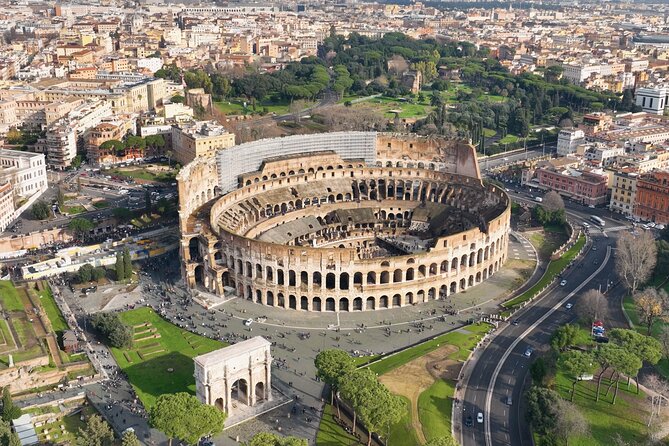
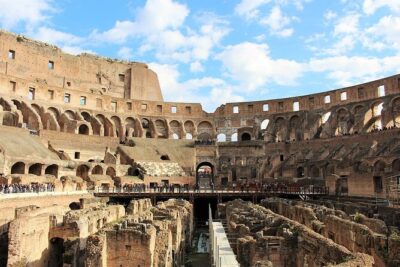
The Colosseum is famous, but it’s also easy to misunderstand if you only view it from the entrances and lower paths. What makes this experience worth a close look is that you’re not limited to the same viewpoint all the way through.
You get:
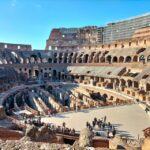
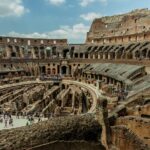
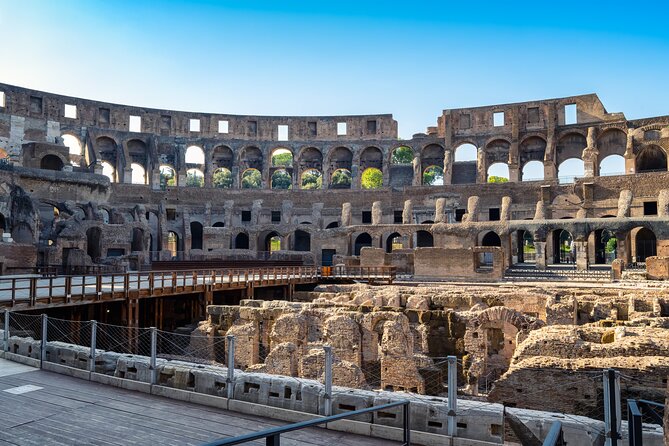
- Access to the spectator levels (so you can picture where people sat and watched)
- Access to the Arena Floor (so you can connect the architecture to the performances that happened down on the ground)
That matters because the Colosseum isn’t one “thing.” It’s a machine for spectacle—views, movement, crowd flow, and stage placement all work together. When you can stand where spectators stood and where performers entered, the site stops feeling like just “big old walls.” It becomes a layout.
Also, the Palatine Hill and Roman Forum portions help you zoom out from the arena to the bigger Roman picture. The Colosseum is an event space. Palatine Hill is tied to power and prestige. The Roman Forum is tied to politics, law, religion, and public life. Doing all three in one day helps your brain connect the dots instead of treating each site like a separate postcard.
Entering The Colosseum: Priority Access and the Security Reality
The experience starts at the Arch of Constantine, in Piazza del Colosseo. It ends back there, so you’re not stuck trying to figure out a different drop-off location.
You’re paying for Colosseum priority/reservation handling, and that usually translates into smoother entry. In practice, skip-the-line access can still mean you pass through security. One account described a security line that existed but moved quickly, and the overall ticketing flow worked.
Here’s the practical way to think about it:
- Priority access reduces waiting for your ticket window.
- Security is security; it can still create a short delay.
- The bigger risk isn’t the line itself—it’s whether your entry time leaves you enough daylight to see everything you want before the site closes.
So, if you’re planning photos, you’ll want to arrive with a calm mindset, not a race-car mentality. The Colosseum is popular, and even with reservation systems, your experience depends on timing.
You can also read our reviews of more tours and experiences in Rome.


Palatine Hill: Imperial Power on a Hill You Actually Walk
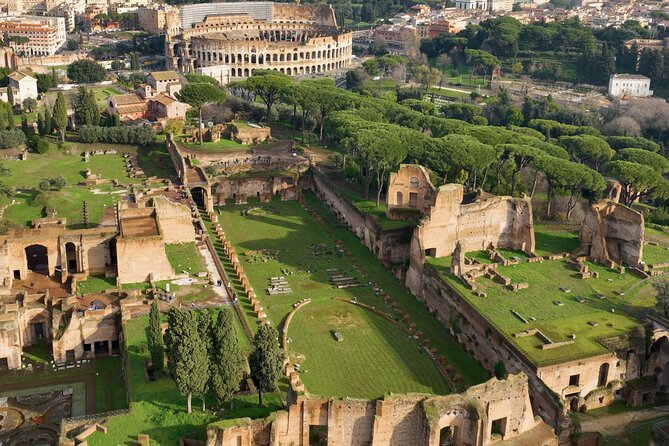
Palatine Hill is often sold as the mythical birthplace of Rome, and that legend is part of the draw. But the best part of this stop is that it’s also a place where you can feel the “why” behind the stories—because Palatine is literally a commanding position over the city.
With this tour format, Palatine Hill is done at your own pace. That’s a big deal here because:
- You’ll want time to look at ruins from different angles.
- You’ll probably pause for photos and to listen to the audio segments that explain what you’re seeing.
- The pathways can involve a bit of walking and climbing, so moving slowly keeps it enjoyable.
You’re exploring landscaped gardens and remains connected to emperors and aristocrats. In other words, it’s not just a collection of stones. It’s a site tied to who had status and influence—right near the center of Roman power. Doing Palatine before the Roman Forum can help you understand the shift from elite residence spaces to public political life.
If you go in with sensible expectations, Palatine is one of those stops where audio does real work: it helps you identify what you’re looking at and why it mattered.
Roman Forum: Temples, Government Ruins, and Staying Oriented
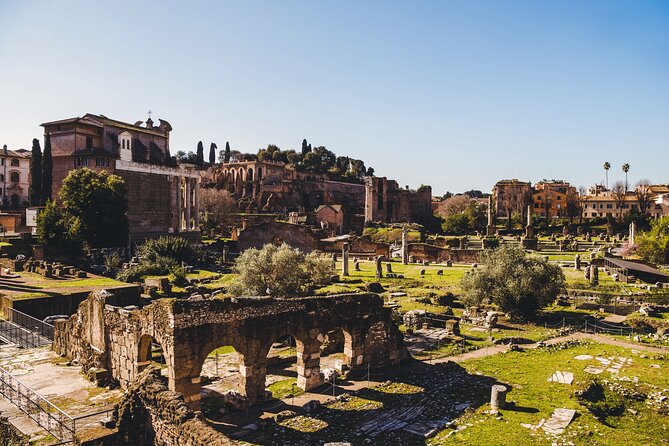
The Roman Forum is the classic “what was where” area of Rome, and it can feel confusing if you only walk through it like a museum hallway. This experience helps because it keeps you moving in a logical order after the Colosseum and Palatine Hill.
At the Forum, you’ll see:
- Remains of temples
- Government and civic structures
- Monuments tied to a thriving civic culture
The key advantage of pairing the Forum with the audio guide app is orientation. The ruins are spread out, and without context you can end up taking the same mental photo in every direction. With the app, the site becomes a story you can follow at your speed, not a checklist you must race through.
A practical note: plan for walking. This area is outdoors, uneven in places, and you’ll likely want to stop often. The payoff is that by the end, the Roman Forum feels less like “scattered columns” and more like a public arena for real decisions.
The Audio Guide App: How It Adds Meaning (Not Just Background Noise)
This is an audio-guided experience with an app in English. That sounds basic, but the difference is huge at sites like the Colosseum, where scale alone can overwhelm.
I like this setup for three reasons:
- You control the pace: stop, replay, or skip ahead.
- You get context for the architecture you’re seeing right in front of you.
- You avoid the awkwardness of waiting for a group leader to catch up to your exact interests.
One strongly positive account described the audio guide as informative and engaging enough to make ancient Rome feel alive. That’s what you’re aiming for: not trivia dumps, but explanations that help you place what’s around you.
The limitation is obvious, but worth saying out loud: there’s no live guide. If you want spontaneous Q&A or deep, human storytelling, you may find an app less satisfying. But if you like independent travel—where you can linger over details and not feel rushed—an audio guide is a good match.
Timing in Rome: Heat, Entry Changes, and Closing-Time Lessons
Here’s where planning matters most: Rome heat and daily schedules can shift the feel of your day.
There was an example where an entry time moved unexpectedly from 10:00 to 11:00. The explanation given was that the arena can look busy during 9:30 AM to 11:00 AM, and adjusting times is often used to avoid peak crowds. On that specific day, it ended up being hotter and busier than expected.
Another example involved a late reschedule that squeezed the time before closing. The Colosseum had already closed at 18:30 on the first visit. The operator clarified the ticket validity is 48 hours, meaning you could return the next day if you didn’t get full time during the first entry.
What you should do with this information:
- Check your exact entry time the moment you get it.
- Build a buffer into your day so you’re not forced to “speedrun” the Colosseum.
- If you’re visiting in hot months, consider that later entry can feel brutal even if it’s strategically chosen.
In summer, Rome temperatures can reach up to 37°C, and one of the operator explanations specifically mentioned this. That’s your cue to pack water, wear breathable clothes, and don’t treat the schedule like it’s theoretical.




Price and Value: What $60.45 Really Buys You
At $60.45 per person, this isn’t a dirt-cheap ticket-only deal. The value comes from bundling three major sites plus an arena-access Colosseum reservation.
Here’s the math that matters:
- The Colosseum entrance ticket with arena access is listed as valued at €24
- The Colosseum reservation fee is listed as valued at €2
- The remaining cost covers other services, including the audio guide app
So the “ticket value” portion isn’t the full story. You’re also paying for:
- The reservation handling
- The structured circuit that keeps you on track across Colosseum, Palatine Hill, and Roman Forum
- The audio app to make the sites intelligible without a live guide
Is it the cheapest way to do the Colosseum? Maybe not. One practical note: a self-sufficient review suggested buying at the Colosseum and doing it yourself could feel cheaper. That’s a reasonable DIY mindset if you’re confident with your plans.
But if you want to cut decision fatigue—when to go, what to see, how to make the ruins make sense—the bundled format can be worth it. Especially if you’re traveling as a group and you don’t want everyone splitting up into separate research missions.
Also, this experience is commonly booked about 35 days in advance on average. That’s a clue you should not wait until the last minute if you have specific timing preferences.
Practical Tips That Make This Feel Easy
Because there’s no live guide, your success depends on how prepared you are.
Here’s what I’d do, based on what tends to make or break experiences like this:
- Arrive at the meeting point with time to spare. The start is at the Arch of Constantine, Piazza del Colosseo. If you’re early, you can orient before you’re stressed.
- Have your confirmation ready on your phone so you can reference it instantly.
- Plan comfortable footwear. You’re walking ruins and uneven outdoor surfaces across multiple sites.
- Bring water, especially in summer. The heat issue isn’t theoretical—at least one scheduling adjustment discussion explicitly referenced extreme temperatures.
- Expect an audio experience, not a guide whispering in your ear. If you like guided conversation, you might miss it.
One more practical note: security lines can still exist even when entry is smoother. Treat it like a “short checkpoint,” not like a magical force field.
Potential Snags to Know Before You Commit
Most days probably run fine—but these are the issues worth noting so you can handle them calmly if they happen to you.
1) Entry time changes
If your entry time shifts, it can impact heat and how much time you have before closing. If you’re trying to see everything, don’t assume the original hour will stick.
2) Communication expectations
Because this is self-sufficient, you may not have someone physically meeting you on site the way you’d expect from a traditional guided tour. One concern involved missing messages and confusion about where staff would be, which led to extra time and expense finding another option.
3) Arena floor ticket accuracy
There was a situation where arena floor tickets were not received as expected, and the operator called that morning to provide a refund. That tells me you should verify your confirmation includes arena access before you go, so you’re not stuck reacting in real time.
4) Closing-time pressure
If you arrive too late in the day, you might feel forced to cut your visit short. The 48-hour ticket validity can help, but it only helps if you’re able to return.
If you’re the kind of traveler who can troubleshoot with a calm phone call, this kind of audio format can still work well.
Who This Tour Fits Best
This is a strong fit if you:
- Like self-paced exploring more than marching with a group
- Want context without paying for a live guide
- Are comfortable navigating large, outdoor historic sites
- Prefer to spend your time where your interest is, not where the schedule says you must stop
It may be less ideal if you:
- Need a human guide to answer questions on the fly
- Get anxious about wayfinding without a staff escort
- Want a tight, timed itinerary with no risk of daily schedule changes affecting your experience
For moderate physical fitness, it’s listed as a requirement. That makes sense: you’ll walk, climb, and spend time outdoors.
Should You Book This Tour or Do It Yourself?
I’d book this if you want the convenience of a bundled Colosseum (arena access) + Palatine Hill + Roman Forum plan plus an English audio guide app that helps you actually understand what you’re seeing.
Skip booking (or consider DIY) if:
- You’re mainly after a cheapest possible ticket and you’re confident building your own route
- You strongly prefer a live guide and live explanations
- You know you’re sensitive to last-minute time changes and schedule stress
My practical bottom line: this is good value when you want structure without a crowd-pace. If you’re careful about your entry time, keep your confirmation handy, and go in ready for an audio-first experience, you’ll get far more from the Colosseum than just “I saw it.” You’ll understand how it works—and then you’ll connect it to Palatine Hill and the Roman Forum in the same day.
FAQ
FAQ
Is there a live guide on this experience?
No. This experience includes an audio guide app, not a live guide.
What’s included with the ticket?
You get an audio guide app, a Colosseum entrance ticket with arena access, and a Colosseum reservation fee. The audio app and ticket components are listed as part of the price.
Where do I meet for the tour?
The meeting point is at the Arch of Constantine, Piazza del Colosseo, 00184 Roma RM, Italy.
What sites are included in the day?
You visit the Colosseum, Palatine Hill, and the Roman Forum in one day.
What language is the audio guide app in?
The experience is offered in English.
Is cancellation allowed if plans change?
Yes. You can cancel up to 24 hours before the experience start time for a full refund.
How fit do I need to be?
It’s recommended for people with a moderate physical fitness level, since you’ll be walking around historic outdoor sites.