REVIEW · BARCELONA
Colonia Guell & Gaudi’s Crypt Admission Ticket with Audioguide
Book on Viator →Operated by Colonia Guell Gaudi Crypt · Bookable on Viator
Colònia Güell feels like a quiet time machine. You get a self-guided walk through Eusebi Güell’s purpose-built workers’ village, then a trip to the Gaudí Crypt, where you can see early ideas that later fed into La Sagrada Familia. The possible catch: it’s not right in the center of Barcelona, so the outing is best if you’re happy taking public transport and you’re genuinely interested in Gaudí.
What I like most is the mix of town and architecture. You don’t just rush into the crypt—you also get the context: mills, school, cooperative buildings, terraced worker housing, and the little details that explain why this place was built in the first place. One drawback to keep in mind is that the whole experience leans on the audio guide, so you’ll want to stay engaged and read the on-site map as you go.
The ticket includes everything you need to explore on your own: admission to Colònia Güell & Gaudí’s Crypt, a town map, and an English audioguide. You choose a departure time when booking, pick up your audio guide at the visitor center, and then you’re free to pace yourself for about two hours (plus extra time if you want it).
In This Review
- Key highlights worth planning for
- Gaudí’s Crypt: Why this is a smart add-on (even if you’ve seen Sagrada Familia)
- Colònia Güell: the workers’ estate behind the architecture
- Your self-guided audioguide game plan (pick up, map, then wander)
- Inside Gaudí’s Crypt: spiraling columns, flowing arches, and two naves
- Timing, transport, and how to avoid wasting your day
- Price and value: is $12.07 worth your time?
- Who should book this ticket, and who might skip it
- Should you book this ticket?
- FAQ
- How long does the audio tour take?
- Is this ticket self-guided?
- What language is the audioguide in?
- Where do I pick up the audioguide?
- Is this inside central Barcelona?
- Is a children’s audioguide included?
- What happens if I need to cancel?
Key highlights worth planning for
- UNESCO setting just outside Barcelona: you’re not in the city buzz, and that changes the mood.
- Two parts in one ticket: the workers’ village first, then the Gaudí Crypt.
- English audioguide with a keepsake guidebook: you can move at your speed without a group schedule.
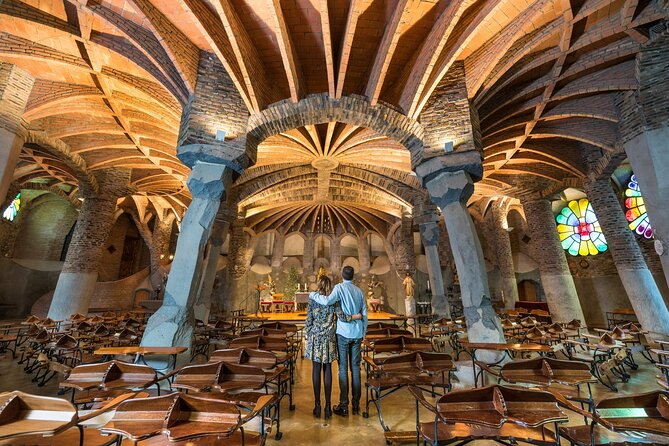
- Gaudí trial ideas in the Crypt: designed in 1882 and connected to La Sagrada Familia’s development.
- Catalan folk + modernist touches: turrets and trencadís mosaic tiling show up across the estate.
Gaudí’s Crypt: Why this is a smart add-on (even if you’ve seen Sagrada Familia)
If you only visit the headline Gaudí sites, the Gaudí Crypt can feel like a warm-up act. But that’s exactly why it’s worth your time. Here you’re looking at experiments—forms and solutions Gaudí was testing long before his later masterpiece took over the spotlight.
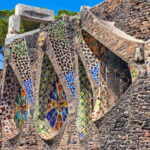
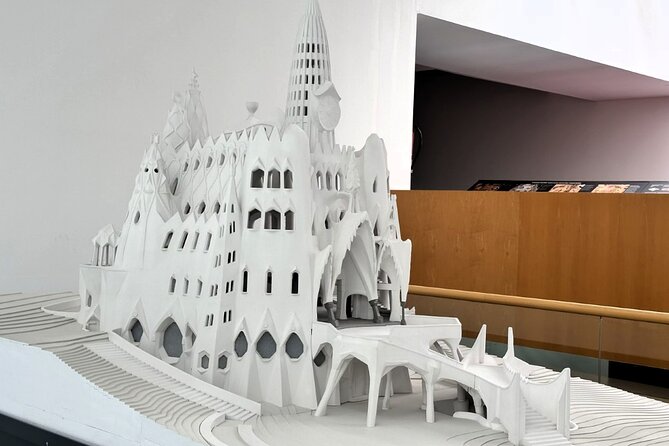
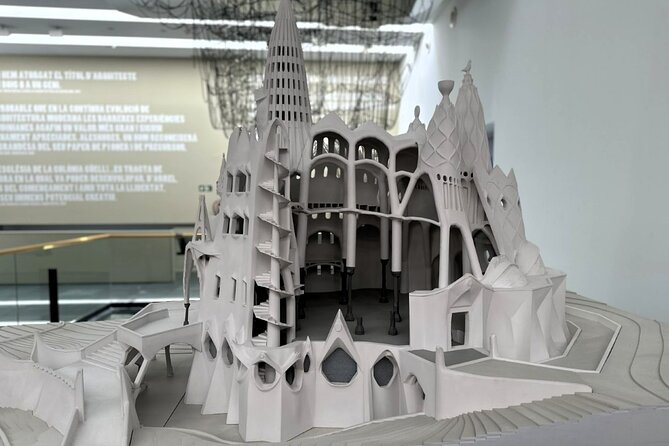
Outside, you’ll recognize the same design logic you’ll later see at La Sagrada Familia: spirals, sculptural stonework, and a sense of motion even when everything is still. Then inside, it clicks. The crypt’s architecture is built for atmosphere as much as it is for structure, with spiraling columns and arches that don’t just decorate a room—they guide your eyes and help the space feel alive.
One more practical plus: this ticket is designed for a relaxed pace. You’re not forced through with a stopwatch; the audio tour is built around you walking the town first, then focusing on the Crypt.
You can also read our reviews of more tours and experiences in Barcelona.


Colònia Güell: the workers’ estate behind the architecture
Colònia Güell is the part people rush through when they only care about the Crypt. I’d do it the other way around: let the village set the stage, then go see what Gaudí did with it.
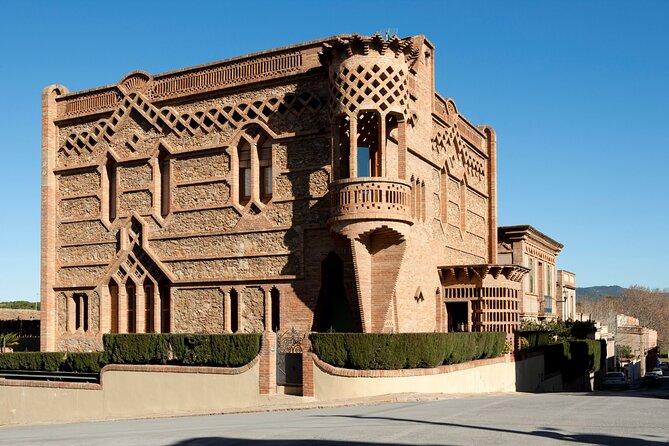
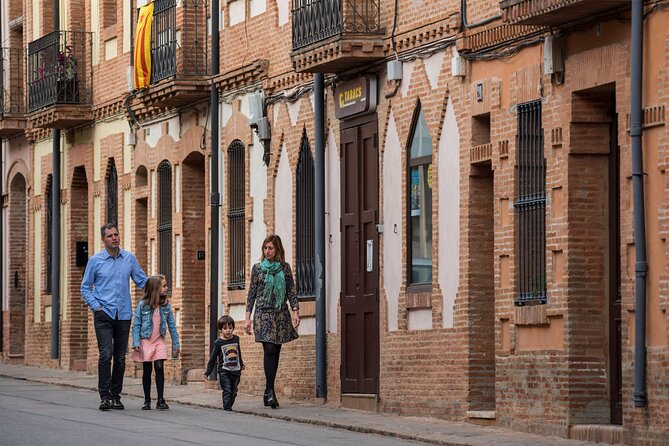
This is a 19th-century estate built by Eusebi Güell for workers coming from his nearby textile mill. As you stroll, the town layout makes sense: houses built into terraces, plus key buildings that explain how life worked day to day. You’ll have a chance to see things like the historic factory area, a school, co-operative headquarters, and the terraced homes with gardens.
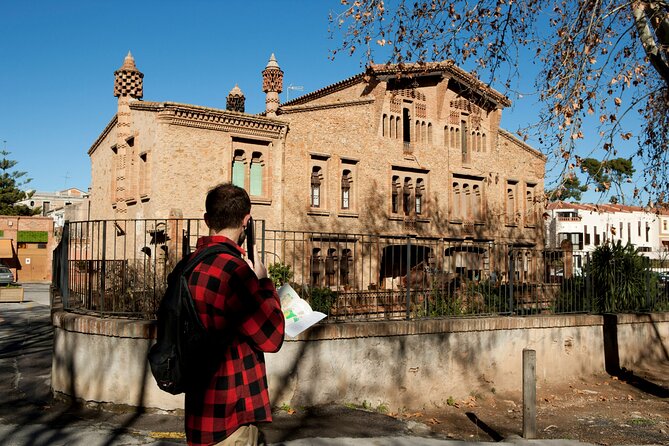
The architecture is where it gets fun. You’ll hear how modernist architects were commissioned to build the estate, yet the look still ties back to Catalan folk styles. Expect details such as turrets and trencadís mosaic tiling—little visual cues that tell you this wasn’t a plain industrial suburb. It was meant to feel intentional.
If you’re paying attention, you can also spot the kind of individual building that makes these places memorable. One highlight mentioned in the material is Ca L’Espinal, described as a masterpiece by Joan Rubió. Even without studying it like an art student, it helps to know you’re looking at notable work, not random rows of buildings.
There’s also an exhibition tied to the village’s story—workers’ lives and the ideals behind the community. Even if you skim it, it changes how you read the buildings outside. You stop seeing only pretty structures and start understanding why they were built.
Your self-guided audioguide game plan (pick up, map, then wander)
This is a self-guided experience, which means you’re in charge of your pace. Here’s the best way to use it without feeling lost.
First, make your way to the Colònia Güell visitor center. You’ll pick up your audioguide there, along with a keepsake guidebook, and you’ll have a map to help you connect the different stops. The whole approach is designed so you can explore the village highlights independently—no group herding, no waiting around.
Then start walking with a simple mindset: let the audio explain what you’re seeing as you move. The experience is structured like a story. The village section sets up the purpose of the settlement, then the Crypt section shifts into architecture and Gaudí’s experimentation.
You’ll likely feel the difference between “reading facts” and “walking through the facts.” When you hear about Eusebi Güell’s role while you’re looking at the town layout, the place stops being a backdrop and becomes part of the narrative.
One thing to be ready for: because it’s audio-first, the best results come when you take breaks. If you’re walking fast, you may miss details like the reasons behind the estate’s design. Give yourself small pauses—stand near a highlight building, listen to a segment, then move on.
Inside Gaudí’s Crypt: spiraling columns, flowing arches, and two naves
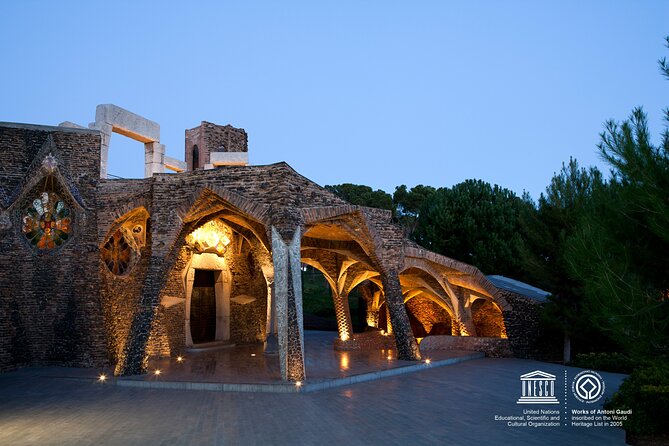
The Crypt is the star, and the reason your ticket isn’t just a village walk with a church tacked on. This is an UNESCO-listed site (World Heritage in 2005), and it carries serious architectural weight despite being “just” a crypt.
You’ll learn that Antoni Gaudí designed this church back in 1882. The key idea is that he used it to test concepts that later shaped La Sagrada Familia in Barcelona. That means you’re not only admiring the result—you’re watching a designer’s thinking process.
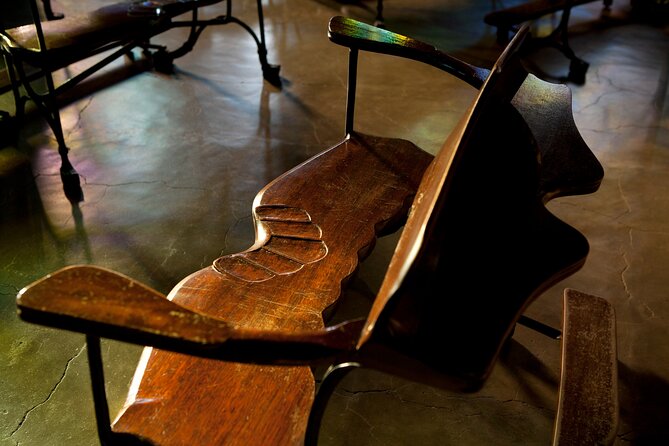
Once inside, look up. The spiraling columns are the obvious wow factor, but don’t ignore the arches and the overall flow of the space. The design uses two naves built on different levels to fit the surrounding hillside. That detail matters: the crypt doesn’t feel like it was dropped into a flat lot. It’s integrated with its setting.
If you want photos, plan for it in two stages. Take a few snaps from outside to capture the architecture from a distance. Then head inside and focus on the columns and arches where the angles do the most work for you.
Also, keep in mind the tone of this place. More than a museum exhibit, it has an ambience that can feel quiet and absorbing. Even if you’re not a hardcore architecture fan, the spatial design is the kind of thing you feel before you can fully explain.
Timing, transport, and how to avoid wasting your day
Plan for this like a half-day outing, even though the audioguide portion is about two hours. A calm rhythm works best: settle into the village, then switch into “Crypt mode” once you arrive.
A big logistics detail: Colònia Güell is just outside Barcelona. That means you need to plan for Barcelona train, not the metro-style network people often assume for anything within the city. If you’re relying on the metro only, you’ll end up frustrated and late.
You’ll have several departure times when booking, so choose one that fits your day. If you’re in Barcelona for a short stay, I’d treat this as a priority morning or early afternoon plan, not something you tack on at the end when you’re tired.
Wear comfortable shoes. You’ll be doing a walking circuit around the village and then moving through the Crypt area. Also note the dress guidance: formal clothes are mentioned, which is unusual for a site like this but worth respecting. If you’re traveling light, aim for “nice casual” rather than sneakers-only.





Price and value: is $12.07 worth your time?
At $12.07 per person, this ticket is priced like a practical add-on, not a high-cost attraction. The real value comes from what’s included: admission to Colònia Güell and the Crypt, a town map, and an English audioguide.
If you were paying separately for entry plus an audio guide, the math starts to look better. And the bigger value is time use. You’re getting both the “why” (the workers’ village) and the “wow” (Gaudí’s architecture) in one visit.
But here’s the honest balancing point: this won’t satisfy everyone equally. If you’re only interested in the big-name Gaudí highlights inside Barcelona, this may feel like a detour. If you love architecture ideas and you enjoy self-guided wandering, it can feel like a very fair price for what you learn and see.
A key tip for value: bring your own curiosity. This is not a scripted guided tour. The audio guide does the heavy lifting, so the experience rewards your attention.
Who should book this ticket, and who might skip it
This works especially well for:
- Gaudí fans who want to see how ideas evolved before the Sagrada Familia era.
- People who enjoy self-guided walking tours with an audio narrative.
- Travelers interested in how communities were built around industrial life—Eusebi Güell’s role, the mill context, schools, co-operative headquarters, and worker housing.
You might reconsider if:
- You hate public transport planning or you’re short on time and only want central Barcelona.
- You want a very guided, conversational human-led tour. This is audio-guided and map-supported.
- You’re expecting a kid-focused audio experience, because a children’s audio guide is not included.
Should you book this ticket?
I’d book this if you want a quieter, more thoughtful Gaudí experience. The Crypt is the reason to come, but the village is what makes the visit feel complete. The ability to go at your own pace, with an English audioguide and a map, helps you turn a two-hour visit into something you actually remember.
Skip it (or at least downgrade expectations) if you’re only chasing the most famous Gaudí stops and you don’t want to plan for the extra travel time outside Barcelona.
If you want that in-between experience—architecture plus the story of a planned worker community—this ticket is a strong choice.
FAQ
How long does the audio tour take?
The audioguide tour is listed as approximately 2 hours. After the audio tour ends, you are free to spend as much time in the area as you like.
Is this ticket self-guided?
Yes. You pick up your audioguide at the Colònia Güell information and visitor center and explore the village and Gaudí Crypt independently.
What language is the audioguide in?
The audioguide is offered in English.
Where do I pick up the audioguide?
You’ll make your own way to the Colònia Güell information and visitor center to pick up your audio guide (and the keepsake guidebook).
Is this inside central Barcelona?
Colònia Güell is just outside Barcelona, and you’ll need to plan public transport accordingly.
Is a children’s audioguide included?
No, children’s audio guide is not included.
What happens if I need to cancel?
You can cancel for a full refund up to 24 hours before the experience’s start time. If you cancel less than 24 hours before, the amount you paid will not be refunded.