Audio leads you past famous and odd Chicago corners. I love the offline GPS maps and the local-style storytelling that makes Gold Coast streets feel like a living timeline. I also like the lifetime access, so you can repeat the walk whenever you want. One possible drawback: the app can be a bit fussy to launch, so plan for a short setup moment before you start walking.
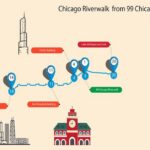
This is a smartphone-powered, self-guided Chicago Gold Coast audio walk that’s priced low and runs about 50 minutes. You begin at the Chicago History Museum (1601 N Clark St) and finish at Zebra Lounge in the Canterbury Court Apartments (1220 N State Pkwy). Tickets and museum entry costs are on you, and you’ll need your own phone and headphones.
In This Review
- Key things to know before you start
- Why This Gold Coast Audio Walk Works for a Low-Budget Chicago Day
- Getting Set Up: VoiceMap Offline Maps and Headphone Reality
- Stop 1 at the Chicago History Museum: Dioramas, Transit, and Lincoln’s Deathbed
- Stop 2 at the International Museum of Surgical Science: A 1917 Mansion with Medical Stories
- Stop 3 at Zebra Lounge: The Piano-Side Ending in the Gold Coast
- The Extra Details You’ll Notice While You Walk (Astor, Fire Survivors, and More)
- Timing Tips: Why 50 Minutes Can Turn into 75
- Price and Value: Is $7.99 a Good Deal in Chicago?
- Who Should Book This Walk (and Who Might Not Love It)
- Should You Book This Chicago Gold Coast Audio Walk?
- FAQ
- How much does the Chicago Gold Coast Hidden History audio walk cost?
- How long is the tour?
- Do I need cell service to use the tour?
- Where does the tour start and end?
- What is included in the price?
- Can I cancel and get a refund?
Key things to know before you start

- Offline GPS and audio through VoiceMap, so you are not hostage to spotty signal
- Lifetime access to the tour, which is great if you like re-watching cities over multiple trips
- A guided pace without a group pack; you stop, look, and listen on your own schedule
- Big-name landmarks plus odd details, from Chicago transit history to medical science
- A finale with live piano vibes at Zebra Lounge in the Gold Coast
- GPS may need a reset once or twice, so keep a little extra time and patience
Why This Gold Coast Audio Walk Works for a Low-Budget Chicago Day
This tour is built for travelers who want more than a surface stroll, but don’t want to pay for a full guided tour. For $7.99, you get the audio guide plus offline maps and geodata, and you can replay it later thanks to lifetime access. That combination is the real value: you are paying for content, not just a one-time walk.
The other reason this works is that it’s not trying to do everything. It focuses on a compact Gold Coast thread—history, architecture, and a proper Chicago “night out” ending—so your time feels purposeful without turning into a marathon.
The biggest practical note is that it is still a phone-based experience. If you’re the type who hates dealing with apps, give yourself a few minutes to get VoiceMap playing cleanly before you walk away from your start point.
You can also read our reviews of more tours and experiences in Chicago.


Getting Set Up: VoiceMap Offline Maps and Headphone Reality
You’ll use the VoiceMap Audio Tours app, and the tour includes offline access to audio, maps, and geodata. That matters in Chicago because you can still keep going even if your data drops or your phone struggles between buildings.
Do this before you start:
- Bring fully charged headphones/phone (offline helps, but your battery still matters)
- Download or confirm offline playback in the app before you begin
- Keep your volume comfortable for sidewalks and traffic
One trip-up to plan for: the audio experience can be a little clunky at launch. In practice, that has meant starting the tour more than once to get it to respond properly. You don’t need to panic, but it’s smart to test the app right at the start.
Stop 1 at the Chicago History Museum: Dioramas, Transit, and Lincoln’s Deathbed
Your walk begins at the Chicago History Museum, and the audio immediately points you toward the museum’s refreshed displays. If you want a strong start, spend a little time with the newly restored dioramas showing Chicago’s shift from frontier outpost to the city you recognize today. Even if you don’t go deep inside, the dioramas set the tone for the neighborhood.
From there, the audio angles your attention toward the South Side Elevated Railroad, described as the first elevated rapid transit line in Chicago. You’ll hear how it was used to shuttle fair goers to the World’s Columbian Exposition. That’s a great reminder that Chicago’s “cool old stuff” wasn’t just decorative—it moved people and shaped the city.
Then there is Abraham Lincoln’s deathbed. Whether you’re a Lincoln superfan or just want a quick, serious moment in the middle of a casual walk, this is the kind of detail Chicago does well: it turns a neighborhood stroll into something weightier.
Practical note: museum entry is not included. If you want to actually see the exhibits in person, check hours and budget for tickets.
Stop 2 at the International Museum of Surgical Science: A 1917 Mansion with Medical Stories
Next comes the International Museum of Surgical Science, and it has an excellent “how is this even real?” factor built in. The audio focuses on the museum’s exhibitions covering aspects of Eastern and Western medicine.
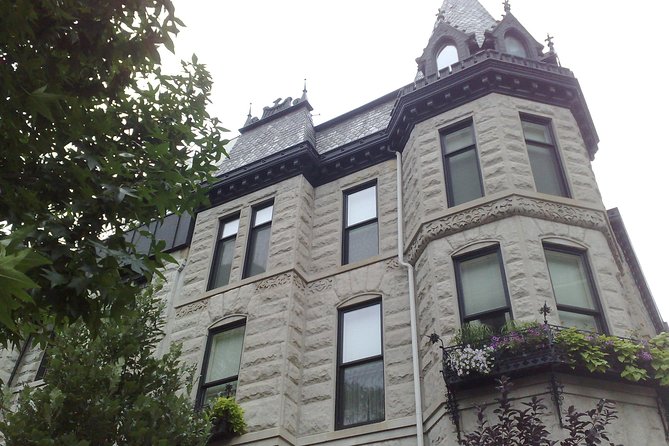
But what makes the setting especially memorable is the building itself: a 1917 mansion designed as a Chicago-style interpretation of the Petit Trianon of Versailles. In other words, you’re walking into a pretty, historical shell that houses medical history—architecture meets science.
If you’re the type who likes your sightseeing to be slightly unusual, this stop delivers. It’s also a nice break from the usual Gold Coast rhythm of mansions and boutiques. You get a different kind of Chicago story: progress, practice, and the ways medicine evolved.
Again, entry costs aren’t included. If you plan to go inside, confirm what’s open and how long it might take you to get through the exhibits.
Stop 3 at Zebra Lounge: The Piano-Side Ending in the Gold Coast
The tour ends at Zebra Lounge, tucked into the Canterbury Court Apartments. This is where the audio shifts from past to present—and gives you a reason to stick around after you finish the walking portion.
The vibe is described as live piano seven nights a week since 1929, and the atmosphere sounds like it’s meant for singing along and ordering drinks like Lemondrops. The setting is also part of the charm: Zebra Lounge lives in the lobby of a vintage apartment building, so you’re not just visiting a bar—you’re stepping into a piece of neighborhood texture.
One practical consideration: hours can vary. If the lounge is not operating during your timing, you can still treat the finish as a landmark and make your own plan nearby, especially if the area has outdoor seating options during your visit.


The Extra Details You’ll Notice While You Walk (Astor, Fire Survivors, and More)
This tour isn’t only about the big anchors. The audio also trains your eyes on smaller, clever details around the route—stuff that is easy to miss when you’re just walking and people-watching.
You may hear prompts to look for:
- The Three Arts Building, a spot that shows up as a worthwhile stop if you like arts-and-architecture context
- The public graveyard and the Couch Mausoleum, including the fact that it survived the Great Chicago Fire
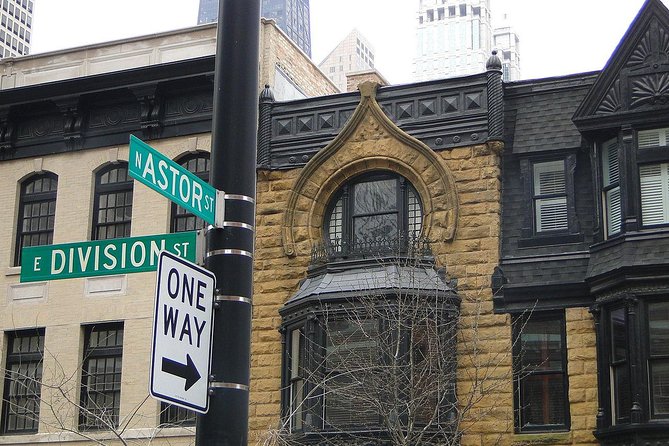
- A wood plank street experiment on Astor, which is exactly the kind of Chicago engineering footnote you’ll be glad you learned about
- Stops and suggestions around places like the Three Arts Cafe inside Restoration Hardware, which is more museum-like than you might expect
- Mentions of the monarchs that built Chicago during the 19th and 20th century, giving you a lens for why some neighborhoods look the way they do
The value here is simple: you end up with a mental map of how the city grew and what kinds of experiments and institutions existed along the way. That makes your later wandering more rewarding, because you recognize stories behind what you see.
Timing Tips: Why 50 Minutes Can Turn into 75
The tour is listed at about 50 minutes, but that’s a best-case scenario if you walk steadily and don’t pause much. The audio encourages you to stop and look, and when you do, the time adds up fast.
A smart rule: plan for at least 60 minutes, and if you want to linger at exhibits or step inside nearby places, give yourself closer to 1.5 hours.
Also, GPS tracking can lose your position occasionally. If that happens, the practical fix is to zoom in on the map, figure out the correct direction, and turn around to match your route. Once you correct your location, the tour audio typically continues from where it left off.
This is not the kind of tour where you should sprint for the finish like a game show. It works best when you treat it like a self-paced walk that you can steer.
Price and Value: Is $7.99 a Good Deal in Chicago?
At $7.99, this tour is competing with a snack and a short ride, not with a full guided experience. Here’s why that price feels fair:
- You get lifetime access, so you can do it on more than one Chicago trip or repeat it later after you’ve learned more about the city
- You get offline audio and maps, which reduces friction and stress
- You see a tight line of meaningful stops, including Chicago History Museum, the International Museum of Surgical Science, and Zebra Lounge
What you still have to pay for:
- Museum tickets and any entrance fees at stops you want to go inside
- Transportation and food/drinks
In other words, this is a value play if you’re willing to be flexible. If you want every stop to include paid entry, it’s better to budget that separately. But if you treat the audio as a guide to what to notice—and optionally step inside—you’ll likely feel like you got your money’s worth.
Who Should Book This Walk (and Who Might Not Love It)
You’ll probably love this if you:
- Like self-guided travel with a “choose your pace” style
- Want a budget way to get context in one neighborhood
- Appreciate a mix of big institutional history and surprising side stories
- Enjoy ending a walk with a real Chicago-style night spot
You might not love it if:
- You strongly dislike smartphone apps or setup steps
- You need a totally hands-off experience with no GPS hiccups
- You want a guided group tour with a live person answering questions (this is audio-guided, not a live host)
It’s especially suitable for solo travelers and couples who want control, and for anyone who wants to keep the day flexible. Also, the experience is in English and is available at all times listed in the hours window, which helps if you’re on an odd schedule.
Should You Book This Chicago Gold Coast Audio Walk?
If you want a low-cost way to add story to your Gold Coast walking day, this is an easy yes. The offline VoiceMap setup, lifetime access, and the mix of Chicago History Museum, surgical science, and Zebra Lounge make it feel like more than a simple route.
My one caution is practical: test the app before you commit your walk-time. If you can handle that small bit of tech friction, you’ll end up with a memorable Gold Coast route—and a reason to return later with fresh eyes.
FAQ
How much does the Chicago Gold Coast Hidden History audio walk cost?
It costs $7.99 per person.
How long is the tour?
The walk takes about 50 minutes, approximately.
Do I need cell service to use the tour?
No. The tour includes offline access to audio, maps, and geodata through the VoiceMap application.
Where does the tour start and end?
It starts at the Chicago History Museum, 1601 N Clark St, Chicago, IL 60614, and ends at Zebra Lounge, Canterbury Court Apartments, 1220 N State Pkwy, Chicago, IL 60610.
What is included in the price?
Included are lifetime access to the Hidden History in Chicago’s Gold Coast tour, the VoiceMap application, and offline access to audio, maps, and geodata.
Can I cancel and get a refund?
No. This experience is non-refundable and cannot be changed for any reason.