REVIEW · CHICAGO
Chicago Riverwalk Self-Guided Walking Tour
Book on Viator →Operated by History with Action · Bookable on Viator
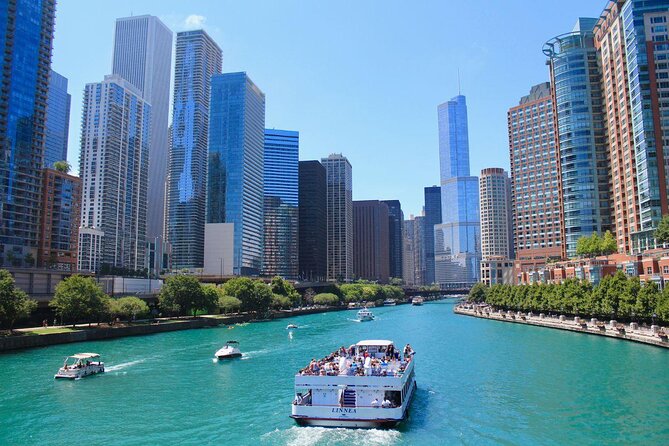
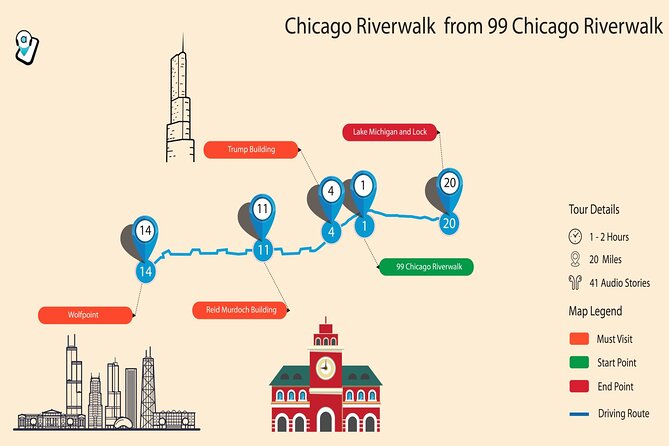
Chicago’s Riverwalk is a straight shot to big views and small stories. This self-guided audio walk helps you connect the buildings, bridges, and memorials you pass with what they mean. You get offline GPS navigation and location-triggered audio, so the experience stays smooth even when the city gets noisy.
I particularly like the value: the tour is priced at $14.99 per person and you’re set up for long-term use, not a one-and-done ticket. I also like that it’s designed for your pace, with audio that plays hands-free as you move along the route. One thing to consider: you’ll want your phone ready (download on strong Wi-Fi first), plus headphones so you can hear the narration clearly while walking.
Key points that make this walk worth your time
- Offline GPS maps mean you can keep moving even with spotty service
- Hands-free audio plays automatically based on where you are
- A one-time purchase approach with long-term access to the audio content
- A smart mix of landmarks, including bridges, towers, and a river museum
- Built for flexible timing (start, pause, and break whenever you want)
- Designed for easy use on recommended iPhone and Android versions
In This Review
- Offline GPS and hands-free audio: start smart at 99 Chicago Riverwalk
- From Wrigley Building to 401 N Wabash: big clocks and big numbers
- Vietnam Veterans Memorial to 325 N La Salle: solemn, modern, and historic
- Merchandise Mart and McCormick Bridgehouse: commerce meets the river museum
- Fahey Bridge to NBC Tower: ending with art deco and change
- Who this self-guided Riverwalk walk suits best
- Should you book this Chicago Riverwalk self-guided tour?
- FAQ
- How much does the Chicago Riverwalk self-guided tour cost?
- How long is the tour?
- Where do I start and where does it end?
- Does the tour work without cellular or Wi-Fi?
- What language is the tour in, and do I need headphones?
- Is there free cancellation?
Offline GPS and hands-free audio: start smart at 99 Chicago Riverwalk
This tour is built for a simple idea: you don’t need to keep checking your map. After you book, you get an email and text with setup instructions and a password. You download the separate Action’s Tour Guide App using the instructions provided, and you’re told to download the tour while you have strong Wi-Fi/cellular so it works offline afterward.
Once you’re at the starting point, no guide meets you. You just open the app on-site, pick the correct tour, and let the audio begin when you reach the first story point. Then the narration follows your location, so you can focus on the Riverwalk, photos, and people-watching instead of tapping through screens.
Time-wise, plan for about 1 to 2 hours. The tour includes short segments at each highlight, which is ideal if you want a confident route through the Riverwalk without committing to a full museum day. For the best experience, bring headphones/earbuds and follow the tour route and speed limits.
This is also a practical choice if you like repeating a walk later. The materials emphasize no expiry / lifetime access, and that makes sense for a city with seasons. You can use it on a return trip, or replay the parts you want to linger on.
From Wrigley Building to 401 N Wabash: big clocks and big numbers

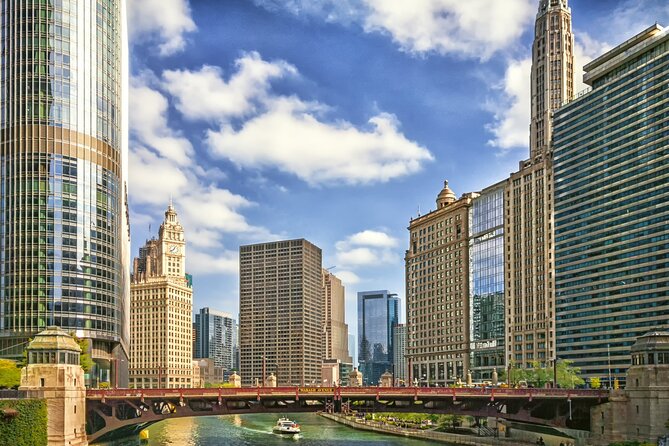
Your walk kicks off near the Wrigley Building, an iconic terra cotta landmark with a huge clock tower and plenty of character. The story centers on its namesake, William Wrigley Jr., whose wealth came from chewing gum. If you look around the area, you’ll also get the sense that this part of town is packed with hidden surprises, including the Hotel InterContinental and its observatory setup.
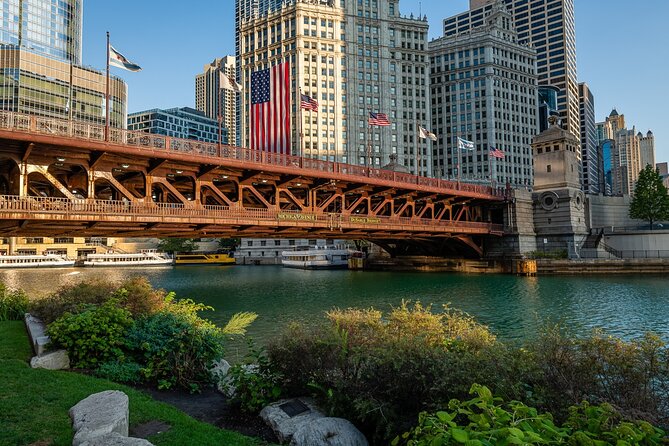
Next comes the Michigan Avenue Bridge, also called the DuSable Bridge. This is one of those stops where the visuals are good on their own, but the audio adds the why. You’ll hear about the bridge’s decorative flags and the history behind them, which gives you something extra to notice as you stand, snap a picture, and keep moving.
Then you reach the eye-catching 401 N Wabash Ave. It’s impossible to miss once it’s in front of you, mainly because of scale: 1,399 feet tall and 98 stories. The narration also links the building technique to the approach used for Burj Khalifa in Dubai, helping you see Chicago as a place that thinks globally about engineering.
A nice benefit of this stretch is how varied it feels. You’re not stuck with only one type of sight: you go from a clock-and-gum origin story, to a bridge with symbolism, to a skyscraper that lets you appreciate modern construction.
You can also read our reviews of more tours and experiences in Chicago.



Vietnam Veterans Memorial to 325 N La Salle: solemn, modern, and historic
As you continue, the mood shifts with the Vietnam Veterans Memorial. Instead of a statue-on-a-pedestal moment, this memorial uses a sunken, rectangular pool and fountain. It’s somber, and the form makes it feel quiet even when the street noise is still around you. The audio frames it around Illinois residents who died in the Vietnam War, which helps the space land with meaning rather than just aesthetics.
A short walk later, you hit the Marina Towers complex, known for its twin towers that resemble giant corn cobs. The narration leans into the idea of a city in a city, with amenities like an in-house theatre, gym, pool, ice-rink, bowling alley, and a 360-degree roof deck. Even if you don’t tour any interiors, hearing how it functions adds context to what you see from outside.
Then you’ll cross the Dearborn Street Bridge, built in 1962. This stop isn’t just about architecture. You’ll learn that it replaced a badly planned bridge that local residents hated, and the audio explains why people pushed back and what changed. That theme is worth keeping in mind on this whole walk: Chicago doesn’t just build things, it argues about them.
From there, the route brings you to 325 N La Salle Dr, constructed in 1914 and now tied to the Encyclopedia Britannica headquarters. The building may look short or understated compared with newer neighbors, but that contrast is the point. It’s a reminder that the city’s skyline didn’t evolve overnight, and that older institutions shaped the downtown core long before today’s glass towers.
If you like tours where you can feel the timeline, this middle section is a good one. It mixes memory, residents’ influence over infrastructure, and a pre-modern view of what Chicago valued downtown.
Merchandise Mart and McCormick Bridgehouse: commerce meets the river museum
One of the biggest surprises on this route is the Merchandise Mart. It’s so large it’s described as having its own zip code, and it’s designed in art-deco style with around four million square feet. That kind of scale can feel abstract until you stand near it, and the audio helps you turn size into something graspable.
After that, you’ll reach the McCormick Bridgehouse & Chicago River Museum. This isn’t just about signage and photo angles. The museum’s focus includes exhibits on the river and its significance to Chicago, and the top floor is highlighted for bird’s-eye views of the waterway. If you enjoy small museums that teach you how a city actually works, this is the moment to slow down a bit.
Then your walk continues to the Tribune Tower, a neo-Gothic skyscraper with dramatic styling. Here, the story centers on a competition run by the Chicago Tribune for its 75th anniversary, with the goal of creating their headquarters as one of the most beautiful and distinctive office buildings in the world. It’s a great stop if you like architecture with a backstory, because it explains why the building looks the way it does.
This section is valuable because it connects three big ideas: downtown commerce (Merchandise Mart), river engineering and observation (Bridgehouse), and media-era civic ambition (Tribune Tower). Together, they help you see the Riverwalk not just as scenery, but as part of Chicago’s work and identity.
Fahey Bridge to NBC Tower: ending with art deco and change
Near the end, the tour shifts to newer river-spanning infrastructure with the William P. Fahey Bridge. The audio frames it as Chicago’s newest river-spanning bridge, and highlights the idea that it shows how construction technology and philosophy evolved over the decades. If you’ve been paying attention to how earlier bridges were shaped by people and planning, this stop feels like the final chapter.
Then you close out near the NBC Tower. It’s another art-deco star, modeled after 30 Rockefeller Center in New York City. The narration also notes it was a former recording spot for the Jerry Springer Show and the Steve Harvey Show. Even if you’re not a TV-history person, it’s a fun way to connect the skyline to entertainment, studio life, and the way media brands leave physical marks on cities.
The tour ends at River Esplanade, so you finish with a Riverwalk stretch that feels natural to keep exploring after the audio stops. The whole route is designed as a walking loop of sorts, where you can stop, restart, and take side detours without losing the thread.
Who this self-guided Riverwalk walk suits best
This is a strong pick if you want a guided-feeling walk without a group schedule. You can start and pause whenever you like, which is perfect for a quick morning stroll, a midday break between museum visits, or an evening window when you want views and stories.
It’s also a good fit if you care about:
- Architecture and design details you can see right in front of you
- City history that explains the why behind buildings and bridges
- A route that keeps you oriented with offline navigation
A couple practical notes will help you get the most out of it. First, the app experience is location-based, so you should keep your phone’s location services working. Second, the instructions recommend iPhone models on iOS 15 or later, Android on version 9 or later, or an iPad/tablet with GPS and cellular connectivity.
One small money-saving tip included with the tour: couples can share one tour by splitting headphones. It’s not a “double device” requirement for the same narration, as long as both people can listen clearly.
If you hate self-guided tours, this may feel like work. But if you enjoy wandering with a soundtrack, the hands-free setup is exactly the kind of comfort that turns a normal Riverwalk walk into something you’ll remember.


Should you book this Chicago Riverwalk self-guided tour?
Book it if you want a low-cost, high-value way to see key Riverwalk landmarks while learning the stories that explain what you’re looking at. The $14.99 price makes sense because there’s no extra admission needed for the stops described, and the long-term access angle means you’re not stuck using it only once.
Skip it if you want an in-person guide answering questions or if you’re looking for a tour that includes tickets and timed entries. Also skip it if you don’t want to manage a smartphone app, because the experience depends on downloading and using the audio correctly.
If you’re visiting Chicago for the first time and you’d like a confident Riverwalk route you can flex around, this is an easy yes.
FAQ
How much does the Chicago Riverwalk self-guided tour cost?
It costs $14.99 per person. It’s a smartphone audio tour you can use at your own pace.
How long is the tour?
The duration is about 1 to 2 hours.
Where do I start and where does it end?
You start at 99 Chicago Riverwalk, Chicago, IL 60601, USA, and you end at River Esplanade, Chicago, IL 60611, USA.
Does the tour work without cellular or Wi-Fi?
The tour is designed to work offline with offline GPS maps. However, the instructions say you must download the tour while you have strong Wi-Fi/cellular, and it will work offline after that.
What language is the tour in, and do I need headphones?
The tour is offered in English. For the best experience, bring headphones or earbuds, since the audio is how you hear the narration.
Is there free cancellation?
Yes. Free cancellation is available up to 24 hours in advance for a full refund.