REVIEW · CHICAGO
Chicago Self-Guided Audio Tour
Book on Viator →Operated by Uvamai Niche Tourism · Bookable on Viator
Chicago doesn’t need a group to feel magical. This self-guided audio route turns landmarks into stories.
What makes it interesting is the format: one private playlist on SoundCloud plus an interactive map, so you control the order, the pacing, and how many stops you actually do. You’re not stuck with a strict schedule, and your access links stay valid for up to 6 days.
I especially like how the narration is designed to be easy to hear and engaging, not a droning lecture. I also love the stop mix: Union Station for architecture and WWII lore, then back downtown for big public-art hits like Cloud Gate and the Riverwalk.
One consideration: this is not a long guided tour. Each stop is built for a short on-site listen, and some major attractions require entry fees you’ll pay separately.
In This Review
- Key highlights you’ll feel right away
- Why a self-guided Chicago audio tour works so well
- Price and value: $6 for 15 stops (and what it means)
- Union Station: Beaux-Arts glamour plus WWII training stories
- Field Museum: more than T. rex, with ancient Americas and lab work
- Buckingham Fountain: engineering scale and Great Lakes symbolism
- Art Institute of Chicago: acquisition stories and local patrons
- Millennium Park and the Crown Fountain: modern design with underground brains
- Cloud Gate: the Bean, the engineering, and why it makes people smile
- Chicago Cultural Center: Tiffany glass domes and the people’s palace makeover
- Riverwalk to Navy Pier: water-level engineering and the wartime origin story
- Driehaus Museum, 360 Chicago, and Lincoln Park Zoo: luxury, skyline, and conservation
- Driehaus Museum
- 360 Chicago Observation Deck
- Lincoln Park Zoo
- Chicago History Museum and Newberry Library: artifacts plus ideas
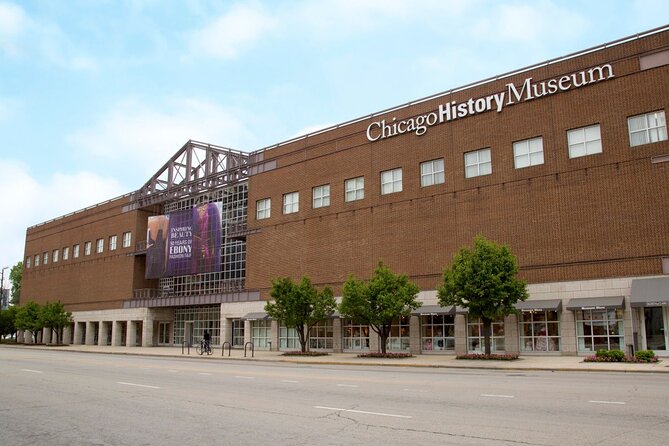
- Chicago History Museum
- Newberry Library
- Science and Industry: 1893 World’s Columbian Exposition leftovers
- How to plan your route without GPS getting in the way
- Who should book this and who might prefer a live guide
- Should you book this Chicago self-guided audio tour?
- FAQ
- FAQ
- How long is the Chicago self-guided audio tour?
- How much does the tour cost?
- Is this a GPS-guided tour?
- What language is the audio guide offered in?
- How do I access the audio and the map?
- Do I need headphones?
- Will I need an internet connection?
- Are admission tickets included for the museums and attractions?
- Can I change or cancel after booking?
- How long do the access links stay valid?
Key highlights you’ll feel right away

- Short, story-driven audio at each stop so you can keep sightseeing without audio fatigue
- SoundCloud playlist + Google-style map lets you jump stops in your own order
- Clear narration you can hear without everyone needing individual earphones
- Iconic Chicago landmarks paired with behind-the-scenes context (engineering, art collecting, and city history)
- Good value at $6 because the tour is mostly free to access once you’re there
Why a self-guided Chicago audio tour works so well

Chicago is perfect for going at your own speed. One minute you’re staring up at grand stone; the next you’re at a fountain or sculpture that begs you to pause and look from different angles. This tour matches that style because it’s self-guided and explicitly not GPS-guided.
That matters for two reasons. First, you can start where it’s convenient for you, not where someone else decided you should stand. Second, you’re not tied to a route that ignores real life: weather, energy levels, lines, and the fact that Chicago can trick you with wind right when you want to take photos.
Also, the duration range—about 3 to 9 hours—makes sense. With 15 stops, the audio snippets are long enough to give you context but short enough that you can still spend the day actually looking.
You can also read our reviews of more tours and experiences in Chicago.


Price and value: $6 for 15 stops (and what it means)
At $6 per person, the big “win” isn’t that you’re paying for museum access. You’re paying for story structure: a playlist that helps you notice details you might otherwise skip. If you’ve ever walked through a museum thinking you should be impressed but didn’t know where to focus, this is the antidote.
Here’s what you do get:
- A private audio playlist covering all 15 attractions
- A private itinerary map with each stop tied to its audio
- Links that remain valid until your tour is complete, up to 6 days
What you don’t get (and you should plan for this):
- Entry tickets where required
- Transportation
- Guided pickup/drop-off
So the value calculation is simple. If you can do several free stops plus at least one paid stop, the $6 feels like a bargain. If your plan is to pay for every paid attraction and you only do one or two stops, it’s still fine, but you’ll feel less of the “audio value” because the cost is concentrated in admissions.
Union Station: Beaux-Arts glamour plus WWII training stories
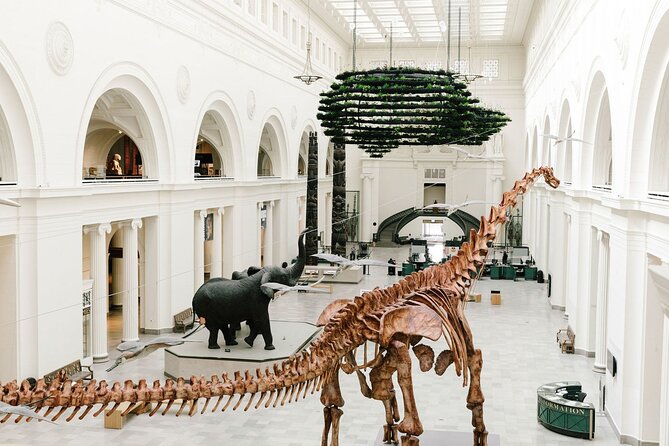
Start with Union Station if you want the day to feel cinematic. The audio here frames the station as more than a hub: architecture as a movie set, and a place tied to serious WWII training activity that most people never connect to this beautiful hall.
Expect the Great Hall to be the visual anchor. The narration also points out the soaring skylight and walks you through the idea of hidden spaces beneath your feet, including tunnels and secretive wartime connections. If you like architecture, the station alone is a great “first win” because you immediately understand why people keep coming back to look upward.
Practical notes:
- This stop is listed as free entry
- The audio is timed to about 20 minutes, which is ideal for strolling the main areas before you move on
Field Museum: more than T. rex, with ancient Americas and lab work
The Field Museum stop is about breadth, not just spectacle. You’re still going to see the headline exhibits in your peripheral vision, but the audio pushes you toward the collections and research that many people miss once they’ve snapped their dinosaur photos.
You’ll hear about:
- The museum’s origin story tied to the 1893 World’s Fair
- The Ancient Americas collection
- The real-world storytelling behind Egyptian mummies
- The idea of labs above your head and the research happening inside the institution
This is one of the stops where I’d recommend doing a quick strategy before you listen. Pick one or two themes to follow. If you try to absorb everything at once, you’ll end up speed-walking and missing what the audio is trying to highlight. Let the narration tell you what to look for, then spend your museum time verifying details with your own eyes.
Cost note: this stop says admission is not included.
Buckingham Fountain: engineering scale and Great Lakes symbolism
Chicago’s fountains are famous for a reason, and Buckingham Fountain is built to earn your attention even if you’ve seen photos before. The audio adds a layer most people don’t catch: it’s not just a pretty show, it’s massive engineering with meaning.
What you’ll pick up:
- Why it’s one of the world’s largest fountains
- A family legacy behind its creation
- Hidden symbolism connected to the Great Lakes
- The cultural renaissance connection and restoration efforts when it fell into decay
Also, the narration tees up seasonal details and the history around the nighttime light show. You don’t need to memorize times, but it helps you know what you’re looking for depending on the season.
Cost note: this stop is free.


Art Institute of Chicago: acquisition stories and local patrons
The Art Institute stop is great if you like art, and even better if you like people stories—who funded what, who fought over masterpieces, and how a collection becomes a collection.
The audio points you to:
- How the museum acquired famous works, including controversial circumstances around certain acquisitions
- Donors and patrons who shaped the collection
- Connections between Chicago’s industrial boom and its artistic rise
- Why pieces like Grant Wood’s American Gothic became cultural icons
A smart way to use this stop: don’t try to see everything. Use the audio to choose your handful of targets, then slow down for those works. The audio works best when it gives you a reason to linger instead of just passing through.
Cost note: admission is listed as not included.
Millennium Park and the Crown Fountain: modern design with underground brains
Millennium Park is one of those places where you can get lost in the visuals. That’s good—until you realize you’re enjoying it without understanding why it looks the way it does. This stop fixes that.
The narration focuses on the transformation story from industrial wasteland to a downtown cultural destination, and then it brings you into the engineering side of the design. You’ll hear about:
- The political drama and challenges involved in making it work
- Underground engineering that supports the park’s features
- The Crown Fountain’s technology approach
- The Lurie Garden’s significance
- Architectural details people often overlook
You’ll also get a clear explanation of what this park represents in Chicago: public art and urban renewal as an actual civic project, not just a slogan.
This stop is free (no entry ticket mentioned).
Cloud Gate: the Bean, the engineering, and why it makes people smile
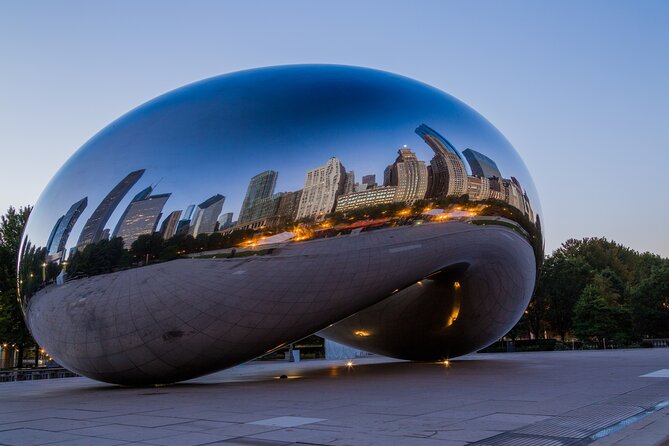
Cloud Gate is the one stop almost everyone recognizes. The audio helps you understand why people keep circling it like it’s a friendly puzzle.
Expect the narration to cover:
- Why the creation process was controversial
- The artist’s intentions and the sculpture’s tie to Chicago’s identity
- The engineering challenges that threatened completion
- The mathematical properties behind its seamless surface
- Why visitors touch it and how maintenance keeps it gleaming
If you use this audio well, you’ll stop taking photos from only one angle. The sculpture is literally built for perspective—your reflections change as you walk around. Use the narration as a cue to slow down, then do one full loop where you pay attention to how the reflections distort the skyline.
This stop is free.
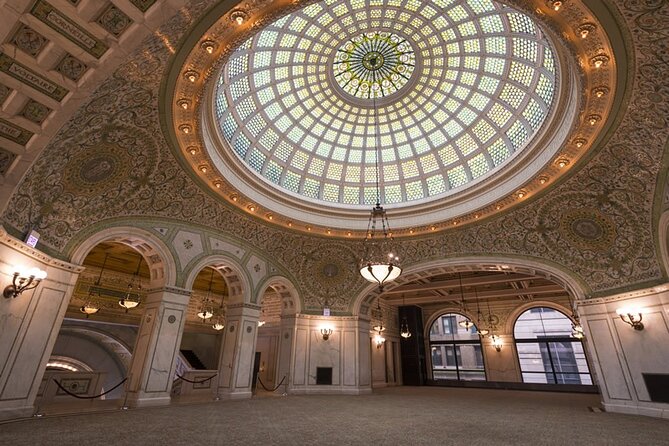
Chicago Cultural Center: Tiffany glass domes and the people’s palace makeover
The Cultural Center stop is a reminder that Chicago has beautiful public buildings that aren’t trying to be private. The audio calls it a People’s Palace and walks you through a very specific reason it matters: Tiffany glass domes inside a building that started life as something else.
You’ll hear how the building transformed from Chicago’s first central library into a culture hub, plus:
- Stories about the craftsmen behind mosaics
- Political battles that helped it avoid demolition
- The role of the building in Chicago’s cultural identity
- Ways the space continues to democratize access to art and culture
If you like architecture plus accessible culture, this is one of the best “free stops that feels like an event.”
Cost note: this stop is free.
Riverwalk to Navy Pier: water-level engineering and the wartime origin story
This section works because it turns a walk into a narrative arc.
On the Chicago Riverwalk, the audio frames the waterfront promenade as an urban “reclaiming” project. You’ll learn about:
- The river’s founding role in Chicago
- The famous reversing-the-river-flow idea
- The modern renaissance that created today’s walkway
- Water-level views of architectural treasures
- Ecosystems living in an urban environment
- Why the Riverwalk matters economically and culturally
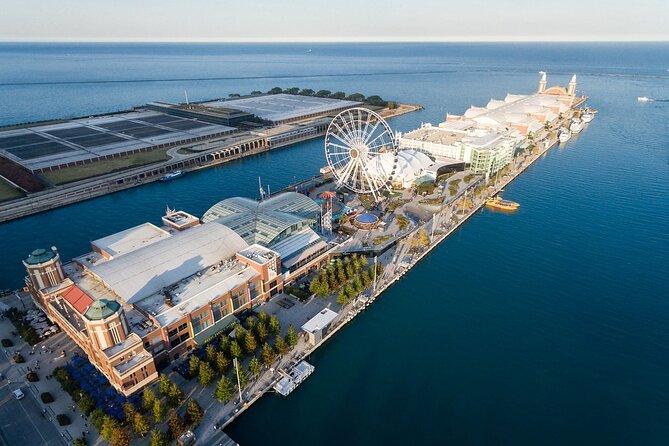
Then you move to Navy Pier, and the tone shifts. The audio brings in military history and how the pier transformed into a tourism and entertainment destination. You’ll hear about:
- WWII training connections
- Near-demolition and rescue
- Engineering marvels beneath the boardwalk
- Ongoing efforts to balance tourism with local needs
- Environmental initiatives tied to sustainable tourism
This pair is ideal if you want both city planning and lakefront storytelling in one go. If you only have time for one, Riverwalk usually feels more “everyday Chicago.” Navy Pier is bigger-energy, more tourist-facing.
Both are listed as free stops.
Driehaus Museum, 360 Chicago, and Lincoln Park Zoo: luxury, skyline, and conservation
This cluster is where you pick your “how much do I want to pay today?” level.
Driehaus Museum
You’ll get a tour inside a Gilded Age mansion and a sense of how one person’s decorative-arts passion created a time capsule of American luxury. The audio focuses on:
- Family secrets and the mansion’s original story
- The restoration process
- Room-by-room furnishings, including Tiffany windows and hand-painted ceilings
- How the private residence became a public museum
Cost note: admission is not included.
360 Chicago Observation Deck
Then you go upward. The audio helps you read the skyline like a timeline. It highlights:
- Engineering marvels visible from above
- Stories behind skyscrapers that define Chicago’s identity
- How neighborhoods and architects shaped the city’s “first skyscraper city” reputation
- Ongoing development visible in the broader view
Cost note: admission is not included.
Lincoln Park Zoo
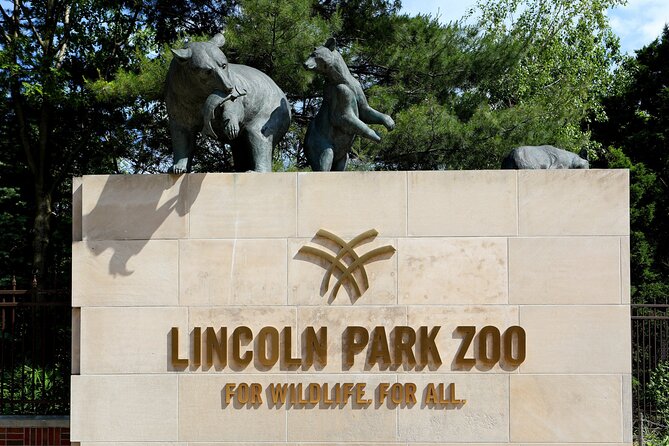
Finally, you reset to animals and conservation. This stop is special because it’s described as America’s last free major zoo. The narration emphasizes:
- Captive breeding programs and conservation work
- Scientific breakthroughs and animal care
- Habitat design and research on-site
- How the zoo balances public education, research, and welfare
Cost note: this stop is free.
A practical tip: don’t schedule these three back-to-back if you hate crowds. If you do them all, I’d do 360 Chicago earlier in the day and save the zoo for when you want a calmer pace.
Chicago History Museum and Newberry Library: artifacts plus ideas
If you want your day to move from buildings and objects to the story of people and thinking, these two stops do that well.
Chicago History Museum
The audio frames it as Chicago’s premier repository of local history, with artifacts and stories that move from frontier trading roots to the city’s reinvention. You’ll hear about:
- The aftermath of the Great Fire
- The world-shaping impact of the World’s Fair
- Lesser-known stories that shaped Chicago’s character
- Ordinary citizen accounts alongside major events
- The ongoing struggles and triumphs that define the city
Cost note: admission is not included.
Newberry Library
Then you switch gears to books, rare collections, and research spaces. The narration explains:
- The library’s founding story
- Unique collections across centuries
- Famous scholars and writers who worked there
- Rare manuscripts and historic maps
- The role the library plays in Chicago’s intellectual life
Cost note: this stop is free.
If you’re traveling with anyone who reads on trains and always wants one more book shop stop, this library stop is a nice payoff.
Science and Industry: 1893 World’s Columbian Exposition leftovers
The last stop leans hands-on and curiosity-led. Science & Industry is described as one of the world’s largest science museums, and the audio positions it inside the last remaining building from the 1893 World’s Columbian Exposition.
You’ll hear about:
- How the museum grew from World’s Fair palace to educational powerhouse
- Iconic exhibits like the captured German U-boat and the Pioneer Zephyr train
- Technology, medicine, and innovation
- Educational programs and research partnerships
This is the stop where it helps to be honest with yourself: do you like interactive science museums? If yes, you’ll likely keep going past the audio. If no, treat the audio as a sampler and skim the rest.
Cost note: admission is not included.
How to plan your route without GPS getting in the way
This is self-guided, not GPS-guided. So you need a little prep to avoid wasting time.
Here’s my practical approach:
- Use the map link and tap the headphone icons on your browser (not the app).
- Decide if you want a “greatest hits” day or a “slow and personal” day.
- Bring headphones and start the audio at the moment you arrive, so you connect the narration to what you’re actually seeing.
Also, the audio works best when you do it in a clean rhythm. If you try to hit too many spots fast, the audio becomes background. If you give each stop even a short pause, the narration earns its keep.
Timing wise, the tour is designed around about 20 minutes per stop. If you spend 40 minutes at one place, that’s fine. Just expect the day to run long. The total tour time estimate is about 3 to 9 hours, so your breaks matter.
And yes, you’ll need a charged phone and internet. The materials come through private access links, hosted on SoundCloud and a map platform.
Who should book this and who might prefer a live guide
This tour fits you if:
- You like structuring a day around major Chicago landmarks like Union Station, Millennium Park, Cloud Gate, and the Riverwalk
- You want an audio companion that nudges you toward engineering, art collecting, and the kind of details you’d miss when moving fast
- You don’t want to pay for a live guide for an entire day
You may want to skip or be cautious if:
- You’re expecting a full guided lecture experience. This format is built for short on-site listens, not hours of narration.
- You’re planning to pay admission at every stop. Several stops list entry as not included, and those costs can add up quickly.
- You’re traveling with limited phone/internet comfort. If your signal is weak, the audio won’t magically play offline since you’re using streaming links.
Should you book this Chicago self-guided audio tour?
If your goal is smart pacing and story-based sightseeing for $6, I think it’s worth considering. You get a structured playlist, a map with headphone icons, and the flexibility to split the tour across days. The narration quality and clarity (it’s meant to be heard well) is the key selling point.
My decision rule:
- Book it if you want a flexible day of architecture, public art, lakefront walks, and museum highlights.
- Skip it if you want one person talking for hours like a traditional tour.
FAQ
FAQ
How long is the Chicago self-guided audio tour?
It’s estimated at about 3 to 9 hours, depending on how many stops you choose and how long you spend at each one.
How much does the tour cost?
The price is $6.00 per person.
Is this a GPS-guided tour?
No. It’s a self-guided audio tour, and it’s not GPS-guided.
What language is the audio guide offered in?
The audio is offered in English.
How do I access the audio and the map?
You’ll receive private access links that give you a SoundCloud audio playlist and an interactive map. The links are sent via the booking platform’s messaging system.
Do I need headphones?
Yes. You’ll need headphones or earphones to listen to the audio.
Will I need an internet connection?
Yes. You need internet access to open the audio and map links on your phone.
Are admission tickets included for the museums and attractions?
Entry fees are not included where required. Some stops list admission ticket free, while others are specifically marked as not included.
Can I change or cancel after booking?
This experience is non-refundable and cannot be changed for any reason.
How long do the access links stay valid?
The access links are valid until your tour is complete, up to a maximum of 6 days.