REVIEW · DUBLIN
A Self-Guided Stroll Along Dún Laoghaire’s East Pier
Book on Viator →Operated by VoiceMap Audio Tours · Bookable on Viator
One walk, and Dún Laoghaire starts talking. This self-guided East Pier stroll uses the VoiceMap app with offline audio and maps, turning a simple seaside route into a chain of stories you can pace yourself. I like the Dublin Bay panoramas that keep pulling you back to the water, and I like that you can do it on your own schedule, not someone else’s timetable.
I also appreciate that it’s built for an easy win: about 1 hour to 1 hour 15 minutes, with a clear start near St Michael’s Church and an end right back where you began. The main drawback is practical: the experience gives you the audio, but you’ll need your own smartphone and headphones to use it.
In This Review
- Key things to know before you go
- Why Dún Laoghaire’s East Pier Works So Well on Foot
- Price and value: $8.99 for a lifetime-access audio walk
- Getting set up: what you need on your phone (and what you don’t)
- Starting at St Michael’s Church in Dún Laoghaire
- Pavilion Theatre and the town’s mix of old and new
- King George IV Monument and the RMS Leinster Memorial
- The Metals: where an old railway became a promenade
- East Pier Lighthouse: best views on a short timer
- Carlisle Pier, the Forgotten Irish Memorial, and the Bandstand Sun Shelter
- The Crimean War cannon with a Romanov eagle motif
- Ending at the Roger Casement Statue and finding your next bite
- Timing, effort, and what the walk feels like day to day
- Who should book this East Pier walk?
- Should you book this self-guided stroll?
- FAQ
- What is the duration of the Dún Laoghaire East Pier stroll?
- What language is the audio available in?
- Do I need internet to use the audio and maps?
- Do I need to bring my own phone and headphones?
- Where do I start the walk?
- Is it suitable for everyone and can I bring a service animal?
Key things to know before you go
- Offline VoiceMap access means your audio and maps can work without mobile data
- Pier viewpoints give you classic Dublin Bay angles without needing a long hike
- Old railway turned promenade on the Metals makes the walking feel purposeful, not random
- WWI memorials and emigration remembrance keep the story human, not just scenic
- A Romanov eagle motif on a Crimean War cannon adds a quirky, unexpected detour
- Private group setup means you’re not coordinating your pace with strangers
Why Dún Laoghaire’s East Pier Works So Well on Foot
Dún Laoghaire is close enough to Dublin to feel convenient, but its waterfront has its own rhythm. This walk is a sweet match for a day when you want sea views and meaning, without committing to a full-day tour.
The big strength here is how the route mixes calm scenery with real-world local markers: churches, theatres, commemorations, piers, and even a cannon tied to a Russian story. You’re not just looking at the water; you’re learning why these structures matter. And because it’s audio-led, you can stop for photos or linger by the railings without feeling lost.
If you’re the type who likes to get your bearings fast, this is a format that helps. You get a steady flow of stops, in a logical seaside order. No guesswork about where to turn next, and no need to decode signs under pressure.
You can also read our reviews of more tours and experiences in Dublin.


Price and value: $8.99 for a lifetime-access audio walk
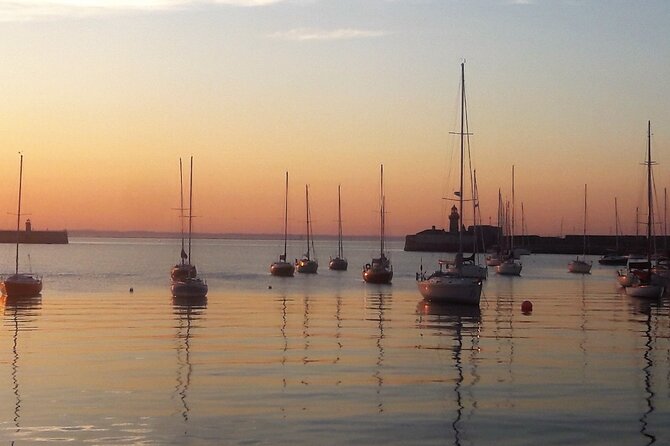
At $8.99 per person, the cost is low enough that this doesn’t have to compete with museum tickets or day trips. The value comes from the lifetime access piece plus the app setup: you get lifetime access in English, and the audio, maps, and geodata are available for offline use.
That offline feature is more than a tech perk. Waterfront areas can be spotty for signal, and you don’t want your story cutting out right when you’re standing at the East Pier Lighthouse. With VoiceMap, you can keep moving and keep listening at your own pace.
One more practical angle: you’re planning a compact outing. With a duration of about 1 hour to 1 hour 15 minutes, you’re not locking yourself into half a day. That makes it a good fit for arrival days, layovers, or a calm end to a busier sightseeing run.
Getting set up: what you need on your phone (and what you don’t)
You get the VoiceMap experience. What you provide is the listening gear. The tour does not include a smartphone or headphones, so budget for that.
You’ll also want to be comfortable using an app while walking. The good news: you’re not dealing with constant map chasing. The experience is designed around audio cues and offline materials. Still, I’d treat this like any self-guided audio walk: plug in headphones before you start, and double-check the audio is downloading or accessible offline if your signal is unreliable.
The result is simple: you can focus on the pier, not on figuring out your directions app with seawind in your face.
Starting at St Michael’s Church in Dún Laoghaire
Your walk begins at St Michael’s Church on Marine Road in Dún Laoghaire. The church dates to the 1820s, and the audio frames it as the heart of the community’s long presence.
This is a smart place to start because it gives you a baseline. Before you hit modern buildings and maritime monuments, you get a feeling for how this town has been anchored here for generations. It’s also an easy meeting point if you’re using public transport or arriving on foot, since it’s right in the town area rather than out on the pier.
Pavilion Theatre and the town’s mix of old and new

Next, you pass by the Pavilion Theatre, described as a modern cultural hub. This is where the walk starts balancing the story: not everything is medieval or monumental. A working theatre signals that Dún Laoghaire isn’t frozen in time.
In practical terms, this stretch works as a transition. You leave the church, cross into a more current streetscape, then settle back into the maritime theme as the pier route takes over. If you like your sightseeing to have a natural rhythm rather than a straight line, this middle section helps.



King George IV Monument and the RMS Leinster Memorial
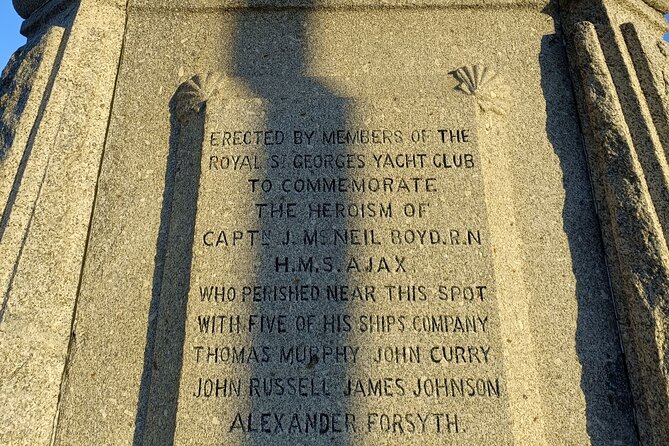
Then you get to monuments with heavier meaning: the King George IV Monument and the RMS Leinster Memorial.
Monuments like these can feel intimidating if you only see them as statues. The audio approach helps, because it connects them to Dún Laoghaire’s identity as a port community and to the way the town remembers events that shaped lives.
The RMS Leinster Memorial is especially moving because it commemorates the tragic sinking during World War I and the lives lost in what’s described as one of Ireland’s deadliest maritime disasters. You’re not just reading names; you’re standing in a place where the sea has always been part of ordinary life. Even if you don’t know the whole WWI maritime story beforehand, the walk gives you the emotional anchor.
The Metals: where an old railway became a promenade
After the monuments, you’ll follow the path known as the Metals, described as remnants of an old railway track turned into a promenade. This is one of the stops where the walk feels like a real place, not a list of attractions.
Why it matters: a repurposed rail line tells a story about change over time—how infrastructure gets reused when a town evolves. As you walk, you also get context about the area shifting from a fishing village to a bustling port.
The Metals section is also a nice physical break. It’s long enough to settle into your pace, but not so long that you’re stuck in one mode. You’re learning while walking, which is what self-guided audio is best at.
East Pier Lighthouse: best views on a short timer
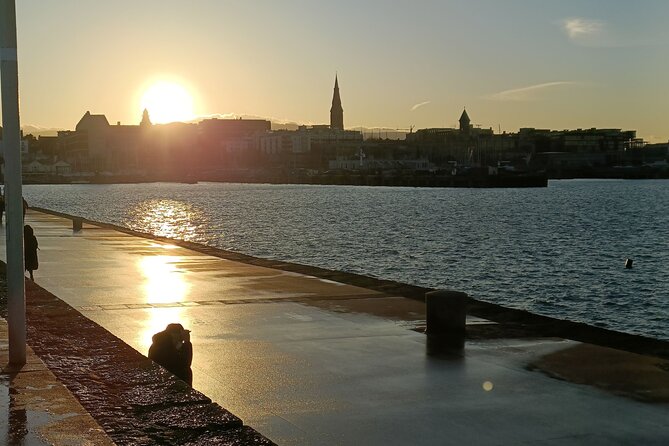
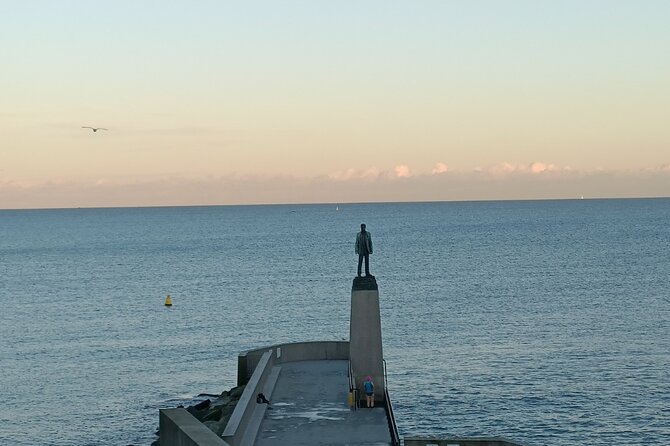
As you approach the Dún Laoghaire Pier to the East Pier Lighthouse, the walk delivers what most people come for: panoramic views of Dublin Bay and the city.
If you’re doing this after other sightseeing, the lighthouse stretch functions like a reset button. You can look, breathe, and slow down. If you’re doing it early in your day, it gives you a clear mental map of how Dublin Bay sits around the coastline.
The audio also covers how the harbor’s construction mattered and how it played a key role in shaping Ireland’s destiny. I’d treat that as a reason to watch the water a little more closely. Piers aren’t just scenery here; they connect ships, commerce, and wider history.
Tip: when you stop for photos, pause near safer viewing points with stable footing. Pier walks can be breezy, and you’ll want both hands free when you’re framing the city across the bay.
Carlisle Pier, the Forgotten Irish Memorial, and the Bandstand Sun Shelter
Next comes Carlisle Pier, with origins traced back to the 1820s. It’s a maritime witness to Dún Laoghaire’s evolution, giving you a time anchor that matches what you’ve been learning so far.
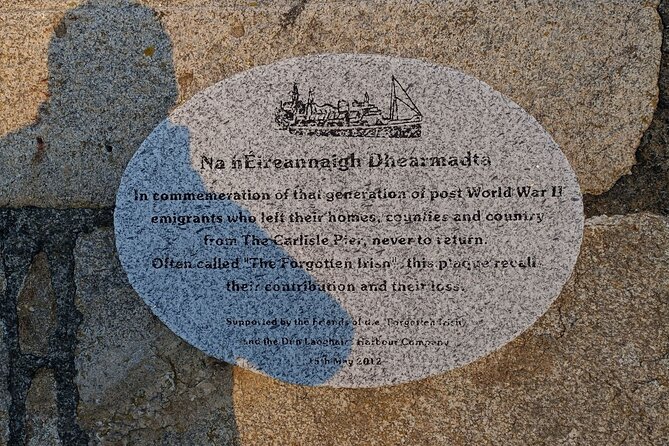
Right alongside that pier story, you’ll also encounter the Forgotten Irish Memorial, described as honoring Irish emigrants. The focus is on resilience—people leaving home, seeking new opportunities, and facing the hard work of building lives abroad. Even if emigration history isn’t your usual topic, this kind of memorial lands because it’s rooted in the reality of a port town.
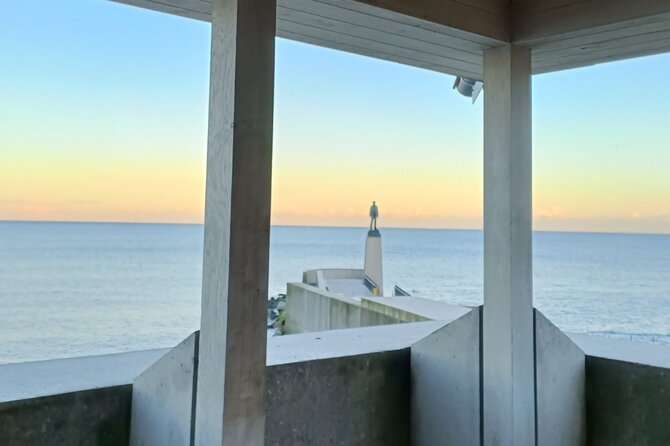
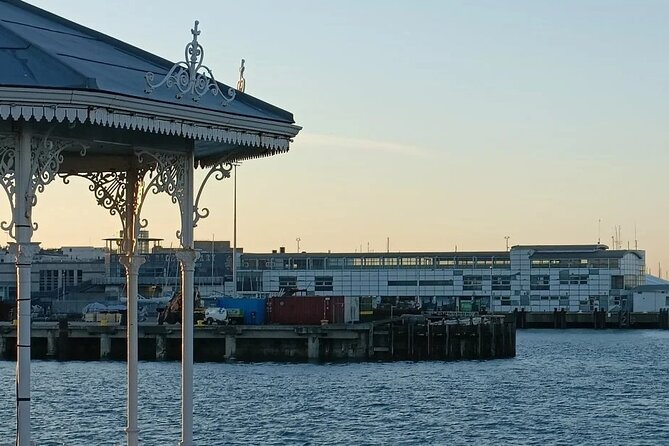
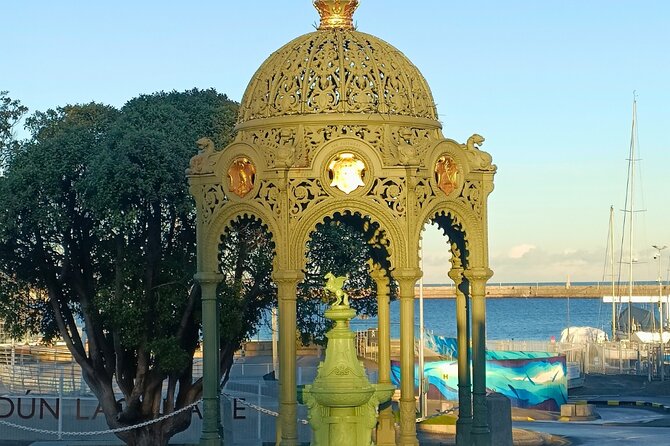
Then there’s a design detail that can easily get missed if you’re rushing: the East Pier Bandstand Sun Shelter, highlighted for its unique architecture. This is the kind of stop I love because it reminds you that public spaces aren’t only functional. They’re also cultural—places where community events and waterfront life can happen.
The practical payoff: this portion breaks the walk into distinct stops that vary in mood. You go from maritime infrastructure to memorial reflection to architecture appreciation, all without losing the seaside setting.
The Crimean War cannon with a Romanov eagle motif
Now for the oddball detail that makes the walk memorable: spot the eagle motif of the Romanov family on a Crimean War cannon. The audio explains the intriguing tale of a Russian cannon finding its place in Dublin.
This is where the self-guided format helps most. A random cannon on a pier could be just another object. But with story-led audio, it becomes a plot twist. You start looking at maritime connections in a wider European frame, not just local Irish events.
Even if you don’t go deep into military history, you’ll likely remember the visual of that eagle motif. It’s a strong way to end a history-heavy stretch without making it feel like homework.
Ending at the Roger Casement Statue and finding your next bite
Your walk ends near the Roger Casement Statue, honoring the Irish Revolutionary. That final marker works as a closing note: the pier isn’t just trade and tragedy. It’s also a stage for political identity.
From there, you’re left in a part of town where it’s easy to keep going—especially for food and drink. The tour doesn’t include meals, so you’ll want to plan your post-walk snack or dinner on your own, but the location makes that easy.
I like ending with a statue for a simple reason: it gives your brain one final theme to hold onto while you walk back into town life.
Timing, effort, and what the walk feels like day to day
With a duration of about 1 hour to 1 hour 15 minutes, this is a true micro-adventure. You won’t feel drained. You’ll feel satisfied.
Most people can participate, and it’s near public transportation, which helps if you don’t want to base your entire day around a waterfront commute. The route also runs in a simple loop: start at St Michael’s Church and end back at the same meeting point.
Opening hours are listed as open all day, which is useful for planning. You can pick a calmer time of day for views, or a brighter hour for photos. Just remember that a pier can be windy no matter what the calendar says.
If you’re doing this with kids, this format works well because the audio breaks the walk into small story targets. If you’re doing it solo, it’s a great way to keep moving while still learning.
Who should book this East Pier walk?
This is a strong choice if you want:
- Big views in a short time
- A walk that mixes scenery with memorials and monuments
- A self-guided format with offline audio and maps
- A low-cost activity that you can repeat later thanks to lifetime access
If you’re the kind of person who only wants scenic walking with zero emotional weight, you might find the WWII sinking memorial and the emigration memorial a lot in one short outing. You can still do it, but treat it like a reflective walk, not just a photo mission.
And if you don’t have headphones or you don’t want to use your phone while walking, plan to pass or adjust. The audio experience is the main feature.
Should you book this self-guided stroll?
Yes, if you want a practical, meaningful waterfront walk you can do on your own timing. At $8.99 with lifetime access and offline VoiceMap support, it’s good value even for a tight schedule.
Book it if you appreciate monuments that explain themselves and you’re happy to learn as you walk. The East Pier Lighthouse views are the easy selling point, but the best part is how the route turns the whole shoreline into a story of ships, departures, and how the town remembers.
Skip it if you prefer a tour where a person is constantly guiding you in real time, because this is audio-led and self-paced. Also, make sure you have headphones ready.
FAQ
What is the duration of the Dún Laoghaire East Pier stroll?
It takes about 1 hour to 1 hour 15 minutes.
What language is the audio available in?
The tour is offered in English.
Do I need internet to use the audio and maps?
No. It includes offline access to the audio, maps, and geodata.
Do I need to bring my own phone and headphones?
Yes. A smartphone and headphones are not included.
Where do I start the walk?
You start at St Michael’s Church on Marine Road, Dún Laoghaire, Co. Dublin, Ireland.
Is it suitable for everyone and can I bring a service animal?
Most people can participate, and service animals are allowed.