REVIEW · CARCASSONNE
Carcassonne Walking Tour with Audioguide on Your Smartphone
Book on Viator →Operated by TouringBee · Bookable on Viator
One walk, and Carcassonne starts making sense fast. This self-guided smartphone tour strings together the big sights—from the Canal du Midi to the fortified UNESCO Cité—using 19 audio recordings by a professional historian. The result is a trip where you can pause, rewind, and walk at a pace that fits your feet and your attention span.
What I like most: the audio stops are tightly tied to what you’re looking at, so you get context right where it matters. I also love that the route includes an offline map for GPS-style navigation, so you’re not stuck staring at a spinning loading icon. The main drawback to plan around is simple: there’s no human guide. If you forget to download, you’ll miss parts of the experience.
In This Review
- Key Highlights You’ll Actually Use
- Starting Point and Route Flow Around Carcassonne’s Best Squares
- Price and Timing: How $8.41 Stacks Up for 90 Minutes
- Canal du Midi de Carcassonne: A Calm Start on UNESCO Water
- Pont Vieux: Medieval Stone With Big River Views
- Musée des Beaux-Arts: When You Want One Hour That’s Not All Castle
- Musée de l’Inquisition: Dark History, Handled With a Museum Frame
- Le Château Comtal: Count’s Castle Views and Fortress Logic
- La Cité Médiévale: Why This Part Feels Like a Time Machine
- Basilique Saint-Nazaire-et-Saint-Celsus: Romanesque Meets Gothic
- How the Smartphone Audio Works (and How Not to Mess It Up)
- Who This Tour Fits Best in Carcassonne
- Should You Book This Carcassonne Smartphone Audioguide?
- FAQ
- How long is the Carcassonne walking tour with smartphone audio?
- Is there a human guide on this tour?
- What language is the audio guide offered in?
- Do I need to bring headphones?
- Will the audio guide work offline?
- Where does the tour start and end?
- Does the tour price include museum entrance fees?
- How many audio recordings are included?
- What’s the maximum group size?
- Can I cancel for a full refund?
Key Highlights You’ll Actually Use

- 19 historian-narrated audio recordings you can listen to on your own schedule
- Offline map + GPS-style route, helpful when Wi-Fi is patchy
- UNESCO medieval Cité route flow that makes the fortress easier to understand
- Wide variety of stops: canal views, art museum, Inquisition museum, castle, and basilica
- Compact time plan (about 1.5 hours) that works well between other Carcassonne plans
Starting Point and Route Flow Around Carcassonne’s Best Squares
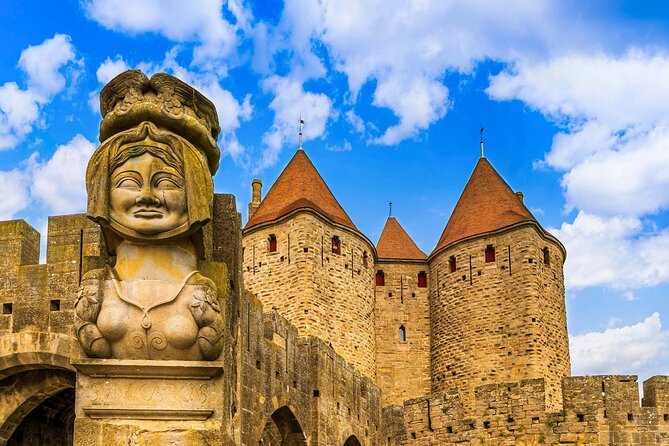
The tour begins at 1 Av. du Maréchal Joffre, 11000 Carcassonne, and it loops back to that same spot when you’re done. That matters because you’re not guessing where you’ll end up after museum time or photo stops.
You’ll use the TouringBee app on your iPhone or Android. You’ll need to download the audio guide content, activate your purchase, and follow the route using the app map. There’s no staff member waiting at the starting point—so treat the app like your guide, not your backup plan.
A practical note: plan to get your headphones on and your download finished right before you start walking. One review tip that’s worth copying: keep a second map handy, like Google Maps, and if you want something low-tech, you can grab a free paper map at the tourism office.
Also remember you’re bringing your own headphones. The tour price doesn’t include them, and the audio will be tough to enjoy in open-air streets without something decent.
You can also read our reviews of more tours and experiences in Carcassonne.


Price and Timing: How $8.41 Stacks Up for 90 Minutes

At $8.41 per person for about 1 hour 30 minutes, this is the kind of activity that works like a budget-friendly primer. You’re paying for narration and route clarity, not for a person standing next to you.
That pricing feels especially fair because the tour includes 19 separate audio recordings, plus an offline route map and landmark illustrations. In other words, you’re getting a structured walk rather than wandering from sign to sign trying to remember what you read in a guidebook.
Timing-wise, the itinerary includes a longer block for La Cité Médiévale (about 1 hour), then shorter segments for canals, bridges, museums, and the basilica. If you’re trying to see Carcassonne in one compact window, this fits well. If you’re the type who needs time to linger in museum rooms, you might want to add extra time beyond the target 90 minutes.
Canal du Midi de Carcassonne: A Calm Start on UNESCO Water

Your first stop is the Canal du Midi de Carcassonne, UNESCO-listed and famous for 17th-century engineering. You’ll be walking along a quieter-feeling part of the city where the water and tree-lined edges slow your brain down.
This is a smart opening choice for a self-guided tour. Before you hit medieval stone and intense museum stories, you get a gentle transition: the canal gives you scenery, a sense of place, and an easy warm-up for walking. You should be able to enjoy it with minimal “focus mode,” because even basic views make sense once the audio provides the background.
This stop is marked at about 10 minutes. Don’t treat it like a checklist. Even a short canal walk can set the mood for the fortress later.
Pont Vieux: Medieval Stone With Big River Views

Next you’ll cross the Pont Vieux, a 14th-century stone bridge that connects the fortified Cité and the Bastide Saint-Louis. As you walk the cobbled path, you’re getting more than a photo opportunity—you’re moving through a piece of the city’s historical “link.”
The audio helps here because Pont Vieux isn’t just a bridge shape. It’s a viewpoint into how people traveled between the walled area and the rest of Carcassonne. If you pause mid-bridge, you’ll see both the river-side atmosphere and the fortress context you’ll explore later.
This segment is also about 10 minutes, which is good. You get the key perspective without forcing you into a long crossing.
Musée des Beaux-Arts: When You Want One Hour That’s Not All Castle

Carcassonne isn’t only towers and walls. The tour includes the Musée des Beaux-Arts, set in an 18th-century building. If your day is leaning heavily medieval, this museum stop is a helpful reset.
What you can expect: European paintings, sculptures, and ceramics spanning the 17th through 20th centuries. The highlights mentioned include works by artists such as Jean-Baptiste Camille Corot and Jacques Gamelin. The museum also holds temporary exhibitions and cultural events, which means what you see can vary.
This is a stop that works well for different travelers. If you’re into art, you’ll likely want extra time. If you’re not, it can still be worth it for the setting and the quick shift from stone fortifications to fine art stories.
Musée de l’Inquisition: Dark History, Handled With a Museum Frame

Then the route turns darker with the Musée de l’Inquisition inside the fortress-like Cité. This museum focuses on medieval Inquisition history, including artifacts and exhibits tied to trials and persecution.
The audio context matters a lot here. Without it, you might just see disturbing objects and wonder what you’re supposed to do with that information. With narration, you’ll get a clearer sense of the museum’s intent: to explain the judicial system behind the era rather than only shock you.
This is not a casual “walk-by” stop. If you’re sensitive to topics involving persecution or torture instruments, plan your pacing. Even if the tour gives you only enough time for the key exhibits, it may still feel heavy. That’s normal.
Le Château Comtal: Count’s Castle Views and Fortress Logic

After Inquisition history, you move to Le Château Comtal, the Count’s Castle dating back to the 12th century. It’s inside the fortified Cité, so you’re still in the thick of the medieval world, but the tone changes: from court-era justice to military architecture and the daily logic of a stronghold.
You’ll explore the castle’s towers, ramparts, and moats. You also get panoramic views over the surrounding countryside, which is one of those moments that makes the whole walled-city layout suddenly click.
There’s also a museum inside the castle with artifacts and exhibits, including material tied to the Cathar region. If you’ve heard the word Cathar before and want a basic starting point, this stop can be your anchor.
La Cité Médiévale: Why This Part Feels Like a Time Machine
The heart of the walk is La Cité Médiévale, a UNESCO World Heritage site and one of Europe’s best-preserved fortified cities. The audio frames it as a place enclosed by double walls and dotted with 52 towers, with roots going back to the Gallo-Roman period.
This is where you should slow down. Narrow cobblestone streets and the sheer density of fortifications can make it hard to “orient” if you’re on your own with no context. The audio recordings help you read what you’re seeing—walls become more than scenery.
The route also connects you to major religious architecture inside the Cité area, including the Basilica of Saints Nazarius and Celsus (which you also visit as its own segment). Expect about 1 hour here.
One practical tip: wear shoes you trust. Cobblestones don’t forgive. And because this is the longest part of the itinerary, it’s the section where your comfort level matters most.
Basilique Saint-Nazaire-et-Saint-Celsus: Romanesque Meets Gothic
Finally, you’ll visit Basilique Saint-Nazaire-et-Saint-Celsus (inside the medieval Cité). It dates to the 11th century and is known for a fusion of Romanesque and Gothic styles.
What makes this basilica a good “last stop” in the audio route is how it gives your brain a quieter visual payoff after the fortifications and museum intensity. You’ll see intricate stone carvings, stained glass windows, and soaring arches.
This segment is around 10 minutes. Even if you only have a short window, this is the kind of place where spending a bit of time just looking upward pays off. The narration helps you notice details you’d otherwise gloss over at street speed.
How the Smartphone Audio Works (and How Not to Mess It Up)
This is the part that decides whether the tour feels effortless or annoying.
You’ll need:
- A smartphone with the TouringBee app (iOS or Android)
- Your purchase activated in the app
- Your own headphones
- The audio guide downloaded soon enough to avoid network issues while walking
The offline map is a big deal. It’s meant to show your position and guide you along the route without requiring constant data. Still, I like the idea of having a second navigation option ready, just in case. One reviewer mentioned using Google Maps alongside the tour’s map, and it’s a strategy that makes sense when you’re exploring on your own.
App timing is also important. Audio guide access is for 1 year in your preferred language, but the listening experience on the day depends on download and activation working smoothly. If your phone battery is low, charge it beforehand.
One downside to be aware of: at least one person had trouble downloading the tour and had to contact technical support. So if you’re traveling with limited time, don’t leave the download until the last second.
Who This Tour Fits Best in Carcassonne
This self-guided format is great if you want:
- A structured route without paying for a human guide
- The freedom to pause for photos and slower museum reading
- A way to understand major landmarks while walking
- A solo-friendly plan (you’re not waiting for anyone else’s pace)
It’s also a strong choice for a short visit. With about 90 minutes built in, you can pair it with other Carcassonne activities like a longer castle visit, a meal break, or additional time wandering the Cité on your own.
If you’re the kind of visitor who hates any app-based activity, then this might feel like work. But if you’re comfortable with a phone map and listening to audio outdoors, you’ll probably find the experience well matched to your travel style.
Should You Book This Carcassonne Smartphone Audioguide?
Yes—if you want a low-cost, high-structure way to learn Carcassonne without committing to a guided group.
Book this tour if:
- You like learning while you walk, not after you’re back in your hotel
- You appreciate offline navigation and professional narration
- You’re trying to see the big sights efficiently in about 1.5 hours
- You want a plan that works for solo time, breaks, and photo stops
Skip it (or be cautious) if:
- You rely on your phone less than you think you will
- You can’t handle downloading content right before you start
- You want a live explanation from a person, especially for museum questions or deeper follow-ups
If you match the first list, this is a smart buy. For the price, you’re effectively hiring a historian’s walking script—delivered at your pace.
FAQ
How long is the Carcassonne walking tour with smartphone audio?
It takes about 1 hour 30 minutes on average.
Is there a human guide on this tour?
No. It’s self-guided, and there is no human guide waiting at the start.
What language is the audio guide offered in?
The tour is offered in English.
Do I need to bring headphones?
Yes. Headphones are not included, so you’ll need your own.
Will the audio guide work offline?
The tour includes an offline map with the route, and the app is designed for navigation during the walk. You should download the content before you start.
Where does the tour start and end?
It starts at 1 Av. du Maréchal Joffre, 11000 Carcassonne, France and ends back at the same meeting point.
Does the tour price include museum entrance fees?
Entrance fee or tickets are not included. The stops are marked with free admission in the tour information, but the tour price itself does not include paid entries if any are required.
How many audio recordings are included?
There are 19 audio recordings narrated by a professional historian.
What’s the maximum group size?
This tour has a maximum of 20 travelers (people).
Can I cancel for a full refund?
Yes. You can cancel up to 24 hours in advance for a full refund, based on the experience’s local time.