REVIEW · ISTANBUL
Bosphorus Daytime or Sunset Sightseeing Cruise & Audio Guide
Book on Viator →Operated by Mega Lüfer Yachts | Bosphorus Dinner Cruise İstanbul | Bosphorus Daytime and Sunset Cruise · Bookable on Viator
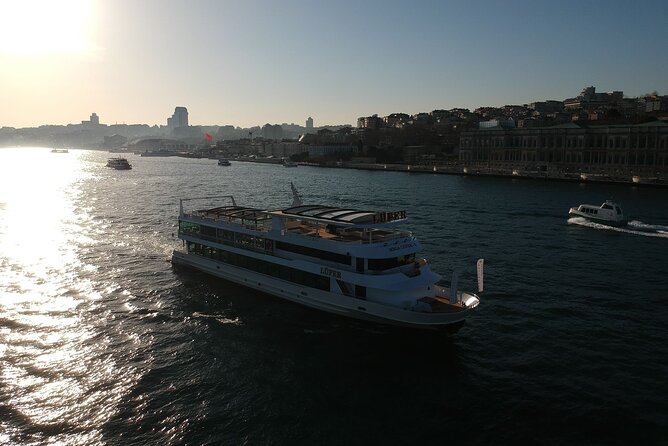
Two hours on the Bosphorus beats Istanbul traffic. I love the live English guide and the mobile audio guide app that explains what you’re seeing as you glide past the big landmarks. The trade-off: the boat can feel busy (especially near sunset), and sometimes the audio timing can lag a bit behind what’s right outside your window.
This cruise is one of those practical Istanbul moves: short enough to fit in a packed day, but long enough to get a real Bosphorus rhythm and a clean photo run from Europe to Asia. For $9, you also get useful comfort—soda/pop, bottled water, and coffee and tea—so you’re not hunting for snacks every time you want to look up.
Getting there is easy, and it ends where you start. The meeting point is at Mega Lüfer Yachts near Ömer Avni Meclis-i Mebusan Cd. No:34 in Beyoğlu, and the tour finishes back at the same place. Bring a camera, but also bring patience for lines on popular deck areas.
In This Review
- Key highlights at a glance
- Why this Bosphorus cruise works when your time is tight
- Mega Lüfer Yachts: what to expect on board
- Meeting point and timing: how to avoid the usual stress
- Stop-by-stop: the route and what each view is good for
- Dolmabahçe Mosque: the elegant opener
- Dolmabahçe Palace: where Ottoman power meets European style
- Çırağan Palace: Ottoman glamour with a modern hotel life
- Ortaköy Mosque (Büyük Mecidiye Camii): the waterfront postcard
- Bosphorus Bridge: the modern icon in the middle of history
- Throat of the Bosphorus: just keep your eyes up
- Galatasaray Island (Kuruçeşme Island): the exclusive side of the view
- Rumeli Fortress: Ottoman defense you can still feel
- Fatih Sultan Mehmet Bridge: another engineering landmark
- Anadolu Hisarı: the medieval fortress across the water
- Küçüksu Pavilion: a royal summer retreat
- Beylerbeyi Palace: Asian-side royalty and dignitary hosting
- Maiden’s Tower: the most photographed ending
- Audio guide reality check: how to get the most from the narration
- What you get for $9: value and limits
- Weather, deck comfort, and photo strategy
- Who should book this Bosphorus cruise
- Should you book this cruise?
- FAQ
- How long is the Bosphorus daytime or sunset sightseeing cruise?
- Where do I meet for the cruise?
- Is there a live guide and audio guide?
- What languages are available for the audio guide?
- What drinks and snacks are included?
- Is Wi-Fi available on board?
- Are alcoholic drinks included?
- Are tips included in the price?
- What is the cancellation policy?
Key highlights at a glance
- Live English guide + mobile audio app so you can follow along even when the view changes fast
- Dolmabahçe Mosque and Palace for Ottoman splendor right by the water
- Two Bosphorus bridges (the big one and the second one) for iconic skyline shots
- Rumeli Fortress and Anadolu Hisarı for Ottoman-era defense on both sides
- Maiden’s Tower as a late highlight with myths and practical café vibes
Why this Bosphorus cruise works when your time is tight
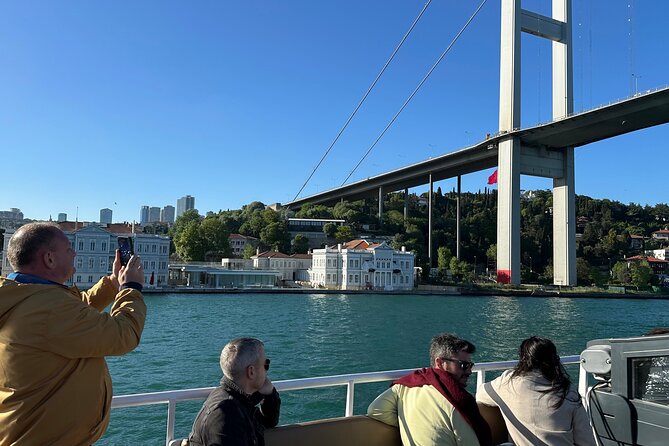
Istanbul has a way of eating your day. Traffic, long museum lines, and constant moving can drain you fast. This is a simple fix: you sit down, and the city comes to you for about 2 hours.
What you’re really buying is access. From the water you see the palace gardens, mosque facades, and fortress walls in the same frame. And because the narration is paired with the route, it helps you connect the dots between what looks like “just a building” and why it matters.
The value also comes from not forcing you to make constant choices. Drinks are handled, audio is handled, and you return to your start point without a puzzle.
You can also read our reviews of more tours and experiences in Istanbul.

Mega Lüfer Yachts: what to expect on board
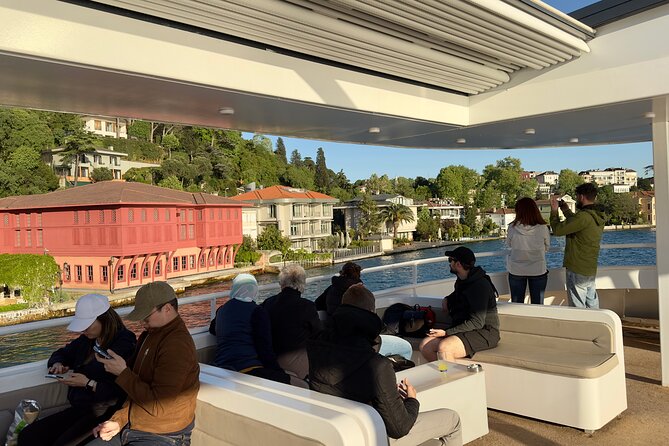
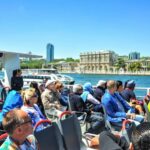
The cruise runs with a maximum group size of 150, and that usually keeps things from feeling totally chaotic—though sunset can still get crowded. You’ll likely spend most of your time on the main viewing deck. If you want photos, plan to move with the boat and be ready to pivot quickly.
Refreshments are straightforward. The ticket includes soda/pop, bottled water, and coffee and/or tea. Wi-Fi is also included, which can help if you want to check maps, translate signs while you’re docked, or just share a quick shot.
One practical note: the alcohol policy is age-based. Alcoholic drinks are served only to travelers 21+. If you’re traveling with younger kids or teens, you’ll still be covered for non-alcoholic drinks.
Meeting point and timing: how to avoid the usual stress
The start is at Mega Lüfer Yachts at Ömer Avni Meclis-i Mebusan Cd. No:34, 34427 Beyoğlu/İstanbul. It’s near public transportation, which matters because Istanbul’s taxis can turn into a time-sink if you land at the wrong hour.
Here’s my advice: arrive early and get your bearings fast. There’s enough moving around the pier that you don’t want to be the person sprinting the last 10 minutes while your camera battery panics.
Also, plan on going back to the same place at the end. This is a tour where you can easily stitch it between other Bosphorus plans, because you don’t need to figure out a second pickup.
Stop-by-stop: the route and what each view is good for
Dolmabahçe Mosque: the elegant opener
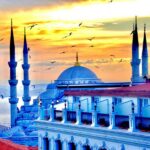
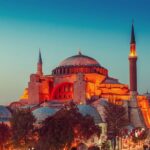
You’ll start with the Dolmabahçe Mosque, positioned right by Dolmabahçe Palace along the Bosphorus. It’s a great first stop because it’s close enough to read the architecture, and dramatic enough to set the tone—elegant minarets and a grand dome, commissioned by Sultan Abdülmecid in 1855.
From the boat, the best move is to shoot wide first (get the palace grounds and mosque together), then zoom in for the dome and minaret lines. The audio guide commentary helps you spot details you might otherwise miss.
A small consideration: since this is early in the cruise, the deck can still be getting organized. If you care about photos, aim to be set up before the boat fully turns into the best angles.
Dolmabahçe Palace: where Ottoman power meets European style
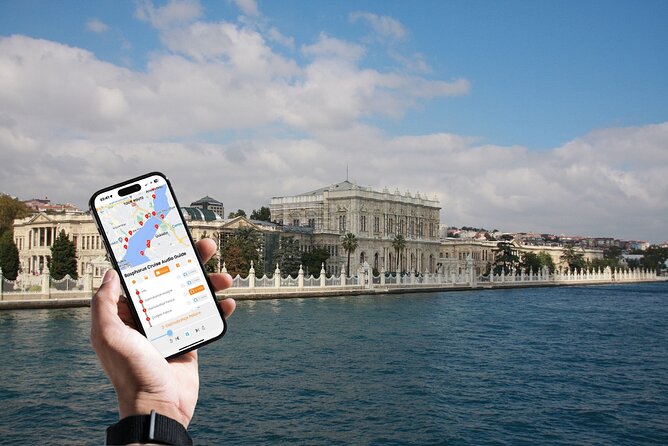
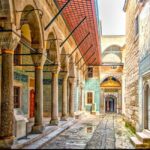
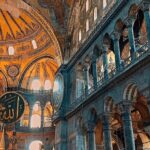
Next up is Dolmabahçe Palace, the late Ottoman administrative center in the mid-19th century. It’s known for a European-leaning architectural blend and some serious interior glamour, including the world’s largest Bohemian crystal chandelier.
From the water, you see the palace as a whole—facade rhythm, landscaped gardens, and the way the shoreline frames the building. This stop is ideal for people who want a “big wow” moment without paying museum ticket prices.
The only drawback is also part of why it’s special: you’re seeing it from the Bosphorus perspective, not from inside. If you’re after rooms, carpets, and close details, you’ll want a land visit too.
Çırağan Palace: Ottoman glamour with a modern hotel life
As you glide past Çırağan Palace, you’re looking at one of Istanbul’s most glamorous conversions: a former royal residence now operating as a luxury hotel. Ottoman architecture shows through in the ornate marble facade and grand terraces facing the water.
This is a photo-friendly stop because the setting is theatrical from every angle. If you’re traveling during good light, you’ll get those palace-and-water reflections that make Instagram feel useful instead of annoying.
Don’t worry if you can’t identify every detail. The audio guide is there to connect the dots between royal residence and today’s hotel role.
Ortaköy Mosque (Büyük Mecidiye Camii): the waterfront postcard
Then comes Ortaköy Mosque, officially named Büyük Mecidiye Camii, famous for its Neo-Baroque style. It sits in the busy Ortaköy district, right by the water, with an elaborate facade and a towering dome that basically demands a photo.
I like this stop because it feels human-scale compared with the massive palace buildings. It also helps you read the Bosphorus as a lived-in corridor, not just a scenic strip.
If you’re sensitive to crowd noise, plan around the peak times. Mosque views are a magnet for photo stops, and the deck can get loud.
Bosphorus Bridge: the modern icon in the middle of history
As you approach the Bosphorus Bridge, you’ll get the classic Istanbul skyline composition: suspension bridge span over the Bosphorus and the city layered behind it. The audio guide ties it to the bridge’s role connecting the European and Asian sides.
This is a “big symbol” stop. Even if architecture isn’t your thing, the bridge makes it clear how modern Istanbul works. And it’s perfect for panoramic shots because the span gives your camera a strong horizontal line.
Because it’s moving infrastructure, angles can change quickly. Keep your camera ready before the boat reaches the best sightline.
Throat of the Bosphorus: just keep your eyes up
After that, the cruise continues along the Bosphorus Strait. This segment is less about a single landmark and more about the overall flow—coastal residences, shoreline textures, and that sense of distance getting eaten up by water travel.
The practical win here is that it gives your brain time to digest what you already saw. You can also use this stretch to catch up on audio narration if you missed earlier parts.
Galatasaray Island (Kuruçeşme Island): the exclusive side of the view
You’ll pass Galatasaray Island, also called Kuruçeşme Island. It’s small, artificial, and known for its exclusive club plus a connection to the Galatasaray Sports Club. From the boat, you’ll get a unique shape against the city background that feels different from the big fortresses and palaces.
Photo-wise, shoot for context, not just the island. Including the city skyline around it makes the island feel like what it is: a small note in a giant city story.
One consideration: because it’s associated with private facilities, you may not get a “tourist close-up” view. The value here is the perspective from the water.
Rumeli Fortress: Ottoman defense you can still feel
Next is Rumeli Fortress, guarding the Bosphorus since the 15th century. Built by Sultan Mehmed the Conqueror, it played a major role in the conquest of Constantinople. The walls and towers look sturdy even from a distance, and that’s the point.
This stop is ideal for people who like history that feels physical. Even if you’re not a fortress person, the audio narration makes the strategy clearer—why it was built here, how it fit into Ottoman expansion, and what it witnessed.
For photos, try wide shots first to capture the full mass of the fortress, then zoom to emphasize the tower shapes.
Fatih Sultan Mehmet Bridge: another engineering landmark
As you cruise under the Fatih Sultan Mehmet Bridge, also known as the Second Bosphorus Bridge, you get a suspension-bridge view that’s more than just a crossing. It’s named after Sultan Mehmed the Conqueror and symbolizes the ongoing link between Europe and Asia.
From the water, bridges have a different feel than from land. You see vertical lines and support shapes with real depth, and it’s easier to capture the bridge plus city framing in one shot.
If you love skyline photos, this is one of the better parts of the cruise to set up early and wait for the angle.
Anadolu Hisarı: the medieval fortress across the water
On the Asian side, you’ll see Anadolu Hisarı, a medieval fortress built by the Ottomans in the 14th century. Its rugged walls and watchtowers work great against greenery on the Asian shore, giving you a classic “old stone meets water” Istanbul view.
This stop pairs well with Rumeli Fortress. You can start seeing the Bosphorus as a corridor controlled and defended over centuries, not just a modern travel route.
If the audio guide is on time, you’ll get a better sense of Ottoman expansion and architecture here. If it’s a bit behind, just focus on visual cues and let the narration catch up when it does.
Küçüksu Pavilion: a royal summer retreat
Then comes Küçüksu Pavilion, a charming Ottoman-era summer palace along the Asian shore. Built in the 19th century, it’s known for ornate decorations and detailed craftsmanship, and it also shows up in historical films.
This is a great “pause” moment in the cruise. After the heavier fortress and bridge views, the pavilion feels lighter and more intimate. The audio guide adds extra texture by talking about it as a retreat and as film scenery.
For best photos, aim for an angle that includes the pavilion plus water and gardens. That way it reads as a palace setting, not just a standalone building.
Beylerbeyi Palace: Asian-side royalty and dignitary hosting
You’ll continue past Beylerbeyi Palace on the Asian side. This 19th-century palace served as a summer residence for Ottoman sultans and as a guest house for visiting dignitaries. It’s known for elaborate stone carvings and majestic gardens, and the boat gives you a strong view of the palace structure against the shoreline.
This stop is helpful if you want the Ottoman story to feel more than military. It shows the “soft power” side: hospitality, status, and long-term presence.
The audio guide’s commentary about notable figures and architectural style helps you avoid treating it like a decorative backdrop.
Maiden’s Tower: the most photographed ending
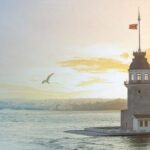
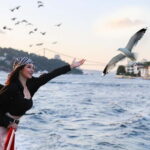
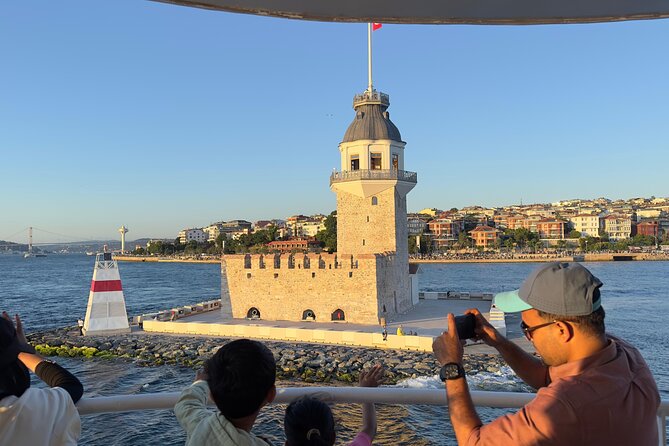
The cruise often ends with Maiden’s Tower, a historic tower on a small islet at the southern entrance of the Bosphorus. It’s one of Istanbul’s most photographed landmarks, with myths involving princesses and tragic love stories. Today, it also functions as a popular café and restaurant.
If you’re booking this for sunset, this is why. The tower’s silhouette is distinctive, and the skyline backdrop makes it a strong final frame.
One practical tip: decide whether you want the widest city-and-water shot or a tighter tower shot. The deck crowd may shift suddenly, so having a plan keeps you from spinning in circles.
Audio guide reality check: how to get the most from the narration
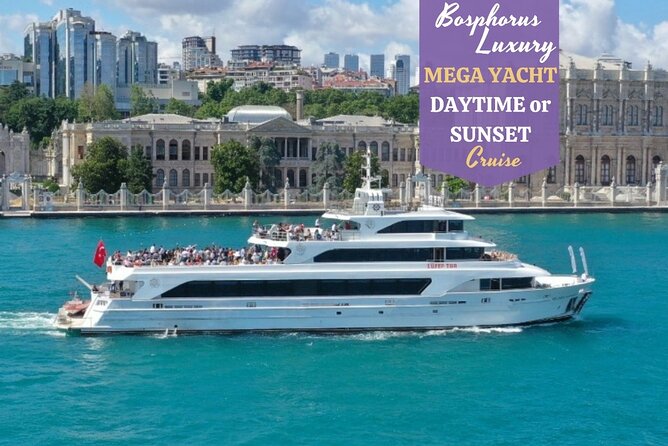
You’ll have a mobile audio guide app and a live guide in English. That’s a smart combo: when you miss a detail on one layer, the other can catch you.
Still, audio timing isn’t perfect. Some people find the narration runs a little behind what they’re seeing. So don’t treat it like a live tour of a museum with set dwell times.
My advice: sit where you can hear well, keep your volume moderate, and use the narration as context instead of a rigid script. Also, if you want better sightlines, the best seats tend to be around the middle and closer to the left side for some views and sound.
What you get for $9: value and limits
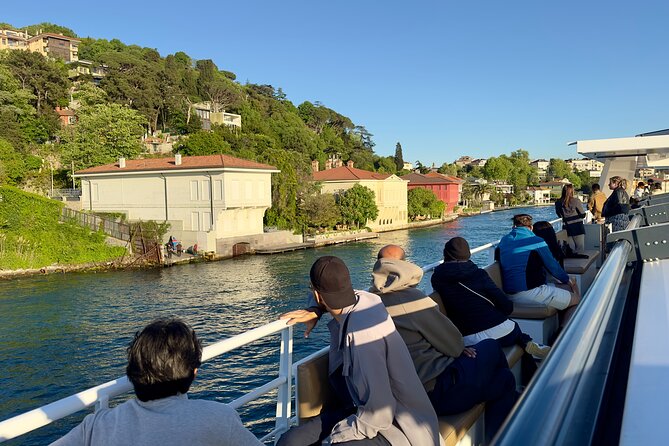
For $9 per person, the included extras are the point:
- Soda/pop and bottled water
- Coffee and/or tea
- Wi-Fi
- A mobile audio guide app (9 languages)
- Live guide in English
- Mobile ticket convenience
That’s what makes it feel like a “buy time back” experience. You’re paying for speed, structure, and reduced decision fatigue.
Two limits to accept:
1) It’s a sightseeing pass, not a museum visit. You’ll get exterior views and on-the-water context, not interior access.
2) You’re sharing the boat. If you want solitude, sunset hours can test your tolerance.
Also, tips aren’t included. Budget for that if you want to recognize friendly staff.
Weather, deck comfort, and photo strategy
On the Bosphorus, weather can shift your whole mood. If it’s cold, you may feel it more on the deck. If it’s hot, you’ll still want a cooler spot between photo stops.
For pictures, timing beats gadgetry. Keep your camera ready at bridge and fortress moments, because those are the fastest angles. When you do stop for a shot, shoot wide first, then zoom, then go back wide to remember the full scene.
If you can, choose a spot that balances view and hearing. Some folks report the audio is harder to hear from certain areas, especially when the boat is busy.
Who should book this Bosphorus cruise
Book it if you:
- Have only a couple hours and want major landmarks without switching neighborhoods
- Like history, but prefer it explained while you watch the buildings
- Want an easy day plan that doesn’t rely on ticket lines
- Are traveling on a budget and still want included drinks and guided storytelling
Consider a different style of tour if you:
- Need quiet and personal space for long periods
- Want guaranteed interior access to palaces and fortresses
- Get impatient when audio timing doesn’t match your exact photo moment
If you’re bringing kids, it can still work. Just know this is a mostly sitting-and-looking experience, so bring snacks, plan for breaks, and help them choose one or two “must photograph” landmarks.
Should you book this cruise?
If you’re looking for one smart Bosphorus activity that’s short, guided, and great for photos, I think this one is a solid yes. The $9 price is unusually low for what you get: live English guidance, a mobile audio app, and refreshments included for the whole trip.
I’d book it early if you care about seating and sound. And if you’re sensitive to crowd levels, choose a daytime option rather than the most packed sunset slot. Do those two things, and you’ll come away with a clear Istanbul map in your head and some very usable skyline photos.
FAQ
How long is the Bosphorus daytime or sunset sightseeing cruise?
The cruise is about 2 hours (approx.).
Where do I meet for the cruise?
You meet at Mega Lüfer Yachts | Bosphorus Dinner Cruise İstanbul | Sunset & Daytime Tours at Ömer Avni, Meclis-i Mebusan Cd. No:34, 34427 Beyoğlu/İstanbul, Türkiye.
Is there a live guide and audio guide?
Yes. There is a live guide in English, plus a mobile audio guide app.
What languages are available for the audio guide?
The mobile audio guide app is offered in 9 languages, and the live guide is in English.
What drinks and snacks are included?
The cruise includes soda/pop, bottled water, and coffee and/or tea.
Is Wi-Fi available on board?
Yes, Wi-Fi is included.
Are alcoholic drinks included?
The information provided does not say alcohol is included in the ticket. It does state that alcoholic drinks are served only to travelers 21 years old and above, with non-alcoholic drinks for minors.
Are tips included in the price?
No, tips are not included.
What is the cancellation policy?
You can cancel for a full refund up to 24 hours in advance. If you cancel less than 24 hours before the start time, the amount paid is not refunded.